
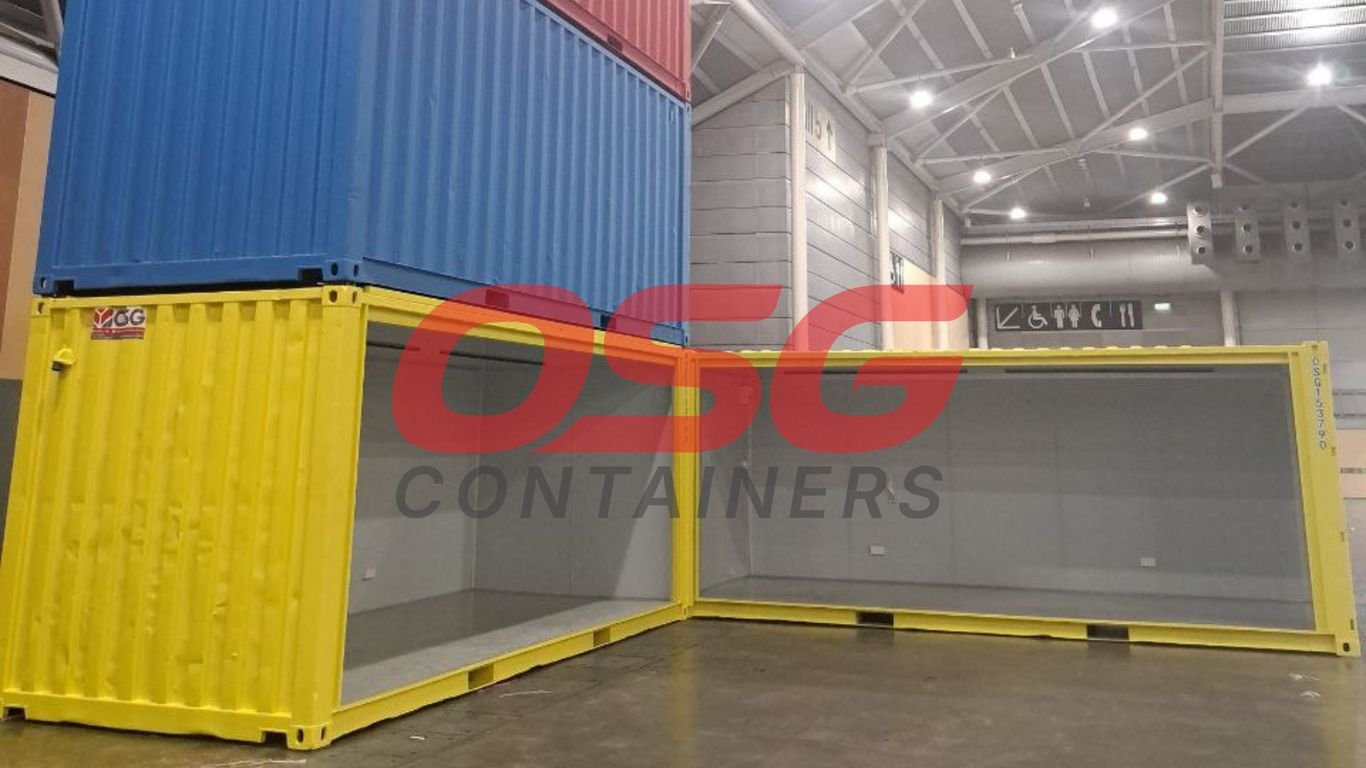
So, you’re thinking about getting an open-top container. They’re pretty handy for certain jobs, especially when you need to load things from above. But before you just grab one, there are a few things you should really know. It’s not just about the size; there’s a whole bunch of details that can make a big difference in whether you get the right container for your needs or end up with a headache. Let’s break down what really matters when you’re looking to buy an open-top container.
Key Takeaways
- When buying an open-top container, pay close attention to its exact external and internal measurements, as well as the door opening size. This ensures your cargo fits and that the container works with your loading equipment.
- Container condition is a big deal. Decide if you need a new or one-trip container, or if a used one that’s ‘cargo-worthy’ or ‘wind and watertight’ will do the job. ‘As-is’ containers might seem cheap but often cost more to fix.
- Know the weight specs: Tare weight (how much the container weighs empty) and payload capacity (how much it can hold) are vital. Always check the maximum gross weight limit too, to stay safe and legal.
- Standard sizes like 20-foot and 40-foot open-top containers have specific dimensions and capacities. Pick the size that best matches your volume needs and any space limitations you might have.
- Make sure the container meets important standards, like ISO certifications and CSC plates if you plan on international shipping. Also, plan your delivery site carefully, checking for overhead obstructions and ensuring the ground is stable.
Understanding Open-Top Container Dimensions
When you’re looking at open-top containers, the first thing you’ll want to get a handle on are the dimensions. It sounds simple, but these numbers really matter for figuring out if your stuff will fit and how you’ll get it in and out. Think of it like buying a couch – you gotta measure your doorways first, right?
External Container Measurements
These are the overall outside measurements of the container. They’re important because they tell you how much space the container itself will take up on your property and if it can even be delivered to your site without hitting anything. For a standard 20ft container, you’re generally looking at an external length of 20 feet, a width of 8 feet, and a height of 8 feet 6 inches. These external specs are also what allow containers to stack neatly on ships or trains.
Internal Usable Space
This is where the real magic happens – the space inside where your cargo actually goes. Because of the container walls and flooring, the internal measurements are always a bit smaller than the external ones. For a 20ft container, the inside length might be around 19 feet 4 inches, the width about 7 feet 9 inches, and the height roughly 7 feet 10 inches. It’s this usable space that you need to plan your loading around. You don’t want to get halfway through loading and realize your biggest items won’t fit.
Doorway Clearance Considerations
With an open-top container, you’ve got that removable roof, which is great for loading from above. But you still have the doorway to think about. The width and height of the door opening are key. If you’re moving large machinery or bulky items that can’t be lifted from the top, you need to make sure they can actually pass through the door. A typical 20ft container door opening might be around 7 feet 5 inches wide and 7 feet 6 inches tall. Always double-check these if you have oversized items.
Knowing the difference between external and internal dimensions is key. Don’t just assume the external length is your usable length; account for the wall thickness. It’s a common mistake that can lead to packing problems later on.
Evaluating Open-Top Container Condition
When you’re looking at open-top containers, the condition they’re in really matters. It’s not just about how they look; it’s about whether they can do the job you need them to do, especially if you’re shipping things overseas or need them to last a long time.
New or One-Trip Quality
These are pretty much as good as it gets. They’ve usually only made one trip from the factory, often from Asia to wherever they’re being sold now. Because of this, they’re typically in great shape – no rust, no big dents, and they usually look pretty clean. If you want something that’s going to look good and last a long time with minimal fuss, this is the way to go. They’re the most expensive option, though.
Cargo-Worthy Certification
This is for used containers. To be called ‘cargo-worthy,’ a container has to pass a check to make sure it’s strong enough for shipping goods across the ocean. This means it’s structurally sound. You might see some signs of wear and tear, like minor rust spots or small dents, and maybe some old shipping company logos, but the important thing is it’s built tough and ready for heavy use. This certification is key if your container will be part of international shipping.
Wind and Watertight Standards
These containers are a step down from cargo-worthy, but still pretty solid for many uses. Their cargo-worthy status might have expired, or they might have a small issue that wouldn’t stop them from being used for storage but would prevent them from being shipped overseas. Think of them as good, reliable storage units. They’ll keep the wind and rain out, which is the main thing for most storage needs.
As-Is Container Assessment
Buying a container ‘as-is’ means you’re taking it with all its problems. These can range from small issues to big ones, like holes in the walls or bad flooring. They’re usually the cheapest option, but you have to be careful. Sometimes, the cost to fix up an ‘as-is’ container is more than it’s worth, especially when compared to a ‘wind and watertight’ unit. It’s a gamble, and you really need to know what you’re getting into before you hand over any cash.
When inspecting a container, pay close attention to the floor. It should be solid and free of rot or major damage. Also, check the roof and walls for any holes or significant rust that could let water in. The doors should open and close smoothly, and the seals should be intact to keep out the elements.
Key Specifications for Open-Top Containers
When you’re looking at open-top containers, it’s not just about the big picture; the details really matter. Getting these specs right means your cargo is safe, you’re not running into unexpected issues, and everything fits where it needs to. Let’s break down what you should be paying attention to.
Tare Weight and Payload Capacity
Think of tare weight as the container’s own weight when it’s empty. Payload capacity, on the other hand, is the maximum weight of goods you can actually put inside. It’s super important to know both because you don’t want to overload the container, which is dangerous and can lead to fines. Plus, you need to make sure the container can handle the weight of your stuff.
- Tare Weight: The empty weight of the container itself.
- Payload Capacity: The maximum weight of cargo the container can safely hold.
- Gross Weight: The combined weight of the container and its payload.
Maximum Gross Weight Limits
This is the absolute ceiling for how much a fully loaded container can weigh. It’s a combination of the container’s tare weight and its payload capacity. This limit isn’t just about the container; it also considers the trucks, cranes, and ships that will be moving it. Exceeding this can cause serious damage and legal trouble.
Material Composition and Flooring
The stuff the container is made of affects its durability and how it holds up over time. Most containers are made of steel, but the type and thickness can vary. The flooring is also a big deal. Usually, it’s made of strong hardwood, but you need to check for any damage, rot, or weakness, especially in older or used open-top containers. A solid floor is key to preventing cargo from falling through or getting damaged from below.
The integrity of the container’s structure, from its steel walls to its floorboards, directly impacts its ability to protect your goods during transit and storage. Always inspect these components closely.
Here’s a quick look at typical specs for common sizes:
| Specification | 20-Foot Container (Approx.) | 40-Foot Container (Approx.) |
|---|---|---|
| Tare Weight | 5,000 lbs | 8,400 lbs |
| Max Payload Capacity | 63,000 lbs | 59,000 lbs |
| Max Gross Weight | 68,000 lbs | 67,200 lbs |
Choosing the Right Open-Top Container Size
So, you’ve decided an open-top container is the way to go. Awesome. Now comes the part where we figure out which size actually makes sense for what you need to store or move. It’s not just about picking the biggest one you can find; that could mean paying for space you’ll never use. On the flip side, getting one that’s too small is just going to cause headaches later on.
20-Foot Container Suitability
The 20-foot container is your go-to for smaller jobs. Think of it as the compact car of the container world. It’s easier to maneuver into tighter spots, which can be a big deal if your delivery location isn’t exactly spacious. Internally, you’re looking at roughly 1,170 cubic feet of space. This is usually plenty for things like household furniture during a move, smaller equipment, or even just extra inventory that doesn’t take up a ton of room. Plus, if you plan on moving the container around often, the 20-footer is definitely the easier option to handle.
40-Foot Container Advantages
Now, if you’ve got bigger fish to fry, the 40-foot container is where it’s at. This is the workhorse, offering about double the internal space of its 20-foot cousin, around 2,390 cubic feet. This makes it ideal for bulkier items, larger machinery, or significant amounts of inventory. Many businesses find the 40-foot container offers better value per cubic foot, especially for long-term storage or large-scale transport. It’s a popular choice for warehousing, mobile offices, or even storing vehicles.
Volume Needs and Space Constraints
When you’re trying to decide, really think about what you’re putting inside. Make a list. Measure your biggest items. Don’t guess your volume needs; actually calculate them. It’s easy to underestimate how much space things take up. Also, remember to factor in the space needed for loading and unloading. You don’t want to get the container delivered and then realize you can’t actually get your stuff into it easily because of the doorway clearance or internal layout. Consider these common dimensions:
| Feature | 20-Foot Container (Approx.) | 40-Foot Container (Approx.) |
|---|---|---|
| External Length | 20 ft | 40 ft |
| External Width | 8 ft 6 in | 8 ft 6 in |
| External Height | 8 ft 6 in | 8 ft 6 in |
| Internal Width | 7 ft 8 in | 7 ft 8 in |
| Internal Height | 7 ft 10 in | 7 ft 10 in |
| Max Payload | 47,000 lbs | 58,820 lbs |
Remember that while the length changes between a 20-foot and a 40-foot container, the width and height usually stay the same. This consistency is helpful for planning how things fit, but it means the main difference in capacity comes from that extra length.
Ultimately, the best size depends on your specific situation. If you’re unsure, it’s often better to go slightly larger than you think you’ll need, rather than risk running out of space.
Open-Top Container Compliance and Standards
When you’re looking at open-top containers, it’s not just about the size and how much stuff fits inside. There are some rules and standards you need to know about, mostly to make sure they can be moved around the world without a hitch and are safe for carrying goods. It might seem a bit dry, but understanding these bits can save you headaches later.
ISO Standards for Interoperability
Think of ISO standards like a universal language for shipping containers. The International Organization for Standardization (ISO) has set specific dimensions and features that containers need to meet. This is super important because it means a container built in China can be stacked and moved on a ship, train, or truck in the US, or anywhere else, really. It’s all about making sure they fit together and can be handled by standard equipment. The main standard to look out for is ISO 668, which covers the basic dimensions and tolerances for different container sizes. This standardization is what makes global shipping even possible.
CSC Plate Requirements
Every container that’s going to be used for international shipping needs a CSC plate. CSC stands for the International Convention for Safe Containers. This plate is basically a sticker or metal plate attached to the container that shows it’s been inspected and meets safety standards for shipping. It includes information like the container’s owner, its unique number, the date it was manufactured, and the date of its last safety approval. Without a valid CSC plate, a container isn’t allowed on international voyages. If you’re just using the container for storage on your property, the CSC plate might not be a big deal, but if there’s any chance it might be shipped, even domestically by sea, you’ll want to check this.
Understanding Container Certifications
Beyond the CSC plate, there are different levels of certification that tell you about a container’s condition and suitability for use. You’ll often hear terms like ‘new’ or ‘one-trip’, ‘cargo-worthy’ (CW), and ‘wind and watertight’ (WWT).
- New / One-Trip: These are containers that have only made one journey from the factory, usually from Asia to their first point of sale. They’re typically in the best condition, with minimal wear and tear.
- Cargo-Worthy (CW): This means the container has been inspected and is deemed structurally sound enough for shipping goods overseas. It might have some dents or rust from previous use, but it’s solid.
- Wind and Watertight (WWT): These containers are still good for storage, but their cargo-worthy status might have expired, or they might have minor issues that wouldn’t pass for international shipping. They’re generally cheaper than CW containers.
- As-Is: These are sold with known defects. They might have holes, floor damage, or roof issues. While they’re the cheapest option, repairs can often cost more than the container itself.
Choosing the right certification level really depends on what you’re using the container for. If it’s just sitting on your land for storage, WWT or even As-Is might be fine. But if you plan to ship goods, you absolutely need to look at CW or new containers, and always check that CSC plate.
It’s good to ask suppliers about these certifications when you’re shopping around. They should be able to tell you exactly what you’re getting and why it’s suitable for your needs.
Delivery and Site Preparation for Open-Top Containers
So, you’ve picked out the perfect open-top container, maybe a spacious 40 ft container, and now it’s time for it to arrive. This part is pretty important, and a little planning goes a long way to avoid headaches. Think of it like getting a big piece of furniture delivered – you need to make sure the path is clear and the spot where it’s going is ready.
Delivery Truck Clearance
Delivery trucks, especially those hauling a large cargo container, need a good amount of space to maneuver. They can’t just zip through narrow alleys or tight driveways. You’ll want to check:
- Access Route: Is the road leading to your site wide enough? Are there any low-hanging branches, power lines, or other obstructions that could get in the way?
- Turning Radius: Trucks need room to turn. If your site is at the end of a tight cul-de-sac or has sharp corners, this could be an issue.
- Unloading Area: The driver needs a clear, straight path to back up the truck and place the container. This usually means a flat, firm area where the truck can get close to the final spot.
Site Stability and Leveling
Once the container is off the truck, it needs a solid foundation. You don’t want your container sitting at a weird angle or sinking into the ground over time.
- Level Ground: The ideal spot is as level as possible. Minor slopes can sometimes be managed with shims, but a significantly uneven surface is a problem.
- Firm Surface: Paved surfaces like concrete or asphalt are great. Compacted gravel or even packed dirt can work, but softer ground might shift under the weight of a loaded container.
- Drainage: Think about where water goes. You don’t want your container sitting in a puddle, especially if it’s a used cargo container that might have some rust spots.
Overhead Obstruction Awareness
This one is super important and often overlooked. When that container is being lifted off the truck, or if you plan to load it from above, you need to be mindful of what’s overhead.
Always double-check for any overhead obstructions. This includes not just power lines and tree branches, but also things like awnings, overhangs, or even the eaves of a building. A few extra feet of clearance can prevent a costly mistake.
- Power Lines: These are a big no-no. Never place or unload a container near active power lines.
- Tree Branches: Overhanging branches can interfere with lifting and placement, and they can also drip sap or debris onto the container.
- Building Structures: Be aware of rooflines and other structures that might be in the path of the container during delivery or if you plan to use a crane for loading.
Wrapping It Up
So, you’re looking to buy an open-top container. It might seem like a lot to think about, but really, it boils down to a few key things. You need to know what size you need – 20-foot or 40-foot usually. Then, think about the condition. Are you going for brand new, or is a used one okay? Make sure it’s sturdy enough for what you plan to do with it. Don’t forget to check the actual measurements, inside and out, so you know exactly what you’re getting. And when it comes to getting it to your place, make sure there’s enough room for the truck. Asking these questions upfront will save you a headache later. Good luck with your container hunt!
Frequently Asked Questions
What’s the difference between a new container and a used one?
New containers, often called ‘one-trip’ containers, have only made one journey from the factory. They’re usually in great shape with no rust or dents. Used containers, on the other hand, have traveled more and might have some wear like rust spots or minor dents. They can still be perfectly good for storage, though!
What does ‘cargo-worthy’ mean for a container?
‘Cargo-worthy’ means a used container is strong enough and safe for shipping goods overseas. It’s checked to make sure it can handle the journey without falling apart. These are usually the best quality used containers you can find.
How do I know if a container is still good for storage if it’s not ‘cargo-worthy’?
Containers that are ‘wind and watertight’ are still solid for storage. Their official ‘cargo-worthy’ status might have expired, or they might have a small issue that wouldn’t stop them from protecting your stuff from the weather, but would prevent them from being shipped internationally.
What’s the main difference between a 20-foot and a 40-foot container?
The main difference is size! A 20-foot container is great for smaller loads or if you have limited space. A 40-foot container offers about twice the storage space and is often a better deal for larger amounts of stuff or for things like storing vehicles.
What are the outside measurements of a standard container?
Most standard shipping containers are 8 feet wide and 8 feet 6 inches tall. The length is either 20 feet or 40 feet. These sizes are pretty standard worldwide so they can be easily moved around.
What do I need to think about for delivery?
You’ll need to make sure there’s enough clear space for the delivery truck to get in and out, usually about 110-120 feet of straight path. Also, the ground where the container will sit needs to be flat and solid. Don’t forget to check for any low-hanging things like power lines or tree branches above where the container will be placed.


