
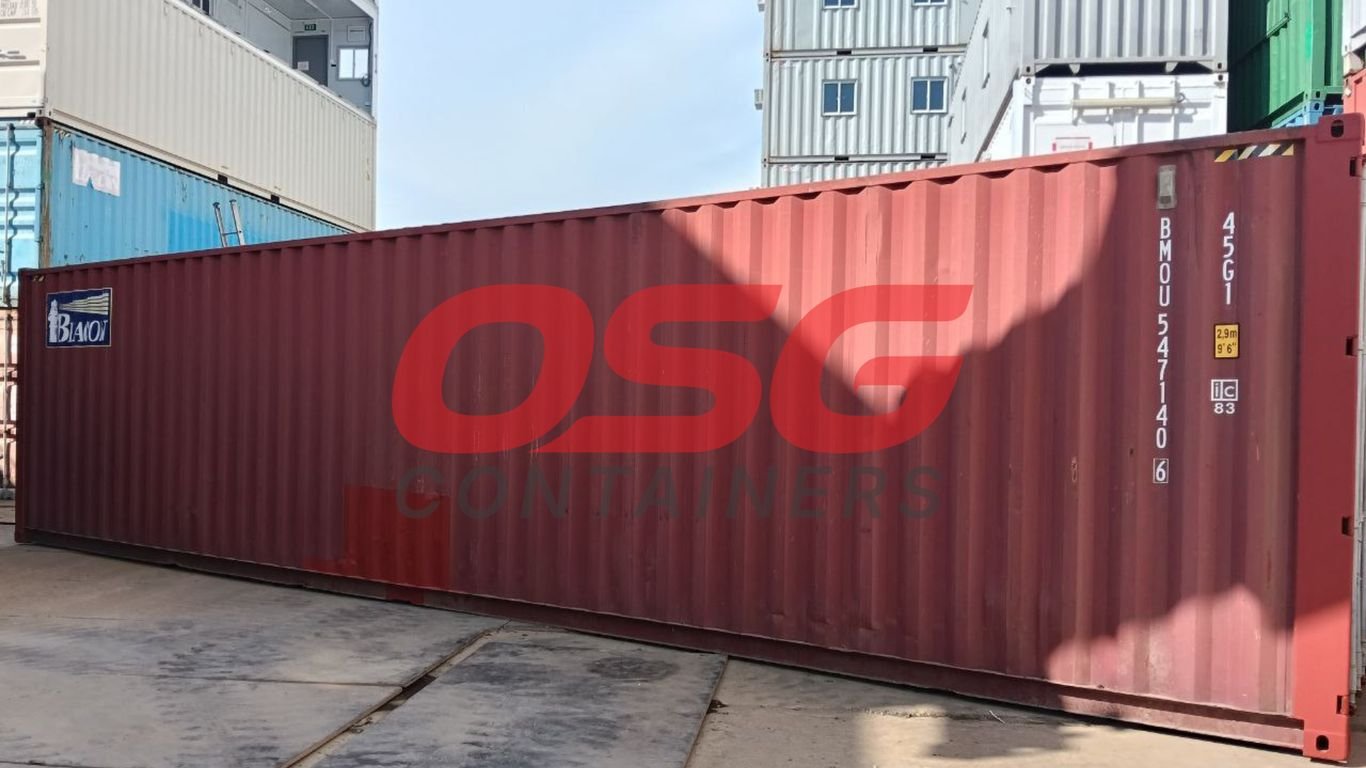
So, you’re looking into shipping containers, huh? Specifically, the big 40-foot ones. They’re everywhere in shipping, and for good reason. I’ve been digging into what makes them tick, from their size and how tough they are to why they’re such a big deal in industries. It’s not just about moving stuff from point A to point B; there’s a whole system behind these metal boxes. Let’s break down what you really need to know about the 40 ft container.
Key Takeaways
- A standard 40 ft container measures about 40 feet long, 8 feet wide, and 8.5 feet tall externally. The internal space is a bit less, and the door openings are smaller still, which is important for loading.
- High Cube 40 ft containers offer extra height, giving you more cubic capacity, which is great for bulky items, but check if your route can handle the extra height.
- These containers are built tough, usually from CorTen steel, and have special corner castings to handle stacking and securing them on ships, trains, and trucks.
- There are special types like Open-Top, Flat-Rack, and Refrigerated 40 ft containers for cargo that doesn’t fit standard boxes or needs temperature control.
- The 40 ft container is a workhorse in global shipping because it’s cost-effective for large loads, fits most infrastructure worldwide, and is a preferred size for bulk shipments.
Understanding 40 Ft Container Dimensions
Standard External and Internal Measurements
When you’re looking at shipping containers, the 40-foot size is a real workhorse. It’s a popular choice for a reason, offering a good balance of space and manageability. Externally, these containers typically measure 40 feet long, 8 feet wide, and 8.5 feet tall. That’s about 12.19 meters long, 2.44 meters wide, and 2.59 meters high. But remember, the inside space is a bit less due to the walls and floor. You’re usually looking at an internal length of around 39.5 feet, a width of about 7.7 feet, and a height of roughly 7.9 feet. It’s not a huge difference, but it’s enough to matter when you’re trying to pack things in tight.
High Cube vs. Standard Height
So, you’ve got your standard 40-footer, but then there’s the ‘High Cube’ version. The main difference? Height. Both have the same length and width, but the High Cube adds an extra foot of vertical space. This might not sound like much, but it can be a game-changer for bulky items. A standard 40 ft container has an internal height of about 7.9 feet, while a High Cube pushes that up to nearly 9 feet. This extra space is great for taller machinery or stacked goods, but it’s worth noting that High Cubes can sometimes face clearance issues on certain routes, especially under bridges or in tunnels.
| Container Type | External Height | Internal Height (Approx.) |
|---|---|---|
| Standard 40 ft | 8′ 6" | 7′ 9" |
| 40 ft High Cube | 9′ 6" | 8′ 10" |
Doorway Dimensions for Loading
This is where things can get tricky. Even if your cargo measures up fine for the internal dimensions, it still has to get through the door. The door opening on a standard 40 ft container is usually about 7 feet 8 inches wide and 7 feet 6 inches high. For a High Cube, the width stays the same, but the door height increases to about 8 feet 5 inches. Always double-check these measurements against your largest items. It’s a common mistake to assume that if it fits inside, it’ll fit through the door. A few inches can make all the difference, and it’s much better to know this before you start loading.
Planning your load requires looking beyond just the total volume. The actual entry points and internal usable space are key factors. Don’t forget to consider how your items will be arranged, as this impacts both space utilization and weight distribution.
It’s also worth remembering that a single 40ft container often provides more space and can be more cost-effective than using two 20ft containers for the same amount of goods. This efficiency is a big reason why the 40-foot size is so common in global trade.
The Robust Construction of 40 Ft Containers
These aren’t just big metal boxes; 40-foot containers are built tough to handle the rough and tumble of global shipping. They’re designed to withstand extreme weather, heavy loads, and the constant stress of being stacked high on ships and jostled around on trucks and trains. Let’s break down what makes them so durable.
CorTen Steel for Durability
The primary material used for most 40-foot containers is CorTen steel, also known as weathering steel. This isn’t your average steel. It’s designed to form a stable, rust-like appearance over time when exposed to the elements. This outer layer actually protects the steel underneath from further corrosion. Think of it like a natural shield. This means the container can handle salty sea air, rain, and sun without quickly deteriorating. It’s a smart choice for something that spends its life outdoors.
Corner Castings and Stacking Strength
Take a look at the corners of any 40-foot container, and you’ll see these chunky metal blocks. These are called corner castings, and they’re super important. They’re not just for show; they’re engineered to be incredibly strong. Each corner has openings that allow specialized locking devices (twistlocks) to secure the container to other containers, ships, or transport vehicles. This design is what allows containers to be stacked up to ten units high safely. Without these robust corner castings, the whole system of stacking and securing would fall apart.
Weather and Water Tight Integrity
When you hear ‘container,’ you probably think ‘box.’ And for good reason. A well-maintained 40-foot container is designed to be wind and water-tight. The seams are sealed, the doors have strong gaskets, and the corrugated steel walls and roof help keep everything inside dry and protected from the elements. While condensation can still be an issue inside, especially with temperature changes, the basic structure is built to keep rain and sea spray out. This is vital for protecting the cargo, whether it’s electronics, textiles, or food.
The strength of a 40-foot container comes from its smart design and the materials used. It’s a combination of strong steel, reinforced corners, and a sealed structure that allows it to perform reliably in harsh conditions, shipment after shipment.
Versatile 40 Ft Container Variants
So, you’ve got your standard 40-footer, but what if your cargo is a bit… unusual? Don’t sweat it. The shipping world has figured out some pretty neat tricks to handle all sorts of stuff. Beyond the regular box, there are specialized 40 ft containers designed for specific jobs. These aren’t just for standard goods; they’re built to solve shipping puzzles.
Open-Top for Oversized Cargo
Sometimes, things just don’t fit through a door, no matter how hard you try. That’s where the open-top container comes in. Instead of a solid steel roof, it’s got a removable tarpaulin cover and bows. This means you can load really tall items, like big machinery or construction equipment, straight down from the top using a crane. It’s a game-changer for cargo that’s too bulky for a standard cargo container. The internal dimensions are pretty much the same as a regular 40-footer, but the loading flexibility is way up there.
Flat-Rack for Out-of-Gauge Shipments
Now, what if your cargo is not just tall, but also super wide or long? Think vehicles, boats, or massive industrial parts. A flat-rack container is your answer. These have a strong floor but no fixed sides or roof. Some even have collapsible ends. This setup lets you load items that stick out way beyond the normal container shape. They’re built tough to handle heavy loads and give you the most freedom for those really awkward shipments.
Refrigerated Units for Temperature Control
Got something that needs to stay chilled or frozen? Like food, pharmaceuticals, or certain chemicals? You’ll want a reefer, or refrigerated container. These units have a built-in cooling system. While they offer precise temperature control, keep in mind that the insulation and machinery take up a bit of internal space compared to a standard container. They’re essential for keeping sensitive goods in perfect condition during their long journey.
Here’s a quick look at what makes them different:
- Open-Top: Loads from the top, great for tall items.
- Flat-Rack: No fixed sides or roof, perfect for oversized and awkward shapes.
- Refrigerated (Reefer): Built-in cooling for temperature-sensitive cargo.
Choosing the right variant means your cargo arrives safely and efficiently, avoiding costly delays or damage. It’s all about matching the container to the job.
Global Standards and Identification
ISO Compliance and Series 1 Containers
Ever wonder how a shipping container from China can end up on a truck in Kansas without a hitch? It’s all thanks to international standards, primarily those set by the International Organization for Standardization (ISO). These standards make sure containers are built to specific dimensions and can handle the rigors of global transport. The "Series 1" designation refers to the main set of standards that govern general-purpose cargo containers, the workhorses of the shipping world. These standards cover everything from the container’s size and weight ratings to how it should be tested for strength and durability. Think of it as a universal language for containers, allowing them to be handled and stacked consistently across different ports and transport modes worldwide.
CSC Plates for Safety Assurance
Safety is a big deal in shipping, and that’s where the CSC plate comes in. CSC stands for the International Convention for Safe Containers. This plate is basically a container’s ID card for safety. It’s a metal plate, usually attached near the container’s door, that provides vital information. You’ll find details like the container’s manufacturing date, its unique identification number, maximum gross weight, and its stacking strength. This plate is mandatory for any container traveling internationally and is a quick way for authorities and handlers to verify that the container is safe for transport. It’s checked regularly, and if it’s missing or outdated, the container might not be allowed to travel.
Unique Container Numbering Systems
Each shipping container has a unique identification number, kind of like a license plate for your car, but way more complex. This system, governed by ISO 6346, is crucial for tracking and managing millions of containers globally. The number is a combination of:
- An owner code: Four letters identifying the shipping line or leasing company that owns the container. This code is registered with the Bureau International des Containers (BIC).
- A serial number: Six digits that are unique to that specific container within the owner’s fleet.
- A check digit: A single digit calculated from the previous numbers, used to verify the accuracy of the entire code and prevent errors.
Sometimes, you’ll also see an "ILU code" (Intermodal Loading Unit code) used in Europe, which follows a similar format but is registered differently. This whole system allows for precise tracking from origin to destination, making logistics much smoother.
Maximizing Your 40 Ft Container Load
So, you’ve got a 40-foot container ready to go. Awesome. But how do you make sure you’re getting the most out of it without running into problems? It’s not just about stuffing as much as you can inside. There’s a bit of strategy involved, really.
Calculating Cubic Capacity
First off, you need to know how much space you actually have. A standard 40-foot container offers about 67 cubic meters (m³) of usable space. If you’re looking at a High Cube version, that bumps up to around 76 m³. It sounds like a lot, but cargo comes in all shapes and sizes, right? You can use online calculators, but basically, you’re multiplying the internal length, width, and height of the container to get that total volume. Knowing this number is your starting point for figuring out if everything will fit.
Weight Distribution and Payload Limits
This is where things can get tricky. Every container has a maximum gross weight, which is the total weight of the container and its contents. For a 40-footer, this is typically around 32,500 kg. But you also have to consider the container’s own weight (tare weight), which is usually about 3,700 kg. That leaves you with a payload capacity of roughly 28,800 kg. It’s super important not to overload it. Overweight containers can lead to hefty fines, delays, and serious safety risks. Plus, you need to spread the weight evenly. Putting all the heavy stuff on one end is a recipe for disaster during transit. Think about balancing the load from front to back and side to side.
Pallet Configuration for Efficiency
How you stack your goods, especially if they’re on pallets, makes a huge difference. For standard Euro pallets (1.2m x 0.8m), you can usually fit 24 to 25 pallets tightly packed on the floor of a 40-foot container. If you’re using US standard pallets (40" x 48"), you’re looking at about 20 to 21 per layer. Sometimes, you can even fit more if you use specialized pallet-wide containers, which can squeeze in up to 30 Euro pallets. It really depends on the exact dimensions of your pallets and how much they overhang.
Always double-check the doorway dimensions before you start loading, especially if you have large, awkward items. Just because it fits inside doesn’t mean it will make it through the door opening without a struggle.
Here’s a quick look at typical pallet fits:
- Euro Pallets (1.2m x 0.8m): 24-25 per layer
- US Standard Pallets (40" x 48"): 20-21 per layer
- Pallet-Wide Containers (Euro Pallets): Up to 30 per layer (non-ISO, but common in Europe)
Remember, these numbers are for floor loading. If you can stack items on top of pallets, you can potentially fit even more, but always be mindful of the weight limits and the container’s height.
Why the 40 Ft Container Dominates
It’s no accident that the 40-foot container is the workhorse of global shipping. When you look at the big picture, a few key things make it the go-to choice for so many businesses and industries. It really comes down to efficiency and how well it fits into the world’s shipping systems.
Economies of Scale in Shipping
Think about it: moving one big thing is usually cheaper per unit than moving lots of small things. The 40-footer hits a sweet spot where it’s large enough to carry a significant amount of goods, but not so massive that it becomes unwieldy or prohibitively expensive to move. Shipping lines can pack more cargo onto ships and trains when they’re using these standardized, larger units. This efficiency translates directly into lower costs per cubic meter or per ton compared to using two smaller 20-foot containers for the same amount of stuff. It’s a simple math problem that favors the 40-footer.
Global Compatibility with Infrastructure
This is a big one. Ports, rail yards, and trucking companies around the world are pretty much set up to handle 40-foot containers. Cranes, chassis, and even the roads and bridges in many places are designed with this container size in mind. When a ship arrives, the cranes know exactly how to grab and move a 40-footer. When it gets to land, a truck driver can easily pick it up and take it to its destination. This widespread compatibility means less hassle, fewer specialized handling requirements, and quicker turnaround times. It’s like everyone agreed on a standard size, and that makes everything run smoother.
Preferred Choice for Bulk Shipments
For many types of cargo, especially those that fill up space before they hit weight limits, the 40-footer is just the logical pick. Think furniture, electronics, or general consumer goods. These items often benefit from the larger internal volume of a 40-foot container, especially the High Cube variants which offer that extra bit of height. It allows shippers to maximize the use of the container’s space, reducing the number of containers needed and further cutting down on costs. Plus, for businesses that regularly ship large volumes, consolidating their goods into fewer 40-foot containers simplifies logistics and inventory management.
The dominance of the 40-foot container isn’t just about its size; it’s a testament to how standardization and efficiency can shape global trade. Its widespread acceptance means that planning shipments is more predictable, and the associated costs are generally lower, making it an attractive option for a vast range of industries.
Here’s a quick look at why it’s so popular:
- Cost-Effectiveness: Generally cheaper per cubic meter than two 20-footers.
- Space Utilization: Ideal for bulky items that fill volume before reaching weight limits.
- Infrastructure Fit: Designed to work with existing global port, rail, and road systems.
- Versatility: Available in standard, High Cube, and specialized versions (like reefers) to suit different cargo needs.
- Simplicity: Fewer units to manage means simpler logistics and tracking.
Wrapping It Up
So, we’ve looked at what makes a 40-foot container tick, from its tough steel shell to how much stuff it can actually hold. These big boxes are pretty much everywhere, moving everything from your new TV to parts for a factory. Knowing the difference between a standard and a high cube, or even a special type like an open-top, really helps when you’re figuring out how to get your goods from point A to point B without a hitch. It’s not just about the size, but also about making sure it’s the right kind of box for the job. Keep these details in mind, and your shipping plans should go a lot smoother.
Frequently Asked Questions
What are the main outside measurements of a standard 40-foot container?
A typical 40-foot container measures about 40 feet long, 8 feet wide, and 8.5 feet tall on the outside. Think of it as a big, strong metal box that’s designed to fit onto ships, trains, and trucks easily.
What’s the difference between a standard 40-foot container and a High Cube container?
Both are the same length and width, but High Cube containers are about a foot taller. This extra height gives you more room inside, which is great for bulky items that might not fit in a standard container.
Can I fit really large or oddly shaped items into a 40-foot container?
For items that are too tall or wide for a regular container, there are special types like Open-Top containers (which have a removable roof for crane loading) or Flat-Rack containers (which have a strong floor but no fixed sides or roof). These are perfect for things like big machinery or vehicles.
How do I know if a container is safe and ready for international shipping?
Every container has important markings. There’s an ISO code that tells you its size and type, and a CSC plate that shows it’s safe for travel and lists its maximum weight. Each container also has a unique number for tracking.
What’s the best way to pack a 40-foot container to make the most of the space?
To pack efficiently, you should know the total space inside (around 67 cubic meters for a standard one, or 76 for a High Cube) and the maximum weight it can carry. Spreading the weight evenly and arranging items carefully, like using pallets, helps prevent damage and makes loading easier.
Why are 40-foot containers so popular for shipping?
They’re a favorite because they offer a good balance of space and cost – usually cheaper per cubic meter than two smaller containers. Plus, ports and transport systems worldwide are built to handle them, making them super versatile for all sorts of goods.


