
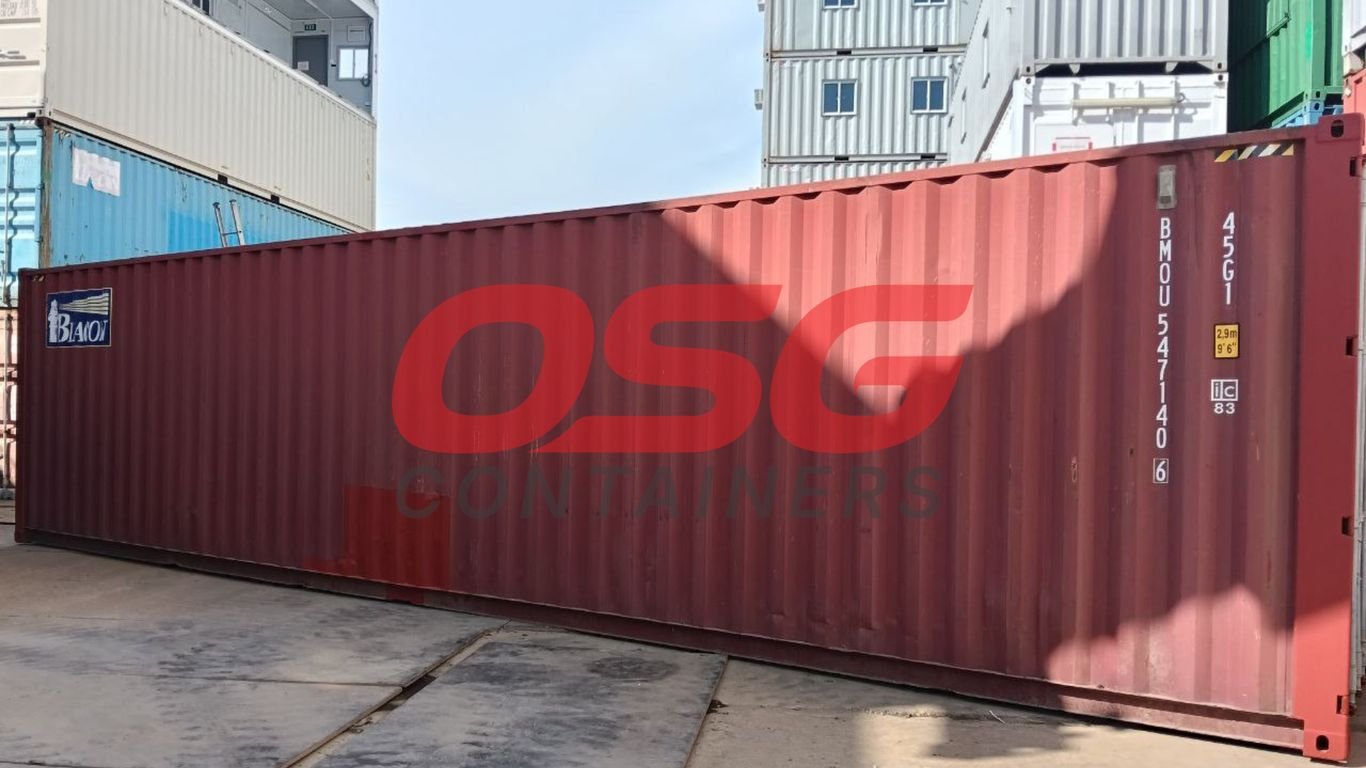
Have you ever seen those big metal boxes on ships, trains, or trucks and wondered what they’re for? Those are called ISO shipping containers, and they play a huge role in how products move around the world. From food and furniture to cars and tools, these containers help carry just about everything you can imagine. But what makes an ISO container special? Why are they used so often in shipping and storage? And did you know there are different types for different jobs? In this blog, we’ll explain what ISO shipping containers are, the different kinds you might see, and how people and businesses use them every day. Whether you’re in shipping, need extra space, or are just curious, this guide will help you understand the basics in a clear and simple way. Let’s take a closer look at these useful storage containers and why they matter.
Key Takeaways
- An ISO freight container is a standardized metal box built to specific sizes and strength rules, making it easy to move cargo globally via ships, trains, and trucks.
- Standardization means these containers fit perfectly on transport equipment, which cuts down on loading times and costs.
- There are various types of ISO freight containers, including standard dry boxes, refrigerated units for temperature-sensitive goods, and open-top or flat-rack options for awkward items.
- These containers are built tough from steel to protect your goods from weather, theft, and damage during transit or storage.
- Choosing the right ISO freight container involves looking at what you need to ship or store, the size you require, and any special features like temperature control or extra height.
Understanding ISO Freight Container Basics
So, what exactly is an ISO freight container? Basically, it’s a big metal box, but not just any box. It’s built to very specific rules set by the International Organization for Standardization (ISO). Think of it as a universal language for shipping. These rules cover everything from the exact outside dimensions to how strong the walls need to be. This standardization is a huge deal because it means a container built in China can be easily handled by a crane in Germany, loaded onto a truck in the US, and then shipped by rail across Canada, all without needing special equipment or repacking the goods inside.
What Defines an ISO Freight Container?
An ISO freight container is defined by its adherence to international standards, primarily ISO 668. This standard dictates the external dimensions, structural integrity, and other critical specifications. The goal is simple: to create a box that can be moved easily and safely between different modes of transport – ships, trains, and trucks – without fuss. This means a standard 40ft container, for example, will have consistent measurements and load-bearing capabilities no matter where it’s manufactured or where it’s going. It’s this uniformity that makes global trade flow so smoothly.
Key Features of ISO Freight Containers
These containers aren’t just simple boxes; they’re engineered for the rigors of global transport. Here are some of the main things that make them stand out:
- Standardized Dimensions: They come in set sizes, like the common 20-foot and 40-foot lengths, making them predictable for logistics planning.
- Durable Construction: Built from strong steel, they’re designed to withstand harsh weather, sea spray, and the stresses of being stacked high on ships or jostled on trains.
- Intermodal Compatibility: They feature specific corner castings and structural designs that allow them to be easily lifted, secured, and moved by cranes, forklifts, and other handling equipment used across different transport methods.
- Security: They are designed to be sealed, protecting cargo from theft and tampering during transit.
The real magic of an ISO container lies in its ability to be a ‘box’ that fits into a global system. It’s not just about the steel; it’s about the agreement between countries and companies that this box will work everywhere.
Why Standardization Matters for Shipping
Before ISO standards, shipping was a chaotic mess. Different companies used different sized containers, and goods often had to be unloaded and reloaded multiple times between ships, trains, and trucks. This was slow, expensive, and risky. Standardization changed all that. It means:
- Efficiency: Goods move faster because handling is streamlined.
- Cost Savings: Less labor is needed for transfers, and less cargo is damaged.
- Global Reach: Businesses can easily ship products anywhere in the world.
- Predictability: Planners know exactly how much space a container will take up and how much it can carry.
Without these standards, the massive volume of goods we move globally today just wouldn’t be possible. It’s the quiet backbone of international commerce.
Exploring Common ISO Freight Container Types
When you look at a busy port or a long train, you’ll see a lot of those big metal boxes. They all look pretty similar, but they’re actually designed for different jobs. These aren’t just generic boxes; they’re specific type containers built to handle all sorts of cargo. Let’s break down the most common ones you’ll run into.
Standard Dry Storage Containers
These are your everyday workhorses. Think of them as the default option for shipping most kinds of goods that don’t need special temperature control or handling. They’re fully enclosed, keeping your stuff safe from rain, wind, and dust. You’ll see them in various lengths, usually 20 or 40 feet, and they’re great for everything from furniture and electronics to packaged food items and general merchandise. They’re the most common type of ISO container for a reason: they’re versatile and reliable.
Refrigerated Containers for Temperature Control
Got something that needs to stay cold, like fresh produce, medicines, or certain chemicals? That’s where refrigerated containers, or ‘reefers,’ come in. These units have built-in refrigeration systems that can keep cargo at a consistent temperature, sometimes well below freezing. They need a power source, which they get from the ship, truck, or terminal. They’re pretty essential for industries dealing with perishable goods.
Open Top and Flat Rack Options
Sometimes, cargo just doesn’t fit neatly into a standard box. For those situations, you’ve got open-top and flat-rack containers. Open-top containers don’t have a solid roof; instead, they’re covered with a heavy-duty tarp. This makes loading tall items or machinery from above, using a crane, much easier. Flat racks are even more open, often just having a base and ends, with no sides or a roof. They’re perfect for really bulky or heavy items like construction equipment, vehicles, or large pipes that need to be loaded from the side or top and secured directly to the frame.
Here’s a quick look at some common specs:
| Container Type | Length (External) | Width (External) | Height (External) | Notes |
|---|---|---|---|---|
| Standard Dry Storage | 20 ft / 40 ft | 8 ft | 8.6 ft | General cargo, weather-protected |
| Refrigerated (Reefer) | 40 ft | 8 ft | 8.6 ft | Temperature controlled (-30°C to +30°C) |
| Open Top | 20 ft / 40 ft | 8 ft | 8.6 ft | Top loading, for oversized items |
| Flat Rack | 20 ft / 40 ft | 8 ft | 8.6 ft | Open sides, for heavy/awkward cargo |
Choosing the right container type is more than just picking a box; it’s about ensuring your goods arrive safely and efficiently. The variety of ISO containers means there’s a solution for almost any shipping challenge, from delicate perishables to massive industrial equipment.
Specialized ISO Freight Container Variations
Beyond the standard boxes, there are some pretty neat ISO container types designed for specific jobs. Think of them as the Swiss Army knives of shipping. They handle stuff that regular containers just can’t.
Shipping ISO Tank Containers
These aren’t your typical rectangular boxes. ISO tank containers are built for liquids, gases, and chemicals. They feature a strong cylindrical tank fitted inside a standard ISO frame. This design makes them super safe and durable for moving all sorts of fluids. Because they’re designed for multi-modal transport, you don’t have to worry about transferring your cargo between different containers when switching from ship to truck, which saves a lot of hassle and potential spills.
High Cube Containers for Bulky Items
If you’ve got a lot of stuff that isn’t super heavy but takes up a lot of space, like furniture or textiles, a high cube container is your friend. They’re basically the same length and width as a standard container, but they’re about a foot taller. This extra height gives you more room without adding a ton of weight. They’re a popular choice for industries that ship large volumes of lighter goods. A 40ft container in high cube spec gives you that extra vertical space.
Modified Containers for Unique Applications
This is where things get really interesting. ISO containers are incredibly adaptable. Beyond just shipping, they get modified for all sorts of uses. You’ll find them turned into pop-up shops, temporary offices, workshops, and even homes. People repurpose them for all kinds of projects, sometimes for eco-friendly building. It just goes to show how versatile these steel boxes really are. If you’re looking for a more budget-friendly option for a project, you might even find used shipping containers for sale that can be adapted.
The adaptability of ISO containers means they’re not just for moving goods from point A to point B. They can be transformed into functional spaces, offering a cost-effective and durable solution for temporary or even permanent structures. This repurposing trend highlights a growing awareness of sustainability and creative problem-solving in logistics and beyond.
Here’s a quick look at some common specialized types:
- Tank Containers: For liquids, gases, and chemicals.
- High Cube Containers: Offer extra height for bulky, lighter goods.
- Modified Containers: Repurposed for offices, homes, workshops, and more.
Key Dimensions and Specifications
When you’re looking at ISO freight containers, understanding their size and weight limits is pretty important. It’s not just about picking the biggest one; it’s about matching the container’s specs to what you’re shipping. These containers are built to very specific standards, which is why they can be moved around the world so easily.
Standard ISO Freight Container Sizes
ISO containers come in a few standard lengths, but the width and height are usually the same across the board for most common types. This uniformity is what makes them so easy to stack and handle on ships, trains, and trucks. The most common lengths you’ll see are 20-foot and 40-foot, but there are others too.
Here’s a quick look at the typical external dimensions:
| Container Type | Length (External) | Width (External) | Height (External) |
|---|---|---|---|
| 20ft Standard | 20 ft (6.06 m) | 8 ft (2.44 m) | 8.6 ft (2.59 m) |
| 40ft Standard | 40 ft (12.19 m) | 8 ft (2.44 m) | 8.6 ft (2.59 m) |
| 40ft High Cube | 40 ft (12.19 m) | 8 ft (2.44 m) | 9.6 ft (2.89 m) |
| 40ft Reefer (40′) | 40 ft (12.19 m) | 8 ft (2.44 m) | 8.6 ft (2.59 m) |
Keep in mind that "High Cube" containers are just a bit taller, giving you more room for lighter, bulkier stuff. Standard widths are almost always 8 feet, which is key for stacking.
Understanding Payload and Capacity
Beyond just the outside measurements, you need to know what the container can actually hold. This breaks down into two main things: payload and cubic capacity.
- Payload: This is the maximum weight of cargo the container is rated to carry. It’s usually listed as "Max Gross Weight" (the total weight of the container and its cargo) and "Tare Weight" (the weight of the empty container). Your payload is the difference between these two.
- Cubic Capacity: This tells you the volume of space inside the container, usually measured in cubic meters (m³) or cubic feet (ft³). It’s important for figuring out if all your goods will fit.
For example, a standard 20ft container might hold around 33 cubic meters and have a maximum payload of about 28,000 kg. A 40ft High Cube will give you more volume, maybe around 76 cubic meters, but the payload might be similar to a standard 40ft container.
Container Markings and Identification
Every ISO container has a bunch of markings on it, and they’re not just for show. These markings tell you a lot about the container and help keep track of it.
- Container Number: An 11-character code (like ABCU1234567) that uniquely identifies the container. It includes an owner code, a category identifier (usually ‘U’ for freight containers), a serial number, and a check digit to make sure the code is correct.
- CSC Plate: This is a metal plate, usually near the doors, that stands for "Convention for Safe Containers." It shows important safety information like the date of manufacture, maximum gross weight, and approval details.
- Size and Type Code: A four-character code (e.g., 45G1) that tells you the container’s dimensions and type (like 40ft High Cube Dry).
- Weight Markings: These clearly state the maximum gross weight, tare weight, and net weight (payload).
These markings are standardized globally. They ensure that anyone handling the container, from the port to the shipping line, knows exactly what it is, how much it can carry, and that it meets safety standards. It’s all about making sure things move smoothly and safely.
Knowing these details helps you pick the right container and avoid problems down the line. It’s like having a cheat sheet for your cargo!
Choosing the Right ISO Freight Container
So, you’ve learned about the different types and sizes of ISO containers, but how do you actually pick the one that’s going to work best for you? It might seem a little daunting with all the options out there, but really, it just comes down to asking yourself a few key questions. Think of it like picking out a tool for a specific job – you wouldn’t use a hammer to screw in a bolt, right? Same idea here.
Identifying Your Container’s Purpose
First things first, what exactly are you going to do with this container? This is the biggest question, and it helps narrow down your choices real fast. Are you shipping goods across the ocean? Or maybe you just need a secure spot to store equipment at your worksite? Or perhaps you’re thinking about turning it into something else entirely, like an office or a workshop?
- Transport: If your main goal is moving items from point A to point B, especially over long distances, you’ll want to focus on containers built for that journey. Standard dry containers are great for most things, but if you’re moving food or medicine, a refrigerated container (reefer) is a must.
- Storage: Need a place to keep tools, materials, or inventory safe and sound? A used container can be a really budget-friendly option here. They’re tough and weatherproof, perfect for keeping things protected.
- Modification: Got a creative idea? Maybe a pop-up shop, a backyard studio, or even a small home? Containers that are easier to work with, like high-cube models or those with side doors, might be a better starting point.
Figuring out the primary use case is the most important step. It helps you avoid looking at containers that just won’t fit your needs, saving you time and potential headaches down the line.
Selecting the Appropriate Size
Once you know why you need a container, you can think about how much space you need. The most common sizes you’ll hear about are 20-foot and 40-foot. But don’t forget there are other options too.
| Container Size | Typical Use Cases |
|---|---|
| 10ft | Small storage needs, tight spaces |
| 20ft | General cargo, easy transport, common for storage |
| 40ft | Bulk cargo, large storage needs, more space per foot |
| 40ft High Cube | Taller items, maximizing vertical space |
If you’re moving a lot of stuff or need significant storage space, a 40-footer usually gives you the most bang for your buck in terms of volume. But if you’re working with limited space or just have a smaller load, a 20-foot or even a 10-foot container might be just right. Always measure your cargo or estimate your storage needs carefully before deciding.
Considering Special Features and Needs
Beyond just size and purpose, think about any specific requirements your cargo or project might have. These details can make a big difference in how well the container serves its function.
- Temperature Control: Perishable goods? You’ll need a reefer. These units have built-in refrigeration systems to keep your items at a precise temperature.
- Ventilation: Some goods need airflow to prevent spoilage or moisture buildup. Ventilated containers offer a solution for this.
- Access: Do you need to load or unload from the side? Side-door containers offer much easier access in certain situations compared to the standard end doors.
- Durability: If the container will be in a harsh environment or needs to withstand rough handling, look for reinforced steel or specific weather-resistant coatings.
- Portability: If you plan on moving the container frequently, especially to tricky locations, consider how it will be lifted and positioned. Some specialized handling equipment or systems can make this much simpler and safer.
The Advantages of Using ISO Freight Containers
So, why are these steel boxes so popular for moving stuff around the world? It really comes down to a few big things that make life easier for pretty much everyone involved in shipping and storage. They’re built tough and fit into a global system that just works.
Efficiency in Global Transport
Think about it: these containers are designed to be swapped between ships, trains, and trucks without a fuss. Because they all follow the same size and fitting rules, loading and unloading takes way less time. This means less waiting around at ports and depots, which speeds up the whole journey of your goods. It’s like a universal language for cargo handling.
- Intermodal Travel: Easily move cargo from a ship to a train, then to a truck, all in the same container.
- Reduced Handling: Less need to unpack and repack goods, saving time and labor costs.
- Global Compatibility: Standard fittings mean they work with cranes, forklifts, and chassis worldwide.
Durability and Security Features
These containers are basically metal fortresses for your stuff. Made from strong steel, they can handle rough weather, bumpy rides, and the general wear and tear of long-distance travel. Plus, they’re designed to be pretty secure, with lockable doors that make it tough for anyone to get to your cargo without permission.
When you’re shipping valuable items or sensitive materials, knowing they’re protected from the elements and potential theft is a huge relief. It’s not just about getting things from point A to point B; it’s about getting them there in the same condition they left.
Cost-Effectiveness Over Time
While buying or renting a container is an upfront cost, they really pay for themselves over time. Their durability means they last for years, often decades, with minimal upkeep. This means you’re not constantly buying new ones. Plus, the efficiency gains in transport and storage directly translate into lower operational expenses. They’re a reusable asset that keeps on giving.
| Aspect | Benefit |
|---|---|
| Lifespan | Typically 15-25 years with basic care |
| Maintenance | Low, designed for harsh conditions |
| Reusability | Hundreds of transport cycles or long-term storage |
| Operational Cost | Reduced labor, time, and replacement expenses |
Wrapping It Up
So, we’ve gone over the different sizes and types of ISO containers out there, and what goes into picking the right one for your needs. It’s pretty clear these metal boxes are a big deal for moving stuff around, whether it’s across the ocean or just to a job site. They’re built tough, they fit pretty much anywhere in the global shipping system, and there’s a type for almost any kind of cargo. Choosing wisely means your goods stay safe, you save some money, and things just run smoother. It’s not just about picking a box; it’s about making sure your logistics are solid. Now you’ve got a better idea of what to look for, so you can make a choice that works for you.
Frequently Asked Questions
What does ‘ISO’ mean for shipping containers?
ISO stands for the International Organization for Standardization. They create worldwide rules for things like container size and strength. This means containers made anywhere can fit onto ships, trucks, and trains anywhere else in the world, making shipping much simpler.
Why are ISO containers so strong?
These containers are built tough using strong, weather-resistant steel. They’re made to handle rough seas, hot sun, and being moved around a lot. They can last for many years, often 15 to 25 years, with just a little care.
Are ISO containers safe from theft?
Yes, they are very secure. Most have strong double doors with special locks. You can even add extra locks or security systems. This makes them great for keeping valuable items safe, even in remote places.
Can I use an ISO container for something other than shipping?
Absolutely! People use them for all sorts of things. They’re great for extra storage, making temporary offices, workshops, or even unique homes. They can be easily changed with windows, doors, and insulation.
What are the most common sizes for ISO containers?
The most popular sizes are 20 feet and 40 feet long. You can also find 10-foot containers for smaller needs or 45-foot ones for really big loads. They all have the same standard width and height, making them easy to stack and move.
What’s the difference between a standard container and a ‘High Cube’ container?
A ‘High Cube’ container is basically a standard container that’s about one foot taller. This extra height is perfect for shipping items that are bulky but not super heavy, like furniture or lots of textiles. It gives you more space without adding much more weight.


