
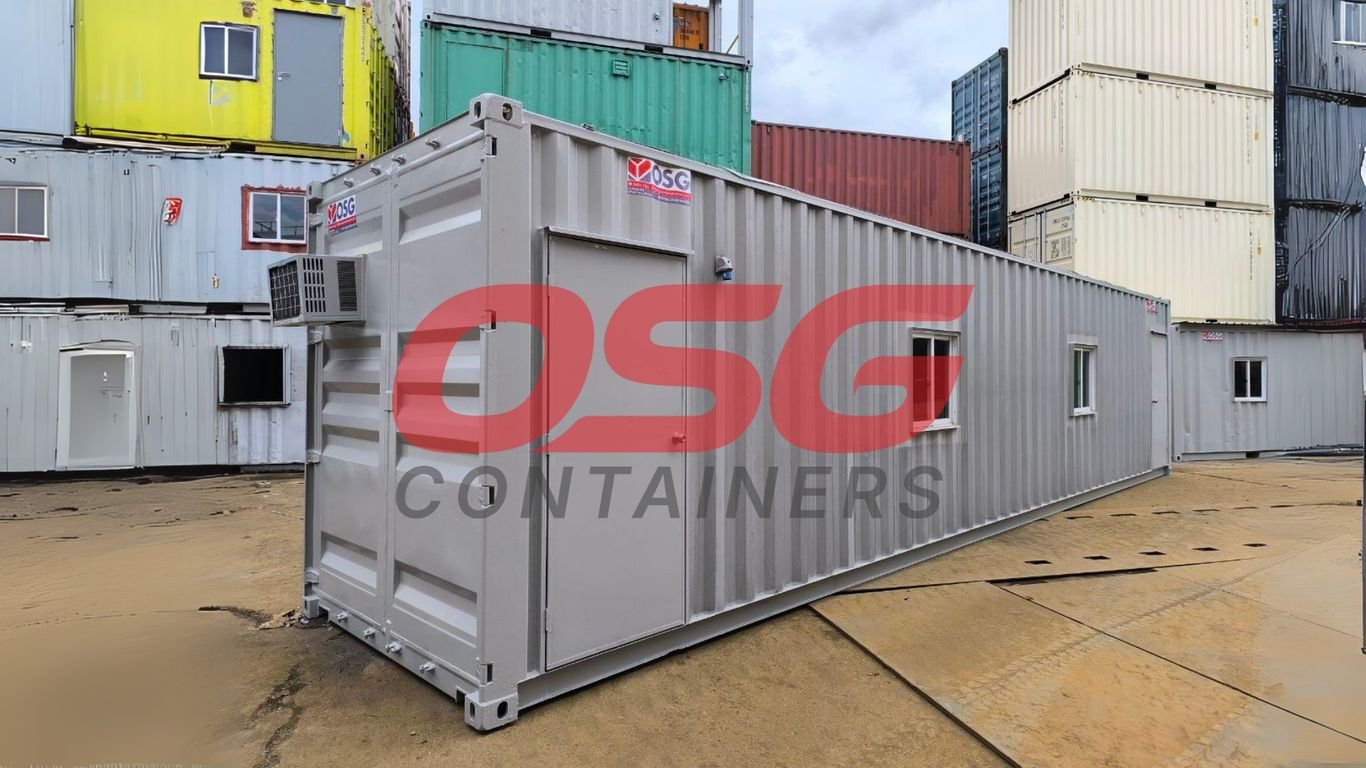
You see them everywhere, right? Those big metal boxes stacked on ships, trains, and trucks. They’re called intermodal containers, and honestly, they’re the real MVPs of getting stuff from point A to point B, especially when those points are on different continents. Without these standardized workhorses, the way we shop, the way businesses operate, and pretty much the entire global economy would look wildly different – and probably a lot more complicated.
Key Takeaways
- Intermodal containers are the backbone of global trade, allowing goods to move between ships, trains, and trucks without needing to be unpacked and repacked.
- Their standardized sizes and durable build make international shipping predictable and more affordable, supporting everything from manufacturing to e-commerce.
- Key benefits include reduced handling, which means less damage and theft, faster transit times, and a more environmentally friendly way to move goods compared to solely relying on trucks.
- New technologies like smart sensors are being added to containers, giving real-time tracking and condition monitoring for better visibility and efficiency.
- Despite challenges like infrastructure issues and coordination complexities, intermodal containers continue to be vital for building resilient and efficient supply chains worldwide.
The Indispensable Role of Intermodal Containers in Global Trade
Powering Global Commerce and Manufacturing
Think about all the products you use every day. From the phone in your pocket to the clothes you wear, a huge number of them have traveled a long way before reaching you. Intermodal containers are the reason this global movement is even possible without costing an arm and a leg. These big, tough metal boxes are designed so they can be moved between ships, trains, and trucks without anyone needing to unpack and repack the stuff inside. It’s like a universal language for moving cargo.
This ability to switch transport modes easily is a game-changer for manufacturing. It makes getting parts to a factory exactly when they’re needed, a concept known as just-in-time manufacturing, much more reliable. Factories can keep less inventory on hand, saving space and money, because they know components will arrive on schedule. This smooth flow is a big deal for keeping production lines running without a hitch.
Facilitating E-Commerce Expansion
Online shopping has really taken off, hasn’t it? Intermodal containers are a huge part of why that happened. Before these standardized boxes, shipping items across the country, let alone overseas, was a slow and costly affair. Now, a container can be packed at a warehouse and then travel by truck to a train, then onto a ship, and finally back onto a truck to reach a distribution center or even a customer’s doorstep. This efficiency means businesses can reach customers far beyond their local area, making it possible to sell products globally. It’s why you can order something from another continent and have it arrive in a week or two.
Connecting Global Supply Chains
Before intermodal containers, moving goods between different types of transport was a messy, labor-intensive process. Every time a shipment changed from a ship to a train, or a train to a truck, workers had to manually unload, sort, and reload everything. This took a lot of time, cost a lot of money, and increased the chances of things getting damaged or lost.
The introduction of standardized containers changed all that. These boxes are built to specific dimensions, meaning they fit perfectly onto specialized equipment on ships, trains, and trucks. This global standardization means a container packed in Shanghai can be easily transferred to a train in Rotterdam or a truck in Chicago.
Here’s a look at why this standardization is so important:
- Universal Fit: Containers are designed to interlock and stack securely on various transport modes.
- Reduced Handling: Goods stay sealed inside from origin to destination, minimizing damage and theft.
- Predictable Movement: Standard sizes allow for efficient planning and scheduling of transport.
The simplicity of a standardized steel box moving across continents and oceans, without constant unpacking and repacking, is the quiet engine driving much of the world’s commerce. It’s a system that allows businesses to operate on a global scale with a level of predictability and cost-effectiveness that was unimaginable just a few decades ago. This efficiency directly impacts the prices consumers pay and the availability of goods worldwide.
Understanding the Mechanics of Intermodal Container Transport
Seamless Integration Across Transport Modes
So, how does all this container stuff actually work? It’s pretty neat, really. The whole idea behind intermodal transport is that your goods get packed into one of those big metal boxes – think standard 20-foot or 40-foot containers – and that box just moves from one type of vehicle to another without anyone having to open it up and mess with the stuff inside. It’s like a giant Lego brick for shipping. You’ve got trucks for the short trips from the factory to the rail yard or port, then massive ships or trains for the long hauls across countries or oceans, and then back to trucks for the final delivery. The container itself is the constant, the thing that makes switching between ships, trains, and trucks so much easier. This avoids all the time and hassle of unloading and reloading, which also means less chance of things getting dropped or broken.
Global Standardization for International Trade
This whole system relies heavily on everything being a standard size and shape. You see, these containers aren’t just random boxes. They’re built to very specific international standards. This means a container loaded in Shanghai will fit perfectly onto a crane in Rotterdam, and then onto a train heading to Warsaw. It’s this global agreement on dimensions and fittings that makes international shipping predictable. Without it, each port or country might have different equipment, and moving goods would become a logistical nightmare. Imagine trying to fit a square peg into a round hole, but for giant shipping boxes – it just wouldn’t work on a global scale.
The Simplicity of Standardized Cargo Movement
Think about it: before containers, people had to load individual crates, barrels, or sacks onto ships. It was slow, labor-intensive, and prone to damage. Now, with containers, you just lift the whole box. This standardization simplifies everything. It means ports can invest in specialized cranes and equipment that handle these standard containers efficiently. It also means that the planning for moving goods becomes much more straightforward. You know the dimensions, you know the weight limits, and you know it will fit on the next mode of transport. It’s this predictable, repeatable process that underpins the massive flow of goods we see around the world today.
The core principle is that the cargo stays put inside its protective shell from origin to destination. This single unit of transport, the container, is what allows for the smooth handoffs between different transportation networks, making global trade flow much more smoothly than it ever could otherwise.
Here’s a quick look at the typical journey:
- Origin: Goods are packed into a container at a factory or warehouse.
- First Mile: A truck picks up the container and takes it to a rail yard or port.
- Long Haul: The container is loaded onto a train or a ship for the main part of its journey.
- Last Mile: Another truck picks up the container from the rail yard or port and delivers it to its final destination.
It’s this multi-stage, multi-modal approach, all centered around the standardized container, that makes modern logistics tick.
Key Benefits Driving Intermodal Container Adoption
So, why are these big metal boxes so popular in shipping? It really comes down to a few major advantages that make moving goods around the world a lot easier and cheaper. Think of it as the backbone that keeps everything moving smoothly.
Reduced Handling and Enhanced Security
Before containers became the norm, goods were handled a lot. Imagine unloading a truck, then loading it onto a ship, then unloading it again at the other end, and so on. Each time something is moved, there’s a chance it could get damaged, lost, or even stolen. Containers changed that. Once your stuff is packed inside, the container is sealed up tight. It usually doesn’t get opened again until it reaches its final stop. This drastically cuts down on those risks. It’s like putting your valuables in a secure vault that travels with you.
- Less chance of items being dropped or broken.
- Significantly lower risk of theft or tampering.
- Peace of mind knowing your cargo is protected.
The simplicity of keeping goods sealed within a standardized unit from origin to destination is a game-changer for protecting cargo and reducing losses.
Faster Transit Times and Cost-Effectiveness
It might sound odd, but handling things less actually makes them move faster. Instead of workers carefully moving individual boxes, big cranes and forklifts can just pick up and move entire containers. This speeds things up a lot at ports and transfer points. Plus, containers are designed to stack neatly on ships and trains, meaning more cargo can be moved at once. This efficiency translates directly into lower costs. You’re not paying for as much labor, and you’re using transport modes like trains and ships that are generally cheaper for long distances than trucks alone.
| Transport Mode | Cost per Ton-Mile (Relative) |
|---|---|
| Truck | High |
| Rail | Medium |
| Ship | Low |
Environmental Sustainability Through Efficient Transport
Using intermodal containers also helps the planet. When goods travel by train or ship for long distances, they use less fuel per item compared to if they were all moved by trucks. This means fewer emissions are released into the air. By consolidating shipments and using these more efficient modes, the overall carbon footprint of moving goods gets smaller. It’s a win-win: businesses save money, and we all benefit from cleaner air.
Innovations Shaping the Future of Intermodal Containers
The world of shipping container logistics is moving faster than ever. Companies are rethinking how a 20ft container or a 40 ft container isn’t just a metal box anymore—it’s turning into a tool packed with new ideas. Below, let’s look at some of the big changes shaking up container transport right now.
Technological Advancements in Tracking and Monitoring
Shipping containers are plugged into global data systems like never before. Smart tracking devices, powered by IoT technology, let operators know exactly where each container is and what’s happening inside it.
Key tech driving this shift includes:
- Real-time GPS for pin-point location details
- Sensors checking for temperature, humidity, and even signs of tampering
- Connected apps sending alerts if there’s a delay, accident, or weather issue
You wouldn’t expect a 20ft container full of electronics or a 40 ft container loaded with frozen foods to disappear, but mix-ups and theft still happen. This tech is helping solve that, step by step.
Smart Containers for Real-Time Visibility
"Smart containers" take things further. These are shipping containers with built-in digital brains—meaning they don’t just get tracked, they talk back. They can:
- Alert operators instantly if doors are opened unexpectedly
- Monitor cargo conditions, so goods that need steady temperatures stay safe
- Use blockchain to log every stop, ensuring transparency
Here’s a quick comparison:
| Feature | Standard Container | Smart Container |
|---|---|---|
| GPS Location | No | Yes |
| Condition Monitoring | No | Yes |
| Tamper Alerts | No | Yes |
| Blockchain Logging | No | Yes |
Many companies now see smart containers as an investment, not an extra expense. Keeping cargo safe and in top shape pays for itself, especially with high-value goods and tight timelines.
Sustainable Practices and Eco-Friendly Designs
Sustainability is pushing its way to the front. Intermodal containers are getting greener with every generation. Some changes are pretty simple, like lighter materials that cut down on fuel use, but others are more radical:
- Containers made from recycled steel or even bio-based materials
- Energy-efficient designs to make them easier to stack and move
- Modular containers that break down for reuse or easy repair
- Smart routing that uses fewer trips and burns less fuel
A lot of new shipping containers are coming off the line with advanced coatings that fight off rust and damage—so they last longer and need less maintenance.
| Sustainability Upgrade | Main Benefit |
|---|---|
| Lighter container materials | Lower fuel consumption |
| Eco-friendly coatings | Fewer repairs required |
| Modular, reusable construction | Less waste |
| Efficient loading designs | More cargo per trip |
Upgrades in container design and data tech don’t just streamline logistics—they help move global trade one step closer to being responsible, efficient, and transparent.
Addressing Challenges in Intermodal Logistics
While intermodal containers are fantastic for moving goods around the world, it’s not always a smooth ride. Think of it like a relay race; each runner has to pass the baton perfectly for the team to win. In logistics, that baton is the container, and the runners are different modes of transport like trucks, trains, and ships. When one part of the chain stumbles, the whole thing can get delayed.
Navigating Coordination and Contractual Complexities
Getting different companies, each with their own schedules and rules, to work together perfectly is a big hurdle. You’ve got trucking companies, rail operators, and ocean liners, all needing to sync up. If a train is late, the truck waiting at the terminal might miss its slot, and then the ship sails without the cargo. It gets complicated fast, especially when you’re dealing with multiple contracts and different service agreements. Keeping everyone on the same page requires serious communication and planning.
Overcoming Infrastructure Bottlenecks and Terminal Delays
Ports and rail yards are like busy intersections. Sometimes, they get jammed up. Too many ships waiting to dock, not enough cranes to unload containers, or even just a shortage of chassis to move containers away from the port can cause major slowdowns. These bottlenecks mean containers sit around longer than they should, eating up time and money. It’s like being stuck in traffic when you’re already running late.
Ensuring Visibility and Compliance Across Multiple Carriers
Knowing exactly where your container is at any given moment can be surprisingly tricky. When your shipment changes hands from a truck to a train to a ship, it can be hard to track. Each carrier might use a different system, and getting a clear, unified view of the entire journey is a challenge. Plus, different countries and different transport modes have their own rules and regulations to follow. Making sure everything is compliant at every step adds another layer of complexity.
The reality is that the efficiency of intermodal transport hinges on the smooth handoff between different legs of the journey. When these handoffs falter due to poor coordination, infrastructure issues, or a lack of clear information, the benefits of using containers across multiple modes can quickly diminish. Finding ways to smooth out these transitions is key to making intermodal work as well as it possibly can.
The Evolution and Future of Container Logistics
Digitalization Transforming Intermodal Operations
Think about how much things have changed. We’ve gone from just stacking boxes on ships to a world where each cargo container is practically a data hub. Sensors are now common, telling us exactly where a container is, its temperature, and if anyone’s messed with it. This constant stream of information means fewer surprises. Everyone involved, from the folks sending the goods to the ones receiving them, can make smarter choices and react faster if something unexpected happens. It really smooths out the whole process.
Building Resilient Supply Chains with Adaptable Solutions
These metal boxes aren’t just getting smarter; they’re also getting tougher and more adaptable. New materials mean they’re lighter but just as strong, which helps cut down on fuel use. Some are even looking at coatings that can fix themselves, which sounds wild but could mean containers last much longer. Designs are also being tweaked to fit more stuff inside while still working perfectly with ships, trains, and trucks. It’s all about making them work better and last longer.
The Ongoing Importance of Intermodal Containers
So, how do these boxes help the planet? By making shipping more efficient, they naturally cut down on waste and energy use. When goods are packed tightly into standardized containers, there’s less wasted space on ships and trains. This means fewer trips are needed, cutting down on fuel use and emissions. Plus, the push for lighter materials and smarter routes, thanks to tracking tech, all adds up to a smaller carbon footprint. It’s a big step towards making global trade a bit kinder to the environment.
The simple intermodal cargo container is set for a dynamic development as the globe embraces digitization and sustainability. We’re looking beyond today to see what possibilities exist for these common boxes to get even smarter, greener, and more vital to international trade.
The Unseen Workhorses of Our World
So, when you think about it, these big metal boxes, the intermodal containers, are really doing a lot of heavy lifting for global trade. They’ve made it possible for us to get pretty much anything we want, from anywhere, without a huge fuss. They connect factories to stores, and ultimately, us to the products we need. As technology keeps changing things, these containers are going to keep adapting too, staying central to how goods move around the planet. They might just be boxes, but they’re the boxes that keep the world economy moving.
Frequently Asked Questions
What exactly is an intermodal container?
Think of an intermodal container as a big, super strong metal box. The cool thing is, it’s designed to be moved between different types of transport, like ships, trains, and trucks, without anyone needing to take the stuff out and repack it. It’s like a universal shipping box that makes moving goods all over the world much easier.
Why are these containers so important for global trade?
These containers are like the workhorses of international shipping. Because they can be easily moved between ships, trains, and trucks, they make it way faster and cheaper to send products between countries. This helps businesses sell things all over the world and allows us to buy products made in faraway places.
How do containers help make shipping faster and cheaper?
Since the goods stay packed inside the same container from start to finish, there’s a lot less work involved. Workers don’t have to unload and reload everything every time it switches from a ship to a train, or a train to a truck. This saves a lot of time and money, and also means less chance of things getting damaged or lost.
Are there different kinds of intermodal containers?
Yes, there are! While many are just standard boxes for general stuff like clothes or electronics, there are special ones too. For example, ‘reefer’ containers keep food or medicine cold, and others are designed to carry liquids or things that are too tall to fit in a regular box.
How do new technologies help intermodal containers?
Nowadays, many containers have cool tech like GPS trackers. This means we can see exactly where they are at all times, almost like tracking a package you ordered online, but for huge shipments! Some also have sensors to check the temperature inside, making sure delicate items stay safe during their long journeys.
Are intermodal containers good for the environment?
They can be! When goods are moved by train or ship, it’s usually better for the environment than sending everything by truck. Because containers make it easy to use trains and ships for the long parts of the journey, they help reduce pollution and save fuel compared to other ways of shipping.


