
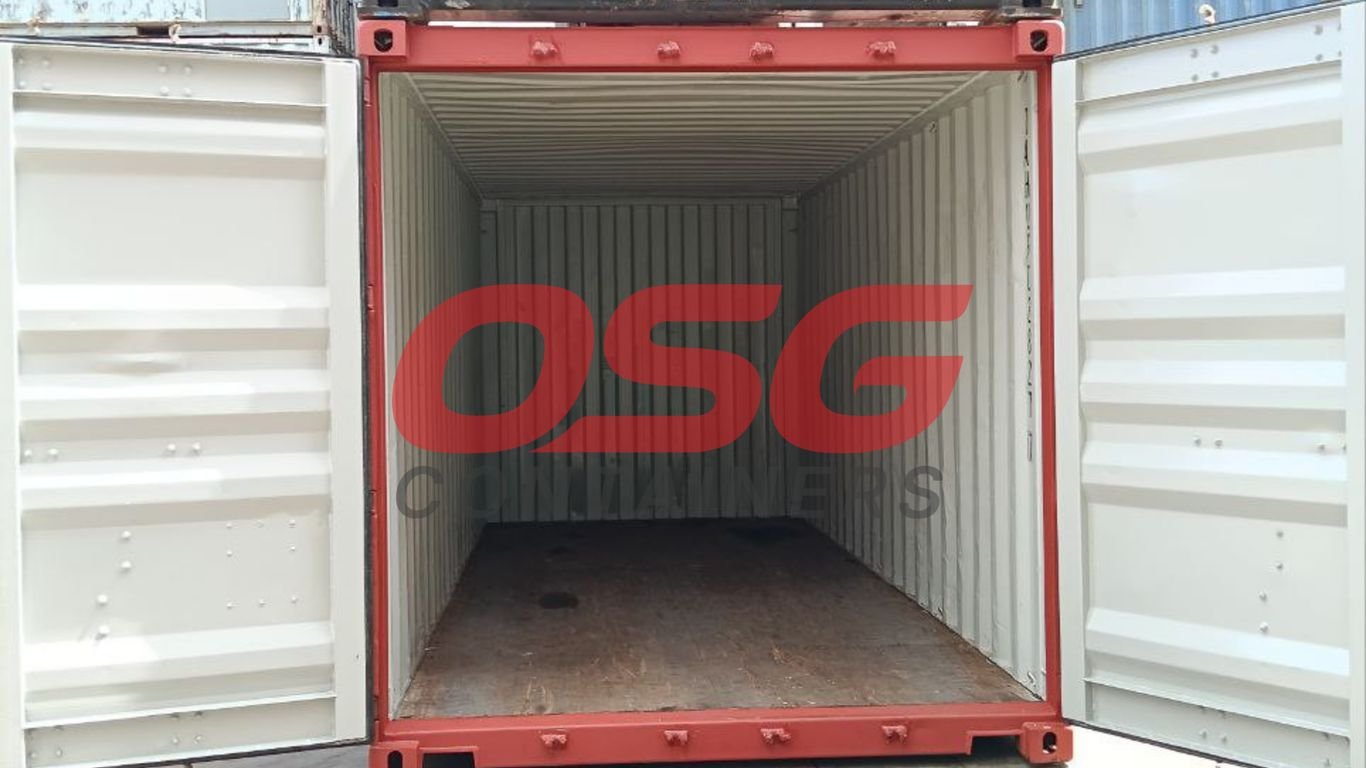
When you’re moving stuff, sometimes the regular boxes just don’t cut it. Maybe your cargo is super tall, really awkward, or just plain too big to slide through a normal door. That’s where special containers come in. Today, we’re going to talk about one of those options: the open top container. It’s a bit different from your standard shipping box, and it’s designed for some pretty specific jobs. Let’s break down what makes it useful and when you might need one.
Key Takeaways
- An open top container is basically a shipping container without a solid roof, usually covered by a tarp or a removable hard top. This design is all about making loading easier from above.
- These containers are fantastic for cargo that’s too tall or oddly shaped to fit through the doors of a standard container. Think big machinery or construction materials.
- Loading an open top container is typically done using cranes or hoists, which is common on many industrial and construction sites. This makes moving heavy stuff much more efficient.
- While the top is open for loading, it can be covered with a tarp or hard top to protect the cargo from the weather once it’s inside.
- Open top containers are best suited for heavy industry, construction, and situations where you need to load bulky items vertically, but they aren’t the best choice for general storage due to their open nature.
Understanding the Open Top Container
Defining the Open Top Container
So, what exactly is an open top container? Think of it as a standard shipping container, but with one major difference: the roof is gone. Instead of a solid metal top, you’ve got an open space that’s typically covered by a heavy-duty tarpaulin or a removable hard top. This design isn’t just for show; it’s specifically made for cargo that just won’t fit into a regular container. We’re talking about stuff that’s too tall, too bulky, or just shaped in a way that makes loading through standard end doors impossible.
Key Features of Open Top Containers
These containers have a few standout features that set them apart:
- Open Roof: The most obvious feature is the lack of a fixed roof. This allows for vertical loading from above.
- Tarpaulin Cover: Most open tops come with a durable, waterproof tarpaulin that can be secured over the top. This provides protection from the elements when the cargo is within the standard height limits.
- Reinforced Lashing Points: You’ll find extra strong tie-down points, often called lashing rings or pad-eyes, both inside and along the top edges. These are vital for securing the cargo and the tarpaulin.
- Removable Top Header: The top door frame piece can often be removed, which helps when loading oversized cargo that might otherwise hit the frame.
- Standard Sizes: Like their closed-top cousins, open tops usually come in 20-foot and 40-foot lengths, and sometimes in high-cube versions for extra height.
When Standard Containers Fall Short
Standard shipping containers are great for a lot of things, but they have their limits. If you’ve got machinery that’s taller than the container’s internal height, or maybe large pipes, structural beams, or even pre-fabricated building modules, a standard container just won’t cut it. Trying to force such items into a regular container is not only difficult but can also damage the cargo and the container itself. Plus, loading these awkward items through the end doors can be a real headache, often requiring specialized equipment and a lot of maneuvering. That’s precisely where the open top container steps in as the practical solution.
The structural integrity of an open top container is different from a standard one. Because the roof is absent, the side walls and corner posts play a more significant role in maintaining the container’s rigidity. This means careful consideration must be given to how the cargo is loaded and secured to avoid putting undue stress on these components.
Advantages of Utilizing Open Top Containers
So, why would you pick an open top container over a regular one? Well, it really comes down to how you need to get your stuff in and out, and what kind of stuff it is. Standard containers are great for a lot of things, but when your cargo is a bit… difficult, the open top really shines.
Facilitating Crane and Hoist Loading
This is probably the biggest selling point. Think about really heavy machinery, big industrial parts, or even just stacks of materials that are too awkward to maneuver through a side door. With an open top, you can just bring in a crane or a hoist and lower the item straight down into the container. It makes loading super efficient, especially on construction sites or in factories where cranes are already part of the daily grind. No more struggling to get things in place; just lift and drop. It saves a ton of time and effort, and frankly, it’s a lot safer when you’re dealing with heavy loads.
Accommodating Bulky and Irregular Cargo
Sometimes, your cargo just doesn’t fit the mold. We’re talking about things that are too tall, too wide, or just plain oddly shaped. Standard containers have fixed roofs and doors that limit what you can fit. Open tops, with their removable tarps or hard tops, give you that extra bit of wiggle room. You can load items that might stick up a bit higher than a regular container would allow, or things that are just too cumbersome to slide in from the end. This flexibility is a game-changer for specialized equipment and materials.
Ensuring Weather Protection with Accessibility
Now, you might think ‘open top’ means ‘exposed to the elements,’ but that’s not usually the case once it’s loaded. After your cargo is in place, you secure a heavy-duty tarpaulin cover over the top, or sometimes a removable hard top is used. This cover does a pretty good job of keeping rain, snow, and sun off your goods, much like a standard container. The key difference is that you get this protection after you’ve had the easy, vertical access for loading. It’s the best of both worlds: easy loading and decent protection for your goods during transit.
Ideal Applications for Open Top Containers
Construction and Heavy Industry Needs
When you’re dealing with big projects, especially in construction or heavy industry, standard containers just don’t cut it. Think about all those massive pieces of equipment, like excavators, generators, or large steel beams. Trying to stuff those into a regular container with fixed doors? Forget about it. Open top containers are a lifesaver here. Their main advantage is that you can load things from the top using a crane. This is super common on construction sites anyway, so it fits right into the workflow. You’re not wrestling with awkward angles or trying to force something that’s just a bit too tall. Plus, once it’s loaded, you can throw on that heavy-duty tarp to keep the weather out. It’s a practical solution for getting bulky, heavy stuff where it needs to go without a huge hassle.
Manufacturing and Industrial Transport
In manufacturing, you often deal with parts or finished goods that are just… awkward. Maybe it’s a tall piece of machinery being shipped to a client, or perhaps large rolls of material that need to be loaded vertically. Open top containers make this way easier. Instead of needing specialized loading docks or complex side-loading equipment, you can often just use an overhead crane. This is especially true for items that might exceed standard height limits. The ability to secure a weather-resistant cover means your goods are protected during transit, even if they’re sticking up a bit higher than usual. It’s all about making the logistics of moving unusual items more straightforward and less risky.
Demolition and Scrap Collection Operations
This is where open top containers really shine, especially for scrap metal or demolition debris. Imagine a site where you’re tearing down an old building. You’ll have all sorts of materials – concrete chunks, twisted metal, old pipes – that are heavy and irregularly shaped. Loading this stuff from the side would be a nightmare. With an open top, you can just dump it in from above. Cranes, excavators with buckets, whatever you’ve got on site, can easily deposit the material. The removable tarp is also great for keeping rain out, which can add a lot of weight to scrap materials, making transport more expensive. It’s a robust solution for handling the messy, bulky output of demolition and waste management projects.
Open Top Container Variations and Specifications
When you’re looking at open-top containers, it’s not just a one-size-fits-all deal. There are a few key differences to keep in mind that can really affect how you use them and what you can fit inside. Think of it like choosing the right tool for a job – you wouldn’t use a hammer for a screw, right? The same applies here.
Soft Top vs. Hard Top Options
Most open-top containers you’ll come across use a "soft top." This is basically a heavy-duty tarpaulin that gets stretched over the top and secured. It’s flexible and works well for most situations, especially when your cargo isn’t sticking up too high. The tarpaulin is your primary weather protection once the cargo is loaded. However, if you’re dealing with really oversized items that go above the container’s frame, you might need a custom-made, extra-large tarp. On the flip side, some specialized open-top containers might have a "hard top," which is a fixed or removable metal roof. These are less common for standard shipping but can offer more robust protection if needed.
Standard and High Cube Dimensions
Just like their standard counterparts, open-top containers primarily come in two lengths: the 20ft container and the 40ft container. These are the industry standards, meaning they fit into the global logistics system. You’ll also find "High Cube" versions. These are taller than standard containers, giving you extra vertical space. This is a big deal if your cargo is tall but still needs that open-top loading capability. It’s important to know that custom sizes are generally a bad idea; they’re expensive to make and difficult to transport using standard port equipment.
Understanding ISO Codes for Open Tops
While there isn’t a specific ISO code just for "open-top" in the same way there is for dry vans or reefer units, they are still built to ISO (International Organization for Standardization) dimensions. This means a 20ft open-top container will have the same external length, width, and basic structural integrity as a standard 20ft container, just without the roof. The key difference is in the construction to compensate for the missing roof, which can sometimes mean a slightly higher floor height. When you’re looking at specifications, you’ll often see codes like "OT" or "UII" used by shipping lines to denote an open-top container. Always double-check the exact specifications, especially if you need features like a removable door header for easier loading.
Loading and Securing Cargo in Open Top Containers
Alright, so you’ve got your open-top container, and now it’s time to get your stuff loaded. This is where things get a bit different from your standard cargo container. Because there’s no roof, you’re usually loading from the top, which is the whole point, right?
Vertical Loading Techniques
This is pretty straightforward. You’ll typically use a crane or a hoist to lower your cargo directly into the container. Think of it like dropping something into a big box from above. It’s super handy for tall items or machinery that just won’t fit through regular doors. The key here is making sure the lifting equipment can handle the weight and that there’s enough clearance above.
Importance of Secure Tarpaulin Covers
Once everything’s inside, you need to cover it up. This is where the tarpaulin comes in. It’s not just a flimsy sheet; these are heavy-duty covers designed to protect your cargo from the elements. Getting this cover secured properly is a big deal. It needs to be pulled taut to prevent flapping in the wind and to keep rain and dust out. Some companies use special clamp systems or even crank-belts to make sure it’s snug. If your cargo sticks out the top, the tarp might need to be secured with a bit of slack so it doesn’t put pressure on the load.
Handling Overheight and Out-of-Gauge Loads
Sometimes, your cargo is just too big to fit entirely within the container’s walls. This is what we call overheight or out-of-gauge (OOG) cargo. When this happens, the tarpaulin might not lie flat. You’ll need to make sure the cover is secured in a way that accommodates the extra height without damaging the cargo or the tarp itself. Also, remember that if your cargo sticks out, the container usually can’t be stacked on other containers in the yard or on a ship. It needs its own space to avoid getting bumped.
Here’s a quick rundown of what to think about:
- Lashing Points: Look for those sturdy tie-down points inside the container. They’re usually rated to hold a good amount of weight and are your best friend for keeping things from shifting.
- Padding: For delicate items, don’t forget to add padding. Sometimes the logistics company can help with this, or you might need to arrange it yourself.
- Tarp Tension: Whether it’s a simple tie-down or a more complex system, the goal is a secure, weather-resistant seal.
When you’re dealing with an open-top container, the structural integrity relies heavily on the sides and the base, since there’s no roof to add rigidity. This means that how you load and secure your cargo directly impacts the container’s stability during transit. It’s not just about keeping things dry; it’s about making sure the whole unit stays sound.
Choosing the Right Container: Open Top vs. Alternatives
So, you’ve got a job to do, and you need a container. Makes sense. But which one? We’ve talked about the open top, which is pretty neat for certain things. But what if your needs are a bit different? Let’s look at how the open top stacks up against some other options, mainly the flat rack and the open side container. It really comes down to how you plan to get stuff in and out, and what kind of stuff it is.
Open Top Container vs. Flat Rack
Think of a flat rack container as a bed of a truck, but made of steel and transportable. It has no side walls and no roof, just a strong base and end walls. This is your go-to for seriously oversized cargo – things like boats, large machinery, or construction beams that just won’t fit in anything else. Loading is usually from the top or sides with cranes or forklifts.
- Flat Rack: Best for extremely oversized or awkwardly shaped items that exceed container dimensions.
- Open Top: Good for tall or bulky items that can be loaded vertically but still need some form of enclosure.
- Loading: Flat racks are open on all sides, while open tops allow vertical loading but offer some protection from above.
The main difference is the level of enclosure. A flat rack offers virtually none, while an open top provides a roof (even if it’s a tarp).
Open Top Container vs. Open Side Container
Now, this is where it gets interesting for many projects. An open side container is basically a standard container, but one of its long sides opens up completely, like a giant door. This is fantastic if you’re using forklifts or need to access items frequently from the side. It makes loading and unloading much quicker if your cargo is palletized or needs to be moved in and out often.
- Open Side: Ideal for frequent access, palletized goods, and when forklifts are the primary loading tool.
- Open Top: Better for items loaded from above with cranes, or for cargo that’s taller than standard.
- Access: Open side gives you full-length side access; open top gives you top access.
When deciding between an open top and an open side container, really think about your daily workflow. If you’re constantly grabbing things from the side, the open side is a lifesaver. If you’re lifting big, heavy things straight down from the sky, the open top is your guy.
Site Considerations for Loading Clearance
Don’t forget about your actual worksite. This is a big one.
- Overhead Clearance: Open top containers need space above them for cranes or forklifts to lower cargo. Make sure there are no power lines, low bridges, or other obstructions.
- Lateral Space: Open side containers need room for their large side doors to swing open. You can’t have them jammed up against a wall or another piece of equipment.
- Ground Stability: Ensure the ground where the container will sit is level and firm enough to support the weight, especially when loaded.
Choosing the right container isn’t just about the container itself; it’s about how it fits into your operation and your physical space. Take a good look at what you’re moving and how you’ll be moving it, and then check out your site. It’ll make the whole process a lot smoother.
Wrapping It Up
So, when it comes down to it, picking between an open top and a standard container really just depends on what you’re moving and how you need to get it in there. If you’ve got big, awkward stuff that needs to go in from the top, or you’re using a crane, the open top is your guy. But for most everyday loads that can be rolled or pushed in through the end doors, a standard container does the trick just fine. Think about your cargo, how you’ll load it, and what kind of protection you need. That’s the best way to make sure you’re not making things harder than they need to be.
Frequently Asked Questions
What exactly is an open top container?
An open top container is like a regular shipping box, but it doesn’t have a solid roof. Instead, it has a removable cover, usually a strong tarp or sometimes a hard top. This design is great for loading big or oddly shaped stuff from the top using a crane.
Why would I use an open top container instead of a regular one?
You’d pick an open top container when your items are too tall or too awkward to fit through the doors of a standard container. It makes loading with cranes super easy and is perfect for things like big machines, construction materials, or scrap metal.
Can my cargo get wet if it’s in an open top container?
Not usually! Once your stuff is loaded, a strong, weather-resistant tarp is pulled over the top and secured tightly. This keeps rain and other weather out, just like a regular container’s roof would.
What kind of things are best shipped in open top containers?
These containers are awesome for heavy machinery, building supplies like steel beams or rebar, large industrial parts, and anything you need to lift into place with a crane. They’re also used for things like demolition debris or scrap metal.
Are there different types of open top containers?
Yes, there are! Some have a flexible tarp cover (soft top), which is the most common. Others have a solid, removable hard top. They also come in the usual sizes, like 20-foot and 40-foot, and sometimes in taller ‘high cube’ versions.
How do you make sure the cargo stays put and is safe in an open top container?
Cargo is secured using strong straps and tie-down points inside the container. The tarp is then pulled tight and fastened down. For really tall items that stick out, special oversized tarps are used to make sure everything is covered and protected during the journey.


