
The Role of Shipping Containers in Modern Supply Chains: Efficiency and Innovation
In the intricate world of global trade and logistics, shipping containers have become the unsung heroes driving efficiency and innovation. These seemingly simple metal boxes have revolutionized the way goods are transported across the globe, reshaping supply chains and streamlining international trade. This article delves into the critical role of shipping containers in modern supply chains, exploring how they contribute to efficiency and foster innovation in the logistics industry.
The Evolution of Shipping Containers
The concept of the shipping container, as we understand it today, was pioneered by Malcolm McLean in the 1950s. McLean, a trucking entrepreneur, sought to improve the cumbersome process of loading and unloading cargo. His innovation—a standardized, stackable metal box—dramatically changed the logistics landscape. Before containers, goods were handled individually, a process fraught with inefficiencies and delays. The introduction of containers standardized cargo handling, dramatically reducing labor costs and improving turnaround times.
Efficiency in Modern Supply Chains
Shipping containers have become a cornerstone of efficiency in modern supply chains. Their impact is evident in several key areas:
- Standardization and Compatibility: Shipping containers come in standard sizes, typically 20 or 40 feet long. This standardization allows for easy transfer between different modes of transportation—ships, trucks, and trains—without the need for repackaging. This seamless transfer reduces the risk of damage and loss, and speeds up the overall transportation process.
- Economies of Scale: By enabling the efficient movement of large quantities of goods, shipping containers facilitate economies of scale. Large container ships, capable of carrying thousands of containers, optimize shipping routes and reduce per-unit transportation costs. This efficiency is reflected in the lower prices of goods for consumers and higher profitability for businesses.
- Enhanced Security: Containers are designed to be tamper-proof and secure. The standardized locking mechanisms and robust construction protect cargo from theft and damage. This security is crucial in maintaining the integrity of goods, particularly for high-value or sensitive items.
- Streamlined Operations: The uniformity of shipping containers simplifies logistics operations. Automated systems and cranes can handle containers efficiently, reducing manual labor and minimizing human error. This automation accelerates loading and unloading processes, contributing to faster turnaround times in ports and warehouses.
Innovation Driven by Shipping Containers
Shipping containers have not only improved existing processes but have also sparked a wave of innovation in various industries:
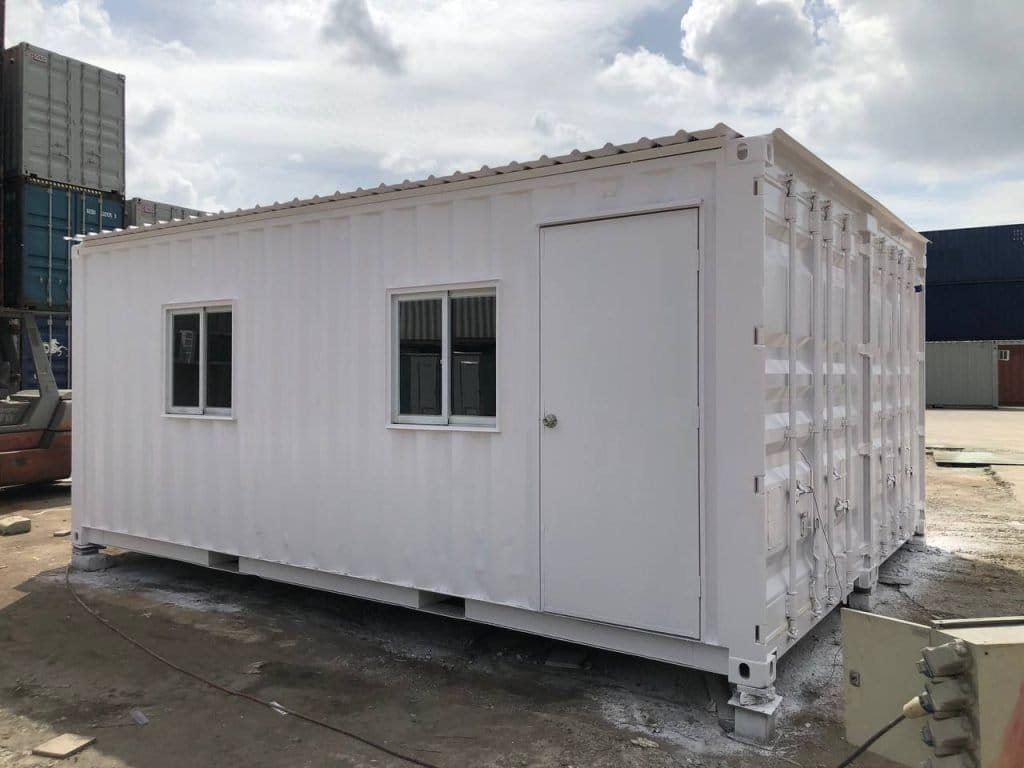
- Modular Architecture: The adaptability of shipping containers has led to innovative architectural solutions. Containers are now used to construct modular homes, offices, and pop-up shops. This trend is particularly appealing for its cost-effectiveness and sustainability, as repurposed containers offer a unique and eco-friendly alternative to traditional building materials.
- Disaster Relief and Emergency Housing: In disaster-stricken areas, shipping containers have been repurposed to provide immediate shelter and support. Their durability and ease of transport make them ideal for temporary housing and emergency medical facilities in regions affected by natural disasters.
- Recycling and Upcycling: The durability and robustness of shipping containers make them excellent candidates for recycling and upcycling. Innovative companies are finding creative ways to repurpose containers into everything from urban farms to art studios, contributing to a circular economy and reducing waste.
- Supply Chain Visibility: Advances in technology have transformed shipping containers into data hubs. Modern containers are equipped with IoT sensors that provide real-time tracking and monitoring of cargo conditions. This visibility enhances supply chain management, allowing companies to track shipments, predict delays, and ensure the optimal handling of goods.
Challenges and Future Directions
Despite their many advantages, shipping containers face challenges that require ongoing innovation. Issues such as port congestion, environmental impact, and the need for enhanced security measures are areas of concern. The industry is addressing these challenges with advancements in green technology, improved logistics software, and sustainable practices.
In conclusion, shipping containers have fundamentally transformed modern supply chains, driving efficiency and sparking innovation across various sectors. Their standardized design, security features, and adaptability have made them indispensable in global trade. As technology continues to evolve, shipping containers will undoubtedly remain at the forefront of logistics innovation, further enhancing their role in a dynamic and interconnected world.