
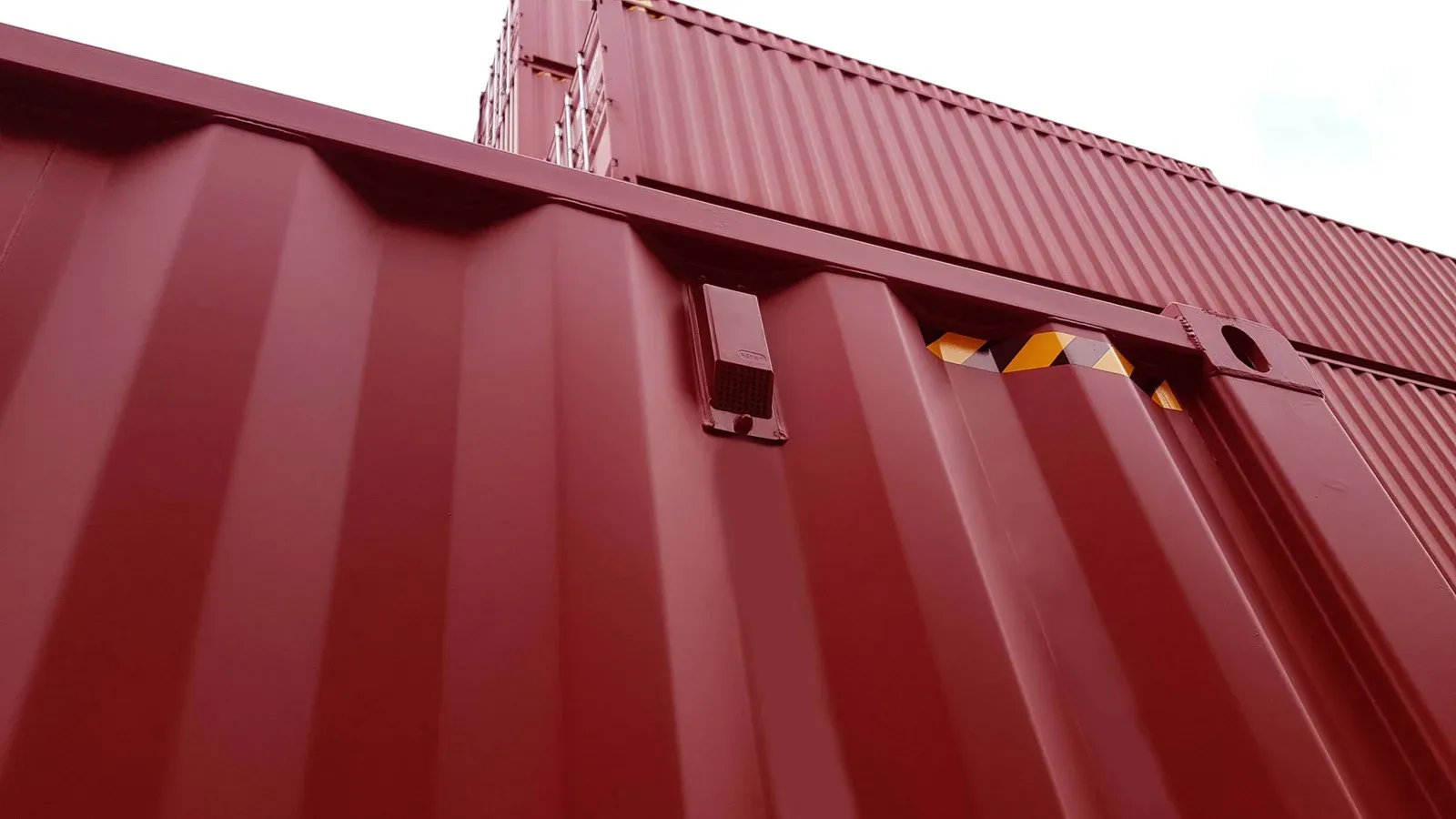
Shipping containers have various uses; from creating storage space to creating work areas. When it comes to its use as storage, a shipping container is ideal for storing furniture, dry food, chemicals, carpets and other items. Shipping containers can also be used as work areas like offices and workshops for employees. Whatever the use of the container is, the construction is done systematically. Here is how shipping containers are made:
Step 1: Making Wall Panels
To make a wall panel, steel sheets are cut into sheets roughly 8 foot by 3 foot in size. The sheets then undergo a process of sandblasting and are corrugated to give them a wavy texture. After the sheets have been corrugated, they are spread out and welded to create a wall panel. To finish the process of building a wall panel, square tubing is welded on the top and bottom of the wall, which is used later to join the floor and ceiling of the container.
Step 2: Assembling the Floor Frame
To assemble the floor frame, I-beams or in other words, the Universal column beams are used. Two long I-beams are placed parallel to each other, and the smaller ones are then welded in between to create a base. The floor frame will resemble the shape of a raft. After the welding is complete, a flap disc grinder is used to check that there are no uneven solder connections in the floor frame.
Step 3: Making the Doors and Corner Posts of the container
Corrugated steel is used to make the doors of the container. The steel is cut according to the required size of the door and enclosed in square shaped steel tubing. Sandblasting is done on the doors to remove uneven joints from the welding process. Furthermore, the corner posts are then joined to the I-beams followed by the welding of doors inside the beams.
Step 4: Completing the overall box shape of the container
The door frames are positioned on top of the floor frames, and the container will begin to take the shape of a box. The door frames and wall panels are welded in their appropriate position followed by the welding of the roof panel to complete the structure of the container.
Step 5: Painting the container
The container is painted in layers. The first layer of paint is sprayed to enable the other layers to stick well on the surface of the container. Moreover, the layers of paint help to protect the surface of the container and therefore make it more durable.
Step 6: Flooring
Wooden flooring is made of 6 plywood panels and is placed above the floor frame. These panels are sprayed with a protective coating to ensure that the wood does not contain any pests. After the panels are dried, they are screwed into the steel beams to complete the flooring of the container.
Step 7: Identification of the container
Once the container is made, it needs its identification code, which is made of eleven alphanumeric characters. The code contains the owner’s code, product group code, and serial number and check digit. After the labelling process is done, the door handles are fixed in place to complete the construction of the container.
Step 8: Testing the Container
The shipping container is sprayed with a waterproof coating and then placed in water. After it is soaked in water, it is checked for leakage and other problems. If no defects are found, the container is completely constructed and ready for use.
These steps show how a simple it is to convert a sheet of steel into a useful shipping container. The process may seem long and complicated, but once these containers are made, they are highly durable for multiple purposes such as shipping materials and storing items. The standard sizes are 20ft shipping containers and 40ft shipping containers. Shipping container prices will differ according to the size and condition of the shipping container.