
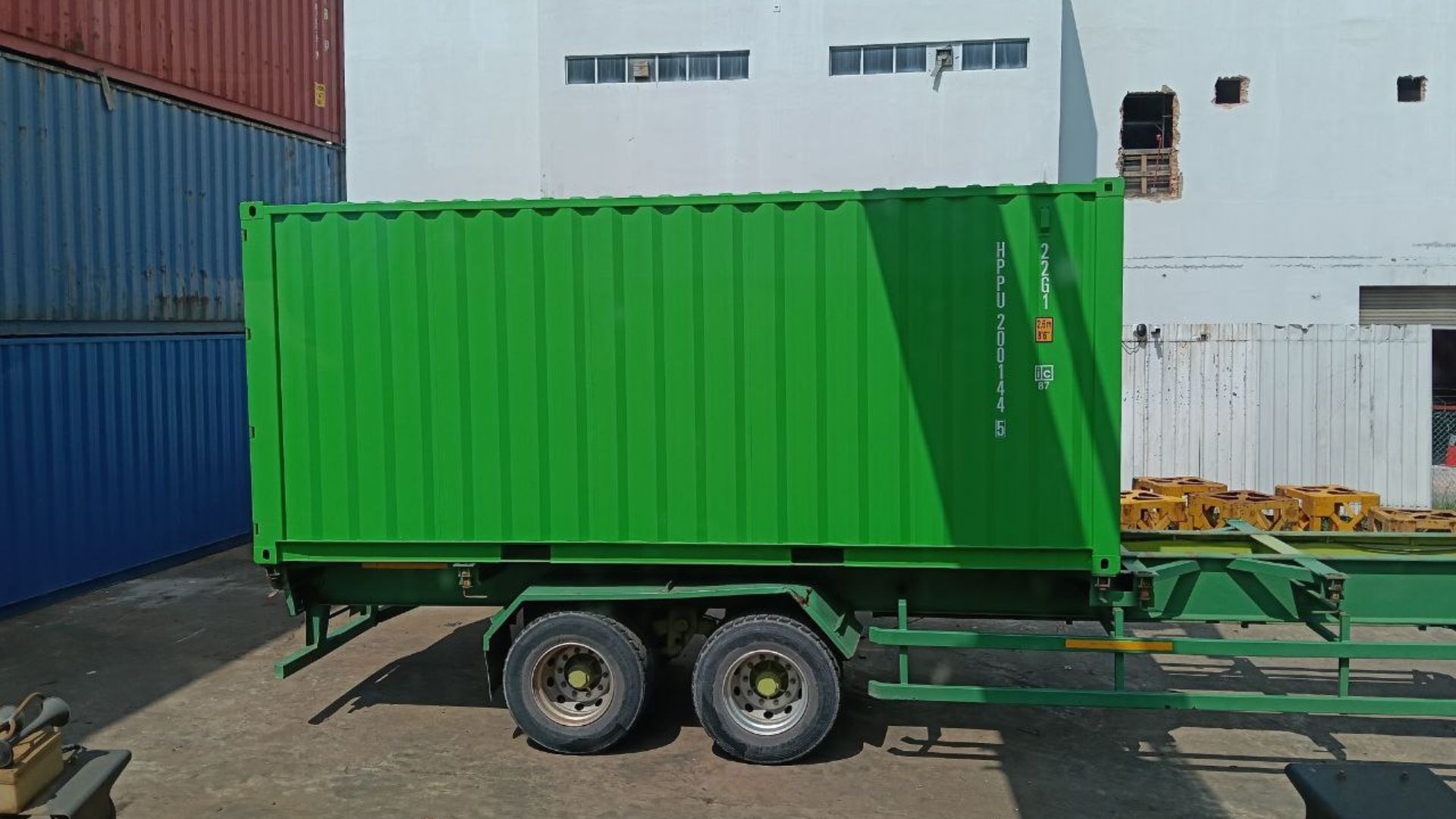
20ft vs 40ft General Purpose Container: Choosing the Right Size in Singapore
A general purpose container is one of the most commonly used shipping container types for dry cargo transportation, commercial storage, and industrial applications. Available in different sizes, these containers provide an enclosed steel structure for protecting suitable goods during storage and transportation.
For businesses in Singapore, choosing between a 20ft and 40ft container involves more than comparing their external dimensions. Cargo volume, weight, available site space, delivery access, and intended use can all influence which container is suitable.
A 20ft container may be appropriate for compact storage requirements or certain dense cargo loads, while a 40ft container provides additional internal volume for larger quantities of goods and equipment.
This guide compares 20ft and 40ft General Purpose containers, explains their common applications, and highlights what businesses should consider when selecting a container for shipping, construction sites, or storage.
Stage 1: Understanding General Purpose Shipping Containers
General Purpose containers, also known as GP containers or dry freight containers, are designed for transporting and storing suitable goods that do not require active temperature control.
They generally feature a steel structure, enclosed cargo space, and double cargo doors at one end.
What Is a General Purpose Container Used For?
Common applications include:
- Dry cargo transportation
- Commercial goods storage
- Construction site equipment storage
- Warehouse overflow storage
- Industrial materials storage
- Export shipping
- Suitable container modification projects
The appropriate use depends on the container's condition, design, specifications, and applicable requirements.
What Are the Main Features of a GP Container?
Common General Purpose container features include:
- Steel exterior construction
- Enclosed cargo storage area
- Double cargo doors
- Corner castings for appropriate handling arrangements
- Standardised dimensions for common intermodal configurations
- Suitable flooring for intended cargo applications
- Weather-resistant construction when properly maintained
Actual specifications vary according to container size, manufacturer, condition, and configuration.
Stage 2: Comparing 20ft and 40ft Container Dimensions
Container dimensions are an important consideration because they determine the available internal storage space and the external footprint required for placement.
Businesses should compare both dimensions and usable capacity before selecting a container.
What Are the Typical Dimensions?
| Specification | 20ft Standard GP | 40ft Standard GP | 40ft High Cube |
|---|---|---|---|
| External Length | 6,058 mm | 12,192 mm | 12,192 mm |
| External Width | 2,438 mm | 2,438 mm | 2,438 mm |
| External Height | 2,591 mm | 2,591 mm | 2,896 mm |
| Approximate Internal Length | 5.9 m | 12.03 m | 12.03 m |
| Approximate Internal Width | 2.35 m | 2.35 m | 2.35 m |
| Approximate Internal Height | 2.39 m | 2.39 m | 2.70 m |
| Approximate Internal Volume | 33 m³ | 67-68 m³ | 76 m³ |
| Maximum Payload | Varies by unit | Varies by unit | Varies by unit |
Note: These are indicative dimensions for common ISO dry freight containers. Actual internal measurements, weights, and payload ratings vary by manufacturer and unit. Always verify the specifications of the selected container.
How Does Container Size Affect Storage Space?
A standard 40ft container provides approximately twice the internal volume of a 20ft container while maintaining a similar external width and height.
This additional length may be useful for businesses storing larger quantities of equipment, packaged goods, or materials.
However, a larger container is not automatically necessary for every application.
The appropriate size depends on the dimensions, weight, and quantity of the items being stored or transported.
When Should You Consider a High Cube Container?
A High Cube container provides additional internal height compared with a standard-height container.
It may be suitable for bulky cargo, tall equipment, or storage arrangements requiring greater vertical clearance.
Businesses should also confirm the door opening dimensions because the available entry height is generally lower than the internal ceiling height.
Stage 3: Matching Container Size to Cargo Volume and Weight
Choosing the correct container requires evaluating both the physical volume and total weight of the cargo.
Some products occupy considerable space without being particularly heavy, while others may reach applicable weight limits before the internal space is fully used.
When Is a 20ft Container Suitable?
A 20ft container may be considered for:
- Compact dry cargo shipments
- Industrial components
- Construction tools and materials
- Warehouse inventory
- Machinery parts
- Smaller storage requirements
Its shorter footprint may also be useful for sites where a 40ft container cannot be accommodated.
For dense cargo, the maximum permitted weight and load distribution should be checked carefully.
When Is a 40ft Container Suitable?
A 40ft container may be appropriate when businesses need additional internal length or storage volume.
Potential applications include:
- Larger quantities of packaged goods
- Commercial inventory
- Bulky machinery components
- Furniture and fixtures
- Industrial equipment
- Extended warehouse storage
However, the permitted cargo weight does not simply double when moving from a 20ft to a 40ft container.
Businesses should confirm the individual container's payload rating and applicable transportation requirements.
Why Is Cargo Weight Distribution Important?
Container floors and structures are designed to accommodate loads within their specified limits.
Concentrating heavy cargo in a small area may introduce additional floor-loading considerations.
Before loading, businesses should review:
- Total cargo weight
- Container tare mass
- Maximum permitted gross mass
- Floor loading requirements
- Cargo dimensions
- Load distribution
- Appropriate securing arrangements
Heavy or unusual loads should be assessed by appropriately qualified logistics or cargo-handling personnel.
Stage 4: Choosing a Container Supplier in Singapore
Working with a suitable container supplier singapore businesses can approach for different sizes and conditions helps simplify container selection and project coordination.
Beyond container dimensions, businesses should review the equipment condition, intended use, and available delivery services.
What Should You Look for in a Container Supplier?
Important considerations include:
- Container range: Availability of suitable 10ft, 20ft, and 40ft units.
- Equipment condition: Clear information about new and used containers.
- Technical specifications: Access to relevant container dimensions and identification details.
- Inspection arrangements: Information about the condition and suitability of selected units.
- Delivery support: Availability of suitable transport and positioning arrangements.
- Modification options: Ability to discuss additional doors, windows, or other features where required.
- Project coordination: Support for site-specific container requirements.
How Do You Check Container Condition?
Before accepting a container, review the available condition information and inspect accessible areas where possible.
Important checks include:
- Exterior panels for corrosion or damage
- Roof condition
- Corner posts and castings
- Door alignment and locking mechanisms
- Rubber door seals
- Interior flooring
- Signs of water ingress
- Previous repairs or modifications
Do not enter a container and close or secure its doors in a way that creates an entrapment risk.
Where structural damage or contamination is suspected, seek an appropriate professional assessment.
What Is the Difference Between New and Used Containers?
New and used containers may be suitable for different operational requirements.
Newer units generally have limited previous service wear, while used containers can have different levels of corrosion, surface damage, repairs, and flooring condition.
Common condition descriptions include:
- New or One-Trip: Units with limited previous cargo service.
- Cargo Worthy: Containers generally assessed for cargo transportation, subject to applicable inspection and approval requirements.
- Wind and Watertight: Units intended to provide weather protection for suitable stationary storage applications, subject to their actual condition.
- As-Is: Containers supplied in their existing condition that may require additional assessment or repairs.
Condition descriptions may vary between suppliers. Businesses should confirm the condition and suitability of the individual unit.
Stage 5: Understanding CSC Approval and Container Documentation
Businesses planning to use General Purpose containers for international shipping should review the relevant safety approval and examination requirements.
What Is a CSC Approval Plate?
The International Convention for Safe Containers (CSC) establishes safety requirements for freight containers within its scope.
An applicable CSC approval plate provides information relating to the container's approved design and operating limits.
However, the presence of a plate alone does not establish that a container is currently suitable for every type of cargo or transportation arrangement.
What Should You Check Before Using a Container for International Shipping?
Depending on the equipment and application, relevant checks may include:
- Container identification markings
- Maximum permitted gross mass
- CSC approval details
- Applicable periodic examination or ACEP status
- Structural condition
- Door and locking mechanism condition
- Suitability for the intended cargo
Containers intended only for stationary storage may have different suitability requirements from those used for international freight transportation.
Stage 6: Using General Purpose Containers at Construction Sites
A construction site container provides enclosed storage space for suitable tools, equipment, materials, and supplies used during a construction project.
Construction sites often need storage arrangements that can be positioned near working areas while keeping materials organised.
What Can Construction Site Containers Be Used For?
Potential applications include:
- Tool storage
- Construction material storage
- Equipment storage
- Maintenance supplies
- Site consumables
- Spare parts
- Project inventory
The container should be suitable for the items being stored, including any ventilation, security, or environmental requirements.
Should You Choose a 20ft or 40ft Construction Site Container?
A 20ft container may be appropriate when storage requirements are relatively compact or site space is restricted.
A 40ft container may be considered when additional internal volume is needed for equipment and materials.
Before selecting a size, businesses should evaluate:
- Available placement area
- Type and volume of materials
- Frequency of access
- Door orientation
- Vehicle and machinery movement
- Delivery and lifting requirements
A suitable layout should support site operations without unnecessarily obstructing access or work areas.
What Features Can Be Added to Construction Storage Containers?
Depending on the container and intended use, possible modifications include:
- Additional personnel doors
- Ventilation provisions
- Storage shelves
- Internal lighting
- Electrical sockets
- Lockboxes
- Security grilles
- Suitable partitions
Modifications should be reviewed according to the container's structure and application.
Stage 7: Planning Container Delivery and Site Access
Container delivery requires suitable planning based on the unit's dimensions, weight, transportation method, and destination.
A location that can accommodate the container's footprint may still have restrictions affecting vehicle access or unloading.
What Should You Check Before Delivery?
Important considerations include:
- Entrance width: Whether the transport vehicle can access the premises.
- Turning space: Whether there is sufficient room for manoeuvring.
- Overhead clearance: Whether structures, cables, or trees create obstructions.
- Ground conditions: Whether the site can support the vehicle and container.
- Unloading space: Whether lifting or handling equipment can operate safely.
- Placement orientation: Whether the container doors will face the intended access direction.
- Site restrictions: Whether operating hours or relevant approvals affect delivery.
The transport provider should assess the appropriate vehicle and unloading arrangement based on actual site conditions.
Can a Lorry Crane Deliver a Shipping Container?
A suitable lorry crane may be used to transport and position certain containers, depending on the container's weight and the equipment's rated capabilities.
However, not every lorry crane can handle every container.
The lifting arrangement should account for the actual weight, lifting radius, designated lifting points, and site conditions.
Where necessary, separate lifting equipment or other container handling arrangements may be required.
Why Does Ground Preparation Matter?
A storage container requires suitable support at the intended placement location.
Uneven or inadequate ground conditions may contribute to container movement, settlement, or alignment problems.
The appropriate support arrangement depends on the container's dimensions, weight, expected loading, and ground conditions.
Businesses should confirm the necessary site preparation before delivery and obtain technical advice where appropriate.
Stage 8: Managing Container Storage in Singapore
For businesses evaluating container storage singapore solutions, container condition and the intended storage environment are important considerations.
General Purpose containers provide enclosed space, but the suitability of the unit depends on the goods being stored and the operating conditions.
How Can You Protect Goods from Moisture?
Singapore's warm and humid climate can influence storage conditions inside enclosed steel containers.
Depending on the cargo and environment, changes in temperature and humidity may contribute to condensation.
Businesses should consider:
- Container roof and door condition
- Suitable ventilation arrangements
- Moisture-sensitive cargo packaging
- Appropriate desiccants where relevant
- Storage duration
- Ground and drainage conditions
- Regular condition checks
General Purpose containers are not climate-controlled storage units.
Goods requiring specific temperature or humidity conditions may need specialised equipment.
What Maintenance Checks Should Be Considered?
Regular visual checks can help identify issues affecting storage suitability.
Potential inspection areas include:
- Roof surfaces and visible corrosion
- Door seals
- Door locking mechanisms
- Flooring condition
- Signs of water ingress
- Interior moisture or condensation
- Exterior damage
Inspection frequency and maintenance responsibilities depend on the container's condition, intended use, and relevant ownership or rental arrangements.
Can Shipping Containers Be Stacked for Storage?
Some freight containers are designed for stacking under specified conditions.
However, safe stacking depends on the containers' structural condition, permitted loads, support arrangement, lifting equipment, connections, and site conditions.
Businesses should not assume that every used or modified container can be stacked.
Stacking arrangements should be designed and managed by appropriately qualified personnel using suitable equipment.
Stage 9: Choosing Between Container Purchase and Rental
Businesses may choose to purchase or rent containers depending on their operational requirements and expected duration of use.
The appropriate arrangement should be determined according to the intended application, equipment requirements, and project plans.
When Might Container Purchase Be Suitable?
Purchasing may be considered when a business requires a container for ongoing storage, repeated project use, or intended modifications.
Ownership may allow greater control over the unit's configuration, subject to applicable technical requirements.
Businesses should also consider maintenance and future relocation responsibilities.
When Might Container Rental Be Suitable?
Rental may be considered for temporary projects, seasonal storage needs, or defined operational periods.
Before arranging rental, businesses should review the container condition, service inclusions, delivery requirements, maintenance responsibilities, and return conditions.
What Does Container Sell Mean When Searching for Suppliers?
Businesses searching online for container sell services are generally looking for suppliers that offer shipping containers for purchase.
When contacting a supplier, it is more useful to specify the required container type, size, condition, quantity, and intended application.
This helps the supplier identify suitable equipment options for the enquiry.
Stage 10: Choosing a General Purpose Container for Your Business
Before selecting a container, businesses should compare their actual cargo and site requirements against the available configurations.
What Information Should You Prepare Before Enquiring?
Useful information includes:
- Required container size
- General Purpose or High Cube configuration
- Purchase or rental preference
- Intended shipping or storage application
- New or used condition preference
- Quantity required
- Approximate cargo dimensions and weight
- Delivery location
- Site access restrictions
- Any required modifications or accessories
Providing these details allows the supplier to review suitable configurations and delivery arrangements.
Frequently Asked Questions About General Purpose Containers
What Is a General Purpose Container?
A General Purpose container is an enclosed dry freight container commonly used for transporting and storing suitable non-temperature-controlled cargo.
It typically features steel construction, cargo doors, and standardised dimensions for common intermodal configurations.
What Is the Difference Between a 20ft and 40ft Container?
A 40ft container provides approximately twice the internal volume of a standard 20ft unit, while both generally have similar external widths and standard heights.
However, maximum permitted cargo weight and transport requirements depend on the individual container and handling arrangements.
Is a 20ft Container Better for Heavy Cargo?
A 20ft container may be suitable for certain dense cargo loads, but this depends on the actual cargo weight, loading arrangement, and container specifications.
Businesses should confirm the permitted payload and transportation limits before loading.
Can General Purpose Containers Be Used for Construction Site Storage?
Yes. Suitable General Purpose containers can provide enclosed storage for construction tools, materials, equipment, and supplies.
The container's condition and site placement should be appropriate for the intended application.
Can I Buy or Rent a Container in Singapore?
Yes. OSG Containers provides General Purpose container purchase and rental options in Singapore, subject to availability and project requirements.
What Container Sizes Does OSG Containers Offer?
OSG Containers offers General Purpose containers in 10ft, 20ft, and 40ft configurations, with other suitable container types available for different applications.
Can General Purpose Containers Be Modified?
Yes. Selected containers can be modified with suitable doors, windows, insulation, electrical fittings, partitions, and other approved features.
Modifications should be assessed according to the container's structure and intended use.
Can OSG Containers Arrange Delivery?
OSG Containers provides container transportation and placement services in Singapore.
The appropriate vehicle, lifting equipment, and delivery arrangements depend on the container and site requirements.
Why Choose OSG Containers for General Purpose Containers in Singapore?
OSG Containers supplies General Purpose shipping containers for logistics, construction, warehousing, industrial storage, and commercial applications.
Our product range includes 10ft, 20ft, and 40ft GP containers, with new and used equipment options subject to availability.
We also provide container modification services and related logistics support, including transportation, lifting, and on-site positioning.
Whether you need a compact storage unit for a construction project or a larger container for commercial goods, our team can help you explore suitable options based on your requirements.
Find the Right General Purpose Container for Your Requirements
Choosing between a 20ft and 40ft General Purpose container involves understanding the available storage space, cargo weight, site conditions, and intended application.
A 20ft unit may suit compact storage or selected freight requirements, while a 40ft container provides additional internal volume for larger quantities of goods.
Before selecting a container, businesses should confirm the relevant dimensions, condition, handling requirements, and delivery arrangements.
Looking for General Purpose Containers in Singapore?
Explore our 10ft, 20ft, and 40ft General Purpose shipping containers for cargo transport, construction site storage, and industrial applications. Contact our team to discuss suitable sizes, new or used conditions, purchase or rental options, and delivery requirements.
Explore General Purpose Containers