Portable Toilets on Rent in Singapore: Self-Contained vs Sewer-Connected Options
Choosing the right portable toilets on rent depends on your site's infrastructure, number of users, project duration, and sanitation requirements. For construction sites, outdoor events, industrial facilities, and temporary operations in Singapore, portable toilet solutions can provide essential restroom facilities without constructing permanent washrooms.
Two common arrangements are self-contained toilets with holding tanks and toilet containers connected to suitable sewer infrastructure. Each has different installation, servicing, and operational requirements.
Businesses planning to rent portable toilets should understand these differences before selecting equipment.
This guide explains how both systems work, their applications, and what to consider when arranging portable toilet rental in Singapore.
Stage 1: Understanding Portable Toilet Options
Portable toilets provide temporary or relocatable sanitation facilities for locations where permanent washrooms may be unavailable, insufficient, or unsuitable for the intended project.
Different toilet configurations are available depending on the required number of users, available utilities, and intended application.
What Is a Self-Contained Portable Toilet?
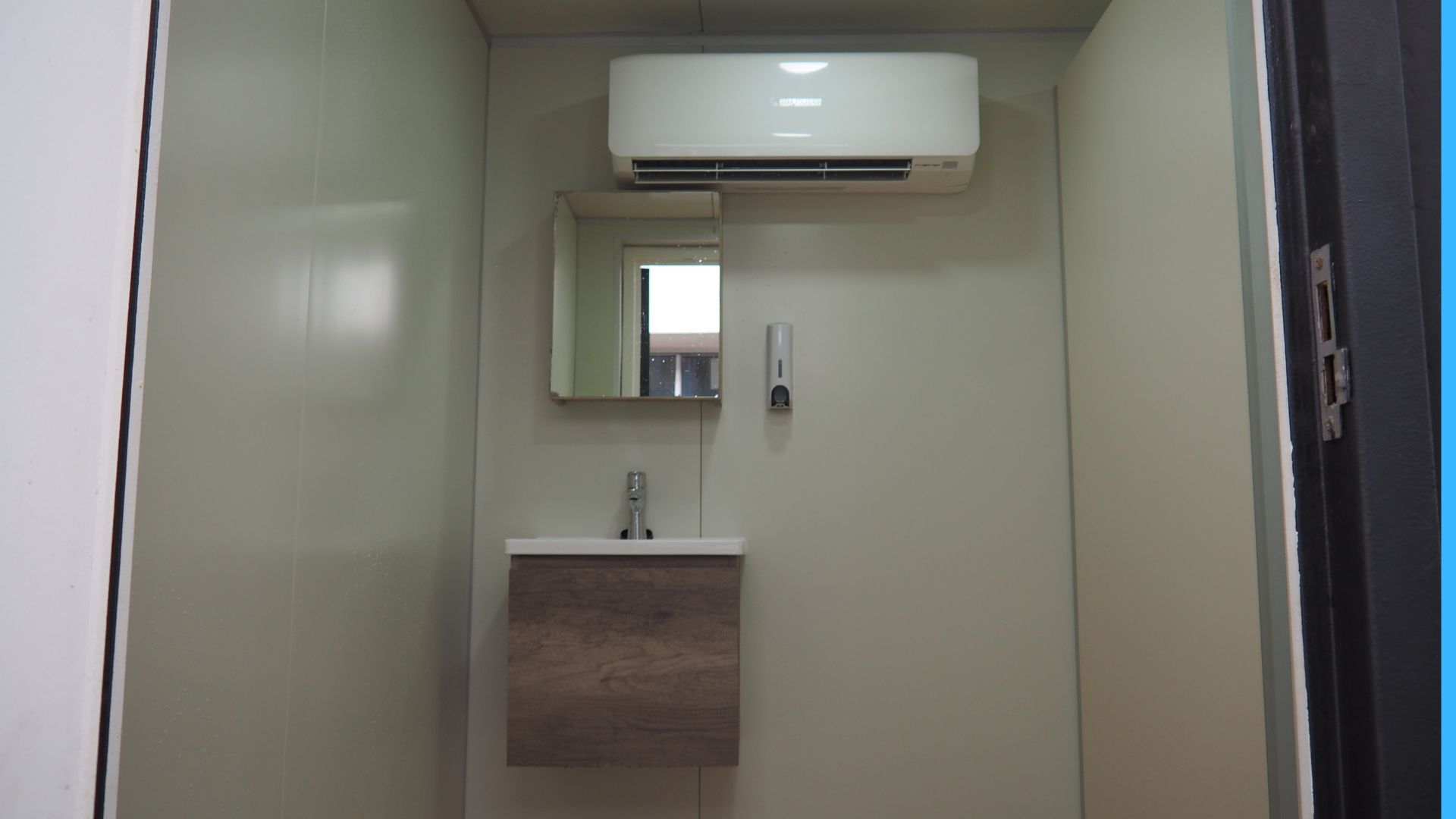
A self-contained portable toilet uses an integrated or associated waste-holding system rather than relying on a direct connection to an existing sewer.
Depending on the design, the unit may include a toilet fixture, ventilation, privacy door, handwashing arrangements, and waste storage provisions.
Self-contained units may be suitable for temporary locations where direct sewer access is unavailable.
However, the actual features vary by product. Not every self-contained toilet uses a chemical recirculating flush, foot-operated pump, or identical holding-tank arrangement.
What Is a Sewer-Connected Toilet Container?
A sewer-connected toilet container is a prefabricated sanitary facility designed to discharge wastewater through an approved connection to suitable sewer infrastructure.
Depending on the configuration, the unit may provide multiple cubicles, flushing toilets, washbasins, ventilation, lighting, and other sanitary fittings.
These facilities may be considered for construction sites, industrial premises, and event locations where approved sewer and water connections are available.
The installation must comply with applicable drainage, plumbing, and wastewater requirements.
Stage 2: When Should You Choose Self-Contained Portable Toilets?
Self-contained units may be suitable when a site needs sanitation facilities but does not have a practical direct sewer connection.
They can be considered for remote work locations, temporary site offices, outdoor activities, and selected event applications.
What Are the Advantages of Self-Contained Units?
For suitable applications, potential advantages include:
- Independent wastewater collection: Waste can be held in a suitable tank rather than discharged directly to a sewer.
- Flexible placement: Units may be positioned at locations without existing sewer connections, subject to site conditions.
- Compact configurations: Single-user toilet units may be suitable where installation space is limited.
- Temporary use: Suitable arrangements may support short-term or changing site requirements.
- Relocation potential: Certain units can be moved using appropriate handling equipment.
These advantages depend on the individual toilet design, available utilities, and servicing arrangements.
What Maintenance Does a Self-Contained Toilet Require?
Self-contained toilets require appropriate waste management and hygiene maintenance.
Depending on the unit and operating conditions, servicing may involve:
- Waste tank emptying
- Cleaning and sanitisation
- Checking water or flushing systems
- Replenishing toilet paper and hygiene supplies
- Inspecting doors, locks, and ventilation
- Checking for leaks or equipment defects
Servicing frequency depends on the number of users, tank capacity, usage patterns, and applicable requirements.
Businesses should confirm the servicing arrangements before renting the equipment.
What Should You Check Before Placement?
Important considerations include:
- Suitable ground conditions
- Available placement space
- Safe pedestrian access
- Delivery and unloading requirements
- Waste collection access
- Ventilation and hygiene requirements
- Applicable electrical or water supply needs
Different portable toilet models have different installation requirements. Businesses should confirm the selected unit's specifications rather than assuming every model can operate without any utility connections.
Stage 3: Portable Toilets for Construction Sites
Construction projects often require temporary sanitation facilities while site conditions and permanent infrastructure are still being developed.
Suitable portable toilets may provide practical facilities for workers, supervisors, and contractors throughout the project.
Why Are Portable Toilets Important on Construction Sites?
Construction sites may operate in locations where permanent restroom facilities are unavailable or cannot be accessed conveniently.
Temporary sanitation facilities help support daily workforce needs and site welfare arrangements.
When planning toilet facilities, contractors should consider:
- Workforce size
- Number of operating shifts
- Project duration
- Available site infrastructure
- Distance from active working areas
- Cleaning and waste management arrangements
- Applicable workplace sanitation requirements
Should Construction Sites Use Compact or Multi-Cubicle Toilets?
A compact portable toilet may be appropriate for smaller work areas or where only limited installation space is available.
Larger construction sites may require multiple units or a toilet container with several cubicles.
The correct configuration depends on the number of users, expected usage, and relevant sanitation requirements.
Businesses should not rely on a universal number of workers per toilet without checking the applicable requirements and actual operating conditions.
How Can Toilet Facilities Be Integrated with Site Offices?
Portable toilets may be positioned near suitable site office or workforce facility areas, subject to safe access and the overall site layout.
When planning the arrangement, consider:
- Pedestrian routes
- Distance from work areas
- Vehicle movement
- Waste servicing access
- Ground drainage
- Privacy and hygiene
Toilet facilities should not obstruct emergency routes, equipment movement, or essential site operations.
Stage 4: When Are Sewer-Connected Toilet Containers Suitable?
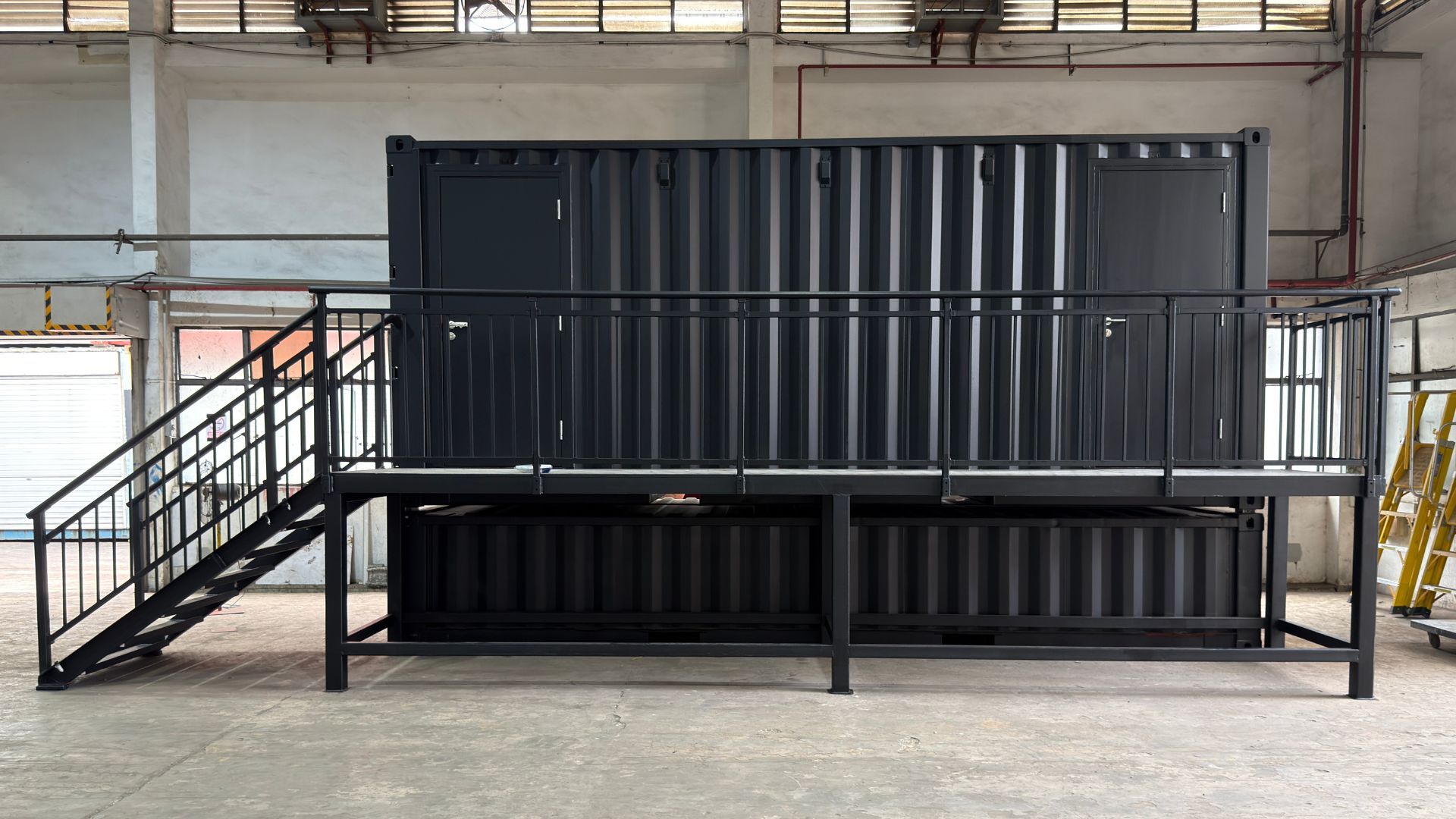
Businesses looking for portable toilets for rent may also consider larger toilet containers with direct sewer connection capabilities.
These units can support sites where suitable wastewater infrastructure is available and the necessary connections have been approved.
How Does a Sewer-Connected Toilet Container Work?
A sewer-connected toilet container uses plumbing and drainage arrangements to discharge wastewater into an authorised sewer connection.
Depending on the configuration, it may require:
- Suitable water supply
- Approved drainage connection
- Electrical supply for lighting or other equipment
- Ventilation provisions
- Safe access for users
- Appropriate support and positioning
The connection arrangement should be designed and installed by appropriately qualified personnel.
Can a Toilet Container Be Positioned Over a Manhole?
Some toilet container configurations may be designed for discharge arrangements involving existing sewer access points.
However, placing a toilet directly over a manhole is not a universal installation method.
The connection must be suitable for the actual sewer infrastructure and comply with relevant approvals and plumbing requirements.
Businesses should confirm the proposed arrangement with the responsible project professionals and relevant authorities before installation.
Does Sewer Connection Eliminate Toilet Maintenance?
No. A sewer connection may remove the need for routine emptying of a separate waste-holding tank, but it does not eliminate cleaning or maintenance requirements.
Connected toilet facilities still require:
- Regular cleaning and sanitisation
- Inspection of toilet fixtures
- Replenishment of hygiene supplies
- Ventilation maintenance
- Plumbing and drainage checks
- Prompt attention to blockages or leaks
Maintenance responsibilities should be confirmed as part of the rental or site management arrangement.
Stage 5: Comparing Self-Contained and Sewer-Connected Toilet Solutions
Both configurations provide practical sanitation options, but their suitability depends on the site and available infrastructure.
| Consideration | Self-Contained Toilet | Sewer-Connected Toilet Container |
|---|---|---|
| Waste Management | Uses a suitable holding arrangement | Discharges through an approved sewer connection |
| Sewer Access | Direct connection generally not required | Suitable approved connection required |
| Water Requirements | Depend on the model | Water supply typically required for flushing fixtures |
| Servicing | Waste emptying and hygiene maintenance | Cleaning, inspection, and plumbing maintenance |
| Typical Configuration | Compact single-user or suitable holding-tank arrangement | Often larger, with multiple cubicles |
| Potential Applications | Remote sites, temporary work areas, suitable outdoor events | Construction sites, industrial facilities, events with suitable utilities |
Note: These are general differences. Actual equipment features, utility connections, and waste arrangements depend on the selected product and site requirements.
Stage 6: Choosing Portable Toilet Facilities for Events
Outdoor events may require temporary sanitation facilities for attendees, organisers, vendors, and operational teams.
The number and type of toilets should be selected according to expected usage, venue infrastructure, event duration, and applicable requirements.
When Are Self-Contained Toilets Suitable for Events?
Compact self-contained units may be considered for events held at locations without convenient sewer connections.
Examples include selected outdoor exhibitions, community activities, and temporary event locations.
Important considerations include:
- Expected attendance
- Event operating hours
- Available installation space
- Cleaning arrangements
- Waste-holding capacity
- Servicing access
- Applicable accessibility requirements
When Might a Larger Toilet Container Be Appropriate?
A multi-cubicle toilet container may be considered for suitable events requiring additional restroom capacity.
Depending on the configuration, it may provide multiple toilets, washbasins, lighting, and ventilation.
Businesses should confirm the required utility connections, site footprint, and installation arrangements before selecting the facility.
How Many Portable Toilets Are Required for an Event?
The appropriate quantity depends on expected attendance, event duration, operating conditions, available permanent toilets, and applicable regulatory requirements.
There is no single attendee-to-toilet ratio suitable for every event.
Event organisers should review the relevant sanitation and accessibility requirements and plan appropriate cleaning arrangements.
Stage 7: Choosing Between InstaLoo and Toilet Containers
OSG Containers offers portable sanitation solutions for construction sites, events, industrial operations, and temporary projects in Singapore.
Two options include the compact InstaLoo series and larger toilet containers.
InstaLoo: Compact Portable Toilet Solution
InstaLoo is a compact portable sanitation solution designed for applications where an enclosed restroom facility is required.
Its self-contained configuration may suit construction sites, temporary workspaces, events, and remote locations.
Depending on the selected product, InstaLoo options may include:
- Standalone toilet facilities
- Shower facilities
- Combined toilet and shower arrangements
- Suitable waste-holding systems
- Ventilation and lighting features
Actual features and operating requirements should be confirmed for the selected unit.
Toilet Containers: Multi-Cubicle Sanitation Facilities
OSG's larger toilet containers may provide multiple cubicles for construction sites, industrial operations, and temporary facilities.
Depending on the configuration, available options may include:
- Sitting toilets
- Squatting toilets
- Shower facilities
- Washbasins
- Urinals
- Ventilation and lighting
- Holding-tank or sewer-connection arrangements
Different configurations may be available for different operating requirements.
Which Option Should You Choose?
Consider InstaLoo when a compact portable toilet solution is sufficient for the intended application.
Consider a larger toilet container when multiple cubicles or additional sanitary facilities are required.
The final choice depends on the number of users, site infrastructure, intended duration, and available installation space.
Stage 8: Planning Portable Toilet Delivery and Installation
Temporary sanitation facilities require suitable delivery access, ground support, and service arrangements.
The necessary preparation depends on the selected toilet design and installation location.
What Should You Check Before Delivery?
Important considerations include:
- Installation area dimensions
- Vehicle access
- Suitable unloading space
- Ground conditions
- Required lifting arrangements
- Water and electrical connections, where applicable
- Waste tank or sewer arrangements
- Servicing access
- Pedestrian routes
- Site restrictions and approvals
The supplier and relevant project personnel should confirm the appropriate delivery and placement method.
Why Is Wastewater Planning Important?
Portable toilet wastewater must be collected and disposed of through suitable authorised arrangements.
In Singapore, relevant sanitary and environmental requirements apply to temporary toilet facilities, including holding tanks and sewer-connected systems.
Businesses should not discharge toilet wastewater into surface drains, watercourses, or other unauthorised outlets.
The appropriate collection and disposal arrangements should be confirmed before the facility is placed into service.
What About Cleaning and Maintenance?
Regular cleaning is necessary regardless of whether a toilet uses a holding tank or sewer connection.
Businesses should establish suitable arrangements for:
- Sanitising toilets and washbasins
- Replenishing toilet paper and soap
- Managing waste collection
- Checking fixtures and ventilation
- Responding to leaks or blockages
- Maintaining suitable user access
Cleaning frequency should reflect the number of users, operating conditions, and applicable hygiene requirements.
Stage 9: What to Consider When Renting Portable Toilets
When renting portable toilets, businesses should assess the intended application, available utilities, site conditions, and maintenance arrangements.
Selecting the right toilet configuration early can help avoid unsuitable installation arrangements or interruptions to daily operations.
What Information Should You Provide When Enquiring?
Prepare the following details:
- Project or event type
- Installation location
- Expected number of users
- Required rental duration
- Preferred toilet configuration
- Availability of sewer access
- Water supply availability
- Electrical supply availability
- Waste collection requirements
- Delivery and site access information
These details help the supplier discuss suitable sanitation equipment and service arrangements.
What Should You Confirm Before Rental?
Before confirming a rental arrangement, clarify:
- Selected unit specifications
- Required utility connections
- Delivery and collection arrangements
- Cleaning responsibilities
- Waste tank servicing arrangements
- Maintenance support
- Rental period and return requirements
- Any site-specific installation conditions
The available services and responsibilities should be established for the actual rental agreement.
Frequently Asked Questions About Portable Toilet Rental
What Are Portable Toilets Used For?
Portable toilets provide temporary or relocatable restroom facilities for construction sites, industrial premises, outdoor events, remote locations, and other suitable applications.
Can I Rent Portable Toilets in Singapore?
Yes. OSG Containers provides portable sanitation solutions with rental options in Singapore, subject to available configurations and project requirements.
Do Portable Toilets Require Plumbing?
Some self-contained units can operate without a direct sewer connection. Other toilet containers require suitable water, drainage, and electrical arrangements.
The requirements depend on the selected configuration.
How Often Do Portable Toilets Need Servicing?
Servicing frequency depends on user numbers, holding-tank capacity, operating conditions, and applicable hygiene requirements.
Self-contained units may require periodic waste removal, while sewer-connected facilities still require cleaning and maintenance.
What Is the Difference Between InstaLoo and a Toilet Container?
InstaLoo is a compact portable sanitation solution, while larger toilet containers can provide multiple cubicles and additional sanitary fixtures.
The most suitable option depends on site requirements and expected usage.
Can Portable Toilets Be Used for Construction Projects?
Yes. Portable toilet facilities can support sanitation requirements at construction projects, provided the selected equipment and servicing arrangements meet the applicable site and regulatory requirements.
Can a Toilet Container Be Connected to a Sewer?
Certain toilet container configurations support connection to suitable sewer infrastructure, subject to technical feasibility, applicable approvals, and correct installation.
Are Portable Toilets Suitable for Outdoor Events?
Yes. Suitable portable toilet units can provide temporary sanitation facilities for outdoor events.
Event organisers should confirm the required number of facilities, accessibility provisions, servicing arrangements, and relevant approvals.
What Information Is Needed to Request a Portable Toilet Rental?
Provide your site location, expected number of users, required duration, available utilities, and preferred toilet configuration.
OSG Containers can review the requirements and discuss suitable available options.
Why Choose OSG Containers for Portable Toilets in Singapore?
OSG Containers provides portable toilet and modular sanitation solutions for construction sites, industrial facilities, commercial projects, and outdoor events.
Our range includes compact InstaLoo units and larger toilet containers designed for different applications.
Depending on the selected configuration, available options include standalone toilet facilities, combined shower and toilet units, multi-cubicle arrangements, and suitable waste collection or sewer connection provisions.
We also provide container-related transportation, positioning, and selected site setup support.
Whether you need a compact portable toilet or a larger sanitary facility for your workforce or event, our team can help you explore available configurations.
Find the Right Portable Toilet Solution for Your Site
Choosing between self-contained and sewer-connected portable toilets starts with understanding your site's infrastructure and operating requirements.
Self-contained units may be suitable for locations without direct sewer access, while larger toilet containers can support applications requiring multiple cubicles or suitable utility connections.
Before arranging rental, confirm the required facilities, number of users, waste management arrangements, delivery conditions, and maintenance responsibilities.
Need Portable Toilets for Your Site or Event?
Explore our InstaLoo and toilet container solutions for construction projects, industrial facilities, outdoor events, and temporary operations in Singapore. Share your site requirements with our team to discuss suitable toilet configurations, rental availability, waste arrangements, and delivery.
Explore Portable Toilet Solutions