
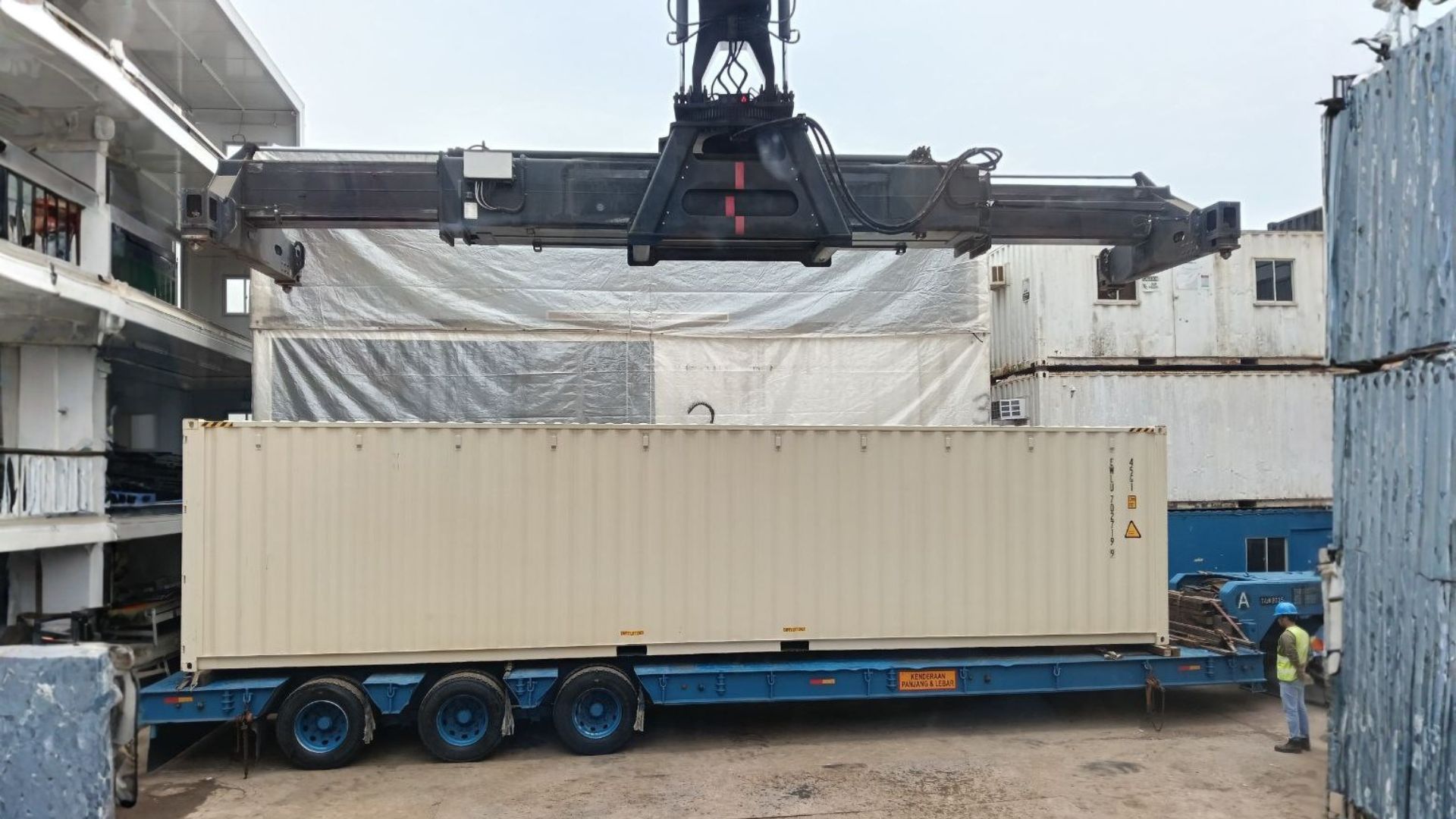
40ft High Cube Container: Dimensions, Capacity and Loading Guide
A 40ft high cube container provides additional vertical storage space compared with a standard 40ft shipping container. With an external height of approximately 2.90 metres and an internal capacity of around 76 cubic metres, this container type is commonly used for light, bulky goods, commercial inventory, and industrial storage applications.
Unlike a standard-height shipping container, a high cube container offers approximately 30 centimetres of additional internal height without increasing its ground footprint.
For businesses involved in logistics, construction, manufacturing, and warehousing in Malaysia, this extra vertical space may provide greater storage capacity or accommodate goods that are too tall for a standard container.
However, the additional height does not automatically mean that every shipment can carry more goods. Cargo weight, packaging, door clearance, loading equipment, and transportation requirements must also be considered.
This guide explains high cube container dimensions, internal capacity, weight limitations, loading considerations, and how to choose the right configuration for your business.
What Is a High Cube Container?
A high cube container is a shipping container designed with additional height compared with a standard general-purpose container.
While a standard dry container typically measures 8 feet 6 inches externally, a high cube model measures approximately 9 feet 6 inches.
The main advantage of this configuration is increased internal height and storage volume without requiring additional ground space.
A container high cube configuration can be particularly useful when transporting or storing goods that are relatively light but occupy significant space.
Common Applications of High Cube Containers
- Logistics: Transporting bulky or high-volume packaged goods.
- Warehousing: Additional vertical storage capacity for suitable inventory.
- Manufacturing: Storage of larger industrial components and materials.
- Construction: Storage of taller equipment and project supplies.
- Commercial Operations: Supplementary storage for furniture, packaging, and inventory.
- Container Modifications: Projects requiring additional interior height, subject to structural and design requirements.
40ft High Cube Container Dimensions and Specifications
The main difference between a standard 40ft shipping container and a 40ft high cube model is their height.
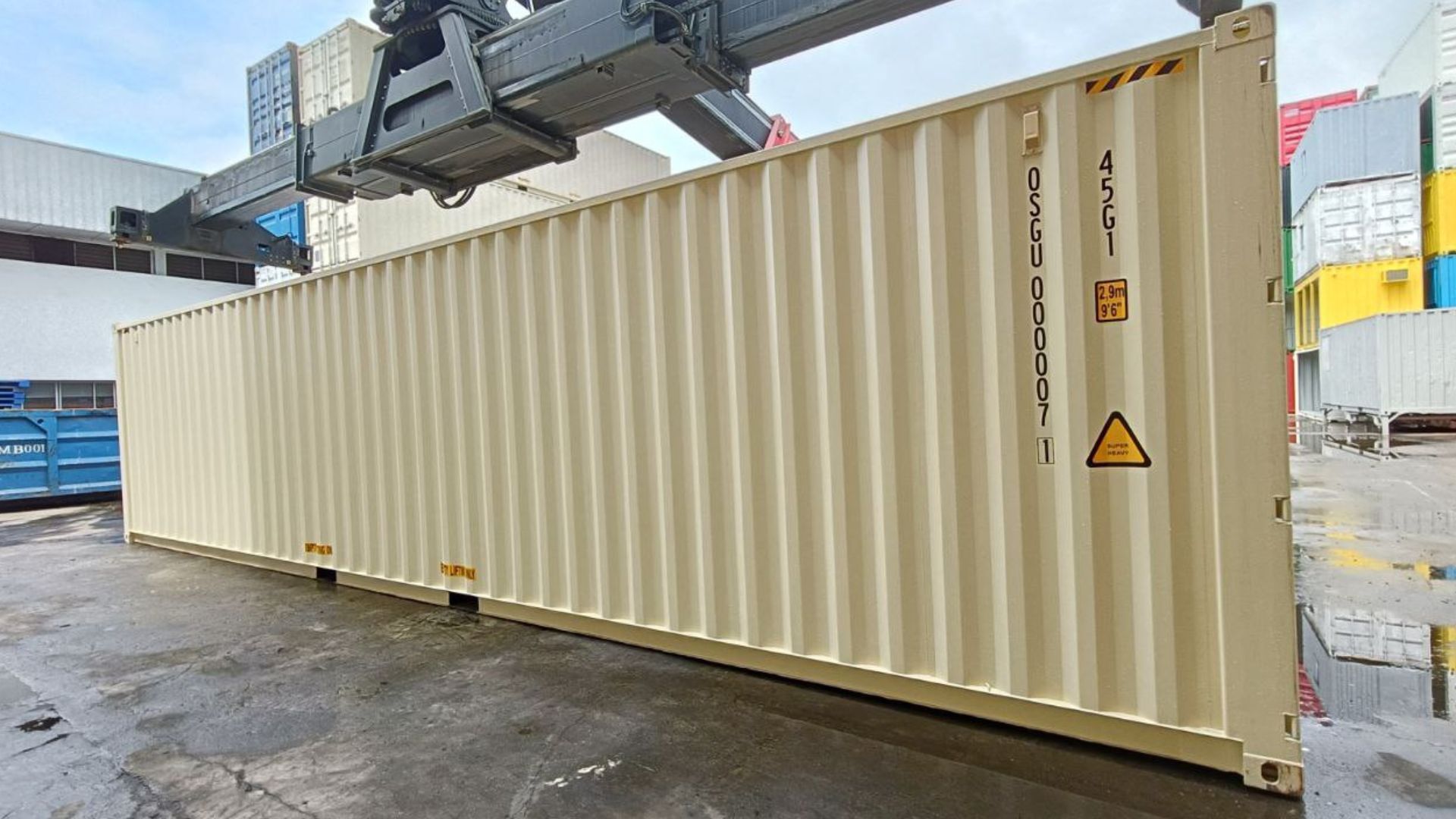
Both configurations share a similar external length and width, but the high cube provides additional internal clearance and greater cubic capacity.
The following comparison uses typical specifications published by international shipping and logistics providers.
| Specification | 40ft Standard Container | 40ft High Cube Container |
|---|---|---|
| External Length | 12.19 m | 12.19 m |
| External Width | 2.44 m | 2.44 m |
| External Height | 2.59 m | 2.90 m |
| Approximate Internal Length | 12.03 m | 12.03 m |
| Approximate Internal Width | 2.35 m | 2.35 m |
| Approximate Internal Height | 2.39 m | 2.70 m |
| Approximate Door Opening Height | 2.28 m | 2.58 m |
| Approximate Internal Capacity | 67.7 m³ | 76.3 m³ |
| Typical Applications | General cargo and industrial storage | Light, bulky goods and taller cargo |
Note: These dimensions are indicative. Actual measurements, tare weight, maximum gross weight, and payload capacity vary by manufacturer and individual container. Confirm the specifications of the available unit before purchase or loading.
Does a 40ft High Cube Container Provide 76 CBM of Usable Storage?
A standard 40ft high cube container provides approximately 76 cubic metres of internal physical volume.
However, the total internal capacity is not necessarily the same as the amount of cargo that can be loaded into the container.
Actual usable space depends on packaging dimensions, pallet arrangements, cargo shape, required handling space, and safe loading practices.
Nominal Volume vs Actual Cargo Capacity
Container specifications describe the approximate total internal volume of the empty container.
In practice, cartons, pallets, crates, and irregularly shaped equipment may leave unused spaces between individual cargo units.
These gaps reduce the amount of goods that can be accommodated.
Businesses should therefore calculate their loading arrangement according to the actual dimensions of their goods rather than assuming that the entire published cubic capacity can be occupied.
How Packaging Affects Available Space
Different types of packaging create different loading requirements.
- Cartons: Uniform boxes may allow relatively efficient space utilisation, depending on their dimensions and stacking limitations.
- Palletised Goods: Pallet bases and gaps between loads reduce usable cargo volume.
- Industrial Equipment: Irregular shapes and required securing arrangements can leave unused spaces.
- Furniture: Bulky items may require additional protection or careful positioning.
- Fragile Goods: Stacking restrictions may prevent full use of the available height.
There is no universal packing percentage that applies to every 40ft high cube shipment.
Businesses should prepare a loading plan based on cargo dimensions, weight, packaging, and handling requirements.
When Is a High Cube Container Better Than a Standard Container?
The main reason to choose a high cube container is the need for additional vertical space.
If the cargo already fits comfortably within a standard container and cannot be stacked higher, the additional height may offer limited practical benefit.
Suitable for Taller Cargo
Some industrial equipment, furniture, and packaged goods may exceed the door opening or internal height of a standard container.
A high cube model provides approximately 30 centimetres of additional internal height.
This can make it suitable for taller items, provided they can pass through the container doorway and be loaded safely.
Suitable for Light and Bulky Goods
High cube containers are commonly considered for goods that occupy considerable space relative to their weight.
Examples include:
- Packaged furniture.
- Textiles and clothing.
- Lightweight manufactured products.
- Consumer goods and packaged merchandise.
- Commercial inventory.
- Selected industrial components.
The additional volume may allow more goods to be accommodated within one container, depending on the loading configuration.
When a Standard Container May Be Sufficient
A standard 40ft container may be sufficient when goods are heavy, compact, or cannot be stacked to take advantage of the additional height.
For example, dense machinery components or heavy industrial materials may reach weight limitations before the container's full internal volume is used.
The appropriate container should be selected according to both cargo dimensions and weight.
40ft High Cube Container Weight and Payload Considerations
Although a high cube container provides greater internal volume, the maximum amount of cargo it can carry depends on its rated payload and applicable transport restrictions.
Businesses should distinguish between the container's empty weight, maximum gross weight, and maximum payload.
Understanding Container Weight Ratings
- Tare Weight: The weight of the empty container.
- Maximum Gross Weight: The maximum permitted combined weight of the container and its contents.
- Maximum Payload: The maximum rated cargo load that can be carried within the applicable requirements.
For reference, published specifications for some 40ft high cube containers show a maximum payload of approximately 28 tonnes.
However, actual ratings vary by manufacturer and container design.
Buyers should confirm the weight information displayed on the individual container's markings and CSC safety approval plate where applicable.
Why Payload Limits Matter
A larger internal volume does not automatically mean that a high cube container can carry more weight than a standard-height unit.
The maximum allowable cargo weight depends on the container's rating and applicable road, port, and shipping requirements.
In Malaysia, businesses arranging container transportation should also confirm that the intended road transport arrangement is suitable for the loaded container.
Dense Cargo vs Bulky Cargo
Dense cargo may reach the container's maximum permissible weight before occupying all the available internal space.
By comparison, lighter goods may use more of the available volume without reaching the payload limit.
This is why high cube containers are often considered for volume-driven shipments rather than automatically being selected for every heavy cargo application.
Why Door Opening Height Matters for High Cube Containers
One important consideration when loading taller cargo is the difference between the internal ceiling height and the cargo door opening height.
A container may have sufficient internal space for an item, but the item must still be able to pass safely through the entrance.
Internal Height vs Door Clearance
A typical 40ft high cube container provides an internal height of approximately 2.70 metres.
However, the rear cargo door opening height is typically around 2.58 metres.
This difference means that equipment taller than the doorway may not be able to enter through conventional loading methods, even if it would fit inside the container.
Buyers should confirm both the internal height and door clearance before planning cargo loading.
What Should You Measure Before Loading?
- Overall cargo height, including packaging.
- Height of pallets, crates, skids, or support structures.
- Any protruding machinery components or lifting attachments.
- Available cargo door opening height.
- Loading ramp conditions and operating angles.
- Clearance requirements of forklifts or other handling equipment.
The loading arrangement should provide sufficient clearance for safe movement of cargo and equipment.
Operators should not rely on the container's nominal internal height alone.
High Cube Sea Container for International Shipping
A high cube sea container may be used for international freight transportation when the unit meets the applicable structural, inspection, certification, and carrier requirements.
High cube equipment is commonly used to transport light, bulky goods and suitable cargo that benefits from additional vertical capacity.
Important Shipping Considerations
Before arranging international transportation, businesses should confirm:
- Container size and equipment availability.
- Maximum gross weight and payload rating.
- Cargo dimensions and packaging requirements.
- Loading and securing arrangements.
- Applicable road transportation limitations.
- Container certification and inspection status.
- Carrier acceptance and booking requirements.
The final shipping arrangement should be confirmed with the relevant transport provider or freight forwarder.
Can Standard Pallets Fit Inside a 40ft High Cube Container?
A 40ft high cube container has approximately the same internal floor length and width as a standard-height 40ft dry container.
Therefore, the additional height does not increase the container's floor area.
The number of pallets that can fit depends on pallet dimensions, cargo overhang, loading arrangement, and handling requirements.
Understanding Pallet Loading Arrangements
Palletised goods may be arranged in different configurations depending on their dimensions and the intended loading method.
Factors affecting pallet capacity include:
- Pallet length and width.
- Overall cargo height.
- Load overhang beyond the pallet.
- Required handling clearance.
- Maximum payload and floor loading limits.
- Whether the cargo can be safely stacked.
Businesses should prepare a loading plan using the actual pallet and cargo dimensions rather than relying on a fixed pallet count.
Can Pallets Be Double-Stacked?
The additional height of a high cube container may make double-stacking possible for certain goods.
However, double-stacking depends on the packaging strength, cargo weight, pallet stability, and available vertical clearance.
Not all palletised goods are suitable for stacking.
Before double-stacking, businesses should confirm that the lower loads can safely support the upper loads and that the overall arrangement meets cargo securing requirements.
Cargo Securing Requirements for High Cube Containers
The additional internal height of a high cube container can create different cargo securing considerations, particularly when goods are stacked above the height normally used in standard containers.
Tall or top-heavy cargo may require additional attention to stability and weight distribution.
Why Cargo Stability Matters
During transportation, cargo may be exposed to movement, acceleration, braking, and vessel motion.
If goods are not properly secured, shifting loads may damage the cargo or container and create safety risks during unloading.
Appropriate cargo securing arrangements should be determined according to the characteristics of the goods and applicable transport requirements.
Common Cargo Securing Considerations
- Weight Distribution: Avoid excessive concentration of weight in unsuitable areas.
- Load Stability: Confirm that stacked goods can remain stable during transportation.
- Lashing Points: Use suitable securing points according to their rated capacities.
- Void Spaces: Assess whether gaps between cargo units require suitable restraint arrangements.
- Packaging: Ensure packaging is appropriate for the intended transport conditions.
- Loading Plan: Follow the relevant cargo handling and securing requirements.
For specialised or heavy cargo, loading and securing should be assessed by appropriately qualified personnel.
40ft High Cube Container for Storage and Industrial Applications
Beyond international shipping, high cube containers can also be considered for land-based storage and industrial applications.
The additional height may be useful for storing taller equipment or improving vertical space utilisation.
Warehousing and Inventory Storage
Businesses managing additional inventory may use high cube containers as supplementary storage units.
The larger internal volume can be useful for bulky goods, subject to the selected storage arrangement.
Construction and Industrial Storage
Construction companies may consider high cube containers for storing suitable tools, equipment, and materials.
Factories and industrial facilities may also use them for supplementary storage where additional vertical clearance is beneficial.
Container Modification Projects
The additional height of a high cube container may be useful for certain commercial or workspace conversion projects.
However, modifications can affect structural integrity, ventilation, electrical arrangements, and other design requirements.
Projects involving container modifications should be assessed according to their intended use and applicable requirements.
What to Consider Before Buying a High Cube Container in Malaysia
Businesses considering a high cube container should evaluate the intended use, required specifications, and site conditions before purchasing.
1. Confirm the Required Container Size
High cube containers are available in different configurations, including 20ft and 40ft models in selected markets.
Confirm which sizes are available and suitable for the intended application.
2. Identify Your Cargo Requirements
Measure the dimensions and weight of the goods you intend to store or transport.
Check whether the additional vertical space of a high cube unit provides a practical advantage.
3. Choose the Appropriate Container Condition
High cube containers may be available in new or used condition grades.
Buyers should confirm the actual condition of the container and whether it is suitable for storage, cargo transportation, or modification.
4. Check Site Access and Height Restrictions
A high cube container is taller than a standard dry container.
This may affect transportation clearance, access through restricted entrances, and placement beneath overhead structures.
Before arranging delivery, check vehicle access, overhead obstructions, ground conditions, and available unloading space.
5. Confirm Weight Ratings
Check the individual container's maximum gross weight, tare weight, and payload rating.
These specifications should be considered together with the intended cargo and transportation arrangements.
6. Review Delivery and Handling Requirements
Container delivery may require suitable transport vehicles and lifting equipment.
Confirm whether the quotation includes transportation, unloading, and final positioning at the destination.
40ft Standard vs 40ft High Cube Container: Which Should You Choose?
| Business Requirement | Container to Consider |
|---|---|
| General cargo within standard height limits | 40ft Standard Container |
| Light and bulky goods requiring more volume | 40ft High Cube Container |
| Taller packaged cargo | 40ft High Cube, subject to door clearance |
| Heavy and compact materials | Standard or High Cube, subject to weight ratings |
| Additional vertical storage space | 40ft High Cube Container |
| Site with height restrictions | 40ft Standard, subject to site assessment |
| Container modification requiring more interior height | 40ft High Cube, subject to design suitability |
The most suitable container depends on cargo dimensions, available site space, loading requirements, and intended application.
Frequently Asked Questions About High Cube Containers
1. What Is a 40ft High Cube Container?
A 40ft high cube container is a shipping container with an external height of approximately 9 feet 6 inches, providing about 30 centimetres of additional height compared with a standard 40ft container.
2. What Are the Dimensions of a 40ft High Cube Container?
A typical 40ft high cube container measures approximately 12.19 metres long, 2.44 metres wide, and 2.90 metres high externally. Internal dimensions are approximately 12.03 metres long, 2.35 metres wide, and 2.70 metres high, depending on the manufacturer.
3. How Many CBM Does a 40ft High Cube Container Hold?
A standard 40ft high cube container provides approximately 76 cubic metres of internal volume. Actual cargo loading capacity depends on packaging, cargo dimensions, weight, and loading arrangements.
4. What Is the Difference Between a High Cube Container and a Standard Container?
The primary difference is height. A high cube container provides approximately 30 centimetres of additional vertical space while maintaining a similar length and width to the corresponding standard container.
5. Is a High Cube Container Suitable for Heavy Cargo?
A high cube container may accommodate heavy cargo when the load remains within the relevant weight ratings and structural requirements. However, additional volume does not automatically mean greater allowable cargo weight.
6. What Is a High Cube Sea Container Used For?
A high cube sea container is commonly used for shipping suitable light, bulky goods, taller cargo, and commercial inventory. It may also be used for storage when the container meets the requirements of the intended application.
7. Can a Hi Cube Container Be Used for Storage?
Yes. A hi cube container may be used for commercial, industrial, construction, and warehouse storage applications where additional vertical space is beneficial.
8. Can Pallets Be Double-Stacked Inside a High Cube Container?
Double-stacking may be possible when cargo height, packaging strength, pallet stability, and loading requirements permit. Businesses should confirm the suitability of the specific goods and loading arrangement.
9. Can I Buy a High Cube Container in Malaysia?
Businesses in Malaysia can enquire with shipping container suppliers about available high cube configurations. Container size, condition, stock availability, and delivery arrangements should be confirmed before purchasing.
10. What Should I Check Before Buying a High Cube Container?
Confirm the container's dimensions, door clearance, payload rating, condition, intended use, and delivery requirements. Buyers should also consider whether the additional height provides a practical advantage for their cargo or storage operations.
Choose the Right High Cube Container for Your Business
A 40ft high cube container can provide additional vertical storage space for businesses handling bulky goods, taller equipment, or large-volume inventory.
However, choosing the right container requires considering more than internal capacity alone.
Cargo weight, door clearance, loading arrangements, container condition, and transportation requirements should all be reviewed before purchase.
For businesses in Malaysia, selecting a suitable high cube container can help support more efficient storage and logistics operations when the specifications match the intended application.
Looking for High Cube Containers in Malaysia?
Need additional vertical space for your cargo, equipment, or industrial storage requirements? Explore OSG Containers' high cube container solutions in Malaysia, including 40ft configurations suitable for commercial, logistics, manufacturing, and construction applications.
Share your preferred container size, quantity, condition, intended application, and delivery location with our team to explore available options and request a quotation.
Explore High Cube Containers in MalaysiaSee More Insights from OSG Containers on Google
Enjoy our container guides and industry insights? Add OSG Containers as a Preferred Source on Google to discover more of our relevant articles.
Add OSG as a Preferred Source (opens in a new tab)