
Open Top Container: Dimensions, Cargo Loading and Shipping Guide
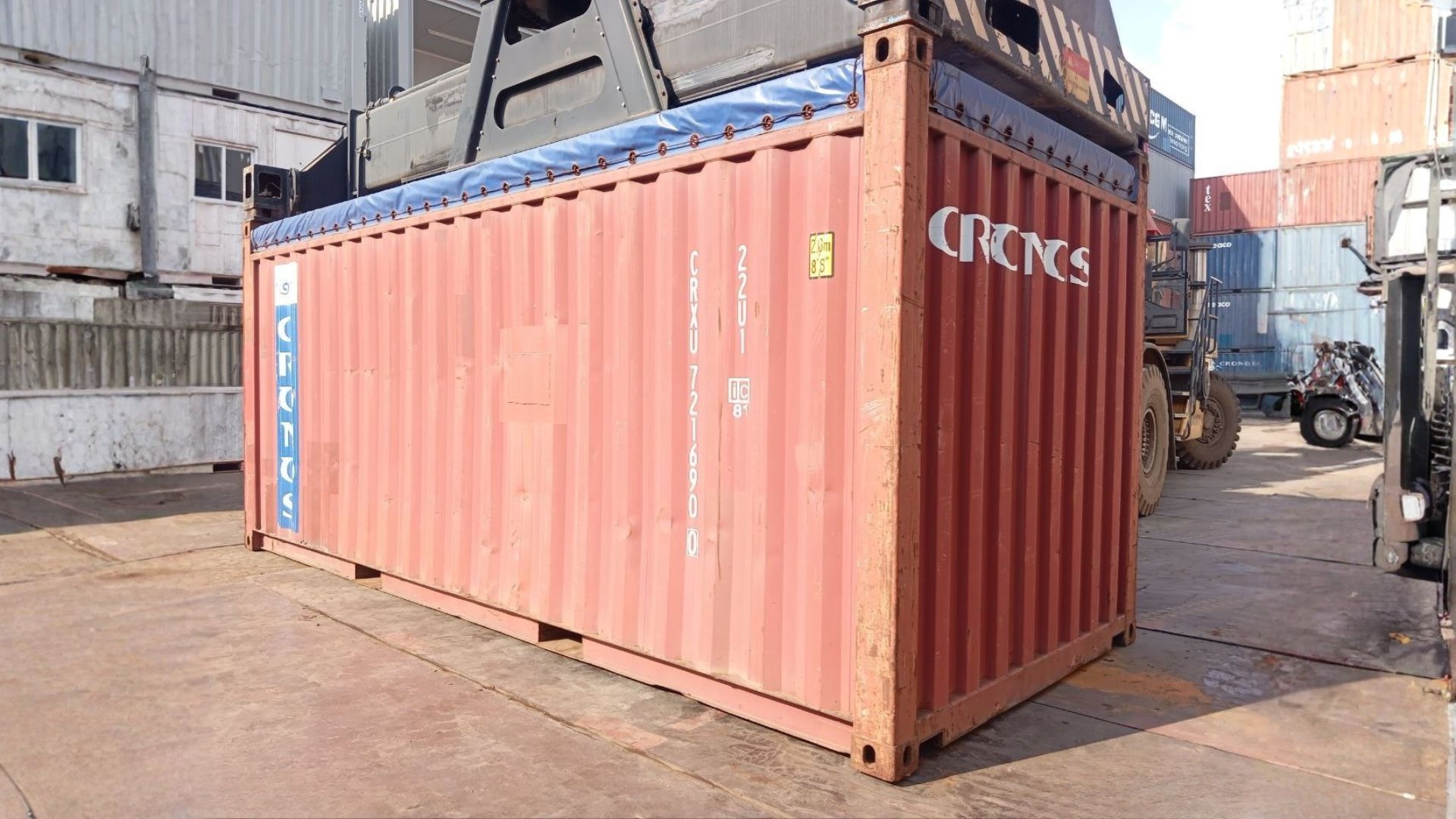
An open top container is a specialised shipping container designed for goods that are difficult to load through standard container doors. Unlike a conventional dry container with a fixed steel roof, it typically features a removable tarpaulin supported by removable roof bows.
This configuration allows suitable cargo to be loaded from above using cranes or other appropriate lifting equipment. It is particularly useful for industrial machinery, construction materials, large components and other bulky or irregularly shaped goods.
For logistics, manufacturing and construction businesses in Malaysia, choosing an open-top container requires understanding cargo dimensions, available roof clearance, equipment weight ratings and shipping requirements.
Although an open top design provides additional loading flexibility, it does not eliminate structural limits or cargo securing requirements.
This guide explains how open top containers work, when they are suitable, the differences between 20ft and 40ft configurations, and what to check before arranging oversized cargo transportation.
What Is an Open Top Shipping Container?
An open top shipping container is similar to a standard General Purpose (GP) container but does not have a permanent conventional steel roof.
Instead, many models use a removable tarpaulin cover supported by detachable roof bows.
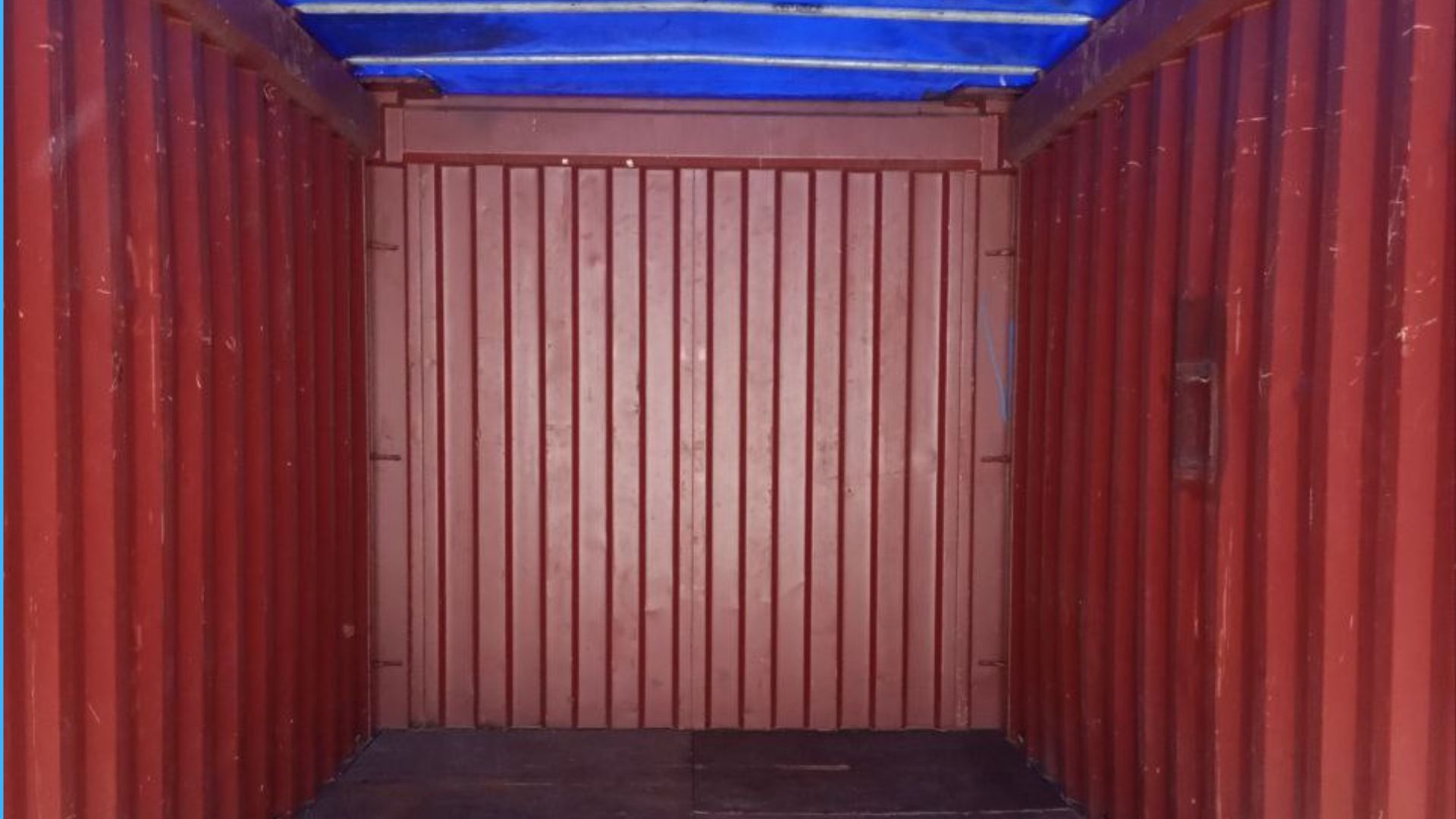
This design allows cargo to be lifted vertically into the container, making it suitable for goods that cannot be conveniently loaded through the rear doors.
Key Features of Open Top Containers
- Removable Roof Cover: Allows access from above for suitable crane loading operations.
- Removable Roof Bows: Support the cover and form part of the intended container structure.
- End Cargo Doors: Provide conventional access for suitable loads.
- Movable Door Header: Available on many models to facilitate loading of certain oversized goods.
- Steel Side Walls: Provide an enclosed perimeter around the cargo.
- Cargo Securing Points: Allow appropriate lashing arrangements within rated capacities.
Specific features vary by manufacturer. Some specialised containers use removable rigid roofs instead of flexible tarpaulins.
When Should You Use an Open Top Container?
The main reason to choose an open top container is that the cargo cannot be loaded conveniently or safely through a conventional end-door opening.
This may be because the equipment is too tall, too bulky, or difficult to manoeuvre horizontally.
1. Cargo Exceeds Standard Door Clearance
A standard dry container typically has an internal height of approximately 2.39 metres, while the rear door opening is lower.
Even when machinery fits within the internal height of a container, it may not pass through the doorway.
An open top unit can allow the cargo to be lowered from above, subject to the available roof aperture and lifting requirements.
2. Heavy Machinery Requires Crane Loading
Some industrial machinery cannot be loaded using conventional forklifts or rear-door handling methods.
Examples include:
- Industrial generators.
- Large machinery components.
- Heavy fabrication equipment.
- Processing equipment.
- Selected construction machinery.
- Large industrial assemblies.
Overhead crane loading may provide a more suitable handling arrangement when supported by an appropriate lifting plan.
3. Long or Awkwardly Shaped Materials
Open top containers can also be used for suitable construction and industrial materials that require overhead loading.
These may include structural steel, timber, certain pipes and large manufactured components.
However, cargo that exceeds the available internal width or cannot pass through the roof opening may require a flat rack or another specialised configuration.
Open Top Container vs Standard Dry Container
A standard dry shipping container provides a fully enclosed structure with a permanent roof.
An open top container provides additional loading access from above, but requires more attention to roof cover arrangements and cargo-specific loading requirements.
| Feature | Standard Dry Container | Open Top Container |
|---|---|---|
| Roof | Permanent steel roof | Removable cover or specialised removable roof |
| Main Loading Access | End cargo doors | End doors and overhead access |
| Crane Loading from Above | Not available through the fixed roof | Possible when suitable lifting arrangements are used |
| Overheight Cargo | Restricted by enclosed dimensions | Possible subject to carrier approval |
| Weather Protection | Enclosed steel structure | Removable cover where fitted and applicable |
| Typical Applications | General dry cargo | Bulky machinery and specialised cargo |
Open Top Container vs Flat Rack Container
Both open top and flat rack containers can support certain oversized cargo requirements, but their structures are different.
An open top container retains conventional side walls, while a flat rack generally has an open platform without permanent side walls or a roof.
When an Open Top Container May Be Suitable
Open top containers may be useful when the cargo fits within the container's available width and floor dimensions but requires vertical loading access.
They can also provide an enclosed perimeter around suitable cargo.
However, steel side walls do not replace proper cargo securing arrangements.
When a Flat Rack May Be More Suitable
A flat rack may be more appropriate for machinery or structures that exceed the available width of an open top container.
Flat racks also provide different loading access and may accommodate certain cargo profiles that cannot pass through an open top roof aperture.
Final equipment selection depends on cargo dimensions, weight, handling requirements and carrier acceptance.
How Does Overhead Loading Work in an Open Top Container?
Many open top containers allow the tarpaulin and roof bows to be removed before loading.
This creates an overhead opening through which suitable cargo can be lowered using appropriate lifting equipment.
Because the roof bows and header components may contribute to the container's intended structural configuration, removal and reinstallation must follow the manufacturer's instructions.
Step 1: Check the Cargo Dimensions
Measure the complete cargo length, width and height, including packaging, support structures and lifting attachments.
Compare these measurements with the actual internal dimensions and clear roof opening.
Step 2: Confirm the Lifting Arrangement
The cargo's lifting points, weight and centre of gravity should be assessed before crane loading.
The lifting operation must be planned and carried out by competent personnel using suitable equipment.
Step 3: Prepare the Container
The equipment provider's instructions should be followed when removing roof covers, bows or movable door headers.
The floor, structural components and cargo securing points should also be checked before loading.
Step 4: Position the Cargo
Heavy equipment should be positioned according to an appropriate loading plan that considers weight distribution, support points and structural capacity.
Where necessary, suitable load-spreading arrangements should be specified by qualified personnel.
Step 5: Secure the Load
Cargo must be adequately secured for the intended transportation conditions.
The lashing arrangement should use appropriate securing equipment and rated attachment points.
Step 6: Reinstall the Roof Components Where Applicable
Where the cargo can be accommodated beneath the cover, the roof bows and tarpaulin should be reinstated according to the relevant instructions.
For overheight cargo, the transport arrangement and any cover limitations must be confirmed with the carrier.
20ft and 40ft Open Top Container Dimensions
Open top containers are commonly available in 20ft and 40ft configurations.
Although their external footprints generally follow standard container dimensions, the internal measurements and usable roof openings can vary by manufacturer.
| Specification | 20ft Open Top | 40ft Open Top |
|---|---|---|
| External Length | Approx. 6.06 m | Approx. 12.19 m |
| External Width | Approx. 2.44 m | Approx. 2.44 m |
| External Height | Approx. 2.59 m | Approx. 2.59 m |
| Internal Length | Approx. 5.90 m | Approx. 12.03 m |
| Internal Width | Approx. 2.35 m | Approx. 2.35 m |
| Usable Roof Opening | Varies by model | Varies by model |
| Payload Rating | Confirm actual equipment | Confirm actual equipment |
| Tare Weight | Confirm actual equipment | Confirm actual equipment |
Important: These measurements are indicative for standard-height equipment. Internal height, roof aperture, door opening and weight ratings should be verified using the selected unit's technical specifications.
Why Roof Opening Dimensions Matter
The available opening at the roof may be smaller than the internal floor dimensions.
Structural rails, end headers and other components can reduce the clear opening through which cargo must pass.
Therefore, machinery may fit within the container's internal floor area but still be too wide or too long to lower through the roof opening.
Shippers should check the complete lifting path, not only the final resting dimensions of the cargo.
20ft Open Top Container Applications
A 20ft open top container may be suitable for compact but heavy machinery, industrial components and other equipment requiring overhead loading.
Its shorter footprint may also be more practical where available site space is limited.
40ft Open Top Container Applications
A 40ft open top container provides a longer internal cargo area.
It may be suitable for long industrial components, machinery and bulky materials that require greater loading length.
However, a larger container does not automatically provide a higher payload rating.
How Much Weight Can an Open Top Container Carry?
The maximum cargo weight depends on the actual container's approved ratings and applicable transportation requirements.
Businesses should confirm three important specifications.
- Tare Weight: The weight of the empty container.
- Maximum Gross Weight: The permitted total weight of the container and cargo.
- Maximum Payload: The rated cargo weight that the container can carry.
Weight limits vary by manufacturer and model.
In addition, the maximum payload does not mean that the entire rated cargo weight can be concentrated on a small area of the floor.
Heavy machinery may require an assessment of point loads, floor support and weight distribution.
Can Open Top Containers Carry Overheight Cargo?
Open top containers may be used for cargo extending above the normal container profile when the relevant shipping requirements are met.
However, exceeding the applicable dimensional limits can result in the cargo being classified as out-of-gauge (OOG).
What Is Out-of-Gauge Cargo?
Out-of-gauge cargo exceeds the applicable dimensional limits for standard container handling or stowage.
For an open top container, this commonly concerns cargo extending above the normal roof profile.
Such shipments may require special vessel stowage, handling arrangements and carrier approval.
What Information Should Be Submitted?
When requesting transport approval for oversized cargo, the shipping line or freight forwarder may require:
- Complete cargo dimensions.
- Total cargo weight.
- Centre-of-gravity information.
- Technical drawings or cargo photographs.
- Proposed loading arrangement.
- Support and securing details.
- Amount of cargo protrusion.
- Relevant lifting and handling requirements.
Shippers should obtain the necessary acceptance before moving the loaded container to the port.
How to Secure Cargo Inside a Container Open Top Configuration
Proper cargo securing is essential when transporting heavy or irregular loads inside a container open top configuration.
Although the container has steel side walls, cargo can still shift during transportation if it is not adequately restrained.
Inspect Available Lashing Points
Open top containers may have designated securing points along structural rails or other locations.
Inspect the condition of these points and confirm their rated capacities before use.
Do not assume that all open top containers have identical lashing arrangements.
Assess Cargo Weight Distribution
Heavy or irregular machinery may apply concentrated loads to the container floor.
The loading plan should account for the position of the cargo's weight and its supporting contact points.
Where necessary, appropriate load-spreading arrangements should be designed for the particular shipment.
Check the Roof Cover
Where a tarpaulin is fitted, inspect it for visible tears, damage or missing securing components.
Confirm that the cover is installed according to the equipment provider's instructions.
A tarpaulin provides weather protection when correctly installed, but it should not be assumed equivalent to a permanent rigid roof or suitable for every exposed cargo configuration.
Follow Applicable Cargo Securing Requirements
Cargo securing should be planned according to the load characteristics and relevant transport guidance, including the IMO/ILO/UNECE CTU Code where applicable.
For heavy or specialised loads, qualified cargo securing personnel should determine the appropriate restraint and support arrangement.
What Should You Inspect Before Buying or Renting an Open Top Container?
Businesses considering open top equipment should check its condition and specifications before arranging cargo loading or storage.
1. Container Structure
Inspect the side walls, corner posts, corner castings, structural rails and other visible components for significant damage.
2. Removable Roof Components
Confirm that roof bows, locking mechanisms and any movable door header are present and operate according to the relevant design.
3. Tarpaulin Condition
Inspect the cover and its securing arrangement for tears, deterioration or missing components.
4. Floor Condition
Check the flooring for visible damage, weak areas and signs of excessive wear.
5. Cargo Securing Points
Inspect the available lashing points and confirm their suitability for the intended load.
6. Certification and Documentation
If the equipment will be used for international shipping, confirm its applicable CSC approval, inspection status and carrier requirements.
7. Equipment Availability
Confirm that the required 20ft or 40ft configuration is available for the intended project timeline and location.
Open Top Container vs Flat Rack: Which Should You Choose?
| Cargo Requirement | Container to Consider |
|---|---|
| Machinery requiring top loading | Open Top Container |
| Tall cargo within container width | Open Top, subject to clearance and approval |
| Cargo wider than a conventional container | Flat Rack Container |
| Long irregular equipment requiring side access | Flat Rack, subject to specifications |
| General dry cargo fitting through end doors | Standard GP Container |
| Industrial machinery requiring overhead crane access | Open Top or Flat Rack, depending on dimensions |
The best option depends on the dimensions, weight and handling characteristics of the goods.
Businesses should compare the actual equipment specifications before finalising transportation arrangements.
Frequently Asked Questions About Open Top Containers
1. What Is an Open Top Container?
An open top container is a shipping container without a permanent conventional roof. It typically uses a removable tarpaulin and roof bows, allowing suitable cargo to be loaded from above.
2. What Are Open Top Containers Used For?
Open top containers are commonly used for heavy machinery, industrial equipment, construction materials and bulky cargo that cannot be conveniently loaded through standard container doors.
3. What Is the Difference Between an Open-Top Container and a Standard Container?
A standard dry container has a permanent roof and is primarily loaded through end doors. An open-top container provides additional overhead loading access through a removable roof arrangement.
4. What Are the Dimensions of a 20ft Open Top Container?
A standard-height 20ft open top typically measures approximately 6.06 metres long, 2.44 metres wide and 2.59 metres high externally. Actual internal dimensions and roof openings vary by model.
5. Are 40ft Open Top Containers Available?
Yes. Open top containers are commonly manufactured in 20ft and 40ft configurations. Availability depends on the supplier, container condition and location.
6. Can an Open Top Container Carry Cargo Taller Than Its Roof?
It may be possible to transport overheight cargo, subject to equipment suitability, loading requirements, out-of-gauge approval and carrier acceptance.
7. Does an Open Top Container Protect Cargo from Rain?
A correctly fitted tarpaulin can provide weather protection for suitable cargo. However, the cover's condition and the cargo arrangement must be assessed, particularly for sensitive or overheight loads.
8. What Is the Difference Between Open Top and Flat Rack Containers?
An open top container retains side walls but has a removable roof arrangement. A flat rack generally has an open platform without permanent side walls or a roof, making it suitable for certain wider and irregular cargo.
9. Can Open Top Containers Be Used for International Shipping?
Yes. Open top containers are used for specialised international cargo transportation when the equipment, cargo securing, certification and carrier requirements are satisfied.
10. Where Can I Enquire About Open Top Containers in Malaysia?
Businesses can enquire with OSG Containers Malaysia about available open top equipment for industrial, manufacturing, construction and specialised cargo requirements. Provide the desired container size, cargo dimensions, weight and delivery location to request suitable options.
Choose the Right Open Top Container for Your Cargo
An open top container provides practical loading flexibility for machinery, construction materials and other cargo that cannot be conveniently handled through a standard shipping container's end doors.
However, successful transportation depends on understanding the available roof clearance, cargo dimensions, structural ratings, loading methods and securing requirements.
For businesses handling industrial or oversized cargo in Malaysia, selecting the appropriate container configuration and confirming carrier acceptance can help support more effective shipment planning.
Looking for Open Top Containers in Malaysia?
Explore open top container solutions for oversized machinery, heavy equipment, construction materials and specialised cargo transportation.
Share your required container size, quantity, cargo dimensions, weight and delivery location with our team to explore suitable equipment options and request a quotation.
Explore Open Top Containers in MalaysiaSee More Insights from OSG Containers on Google
Enjoy our container guides and industry insights? Add OSG Containers as a Preferred Source on Google to discover more of our relevant articles.
Add OSG as a Preferred Source (opens in a new tab)