
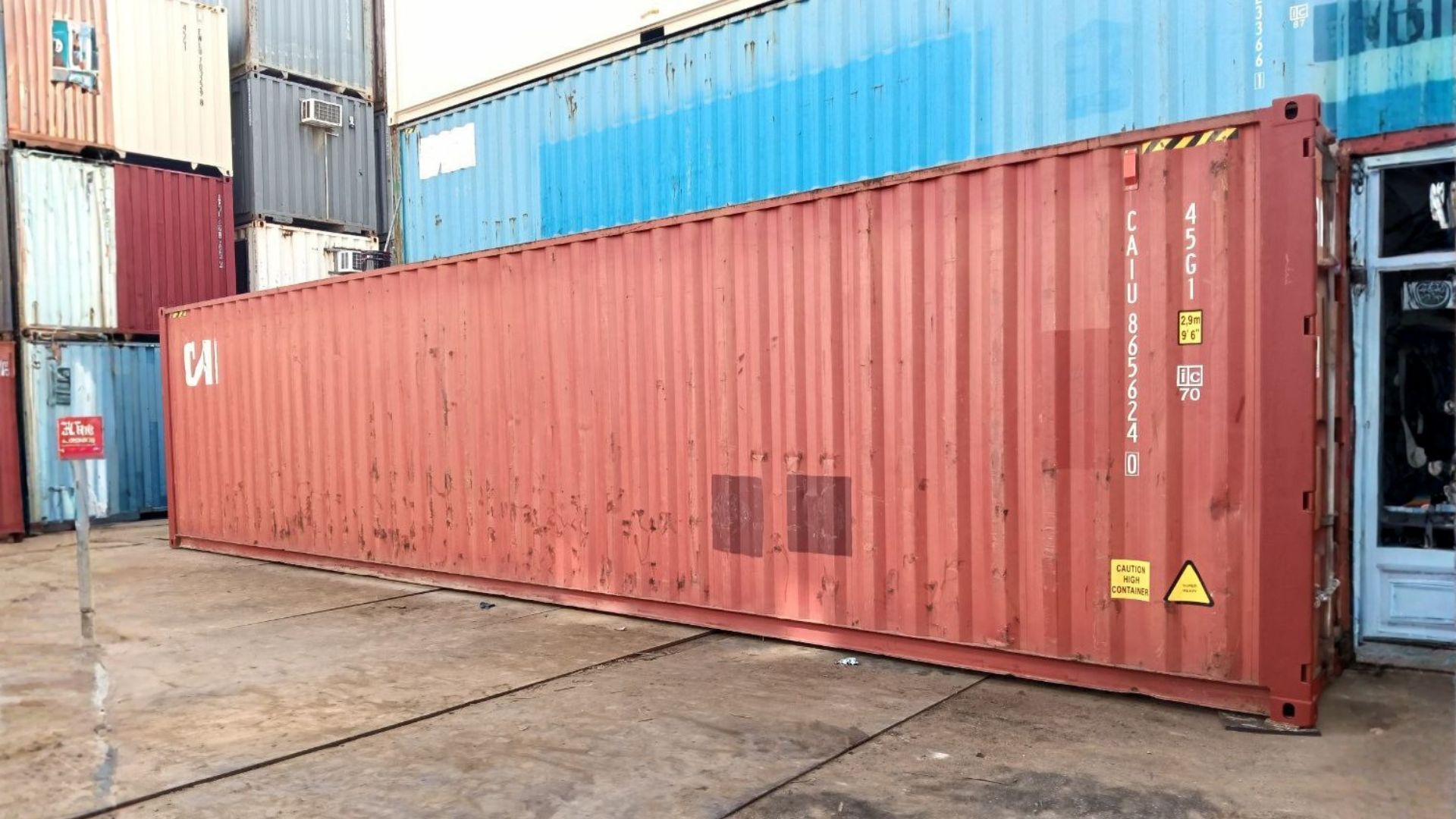
High Cube Container Singapore: Dimensions, Benefits and Buying Guide
A high cube container provides additional vertical space compared with a standard-height shipping container, making it a practical option for businesses that need to transport or store taller and bulkier goods.
In Singapore, high cube containers are used across logistics, warehousing, construction, manufacturing, and commercial operations. Their additional height can accommodate suitable cargo, storage arrangements, and selected container conversion projects without increasing the container's standard external width.
However, choosing the right container involves more than comparing available space. Businesses should review internal dimensions, door opening clearance, payload capacity, structural condition, and delivery requirements before purchasing or renting a unit.
If you are searching for a high cube container singapore supplier, this guide explains the key specifications, applications, and inspection considerations to help you select a suitable container for your business.
Stage 1: Understanding High Cube Container Dimensions and Capacity
High Cube containers are designed with additional height compared with standard shipping containers of the same nominal length.
A typical High Cube container has an external height of approximately 2,896 mm, compared with approximately 2,591 mm for a standard-height container.
This additional height creates more internal volume for compatible cargo and storage applications.
What Are the Dimensions of a 40ft High Cube Container?
A 40ft high cube container has a nominal external length of 12,192 mm, width of 2,438 mm, and height of 2,896 mm.
Its internal dimensions are generally similar in length and width to a standard 40ft dry container, while offering approximately 300 mm of additional internal height.
Common 40ft High Cube containers provide around 76 cubic metres of internal volume, depending on the manufacturer and configuration.
For businesses handling bulky cargo, the additional vertical space may allow more flexible loading or storage arrangements.
How Does a High Cube Container Compare with a Standard Container?
The table below compares typical specifications for Standard 40ft and 40ft High Cube dry containers.
| Specification | 40ft Standard Container | 40ft High Cube Container |
|---|---|---|
| External Length | 12,192 mm | 12,192 mm |
| External Width | 2,438 mm | 2,438 mm |
| External Height | 2,591 mm | 2,896 mm |
| Approximate Internal Height | 2.39 m | 2.70 m |
| Approximate Door Opening Height | 2.28 m | 2.58 m |
| Approximate Internal Volume | 67-68 m³ | 76 m³ |
| Tare Weight | Varies by unit | Varies by unit |
| Maximum Payload | Varies by unit | Varies by unit |
Note: Specifications are indicative for common ISO dry freight containers. Actual internal dimensions, door openings, tare weights, and payload ratings vary by manufacturer and individual unit. Always confirm the specifications before purchasing or loading.
Why Does Internal Volume Matter?
The additional internal volume of a High Cube container can be useful when transporting or storing goods that occupy more space relative to their weight.
Examples may include:
- Furniture and household goods
- Packaged consumer products
- Textiles and apparel
- Lightweight industrial materials
- Bulky machinery components
- Suitable commercial inventory
However, a larger internal volume does not automatically mean that more cargo weight can be carried.
Businesses should assess the relationship between cargo volume, total weight, and the permitted payload of the individual container.
Stage 2: Checking Internal Height and Door Opening Clearance
One important consideration when choosing a High Cube container is the difference between its internal height and actual door opening height.
Although the container offers additional vertical space, the rear door opening is generally lower than the internal ceiling.
Why Is Door Opening Height Important?
A typical 40ft High Cube container may have an internal height of approximately 2.70 m but a rear door opening height of approximately 2.58 m.
This difference matters when loading tall machinery, crates, furniture, or palletised cargo.
An item may fit within the container's internal height but still be too tall to pass through the rear doorway.
Before loading, businesses should confirm:
- Overall cargo height
- Packaging or pallet height
- Actual container door opening dimensions
- Loading equipment clearance
- Any additional height caused by lifting or handling arrangements
Checking these measurements helps determine whether the cargo can enter the container using the intended loading method.
What If Your Cargo Is Too Tall for the Door Opening?
If cargo cannot pass through the available doorway, businesses may need to consider alternative equipment or loading arrangements.
Depending on the cargo, options may include an Open Top container or another suitable specialised configuration.
The appropriate solution depends on cargo dimensions, handling requirements, weight, and transport arrangements.
Businesses should avoid attempting to force oversized cargo through the doorway, as this may damage the cargo or container.
Stage 3: Understanding Payload Capacity and Weight Distribution
A High Cube container provides additional height, but its payload capacity depends on the design and specifications of the individual unit.
Businesses should not assume that every High Cube container has the same maximum allowable weight.
How Do You Check a Container's Payload Capacity?
Before loading a container, review its applicable identification and weight markings.
Important specifications include:
- Tare mass: The weight of the empty container.
- Maximum gross mass: The maximum permitted combined mass of the container and its contents.
- Payload capacity: The permitted cargo mass based on the container's specifications.
- Cargo distribution: How the total load is arranged across the container floor.
Businesses should also account for packaging, pallets, and cargo-securing materials when calculating the total load.
The applicable transportation limits may depend on the vehicles, equipment, and routes involved.
Is a High Cube Container Suitable for Heavy Cargo?
A High Cube container may be suitable for heavy cargo when its weight and loading arrangement are within the unit's permitted limits.
However, dense materials such as metal components or heavy industrial equipment may reach weight restrictions before using the available internal volume.
For this reason, the additional height may provide greater benefits for lightweight or bulky goods than for certain dense cargoes.
The container should be selected according to both cargo dimensions and weight requirements.
Stage 4: Inspecting the Structural Condition of High Cube Containers
Container condition is an important consideration when buying or renting equipment, particularly for used containers.
Although containers may share similar nominal dimensions, their physical condition can vary depending on previous use, maintenance, and repairs.
What Should You Inspect on the Exterior?
When evaluating a used High Cube container, review the accessible exterior surfaces and structural components.
Important areas include:
- Corner posts: Look for visible deformation, cracks, or previous repairs.
- Corner castings: Check for visible damage or signs of deterioration.
- Side walls: Examine corrosion, dents, and repaired sections.
- Roof panels: Look for holes, significant rust, or damage affecting weather protection.
- Bottom rails: Check for visible corrosion or structural concerns.
- Door frames: Look for deformation that may affect door operation.
Minor cosmetic marks do not automatically make a container unsuitable.
However, significant corrosion, cracks, or deformation affecting structural components should be assessed by an appropriately qualified inspector.
How Do You Check Flooring and Internal Condition?
Many General Purpose High Cube containers use timber or plywood flooring, although the material and specifications may vary.
During inspection, look for:
- Damaged or cracked floorboards
- Signs of water damage
- Visible delamination
- Previous repairs
- Unusual stains or residues
- Potential contamination concerns
Flooring should be suitable for the intended cargo and loading equipment.
Where the previous cargo or treatment history is uncertain, additional checks may be appropriate before storing sensitive goods or converting the container into an occupied space.
Why Are Door Seals and Locking Mechanisms Important?
Container doors and seals help protect suitable stored goods from external weather conditions.
When inspecting the doors, consider:
- Door alignment
- Condition of rubber gaskets
- Hinges and locking rods
- Locking handles and keepers
- Visible corrosion around the door frame
Doors should open, close, and secure correctly without excessive force.
Any inspection should be carried out safely, with appropriate precautions to prevent crushing or entrapment hazards.
Stage 5: Checking CSC Approval and Container Documentation
Businesses planning to use a High Cube container for international freight transportation should review the relevant safety approval and examination documentation.
The International Convention for Safe Containers (CSC) establishes safety requirements for freight containers within its scope.
What Is a CSC Approval Plate?
A CSC approval plate provides information relating to the container's safety approval and specified operating limits.
For international freight use, businesses should check that the relevant approval information is legible and corresponds to the container.
The presence of a CSC plate alone does not confirm that a container is currently suitable for every intended application.
What Should You Know About Container Examination Requirements?
Containers may be maintained under periodic examination arrangements or an Approved Continuous Examination Programme (ACEP).
Where periodic examinations apply, the relevant next examination date should be checked.
For containers maintained under ACEP, the applicable programme and examination requirements should be verified.
Businesses should confirm the necessary documentation and current container condition before using the equipment for international shipping.
Stage 6: Planning High Cube Container Transport in Singapore
Transporting a High Cube container requires suitable delivery planning because its additional external height affects overall vehicle clearance.
Businesses should confirm the dimensions of the loaded transport vehicle and assess the intended route before delivery.
What Should You Consider Before Delivery?
When arranging High Cube container transportation, review:
- Container dimensions and actual weight
- Transport vehicle configuration
- Overall travelling height
- Road and overhead clearance restrictions
- Gate and entrance access
- Available turning space
- Ground conditions
- Unloading and lifting arrangements
- Final placement position
The appropriate transport method should be determined by the logistics provider based on the container and site requirements.
Are There Special Transport Considerations in Singapore?
Singapore's road network includes bridges, overhead structures, and access restrictions that may affect container transportation.
Transport providers should evaluate the overall vehicle and container height, route conditions, and applicable requirements before moving a High Cube unit.
Businesses should not assume that all roads or industrial sites can accommodate every vehicle configuration.
Any necessary approvals or special transport arrangements should be confirmed with the relevant service providers and authorities.
Why Is Site Preparation Important?
Containers require suitable support at their intended placement location.
Uneven or unsuitable ground may affect container stability, alignment, and door operation.
The appropriate support arrangement depends on the container's design, weight, expected loading, and site conditions.
Where necessary, obtain technical advice before positioning the container.
Stage 7: Choosing Between Standard and High Cube Containers
Businesses should compare Standard and High Cube containers according to cargo requirements, available space, and intended use.
Choosing a 40 high cube container may be appropriate when additional vertical clearance or internal storage volume provides a practical advantage.
When Is a Standard Container Sufficient?
A Standard container may be suitable when:
- Cargo fits comfortably within the available internal dimensions
- Additional height is not required
- The intended loading arrangement is compatible with standard door openings
- Site or transport requirements favour a standard-height unit
The appropriate choice should be based on the specific cargo and operational requirements.
When Should You Consider a High Cube Container?
A High Cube container may be beneficial when:
- Cargo requires additional vertical clearance
- Bulky goods occupy more volume relative to their weight
- Additional internal storage height is useful
- The container will be adapted for a suitable conversion project
- The intended layout benefits from greater ceiling height
However, businesses should confirm that the additional height can be used effectively and that the selected container remains suitable for the intended transport or storage arrangement.
Stage 8: Buying or Renting a High Cube Container in Singapore
Businesses can choose between purchasing and renting High Cube containers depending on their operational requirements and expected duration of use.
The most suitable arrangement depends on factors such as budget, container condition, availability, and intended application.
Should You Buy or Rent a High Cube Container?
Purchasing may be suitable for businesses that require a container for long-term use or intend to undertake approved modifications.
Rental may be considered for temporary projects, additional storage requirements, or operations with a defined usage period.
Before deciding, businesses should compare the total cost of ownership or rental, including applicable transportation, handling, maintenance, and other commercial terms.
What Container Conditions Are Available?
High Cube containers may be offered in different conditions, including:
- New or One-Trip: Containers with limited previous cargo service, generally showing less wear.
- Used Cargo-Worthy: Containers generally suitable for freight use, subject to applicable inspection and approval requirements.
- Wind and Watertight: Containers that may be suitable for certain stationary storage applications but are not automatically approved for international shipping.
- As-Is: Containers sold in their existing condition, potentially requiring repairs or additional assessment.
The condition and suitability of individual units should be confirmed before purchase or rental.
Frequently Asked Questions About High Cube Containers
What Is the Height of a High Cube Container?
A typical High Cube shipping container has an external height of approximately 2,896 mm, or 9 feet 6 inches.
This is approximately 305 mm taller than a standard-height shipping container.
How Many CBM Does a 40ft High Cube Container Provide?
A typical 40ft High Cube dry container provides approximately 76 cubic metres of internal capacity.
Actual capacity varies according to the manufacturer and equipment configuration.
How Much Cargo Can Fit Inside a High Cube Container?
The amount of cargo that can fit depends on dimensions, packaging, stacking arrangements, and the container's permitted payload.
Although a High Cube container offers additional volume, businesses should not assume that all available internal space can be filled safely or efficiently.
Can a High Cube Container Be Used for Storage?
Yes. High Cube containers can be used for suitable storage applications, including commercial inventory, industrial equipment, and other compatible goods.
The container's condition and storage environment should be assessed according to the materials being stored.
Are High Cube Containers Available in 20ft and 40ft Sizes?
Yes. High Cube containers are available in different nominal lengths, including 20ft and 40ft configurations.
Actual product availability should be confirmed with the supplier.
Is a High Cube Container Suitable for Container Conversion?
High Cube containers may be considered for suitable conversion projects because their additional internal height can provide greater flexibility for selected layouts and fittings.
Any structural modification, insulation, electrical installation, or change of use should be assessed according to the intended application and applicable requirements.
Why Choose OSG Containers for High Cube Containers in Singapore?
OSG Containers provides High Cube shipping container solutions for businesses involved in logistics, construction, warehousing, manufacturing, and commercial operations.
Our High Cube container range includes 20ft and 40ft configurations, with new and used container options subject to availability.
We also provide container-related services such as transportation, lifting, positioning, and selected modification works.
Whether you need additional vertical storage space, suitable equipment for freight transportation, or a container for a conversion project, our team can help you explore available options based on your requirements.
Find the Right High Cube Container for Your Business
Choosing a suitable High Cube container involves reviewing its dimensions, payload limits, condition, and intended use.
The additional height can provide valuable storage and loading flexibility, but businesses should still confirm door clearance, structural condition, and delivery arrangements before purchase or rental.
Understanding these factors helps businesses select equipment suited to their operational requirements.
Looking for High Cube Containers in Singapore?
Explore our 20ft and 40ft High Cube container options for shipping, storage, and container conversion projects. Contact our team to discuss available sizes, conditions, and delivery requirements.
Explore High Cube Containers