How to Use a Container Pop-Up Store to Test New Markets in Singapore
Expanding into a new retail market can involve significant financial commitments, particularly when businesses are uncertain about customer demand, location suitability, or product performance.
A container pop-up store offers an alternative way to establish a temporary physical retail presence. Businesses can use a customised container space to introduce products, engage customers, and gather valuable market insights before deciding whether to invest in a permanent retail location.
From product launches and seasonal promotions to brand activations and temporary retail outlets, container-based retail spaces can support different commercial activities.
However, a successful market test requires more than setting up a store. Businesses should define clear objectives, select a suitable location, plan the retail layout, and measure customer response throughout the activation.
This guide explains how businesses in Singapore can use a container pop-up store to test new markets and evaluate opportunities for future expansion.
Stage 1: Define Your Market Testing Objectives
Before launching a temporary retail store, businesses should determine what they want to learn from the market.
A pop-up activation can provide opportunities to observe customer behaviour and gather direct feedback, but its usefulness depends on having measurable objectives.
What Should You Test Before Opening a Permanent Store?
Businesses may use a temporary retail space to evaluate several factors:
- Customer demand: Determine whether the target audience shows interest in the products or services.
- Product suitability: Identify which products attract attention and generate purchases.
- Location potential: Assess whether the surrounding area provides access to relevant customers.
- Pricing response: Observe how customers respond to different product prices or promotional offers.
- Brand awareness: Evaluate how effectively the retail presence attracts and engages potential customers.
- Operational requirements: Understand staffing, inventory, equipment, and daily operating needs.
Defining these objectives helps businesses evaluate results based on relevant information rather than sales performance alone.
How Long Should a Pop-Up Market Test Run?
The appropriate duration depends on the purpose of the activation, the location, the products being offered, and the available budget.
A short promotional campaign may help businesses collect initial customer reactions, while a longer activation may provide more opportunities to observe purchasing patterns and operational requirements.
When planning the duration, businesses should consider:
- Expected customer traffic during the activation period
- Weekday and weekend shopping patterns
- Seasonal demand for the products
- Available retail space and rental arrangements
- Staffing and operating costs
- The amount of data required to evaluate the market
A longer activation does not automatically guarantee better results. The testing period should be selected according to the business objectives and available resources.
Stage 2: Choose the Right Container Pop-Up Store Configuration
Once the objectives are established, businesses should select a container configuration suitable for the planned activities.
Different retail concepts require different layouts, equipment, and customer interaction areas.
For example, a merchandise showcase may focus on product displays and browsing space, while a promotional booth may require a service counter for demonstrations and customer enquiries.
What Container Size Is Suitable for Your Retail Activation?
Shipping container retail shops can be developed using different container sizes and configurations, depending on the project.
Common 20ft and 40ft shipping container configurations can support a range of retail applications, although the actual layout and available space depend on the selected design.
| Container Configuration | Potential Applications | Main Considerations |
|---|---|---|
| Compact Retail Configuration | Product sampling, ticketing, promotional counters | Limited workspace, equipment requirements, customer access |
| 20ft Container | Pop-up retail shops, product showcases, service counters | Retail layout, display space, staff working area |
| 40ft Container | Larger retail displays, exhibitions, multiple functional areas | Available site space, internal arrangement, delivery access |
The appropriate configuration depends on the products, expected activities, available site area, and budget.
Businesses should confirm the actual dimensions and available product options before finalising their retail plans.
How Can Container Design Support Your Market Test?
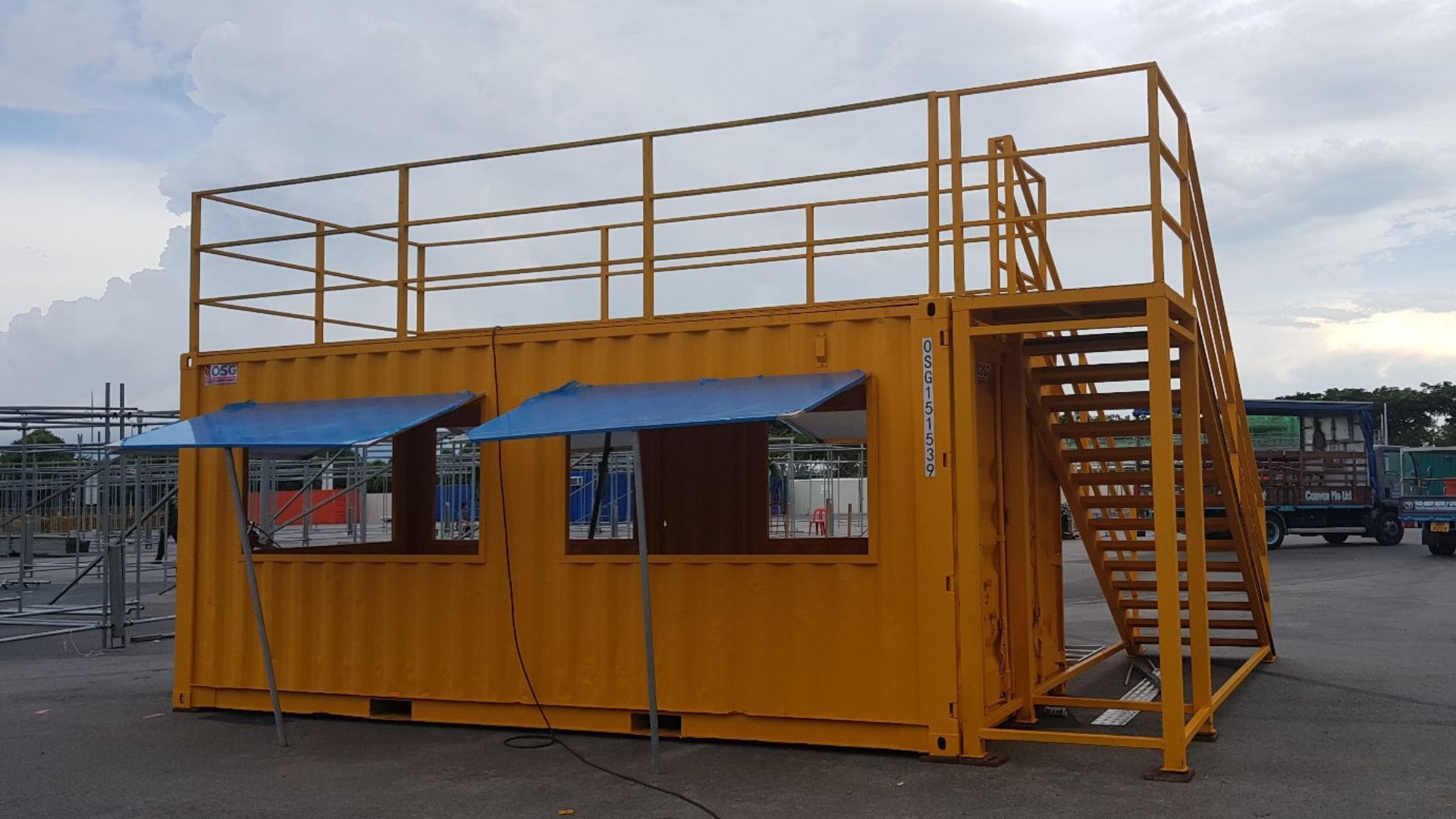
A shipping container retail store can be customised with features that support product visibility, branding, and customer engagement.
Depending on the intended application and available configuration, possible features include:
- Product display shelves and counters
- Serving or transaction windows
- Interior lighting
- Electrical fittings
- Storage cabinets
- Ventilation or air-conditioning provisions
- Exterior branding and signage
- Customer-facing openings
These features should be selected according to how the business intends to operate.
For example, a product demonstration space may require a clear viewing area and access to electrical equipment, while a retail kiosk may prioritise a service counter and secure product storage.
OSG Containers offers ShopBox container solutions for retail, F&B, and exhibition applications, with configuration options depending on project requirements.
Stage 3: Select a Suitable Location for Your Market Test
Location is an important factor when evaluating retail market potential.
A high-traffic location may provide greater brand exposure, but the number of people passing through an area does not automatically translate into purchases.
Businesses should consider whether the location attracts their intended customers and supports the planned retail activities.
How Should You Evaluate Customer Footfall?
Footfall refers to the number of people visiting or passing through a particular area.
For a container pop-up store, pedestrian movement can influence product visibility, customer access, and opportunities for engagement.
When evaluating a location, consider:
- Target audience: Whether visitors match the intended customer profile.
- Peak periods: When the location experiences higher visitor activity.
- Surrounding businesses: Whether nearby activities attract relevant customers.
- Visibility: Whether the store and its products can be easily noticed.
- Accessibility: Whether customers can approach the retail space conveniently.
- Customer behaviour: Whether visitors are likely to browse, make purchases, or participate in demonstrations.
Comparing customer engagement across different periods can help businesses understand how location and timing affect performance.
What Site Requirements Should You Check?
Before confirming a location, businesses should review whether the site can accommodate the proposed container installation.
Important considerations include:
- Available space: Confirm that the container and any required surrounding activity areas fit within the site.
- Ground conditions: Determine whether the placement area is suitable for the proposed installation.
- Delivery access: Check whether transport vehicles and lifting equipment can reach the location.
- Utilities: Identify electrical, water, drainage, and other operational requirements.
- Customer access: Consider entry points, pedestrian circulation, and accessibility.
- Site permissions: Confirm that the intended retail activity and container placement are permitted.
Where technical assessments or approvals are required, businesses should consult the relevant professionals, site owners, and authorities.
What Regulatory Requirements Apply in Singapore?
Businesses planning temporary retail operations in Singapore should confirm which regulatory requirements apply to their proposed activity and location.
Depending on the project, relevant considerations may involve:
- Urban Redevelopment Authority (URA): Planning requirements and approved land use.
- Building and Construction Authority (BCA): Applicable temporary building requirements and permits.
- Singapore Civil Defence Force (SCDF): Fire safety requirements and relevant submissions or approvals.
- Singapore Food Agency (SFA): Applicable licensing requirements for food-related businesses.
- Other relevant authorities: Additional requirements based on the location and intended use.
Temporary installations are not automatically exempt from regulatory requirements.
The necessary approvals depend on factors such as the container's configuration, intended duration, installation conditions, and business activity.
Businesses should confirm the applicable requirements before proceeding with their activation.
Stage 4: Prepare the Container for Retail Operations
After selecting the container and location, businesses should plan the interior layout and necessary operational facilities.
The goal is to create a space that supports staff activities while allowing customers to interact with the products or services.
How Should You Plan the Retail Layout?
The layout should reflect the business's operating model.
Some businesses may require customers to enter the container and browse products, while others may operate through an external service window or counter.
Important layout elements include:
- Product displays: Arrange merchandise to support visibility and accessibility.
- Sales counter: Position payment and enquiry areas according to customer flow.
- Storage: Allocate suitable space for inventory and operational supplies.
- Staff workspace: Provide room for employees and required equipment.
- Lighting: Select lighting appropriate for the products and activities.
- Customer circulation: Avoid unnecessary obstructions around access points.
The final design should also account for applicable safety and accessibility requirements.
What Electrical and Cooling Requirements Should You Consider?
Electrical and cooling requirements depend on the equipment, occupancy, operating conditions, and intended activities.
A container used for basic product displays may have different needs from one operating refrigeration equipment, food preparation appliances, or other powered systems.
Before installation, businesses should identify their intended electrical loads and discuss the requirements with the appropriate professionals.
Insulation, ventilation, and cooling arrangements should be selected according to the container's design and operating environment.
In Singapore, electrical installation and modification work must comply with applicable requirements and involve appropriately licensed personnel where required.
How Should You Plan Transportation and Setup?
Container delivery should be coordinated before the planned opening date.
The appropriate transport and unloading arrangements depend on the container's size, weight, configuration, and site accessibility.
Businesses should confirm:
- Delivery vehicle access
- Available unloading space
- Overhead clearance
- Ground conditions
- Required lifting equipment
- Placement orientation
- Utility connection arrangements
- Site access and scheduling restrictions
Any necessary ground preparation, structural assessment, or lifting work should be planned with the relevant qualified professionals.
OSG Containers provides container-related transportation and site setup services, with arrangements subject to project requirements.
Stage 5: Launch and Promote Your Container Pop-Up Store
A temporary retail space provides an opportunity to introduce a brand or product directly to potential customers.
However, the physical presence of a store does not guarantee customer visits.
Businesses should prepare marketing activities that help the intended audience discover the location and understand the products or services being offered.
How Can You Attract Customers to Your Pop-Up Store?
Marketing activities should reflect the target audience, campaign objectives, and available promotional channels.
Possible approaches include:
- Exterior branding: Use clear signage and graphics to communicate the business identity.
- Social media promotion: Announce the location, operating period, and key products before the launch.
- Product demonstrations: Allow visitors to experience or learn about selected products.
- Promotional offers: Introduce relevant launch promotions where commercially appropriate.
- Event participation: Consider suitable exhibitions, markets, or promotional events.
- Local partnerships: Explore collaborations with nearby businesses serving similar audiences.
All promotional activities should follow the applicable site rules and permissions.
Why Is Exterior Branding Important?
A container's exterior provides a visible surface for communicating the brand and its products.
Depending on the permitted design and configuration, branding may include company logos, product graphics, campaign messages, or promotional signage.
Clear branding can help visitors identify the store and understand its purpose.
For temporary activations, businesses should prioritise messages that communicate the offer quickly and clearly.
Stage 6: Measure Market Performance Before Expanding
The main advantage of conducting a market test is the opportunity to collect information that supports future business decisions.
Rather than evaluating a pop-up activation solely by total sales, businesses should review customer engagement, operating costs, and other relevant performance indicators.
Which Metrics Should You Track?
Useful performance indicators may include:
| Performance Metric | What It Measures | Why It Matters |
|---|---|---|
| Visitor Count | Number of people entering or engaging with the store | Helps assess customer interest and location performance |
| Sales Conversion Rate | Percentage of tracked visitors who make a purchase | Indicates how effectively visits translate into sales |
| Total Sales | Revenue generated during the activation | Supports evaluation of commercial performance |
| Average Order Value | Average transaction value | Helps assess customer spending patterns |
| Customer Feedback | Comments and responses from visitors | Provides insights into product and service expectations |
| Operating Costs | Expenses related to running the activation | Helps assess the commercial feasibility of expansion |
Businesses should select metrics that match their market testing objectives.
For example, a brand awareness campaign may prioritise visitor engagement and enquiries, while a retail concept may focus more heavily on sales performance and transaction behaviour.
How Can Customer Feedback Improve Your Retail Strategy?
Direct customer feedback provides information that may not be visible through sales figures alone.
Businesses can gather feedback through conversations, short surveys, product demonstrations, or other suitable methods.
Questions may focus on:
- Product preferences
- Price expectations
- Reasons for purchasing or not purchasing
- Preferred product variations
- Customer experience
- Interest in future locations
Combining feedback with sales and visitor data can help businesses identify areas for improvement.
How Do You Decide Whether to Expand?
After completing the activation, businesses should compare the results against their original objectives.
Important considerations include:
- Whether sufficient customer demand was observed
- Which products or services performed well
- Whether the location attracted the intended audience
- Whether operating costs were commercially manageable
- What customers said about the products and experience
- Whether the results justify further testing or expansion
A successful short-term activation does not automatically guarantee long-term retail success.
However, the information collected can help businesses make more informed decisions about product development, future locations, and potential investment.
Why Choose OSG Containers for Pop-Up Retail Solutions in Singapore?
OSG Containers provides customisable container solutions for retail businesses, promotional campaigns, exhibitions, and commercial applications.
Our ShopBox and Event & Pop-up Container solutions can support different concepts, including temporary retail shops, product showcases, service counters, and brand activations.
Depending on the selected product and project requirements, configurations may include display areas, serving counters, interior fittings, electrical provisions, and exterior branding.
We also provide container-related services such as transportation, lifting, positioning, and site setup support.
Whether your business is testing a new retail concept, launching a product, or exploring temporary commercial space, our team can help you review suitable container options.
Start Testing New Markets with a Container Pop-Up Store
A container pop-up store offers businesses a way to establish a temporary physical presence while gathering information about customers, products, and location performance.
By defining clear objectives, choosing a suitable configuration, selecting an appropriate site, and measuring results, businesses can use temporary retail activations to support more informed expansion decisions.
From product launches to promotional campaigns, container-based retail spaces provide flexible options for businesses exploring new opportunities in Singapore.
Planning to Test a New Market with a Pop-Up Store?
Explore our customisable pop-up container solutions for retail launches, product showcases, and promotional campaigns. Contact our team to discuss a suitable configuration for your business.
Explore Pop-Up Containers