
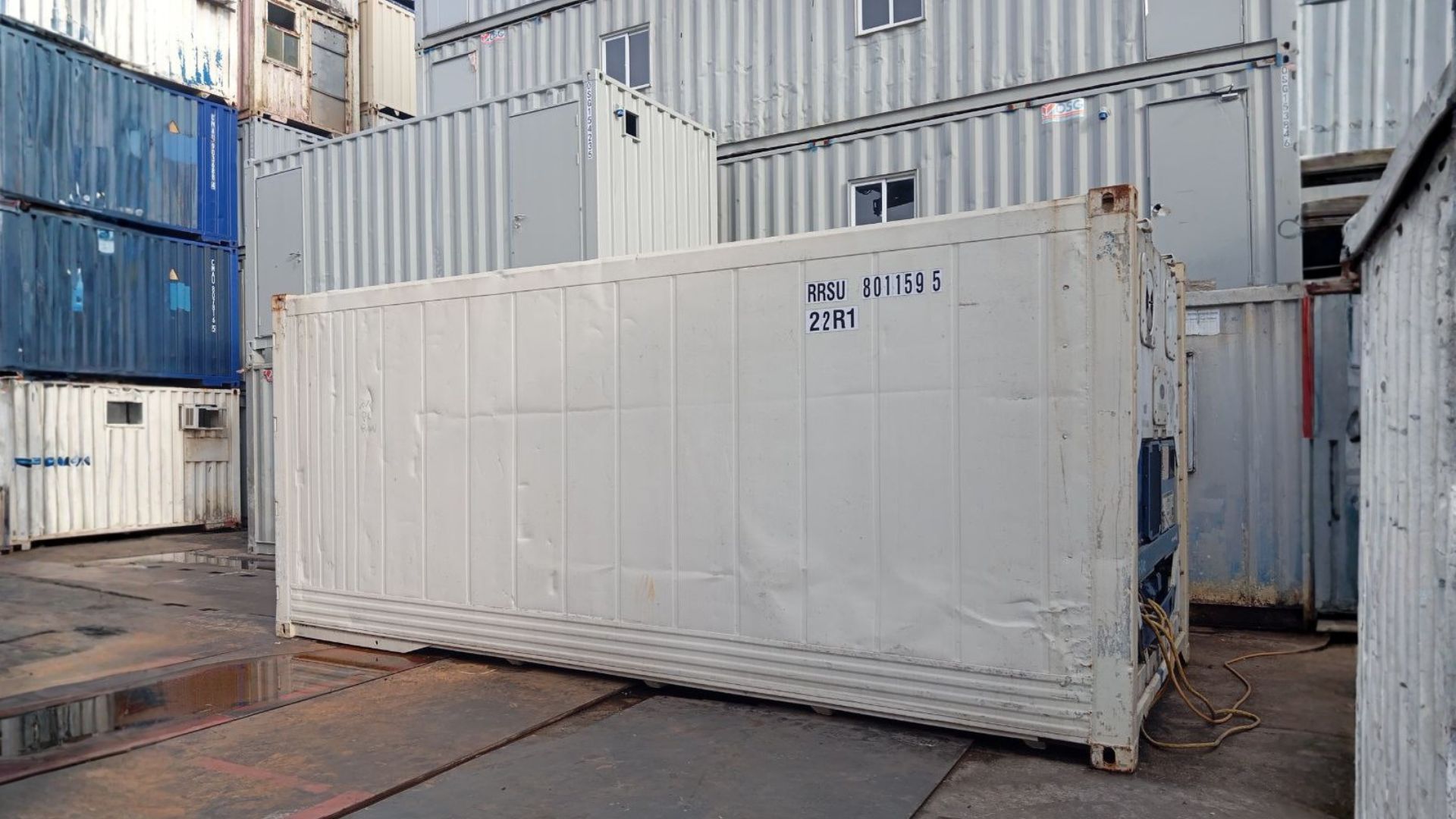
Cooling containers vs fixed cold rooms
Cooling containers offer portable, scalable temperature control that deploys in days without the massive upfront capital, building permits, or permanent site commitments of fixed cold rooms. While built-in facilities suit decades of static volume, modular units protect working capital, lower installation timelines, and scale up or down as commercial inventory demands shift.
You need extra temperature-controlled space right now, but committing hundreds of thousands of dollars to construct a permanent brick-and-mortar cold room risks locking up vital operating capital when seasonal demand swings. When we evaluate storage facilities facing rapid growth or warehouse overflow, the debate between structural cold storage and modular units almost always hinges on speed, financial flexibility, and long-term utility. Modern portable cold storage has evolved far beyond the noisy, rusted transport boxes of past decades, offering commercial food distributors, pharmaceutical suppliers, and chemical manufacturers a genuine alternative to traditional building expansion.
Are cooling containers too expensive compared to permanent cold storage?
Permanent cold rooms demand massive upfront capital because you must fund architectural drawings, structural engineering reviews, municipal permits, and specialized contractors before pouring a single slab of insulated foundation. When you factor in civil works, vapor barrier installations, and dedicated plant machinery, a built-in cold room presents a heavy sunk cost that depreciates slowly and remains trapped inside that specific address forever. Portable cooling containers eliminate that capital lock-in by transferring your cold storage capacity into an adaptable operational asset that you can scale down when volumes normalize.
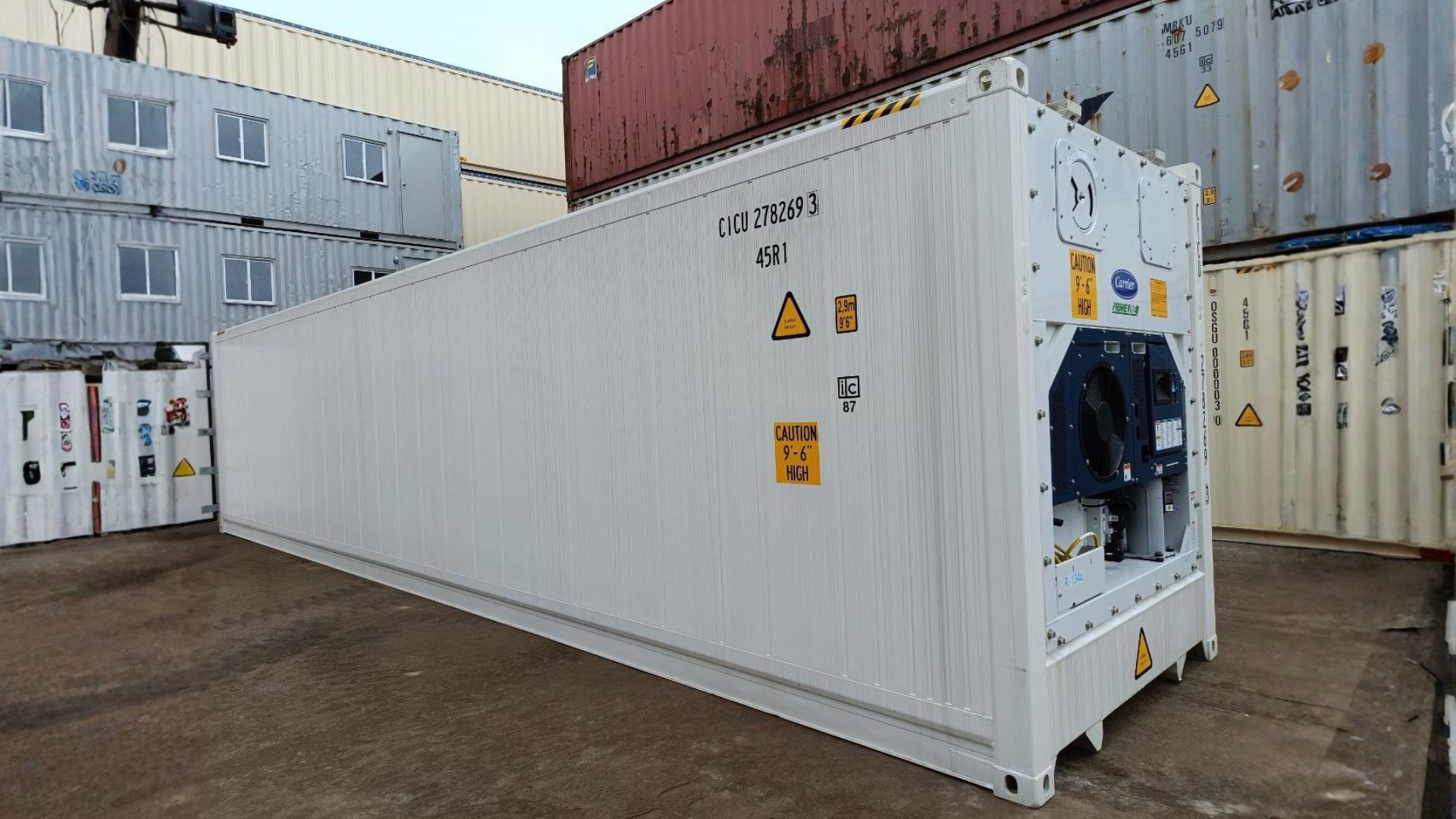
We often advise operations managers to run the numbers across a five-year horizon rather than simply glancing at monthly equipment rental charges. If your inventory levels remain rock-solid for two decades without any shift in product mix or warehouse layout, a permanent room eventually yields lower amortized costs. If your contracts change, your lease expires, or your customer volumes fluctuate throughout the operating year, modular cooling units protect your balance sheet against costly underutilization.
| Comparison Factor | Fixed Cold Room Facility | Modular Cooling Containers |
|---|---|---|
| Upfront Capital Required | High upfront cost for building, planning, and civil works | Minimal setup expense; available via operational rental or purchase |
| Deployment Timeline | Four to twelve months depending on contractor availability | Delivered and commissioned on site within one to three days |
| Relocation Flexibility | Immobile asset permanently attached to leased property | Fully portable across yards, docks, or alternative business sites |
| Capacity Scaling | Requires new construction work to expand square footage | Add or remove individual units as storage volume demands change |
| End-of-Life Value | Demolition expense or asset surrendered to building landlord | High equipment resale value or simple return off-lease |
Capital expenditure versus flexible rental agreements
Opting for a capital expenditure route forces your finance team to secure commercial loans or drain cash reserves that would otherwise support buying inventory, marketing, or hiring key staff. Flexible rental agreements for modular units turn cold storage into an operational expense that maps directly against the revenue generated by specific client contracts. When a client project finishes or peak holiday retail distribution subsides, you simply arrange a scheduled pickup for the off-hired container and immediately strip that overhead cost from your monthly ledger.
Site preparation and rapid deployment timelines
Traditional construction forces you to endure months of disruption, dust, contractor coordination, and local authority inspections that regularly slide past their scheduled milestones. Modular chillers require only a level, hard-standing surface like concrete or compacted gravel, along with an adequate electrical drop from your existing switchboard. A flatbed truck with a mounted crane can drop an insulated storage container into position in the morning, connect the electrical feed by lunch, and have the internal chamber chilled to target temperatures before the end of the shift.
Can reefer containers maintain precise temperatures in tropical heat?
High ambient heat and oppressive atmospheric humidity create relentless thermal pressure that exploits every weak gasket, thin panel, or poorly sealed access door in an unrated cold facility. Industrial reefer containers originate from global maritime shipping lanes, where steel equipment must endure days of direct equatorial sun on the open ocean while keeping cargo frozen solid. The integrated cooling machinery built into these units operates with heavy-duty compressors and forced-air circulation systems specifically calibrated to defend internal temperatures against exterior environments exceeding forty degrees Celsius.
Insulation efficiency in high-humidity ambient environments
The external envelope of a standard maritime unit features durable Corten steel or treated aluminum paneling surrounding a dense core of closed-cell polyurethane foam insulation. This continuous insulating barrier eliminates the thermal bridging problems that plague quickly built drywall cold rooms, preventing exterior condensation from forming on walls or pooling across operational walkways. High-grade rubber perimeter door gaskets seal out moisture ingress completely, which dramatically reduces ice buildup on evaporator coils and prevents temperature spikes caused by humid air creeping into the chamber.
Adjustable settings across chilling and deep-freeze thresholds
Modern temperature control systems do not restrict your warehouse team to a single chilling band, offering seamless digital adjustment from chilled produce settings to extreme low-temperature freezing. Standard commercial units easily span between positive thirty degrees Celsius down to negative thirty degrees Celsius, allowing you to store fresh vegetables one month and frozen meat products the next without swapping machinery. Specialized ultra-low freezers push performance even further down to negative seventy-five degrees Celsius for sensitive life sciences, vaccine supplies, and premium bluefin tuna, while advanced platforms like the ArcticStore Horizon trim operational power consumption by fifty-five percent using low global warming potential refrigerants.
Are reefers containers too rigid to adapt to changing inventory volumes?
Many warehouse managers assume that standalone shipping shells force their staff into narrow corridors that make commercial pallet handling awkward and inefficient. While standard shipping boxes feature fixed widths, contemporary reefers containers can be joined side by side to create seamless, open-plan cold rooms without internal structural dividing walls. This modular engineering allows businesses to expand their cold footprint incrementally as storage demands swell, rather than guessing what warehouse capacity they might need five years down the road.
Modular expansion through linked multi-unit configurations
When you outgrow a single storage box, specialized multi-unit systems like modular superstores combine two, three, or more forty-foot units into an expansive, column-free interior cold floor. These linked systems give your operators wide internal bays that comfortably accommodate industrial pallet racking, staging lanes, and bulk storage aisles under a unified climate control system. If your commercial volume contracts during slower trading quarters, technicians can disconnect and haul away individual sections, ensuring that you never waste electrical utility budgets chilling empty warehouse volume.
Ground-level access and dock-height loading flexibility
Fixed cold buildings often lock your logistical operations into a single loading method, forcing you to choose between exterior yard staging or interior loading bay access. Modular cold stores give you complete layout control, allowing you to mount units on standard trailer chassis for direct flush access to your raised warehouse loading docks. Alternatively, you can rest the containers flush on your outdoor concrete apron, pairing them with gentle external entrance ramps so pallet jacks and forklifts can run straight into the chilled chamber from yard level.
Do refrigerated containers demand complicated site power and infrastructure?
Placing commercial refrigerated containers into active industrial yards rarely demands the massive electrical overhaul or dedicated transformer installation associated with building a permanent chiller room. The cooling machinery operates on standard industrial electrical configurations, requiring only an isolated breaker switch and a compatible power receptacle located near the storage site. If you plan to locate units on remote agricultural land, temporary event venues, or emergency overflow yards lacking electrical lines, standard diesel generator sets mount cleanly onto the container frame to provide independent cooling power.
Commissioning a unit safely requires your site team to execute several standard technical checks before loading sensitive cargo into the chamber:
- Check your electrical supply: Verify that your commercial distribution board delivers 380V to 460V three-phase power at 50 or 60Hz through an approved 32-amp circuit breaker.
- Position on a stable surface: Place the steel corner castings onto level reinforced concrete, durable road plates, or compacted gravel to prevent structural racking and preserve door alignment.
- Run cable and engage plug: Connect the marine-grade four-pin trailing lead directly to your wall-mounted isolator box without utilizing undersized extension cables.
- Confirm motor phase rotation: Power on the refrigeration machinery and check that the internal evaporator fans spin in the correct direction to push cold air down through the floor profiles.
- Run pre-trip temperature pull-down: Allow the cooling unit to run empty until it reaches your targeted setpoint, confirming steady operation before rolling stock inside.
Single-phase and three-phase electrical compatibility
Most commercial and shipping units rely on three-phase 380V/440V electrical connections because three-phase supply powers heavy scroll compressors efficiently with low steady-state current draw. Smaller storage boxes, such as compact eight-foot or ten-foot portable models designed for caterers and local retail, frequently offer single-phase 220V or 240V connections that plug into standard building wiring. Choosing the right electrical profile depends entirely on your available facility infrastructure; we always suggest checking your local distribution panel before selecting unit sizes.
Built-in personnel safety exits and interior lighting packages
Repurposing standard ocean freight boxes for everyday warehouse storage can raise workplace safety concerns due to heavy external locking cam bars that can trap personnel inside. Purpose-built commercial cold storage units eliminate this hazard by incorporating internal safety release handles that glow in the dark and allow workers to unlatch the door from the inside at any time. These modern units also integrate vibration-resistant, low-temperature LED strip lights, non-slip flat aluminum floors, and internal alarm pull cords that keep warehouse personnel safe and compliant with workplace safety regulations.
Will refrigerated shipping containers risk spoilage without on-site monitoring?
Leaving perishable inventory or valuable pharmaceutical products inside an unmonitored cold box creates catastrophic financial exposure if an electrical breaker trips or an operator leaves an access door ajar. Today's commercial refrigerated shipping containers use the same advanced telemetry and automated diagnostic systems that protect ocean cargo traveling unmonitored across rough seas for weeks at a time. Digital controllers continuously sample ambient air, supply airflow, and return duct temperatures, logging every mechanical deviation to maintain a continuous, audit-ready chain of custody.
Remote telematics for real-time temperature tracking
Modern cold units link directly to cloud-based monitoring portals through integrated cellular modems or wireless facility networks, letting quality assurance teams review temperatures from any browser or smartphone. You can review live operating dashboards displaying supply temperatures, setpoints, defrost intervals, and compressor power draw without sending staff outside with clipboards to inspect exterior dials. For regulated medical distributors, these systems generate clean, tamper-proof temperature logs that satisfy strict international pharmaceutical storage and distribution compliance audits.
Automated alarm notifications and event logging
If an electrical brownout drops facility voltage, an evaporator coil begins to frost, or internal temperatures drift outside programmed tolerance bands, the controller instantly dispatches emergency alerts. Automated email and SMS notifications reach your duty engineers within seconds, giving your technical crew time to resolve power issues or shift cargo before the interior chamber warms. Event logging tracks door-opening frequencies and durations, helping warehouse managers spot operating inefficiencies and train staff to keep doors closed during hot afternoons.
Frequently asked questions
What is the difference between a refrigerated container and a reefer?
The terms refer to the same equipment; "reefer" is simply maritime industry shorthand for an insulated shipping container with an integrated refrigeration machine. While both terms describe temperature-controlled steel units, logistics professionals often use "reefer" when referencing standard international shipping boxes, while "refrigerated container" often denotes specialized portable storage units fitted with easy-open doors, internal lighting, and safety releases for stationary ground-level use.
What temperature range can refrigerated containers maintain?
Standard commercial units consistently hold temperatures between negative thirty degrees Celsius and positive thirty degrees Celsius, allowing you to chill fresh food or deep-freeze meats using one machine. Specialized equipment expands these boundaries significantly; ultra-low blast freezers pull temperatures down to negative seventy-five degrees Celsius for biological samples, while specialized heating hot-store containers can elevate interior air to positive eighty-five degrees Celsius for material heat-testing and controlled tempering.
Can refrigerated containers be customized for specific cargo?
Yes, engineering teams can generally tailor container shells to meet distinct operational, logistical, or structural handling demands. You can outfit chambers with interior butcher doors, heavy-duty pallet racking, flat non-slip flooring for bakery trolleys, and side-opening access doors that simplify loading in narrow spaces. Units can also feature backup duplicate refrigeration machines that switch on automatically if the primary cooling circuit ever fails, guaranteeing protection for high-value medical inventory.
How do you heat and cool a shipping container effectively?
You achieve stable climate control inside a container by pairing dense polyurethane or rock-wool insulation with an industrial HVAC or reefer cooling system designed to manage air distribution. True cooling units feed conditioned air through a slotted aluminum T-bar floor or ceiling ducting, forcing air upward through your stacked product to eliminate stagnant hot spots. If you need elevated heat rather than freezing, modern units reverse the thermal cycle or activate supplemental heating elements to warm materials smoothly.
Selecting the right temperature-controlled asset comes down to your operational goals, capital availability, and site constraints. If you are weighing the operational costs of building out an immobile cold facility against deploying flexible, rapidly installed cooling units on site, our team can help evaluate your power layout, throughput volumes, and payload demands. Contact our storage specialists to review unit specifications and choose an ideal setup for your commercial facility.
Searching for a Reefer Container? Have a look at our Refrigerated Shipping Containers for Cold Storage & Transport NOW!