Specs That Define a Quality Portable Bathroom Rental
A quality portable bathroom rental provides durable sanitation through robust foot-pump or mains-connected flushing, sanitary waste treatment, and verified servicing schedules. Whether booking a single cabin or a full site deployment, choosing units with adequate tank capacities, ventilation, and scheduled pump-outs prevents operational shutdowns, foul odours, and hygiene failures on busy worksites and events.
Foul holding tanks, broken foot pumps, and long lines outside temporary cabins can derail a commercial job site or public gathering within a single afternoon. When sanitation facilities fall short of baseline mechanical standards, the resulting operational delays, safety hazards, and hygiene failures quickly overshadow the modest savings of booking cheap, bare-bones cubicles. Selecting the right sanitation equipment demands a technical look at holding capacities, flushing systems, and structural designs rather than treating temporary toilets as interchangeable plastic boxes.
What are the early warning signs of an underspecified porta potty rental?
Early warning signs include chemical breakdown where blue sanitising liquid turns dark, persistent foul odours inside the cabin, and loss of foot-pump pressure before scheduled servicing. These issues signal that waste holding tanks are nearing capacity, chemical neutralisers are exhausted, or daily user headcounts have exceeded the unit's mechanical limits.
Sanitation problems rarely appear without warning; they start with subtle operational failures long before sewage spills onto the ground or complaints reach project managers. When project leads treat a porta potty rental as a commodity purchase, they often choose units with insufficient chemical reserves and undersized holding tanks that fail under real-world usage. Recognizing the early mechanical indicators of an overworked installation allows you to correct equipment choices before health inspectors or site safety officers issue work-stop orders.
Uncontrolled Odours and Chemical Breakdown
The primary defence against cabin odours is the chemical charge placed inside the waste tank, which relies on biocides and neutralising agents to break down solids and suppress airborne bacteria. When user numbers exceed the chemical solution's treating capacity, the blue liquid turns dark green or black, signalling that the biological neutralisers have become completely saturated. Standard recirculating units carry limited liquid reserves, and once that chemical threshold fails, unpleasant vapours vent directly into the cabin enclosure through the toilet bowl. High ambient temperatures accelerate this bacterial breakdown, turning poorly ventilated enclosures into unworkable environments within hours if the chemical balance is not restored through fresh liquid top-ups.
Flush Depletion and Tank Overflow Risks
Most standard self-contained cabins provide roughly 250 flushes before their chemical reservoir empties and the waste holding chamber reaches critical capacity. If an operations team fails to track this cycle against daily headcounts, the foot pump loses pressure, leaving the bowl dry and coated with waste that subsequent users cannot clear. Operating a unit near maximum waste tank volume also increases the chance of waste sloshing during routine site activities, especially when heavy machinery vibrates adjacent soil. When tanks sit near full capacity, every foot-pedal stroke carries a splash hazard that threatens user safety and contaminates the cabin floor.
Site Sanitation Issues
Adding more standard units fails because it does not resolve foundational issues like slow user turnover, lack of hand basins, or poor vacuum tanker access. If site layouts block service vehicles or force handwashing inside single-station cubicles, queues and contamination persist regardless of how many basic boxes you deploy.
Project managers often react to restroom queues and mounting site filth by simply ordering more standard cabins to spread out the user load. This brute-force tactic almost always backfires because placing additional low-grade boxes does not solve poor waste handling, missing washbasins, or flawed service logistics. A flawed port o potty rental strategy cannot be fixed by expanding the footprint of failing equipment; it requires upgrading the technical profile of the units and rethinking how those units integrate with the site layout.
The Limitations of Raw Headcount Assumptions
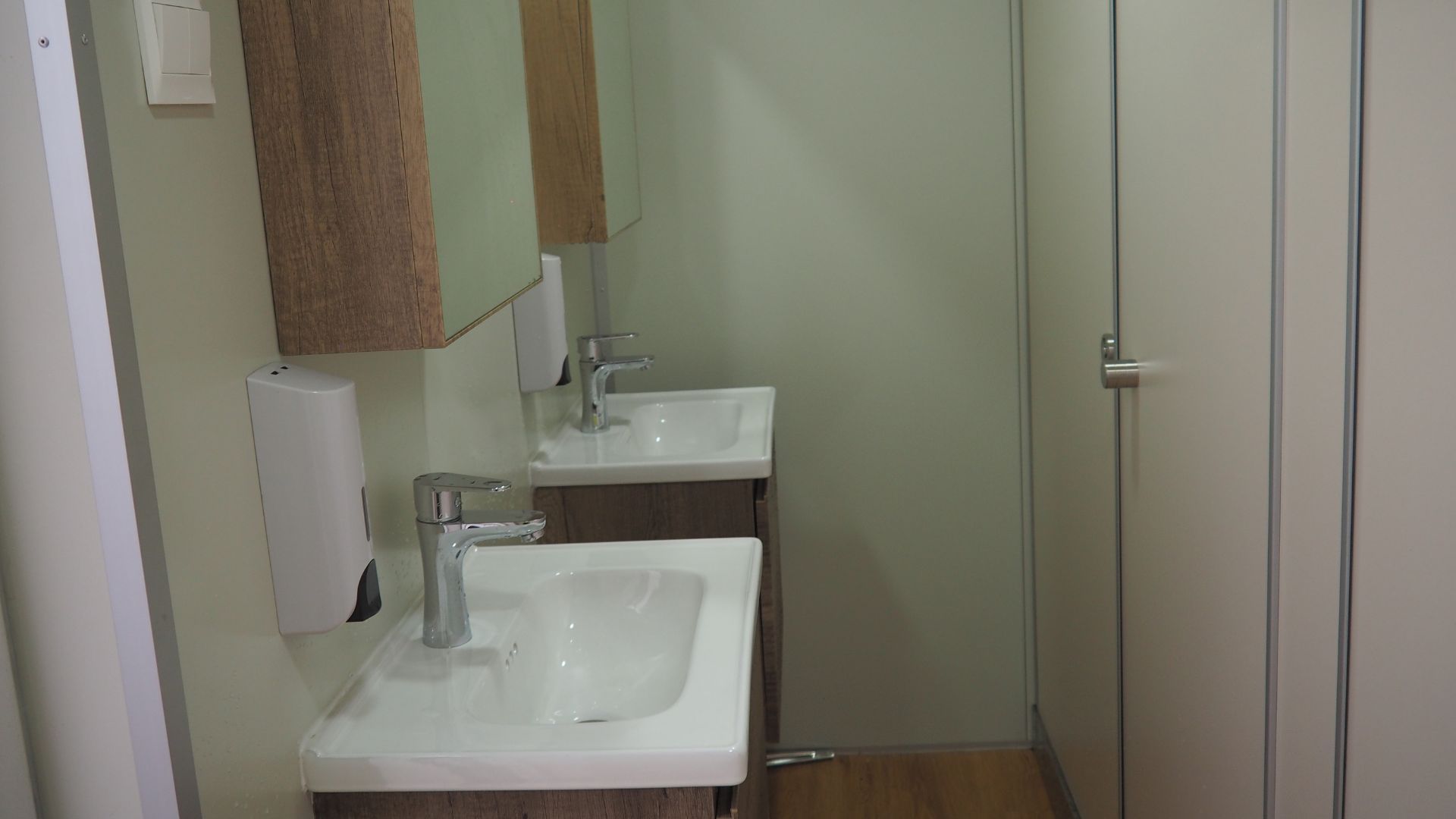
Relying on generic headcounts ignores the spikes in site activity that overwhelm temporary toilets during shift changes, lunch breaks, and event intervals. Standard single-station cabins force users to complete their entire visit, including hand hygiene, inside one tight footprint, which inflates dwell time to four or five minutes. If you manage an active crew, deploying cabins that lack separate washing stations creates an artificial bottleneck where workers wait in line simply to rinse their hands. Instead of buying ten standard units that choke site thoroughfares, we recommend specifying dedicated executive or container-style facilities to separate biological use from personal wash-up.
- Single-compartment bottlenecks: Combining the toilet pan and wash basin inside one tight cabin extends individual user dwell time by up to three minutes.
- Peak cycle surges: Scheduled site breaks compress daily toilet demand into tight thirty-minute windows that overwhelm basic single-user cubicles.
- Surface contamination risks: Forcing high volumes of workers through basic cabins without running hand basins accelerates cross-contamination on door latches and exterior handles.
- Floor space consumption: Sprawling rows of single plastic shells consume valuable laydown space that mobile cranes and delivery trucks need for daily operations.
Overlooking Pumping Access and Waste Tank Clearances
Piling more cabins into a corner of your site creates an operational dead end if vacuum service tankers cannot park within reach of every waste valve. Heavy servicing trucks require wide access lanes, firm ground, and clear clearance to pull waste from cabin holding tanks without dragging suction hoses across busy work zones or walkways. If you cluster units in areas blocked by scaffolding, staging materials, or security fences, pump operators cannot reach the tanks, causing missed pumping runs and rapid overflow. Suppliers also explicitly forbid moving deployed units by hand or dragging them across uneven ground, meaning an inaccessible placement choice remains locked in place.
Which mechanical specifications matter most for a portable bathroom rental?
Key mechanical specifications include the flush mechanism, waste tank volume, handwash water source, and electrical connections. Self-contained cabins rely on mechanical foot pumps and chemical holding tanks good for roughly 250 flushes, whereas direct manhole units connect to water mains and sewer lines for unlimited flushing and standard tap operation.
A reliable portable bathroom rental must feature durable mechanical systems that withstand hundreds of daily cycles without component failure or structural fatigue. You need to assess the pump mechanisms, plumbing configurations, and electrical requirements before signing an equipment hire contract. Evaluating how each unit handles incoming flush water and discharges raw waste determines whether your site enjoys smooth operation or suffers chronic plumbing blockages.
The choice between self-contained chemical systems and direct manhole connections represents the most consequential equipment decision you will make for your job site or event grounds. The following table contrasts the baseline operational specifications of these two dominant cabin categories to help guide your procurement process.
| Specification Feature | Self-Contained Chemical Cabin | Direct Manhole Connected Cabin |
|---|---|---|
| Flush Volume Limit | Approximately 250 flushes per service cycle | Continuous and unlimited via direct water main |
| Flushing Mechanism | Mechanical foot pedal pump | Standard press-button pneumatic flush valve |
| Handwashing Supply | Non-potable freshwater foot pump reservoir | Potable mains water supply with press tap |
| Internal Features | Chemical toilet pan, soap tray, tissue roll holder | Ceramic or stainless pan, integrated sink, bidet spray |
| Power Requirements | Optional CEE-form socket for cabin lighting | Standard CEE-form industrial connection for light and exhaust |
| Service Dependence | Requires scheduled vacuum tanker pumping | Zero pump-outs; continuous sewer discharge |
Self-Contained Chemical Loops versus Manhole Connections
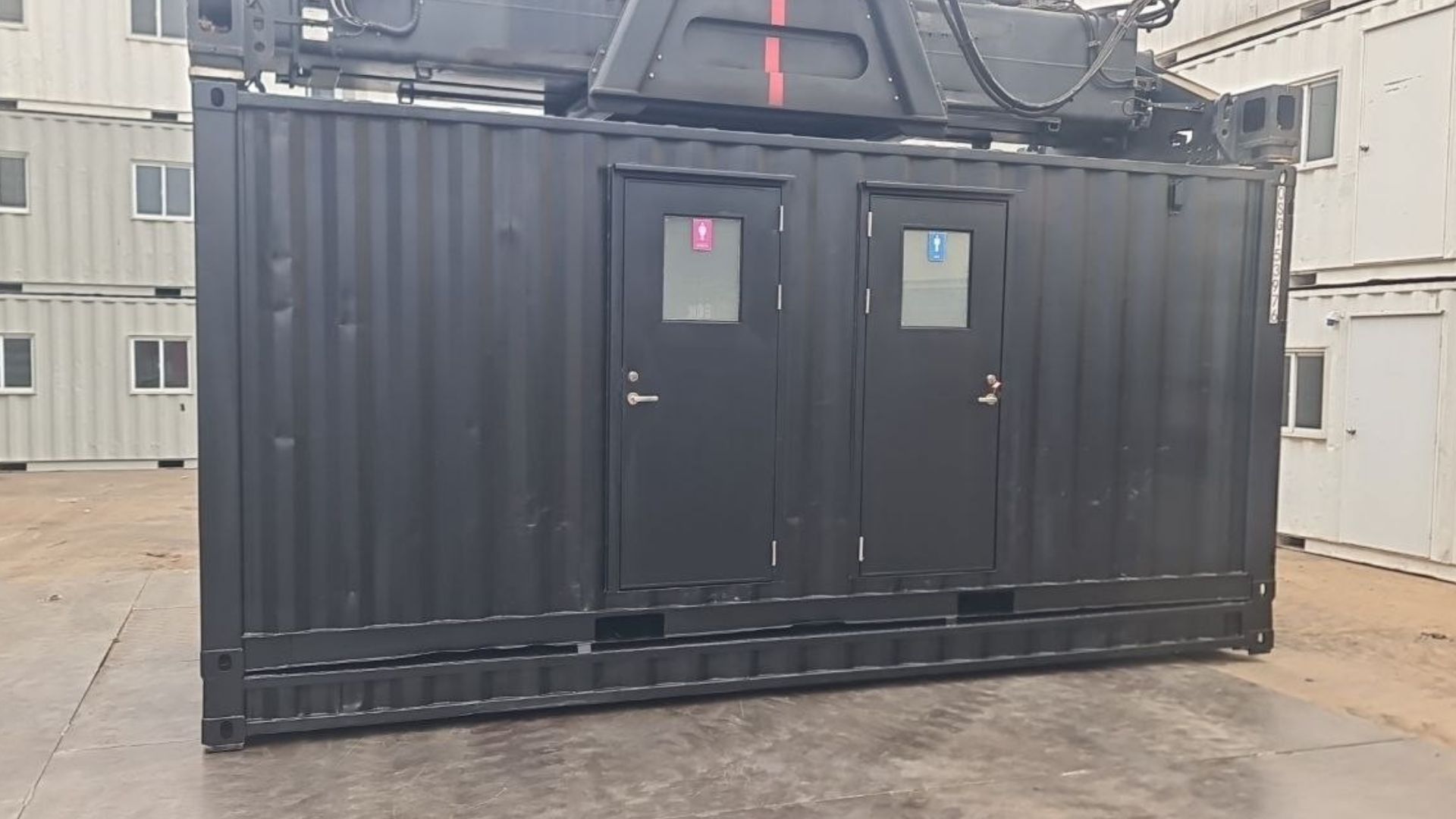
Self-contained cabins work best for short-term events or remote work zones because they function without permanent subterranean drainage infrastructure. These units recirculate a chemical mixture or pump fresh liquid from a dedicated holding reservoir, which neutralises raw waste and controls odours until a servicing tanker empties the main vault. Direct manhole connection units, on the other hand, mount over an open sewer manhole and hook directly into an active municipal water feed. We prefer manhole connection units for long-duration infrastructure projects because they eliminate vacuum tanker visits entirely, allow continuous flushing, and incorporate home-style ceramic amenities such as bidet sprays and high-flow taps.
Foot-Pump Mechanisms, Basins, and Electrical Connections
High-traffic temporary bathrooms should never force users to touch manual flush handles or tap levers, as unwashed hands transfer aggressive pathogens to plastic surfaces. Premium cabins incorporate sealed mechanical foot pumps built from heavy-duty rubber compounds, allowing occupants to cycle flush fluids and basin wash-water entirely hands-free. Illumination requires equal scrutiny; high-grade cabins feature industrial CEE-form plug points that connect directly to site power points or generators to run vapor-tight ceiling lights. Without reliable power, evening shifts and enclosed indoor storage areas quickly render temporary cabins dark, dangerous, and unusable.
What are the proper user ratios and service schedules for portable toilets?
Recommended ratios require one toilet per five workers on a standard construction shift, twenty-five users per unit for a four-hour event, and thirty to forty users per cabin for a single day. Long-term commercial rentals require scheduled tank pump-outs three to six times per week to prevent overflows.
Calculating the proper ratio of toilets to users requires looking beyond raw headcounts to evaluate shift patterns, site tasks, and chemical endurance limits. Securing an adequate porta john rental agreement means matching your physical cabin count with an enforceable cleaning and pumping roster. When service intervals slip, the cleanest hardware will inevitably degrade into a biohazard that disrupts project schedules and damages worker morale.
Differentiating Construction Workday and Event Ratios
Construction projects demand much tighter equipment ratios than public gatherings because physical labour and all-day occupancy generate higher daily use cycles. On a standard construction site running an eight-hour to nine-hour workday, health and safety standards call for at least one toilet for every five workers to maintain acceptable hygiene. In contrast, short-duration public gatherings can stretch capacity to twenty-five users per unit for a four-hour gathering, or thirty to forty users per cabin for a single day. Pushing event ratios past forty people per unit, however, exhausts the integrated 250-flush capacity before the gates close, ensuring the final wave of visitors encounters empty foot pumps and foul bowls.
Scheduling Tank Servicing Intervals and Water Top-Ups
Long-term site hires cannot rely on a single weekly cleanup visit if your workforce exceeds twenty personnel across multiple operating trades. For long duration projects, contractors should lock in service intervals of three to six visits per week, depending on crew sizes and total cabin counts. Each servicing run must encompass a thorough process rather than a quick surface wipe down:
- The vacuum tanker operator couples heavy suction hoses to the holding tank valve and pumps out all biological sludge and accumulated fluids.
- Technicians power-wash internal walls, the toilet pan, and the textured composite floor using industrial sanitising detergents to kill bacteria.
- The crew charges the holding tank with fresh chemical concentrate diluted to the exact ratio needed to suppress bacterial off-gassing.
- Operators refill the secondary clean-water basin reservoir to supply the foot-operated handwash tap through the next working shifts.
- The cabin receives replacement commercial toilet paper rolls, antibacterial hand soap refills, and an updated maintenance log sign-off inside the door.
How should you audit cabin placement and performance on site?
Audit delivered cabins by checking for flat, stable ground, clear tanker access, and unobstructed vents. Test the foot pump, door lock, and lighting connections before sign-off. Suppliers prohibit indoor placement or moving deployed units, so positioning must be verified immediately upon delivery.
A successful sanitation deployment depends on how you inspect and position the hardware the moment the transport vehicle unloads on your property. Leaving delivery drivers to drop equipment wherever it fits usually results in blocked drainage, tipping hazards, or units placed too far from working crews. Conducting a formal arrival check ensures your portable john rental units remain structurally stable, completely accessible, and fully functional throughout their contracted deployment.
Positioning Clearances and Ground Stability Checks
Every temporary cabin must rest on a flat, compacted concrete apron, asphalt pad, or well-graded gravel bed that will not soften during torrential downpours. Placing a cabin directly on loose dirt or uncompacted turf invites structural shifting; as the waste holding tank fills, the unit becomes top-heavy and risks toppling over in high winds. Suppliers strictly prohibit deploying temporary toilets inside existing permanent buildings, as indoor placements trap chemical vapours, violate fire exit codes, and prevent vacuum hoses from reaching the waste tanks. You must also reserve an unobstructed access perimeter in front of every cabin door so delivery crews and service personnel can swing their maintenance tools freely.
Post-Delivery Ventilation and Consumable Verification
Before signing off on the delivery manifest, walk into every cabin to verify mechanical performance, air circulation, and supply levels. Confirm that external louvred vents remain completely unobstructed by protective shipping films or transit stickers, as passive airflow is essential for lifting fumes away from the floor. Depress the chemical foot pedal multiple times to ensure the suction line is primed and that clean chemical liquid covers the bottom of the toilet pan smoothly. Finally, test the internal door latch from both sides to ensure it throws cleanly into the jamb without sticking, and confirm that the CEE-form electrical link lights the cabin without sparking.
Ensuring your job site or event grounds maintain rigorous sanitation standards requires equipment that matches your exact operational footprint. If you need help evaluating site logistics, determining unit ratios, or selecting between self-contained cabins and direct sewer connections, contact our technical team today to review your project specifications.
Contact us today about our InstaLoo NOW!