
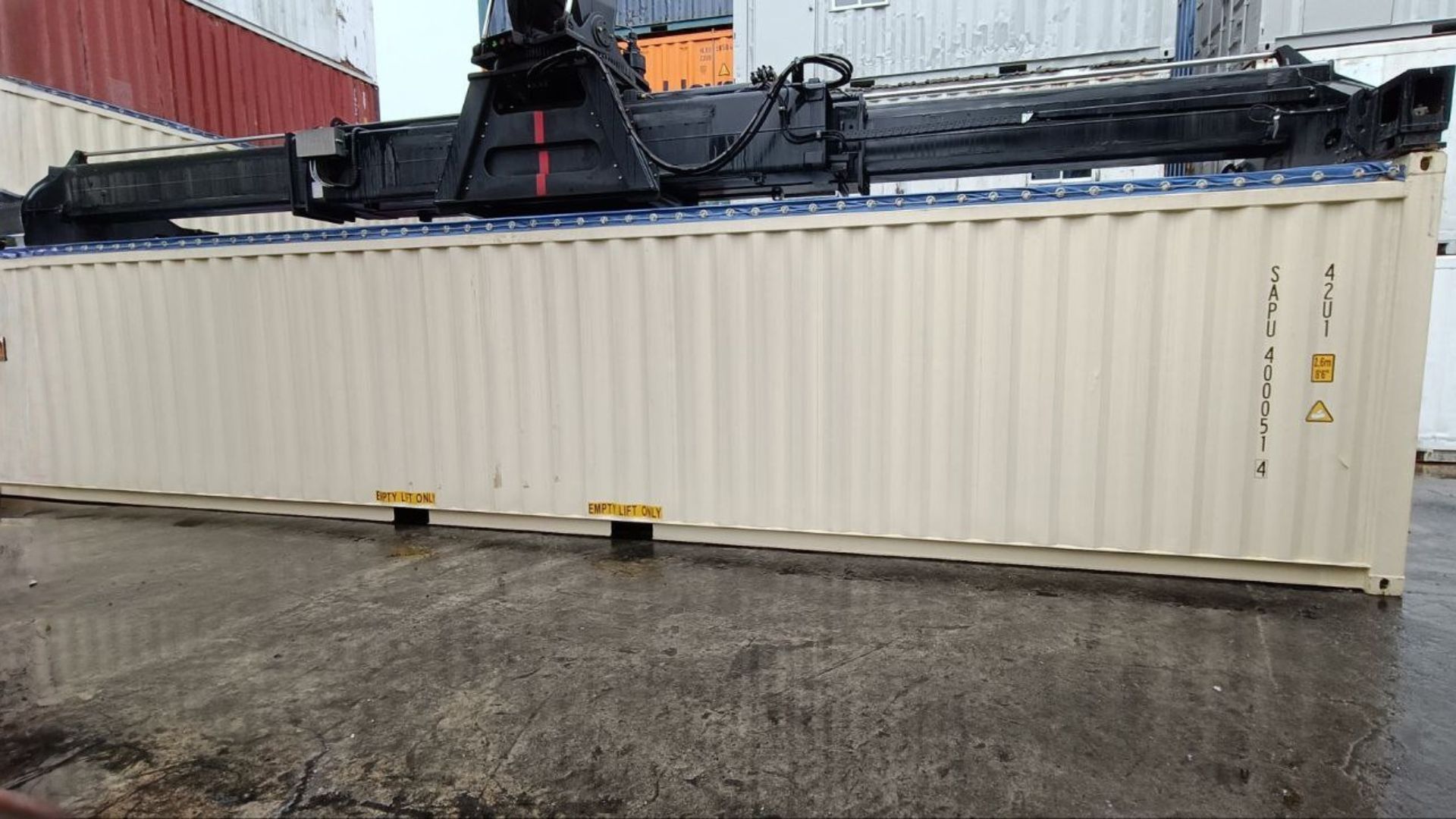
Fitting Cargo into a 40 Container
A standard 40 container offers about 67.7 cubic metres of space, but usable cargo volume usually tops out between 55 and 60 cubic metres for boxed goods and 45 to 52 cubic metres for pallets. Maximising payload requires planning around door aperture limits, highway axle weight thresholds, and side-wall clearances rather than theoretical measurements.
You pay for every cubic metre inside an ocean box, but you rarely get to pack all sixty-seven of them. Most shippers discover this loss when their cartons sit stranded on the warehouse dock because the doors will not latch, or because a highway scale flags the trailer for an overweight axle before it ever reaches the terminal gate. Loading a dry van successfully demands that you separate the theoretical numbers printed on marketing brochures from the rigid physical boundaries of steel, legal highway thresholds, and pallet geometry.
We see logistics teams burn thousands of dollars on dead freight every month because they build their cargo models on external measurements rather than internal realities. Maximising a load requires you to understand exactly where space disappears, from ceiling trusses and floor corrugations to door lintels and corner castings. When you master these specific clearances and pack around real-world constraints, you extract the true value of your equipment without risking cargo damage, fines, or rejected shipments.
The Stated Volume Overestimates Actual Usable Space
Shipping lines quote standard forty-foot dry boxes at roughly sixty-seven cubic metres of interior volume, yet expecting to pack sixty-seven cubic metres of boxed freight into a 40 container ensures that cargo will remain behind on your loading floor. This discrepancy stems from the difference between gross geometric volume and packable cubing capacity. A container is a welded steel box with corrugated walls, interior tie-down rings, floor recesses, and structural framing that obstruct straight carton placement. Unless you pump liquid directly into the cavity, you will never achieve one hundred percent volumetric efficiency.
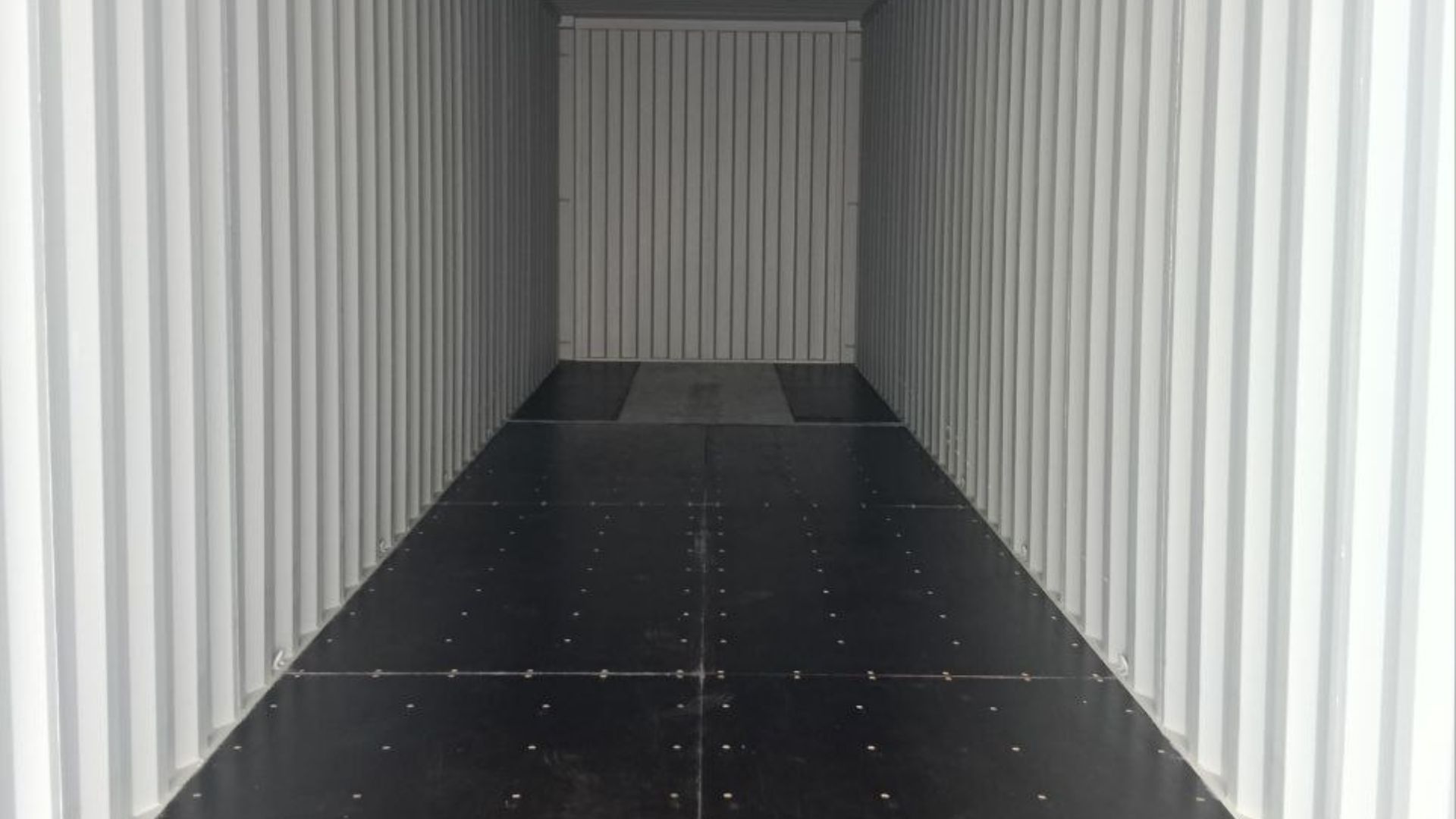
In our experience, a realistic loading factor for uniform cartons tops out between eighty-five and ninety percent of theoretical space, yielding roughly fifty-seven to sixty usable cubic metres. If your goods travel on pallets, that volume drops sharply to between forty-five and fifty-two cubic metres because wooden bases consume vertical space and introduce gaps against the corrugated side panels. Shippers who ignore this gap end up with stranded skids on the dock, which disrupts sailing schedules and forces last-minute bookings for less-than-container loads at premium rates.
Factoring in Dunnage and Airflow Margins
Cargo shifts continuously during transit as ocean swells roll the vessel, meaning your stowage plan should include structural bracing and void fillers rather than wall-to-wall cartons. Inflatable dunnage bags, wooden chocks, and cardboard honeycomb panels prevent stacks from toppling against one another, but they consume hundreds of litres of space that beginners mistake for cargo capacity. If you pack a load completely tight without dunnage, the motion of the sea drives your cartons outward, wedging them against side walls and crushing product corners under immense dynamic pressure.
Ventilated consumer goods and sensitive dry goods also demand a protective buffer of free air above and around the stow. Condensation forms along the steel roof when passing through varying temperature zones, a phenomenon known as container rain. If your top tier touches the ceiling panels directly, moisture will soak into your secondary packaging and destroy corrugated integrity. We always recommend leaving a working clearance of at least ten to fifteen centimetres between the top tier and the ceiling ribs to allow proper airflow and keep moisture collectors working as intended.
Calculating Usable Stacking Height Below Door Apertures
You cannot pack cargo inside a box higher than the opening through which you load it. While the internal height of a standard forty-foot dry box reaches 2,393 millimetres, the rear door aperture measures only 2,280 millimetres tall. That structural header creates a 113-millimetre blind spot, meaning any forklift mast, tall skid, or oversized wooden crate built to clear the interior ceiling will smash directly into the steel top lintel during warehouse loading.
To calculate true vertical capacity, build your master carton stacking patterns strictly against the door opening height rather than the internal ceiling spec. If your palletised load measures 2,300 millimetres tall, it will sit easily inside the box once past the threshold, but you cannot drive it through the frame without tilting the mast dangerously, which routinely gouges the top carton layer. Work with the lower number across your entire pack plan, or switch equipment types entirely before dispatching warehouse crews to stage the cargo.
Internal Container Dimensions May Not Clear Two Pallets Abreast
The standard forty-foot dry unit features an interior width of 2,352 millimetres, a dimension that sounds generous until you attempt to set two industrial cargo skids side by side. Because standard wooden platforms throughout North America and Europe measure at least 1,000 millimetres to 1,200 millimetres across, the math becomes extremely tight. When dealing with real-world container dimensions, you have less than twenty millimetres of combined lateral clearance across the entire span, leaving no room for human error, misaligned stacks, or bulging cartons.
Industrial packaging rarely stays true to its blueprint once it sits in a warehouse under pressure. Cartons bulge slightly after stacking, plastic wrap tails bunch out past the wooden deck boards, and pallets rack during forklift transport. When you push two units measuring 1,180 millimetres each into a steel space that is 2,352 millimetres wide, the loads rub together, catch on interior side-wall ribs, and lock together midway down the container. This causes costly delays and forces your warehouse team to pull skids out with drag chains, damaging goods in the process.
Standard Pallet Clearances Across Internal Width
Loading standard US pallets measuring 1,000 by 1,200 millimetres requires an alternating pinwheel pattern or turning the skids so their 1,000-millimetre faces sit across the floor. Placing two 1,000-millimetre widths side by side leaves approximately 352 millimetres of total wiggle room, which gives warehouse operators sufficient clearance to manoeuvre forklift tines without battering the internal walls. However, turning pallets sideways consumes more longitudinal floor run, capping total floor capacity at twenty or twenty-one pallets instead of the theoretical twenty-four.
If you must pack twenty-one pallets, you have to run two rows down the length of the container and turn the final pallets sideways near the doors. This strategy demands that your forklift operators execute precise entries without scraping the internal paint off the corrugations. Any cargo bulge that exceeds twenty millimetres on an individual skid will eliminate this clearance, wedging the load against the steel sides and creating an operational nightmare for destination teams unloading without specialized slip-sheet attachments.
Overcoming Door Aperture Pinch Points
The interior width of 2,352 millimetres does not carry through the rear opening of the container. The rear corner posts, which provide vertical strength to support nine fully laden containers stacked above, narrow the door aperture to roughly 2,340 millimetres. This restriction steals twelve millimetres of lateral space right at the access point, creating a physical pinch point that catches pallet wings and corner protectors on the way in.
To safely load through this pinch point without stripping packaging, we recommend training operators to build their final door-adjacent stacks slightly narrower than the rest of the shipment. Follow this structured process when setting your rear rows to prevent cargo hang-ups:
- Measure pallet overhang at the staging bay to confirm no single carton protrudes past the outer deck boards of the skid.
- Pick the pallet from the narrow side using fork positioning attachments to keep the load dead centre between the mast rails.
- Clear the outer door seal rubber by holding the pallet fifteen centimetres above the floor plate before driving across the threshold.
- Set the left-hand pallet flush against the interior wall first, creating maximum open space on the right side for the companion unit.
- Drop the final right-hand pallet straight down without dragging it forward against the corner post gusset plate.
Heavy Freight Will Exceed Legal Limits Before Filling the 40' container
A standard 40' container boasts an immense interior footprint, but physics and traffic laws dictate that volume is rarely your primary constraint when shipping dense cargo. Liquid drums, raw metals, stone tile, canned foods, and machine parts will hit gross vehicle weight caps long before the interior is half full. If you pack a forty-foot box to its internal roofline with dense freight, you will create a shipment that no domestic trucking company can legally pull across public highways without specialised overweight permits and expensive multi-axle chassis.
We routinely see inexperienced cargo planners fill a forty-foot box to the roof with heavy goods simply because the space was available. When the container reaches the destination port, the transport line refuses to dispatch a driver, or worse, state transport inspectors impound the rig at the port weigh station. Stripping excess freight from an overweight box inside a bonded marine terminal costs three to four times the original ocean freight booking, wiping out your margins on that inventory run.
Balancing Tare Weight Against Maximum Payload
Every container carries a CSC safety approval plate stamped on the left rear door that specifies three critical numbers: maximum gross weight, tare weight, and net payload. For a standard forty-foot general purpose unit, the tare weight averages 3,490 kilograms of structural steel, timber planking, and locking hardware. The maximum gross weight is certified to 30,480 kilograms, which leaves a maximum internal payload of 26,990 kilograms under international ISO standards.
You must balance this stamped limit against your real shipping manifest. If your wooden pallets weigh twenty kilograms each and you use heavy timber dunnage to block cargo, those accessories deduct directly from your available cargo payload. While the structural box can hold nearly twenty-seven tonnes inside a crane spreader bar, reaching that physical limit almost always violates regional trucking laws the moment the box touches a road chassis.
Highway and Rail Weight Regulations by Region
Container ships follow international maritime rules, but land transport belongs strictly to local state and national jurisdictions. In the United States, the Federal Bridge Formula caps standard three-axle tractor-trailer combinations at 80,000 pounds gross vehicle weight, which restricts your container cargo payload to roughly 19,950 to 20,400 kilograms depending on the tare weight of the truck and chassis. Loading past 20,500 kilograms requires an expensive tri-axle chassis or rail transport, and any load over 21,700 kilograms faces severe interstate routing limitations.
European roads allow slightly higher gross vehicle weights under standard four- and five-axle configurations, typically topping out around 40,000 to 44,000 kilograms total rig weight. This allows container payloads between 22,000 and 24,000 kilograms. You must plan your packing strategy around the most restrictive leg of your transport chain. If your inland delivery route includes a low-weight highway bridge or a strict regional weigh station, that single point governs how much mass you can load into the box, regardless of what the maritime documentation allows.
A Standard gp container Is Too Low for Volumetric or Tall Freight
A standard gp container, short for general purpose, stands eight feet and six inches tall on the outside, which gives you roughly seven feet and ten inches of internal clearance. For high-density, low-profile cargo, this height works well. However, if your business ships lightweight, bulky products like apparel, footwear, plastic consumer items, or tall industrial machinery, standard height boxes waste your freight budget. You run out of vertical room long before reaching the allowable highway weight, paying standard ocean rates while leaving valuable cubic capacity behind.
Choosing between a general purpose unit and a high-cube variant should be an active calculation based on your cargo profile rather than an automated choice on a freight forwarder booking portal. High-cube boxes deliver an extra foot of exterior height, which translates directly into structural clearance that changes what you can pack on a single floor run.
| Specification Parameter | 40ft General Purpose (GP) | 40ft High Cube (HC) | Operational Variance |
|---|---|---|---|
| External Height | 2,591 mm (8 ft 6 in) | 2,896 mm (9 ft 6 in) | +305 mm |
| Internal Height | 2,393 mm (7 ft 10 in) | 2,695 mm (8 ft 10 in) | +302 mm |
| Door Opening Height | 2,280 mm (7 ft 5 in) | 2,585 mm (8 ft 5 in) | +305 mm |
| Internal Width | 2,352 mm | 2,350 mm | -2 mm |
| Internal Length | 12,032 mm | 12,032 mm | 0 mm |
| Tare Weight | 3,490 kg | 4,670 kg | +1,180 kg |
| Max Gross Weight | 30,480 kg | 34,000 kg | +3,520 kg |
| Usable Volume (Approx) | 67.7 m³ | 76.2 m³ | +8.5 m³ |
Vertical Clearance Thresholds for Standard Boxes
The standard GP box caps your safe, uninhibited vertical cargo clearance at roughly 2,200 millimetres once you factor in the door lintel and top airflow requirements. If your manufacturing process builds crated industrial gear that measures two metres tall, that equipment will fit inside, but your crew will have negligible clearance to lift and place the crates over the threshold without striking the top frame. Any crate measuring over 2,250 millimetres will simply not pass through the rear door of a standard GP box.
For double-stacked pallet operations, the GP container presents an immediate bottleneck. Two stacked skids measuring 1,150 millimetres each equal 2,300 millimetres total, which sits clear above the 2,280-millimetre door aperture. Warehouse teams are then forced to manually break down top layers, load single pallets into the box, and hand-stack cartons inside the container. This manual step doubles loading labour times, increases carton drop risks, and drives up terminal detention charges if the truck driver sits waiting at the dock.
Comparing Standard Models Against High Cube Options
The high-cube model provides an internal height of 2,695 millimetres and a door opening height of 2,585 millimetres. That additional 305 millimetres of headroom changes your loading calculations. With a high cube, you can easily forklift double-stacked pallets measuring up to 1,250 millimetres each through the rear opening without modifying packaging or hand-stuffing top cartons in the dark. For bulky consumer goods, that extra height adds roughly 8.5 cubic metres of space, which translates to a twelve to fifteen percent boost in volume for a modest freight premium.
We prefer high cubes for nearly all consumer product runs, but they carry one operational trade-off you must track: tare weight. A 40ft high cube weighs 4,670 kilograms empty compared to 3,490 kilograms for a standard GP box. That extra 1,180 kilograms of tare weight eats directly into your road-legal payload limit. If you ship dense canned goods or chemicals, book a standard GP container instead. The extra height of a high cube gives you nothing if you hit road weight caps at half volume, and its heavier tare steel forces you to leave behind more than a metric tonne of paid cargo.
Standard container size Layouts Waste Floor Space with Euro Pallets
The standard ISO container size was engineered around imperial increments, a design heritage that clashes directly with modern European distribution packaging. While global maritime lines operate containers built to a standard external width of eight feet (2,438 millimetres), modern continental supply chains run entirely on the standardized Euro pallet, which measures 800 millimetres wide by 1,200 millimetres long. Loading these pallets into a standard shipping box leaves vast strips of unusable floor space running the entire twelve-metre length of the container.
When you pack Euro pallets into a standard box, you can achieve a theoretical maximum of twenty-four to twenty-five units on the floorboards, but doing so requires complex interlocking patterns that combine lengthwise and sideways positions. The unused gaps must be braced with costly honeycomb panels or airbags to keep the cargo secure. If your trade lane runs between regional hubs that demand modular efficiency, choosing standard maritime boxes locks you into paying ocean freight on empty floorboards.
Euro Pallet Orientation Challenges
The internal width of 2,352 millimetres cannot cleanly take three 800-millimetre Euro pallets turned lengthwise, because three times 800 equals 2,400 millimetres, which exceeds the internal width by forty-eight millimetres. You are forced to pack one pallet turned sideways at 1,200 millimetres and one pallet turned lengthwise at 800 millimetres, which totals 2,000 millimetres. This leaves a 352-millimetre dead zone down the length of your container.
Leaving a 352-millimetre gap unmanaged invites disaster at sea. Cargo will slide and lean across that open aisle, causing stacks to rack and drop individual cartons into the gap. To prevent load shifts, operators must run continuous void fillers down the centre line of the container, requiring extra materials and packing time:
- Install heavy honeycomb void filler boards between alternating rows to lock the skids into a rigid block.
- Deploy dual-collar inflatable dunnage bags at floor level to keep pallet bases from creeping sideways during rail shunting.
- Pinwheel your pallet layers so the 352-millimetre open void shifts from the left wall to the right wall every two rows, distributing load balance evenly.
- Avoid stacking fragile secondary packaging on the inside edge where the structural void creates an unsupported shear line.
Utilising Pallet-Wide Alternatives for Greater Capacity
If you run dedicated European or intra-regional trade routes, you should ditch standard ISO equipment entirely and secure pallet-wide containers. Pallet-wide boxes maintain standard external ISO corner casting positions so they fit onto container ships, railcars, and truck trailers, but the vertical side walls use thinner, high-strength corrugated steel profiles. This increases the internal width from 2,352 millimetres to roughly 2,440 millimetres, clearing the threshold needed to transform your loading geometry.
That extra eighty-eight millimetres of interior clearance allows you to place two 1,200-millimetre Euro pallet lengths side by side, or three 800-millimetre widths side by side across the internal span. In a standard forty-foot layout, this design jumps floor capacity from twenty-four or twenty-five Euro pallets to thirty full pallets on a single tier. That is an immediate twenty to twenty-five percent increase in freight throughput per run, eliminating void fillers entirely and driving down your per-unit shipping costs.
Frequently Asked Questions
How many CBM can fit in a 40-foot container?
A standard 40-foot general purpose container has an internal volume of roughly 67.7 cubic metres, but practical usable capacity sits between 55 and 60 cubic metres for boxed cargo. Palletised loads reduce usable volume further to roughly 45 to 52 cubic metres because pallet bases consume height and leave side wall gaps. A 40-foot high-cube container offers 76.2 cubic metres of gross volume, delivering roughly 68 to 70 cubic metres of usable space for loose cartons.
How many standard pallets fit in a 40-foot container?
You can fit 20 to 21 standard industrial pallets (1,000 mm by 1,200 mm) on the floor of a standard 40-foot container. Reaching 21 pallets requires pinwheeling the skids, loading them with their 1,000-millimetre dimension across the width of the box, and turning the final unit sideways near the doors. If your products cannot be double-stacked, 21 pallets is your absolute floor ceiling.
What is the maximum payload weight for a 40-foot container?
According to the ISO CSC safety plate, a standard 40-foot container can hold a maximum cargo payload of 26,990 kilograms, with a maximum gross vehicle weight of 30,480 kilograms. However, regional highway transport limits frequently cap practical road payloads lower, typically between 19,950 and 20,400 kilograms in the United States and up to 24,000 kilograms across European road corridors without specialized overweight chassis.
How many Euro pallets can fit in a 40-foot container?
A standard 40-foot container holds between 24 and 25 Euro pallets (800 mm by 1,200 mm) on a single floor layer. Fitting 25 skids requires turning one row lengthwise and one row widthwise across the internal floor, which leaves an open space down the centre that must be secured with dunnage. If you switch to a 40-foot pallet-wide container, you can fit up to 30 Euro pallets on the floor.
If you are planning an upcoming export project and need assistance choosing the right container specifications or evaluating weight distributions for your distribution corridors, our team is available to review your load plans.
Contact us today about our General Purpose Shipping Containers NOW!