
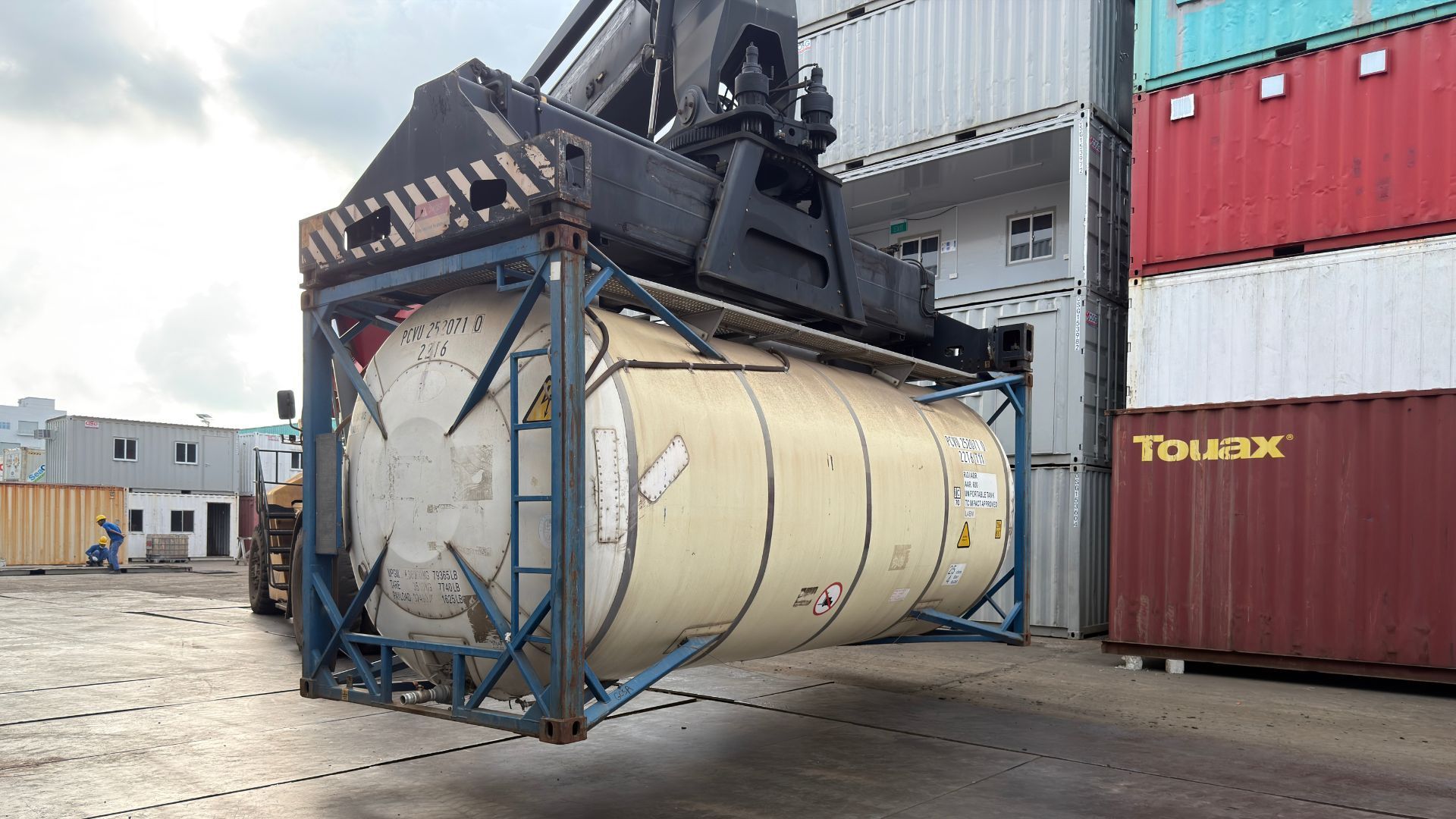
Five container tank checks separating good units from bad
To inspect a container tank before purchase, check five primary areas: verify shell capacity against product density and confirm UN T-code ratings, examine the external frame and corner castings for racking, inspect the inner vessel or lining for corrosion, test all valves and safety relief devices, and audit statutory inspection certificates.
Buying a used liquid cargo vessel without physical verification often saddles your business with hidden structural fatigue, compromised pressure boundaries, and expensive regulatory rejections at port gates. Every day, thousands of intermodal vessels haul hazardous chemicals, food ingredients, and industrial fuels across rail networks and deep-sea routes. When you evaluate an equipment fleet, you cannot rely merely on polished exterior photographs or broker promises. A systematic review protects your capital, your crew, and your cargo from catastrophic failures in transit.
Stage 1: Verifying Sizing and T-Code Specifications Before Purchase
When you browse listings for an iso container for sale, matching the tank shell volume to your product density represents your first critical financial and safety decision. Buying a unit with an incompatible cubic capacity forces your business into an operational trap, yielding either illegal axle overloads on the highway or dangerous liquid movement at sea. We always direct fleet managers to examine shell geometry and regulatory classifications before discussing purchase pricing or delivery timelines.
Density and Volume Mismatches: Detecting Overload and Slosh Risks
Liquid payloads do not behave like dry palletized freight because free surface effects inside a partially filled vessel can destabilize a transport vehicle during sudden braking or cornering maneuvers. International maritime dangerous goods rules generally prohibit operating vessels filled between 20 percent and 80 percent of their volume because liquid surging damages the internal vessel heads. If you ship dense mineral acids with a specific gravity above 1.5, a standard 24,000-liter or 26,000-liter barrel will exceed gross road weight limits long before you reach the required 80 percent minimum fill line.
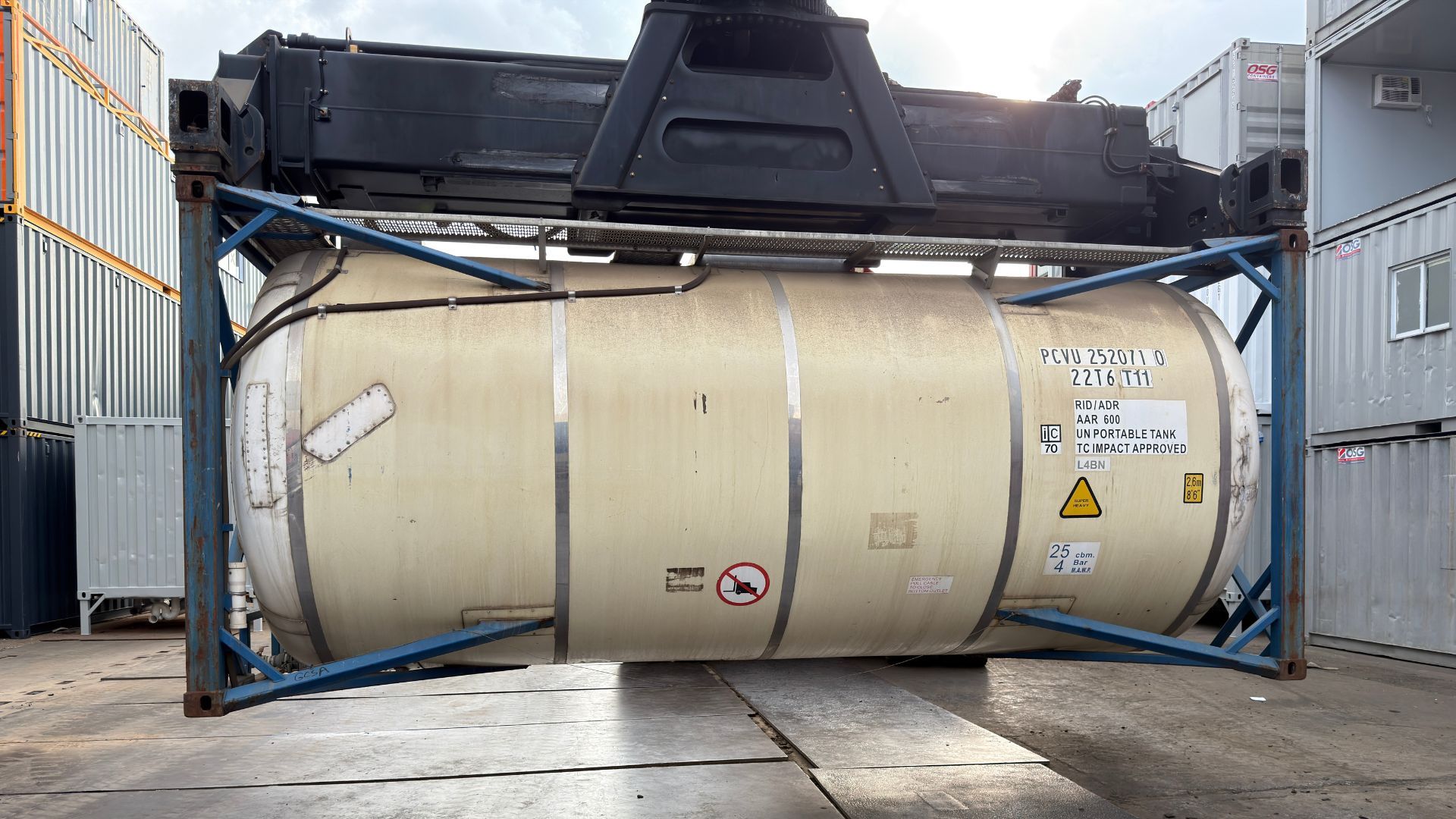
Under these operating conditions, you must source a specialized small-volume vessel between 17,500 and 21,000 liters to ensure you fill past the 80 percent threshold without exceeding highway weight allowances. Conversely, shipping light hydrocarbons, edible spirits, or beer requires high-capacity barrels running up to 35,000 liters to maximize payload economics on every transport leg. Selecting an oversized shell for dense media forces you to install expensive internal baffles or leave the equipment parked because transport authorities will pull your drivers off the road at weigh stations.
Incorrect T-Code Selection: Identifying Incompatible Vessel Classes
The United Nations Portable Tank instruction system assigns specific T-codes that dictate design pressure, shell thickness, bottom outlet configurations, and pressure relief valve settings for liquid logistics. Sourcing a vessel built under an inadequate classification leaves you holding an asset that port terminals and vessel operators will refuse to load. You must audit the equipment data plate to verify that the vessel engineering aligns directly with the hazard profile of your target commodities.
| T-Code Designation | Minimum Test Pressure (bar) | Discharge Valve Setup | Primary Chemical and Cargo Suitability |
|---|---|---|---|
| T1 | 1.50 | Bottom discharge permitted | Wine, non-hazardous liquid foods, light edible oils |
| T4 | 2.65 | Bottom discharge with secondary shutoff | Industrial oils, non-hazardous liquid chemicals |
| T11 | 6.00 | Bottom discharge with three serial closures | Spirits, flammable solvents, light industrial chemicals |
| T14 | 6.00 | Top discharge only, no bottom openings | Corrosive chemicals, toxic liquids, concentrated acids |
We routinely see procurement teams buy T11 barrels to haul hydrochloric acid or concentrated sulfuric chemistries, only to learn that environmental safety codes mandate top-only discharge tanks classified under T14 or higher. Bottom discharge shells introduce potential leak paths at the valve seats, which regulatory agencies strictly forbid when moving corrosive or toxic liquid lines across domestic rail corridors.
Stage 2: Inspecting the External Structural Frame and Corner Castings
Every barrel relies on a mild steel structural skeleton to transfer dynamic transit loads safely into container ship cell guides, road chassis twistlocks, and railcars. If the outer cage suffers distortion or hidden weld tears, the internal pressure barrel takes structural strains it was never designed to absorb. Inspecting a prospective tank container requires strict dimensional checks across the outer framework rather than a casual glance at cosmetic paint coats.
Frame Racking and Distortion: Spotting Dimensional Misalignment
The ISO 1496-3 standard requires external frame dimensions to measure exactly 20 feet in length, 8 feet in width, and 8.6 feet in height to match global intermodal infrastructure. Heavy impacts during yard handling or rail coupling frequently bend side rails, push diagonal braces out of true alignment, and twist the primary frame geometry. When an outer frame loses squareness by even half an inch, container cranes jam while trying to hoist the unit, and terminal spreaders fail to seat properly.
You can identify severe frame distortion by running cross-corner diagonal measurements across the front, rear, and side elevations with a standard steel tape measure:
- Measure diagonals between upper-left and lower-right corner castings, then compare them against opposing corners; dimensional differences exceeding 10 millimeters indicate structural racking.
- Examine the vertical corner posts with a precise straightedge to uncover bowed steel caused by stack overload on container ship decks.
- Check the bottom longitudinal sills for impact gouges or kinks from container handler tines and misaligned chassis bolsters.
- Verify that the distance between corner casting aperture centers strictly matches intermodal lifting standards before approving dispatch.
Stress Cracking and Corrosion: Checking Welds and Corner Castings
Corner castings bear the total weight of stacked vessels and endure brutal twisting torque during sea voyages in heavy swells. You must carefully examine every weld junction where the mild steel frame bonds to these castings, searching for hairline stress fractures hidden underneath loose paint flakes. Water traps around the lower corner joints cause severe crevice corrosion that thins structural steel plates from behind, weakening load-bearing margins until the frame buckles under full gross weight.
We advise rejecting units showing structural flame-straightening marks or uncertified scab patch repairs on primary frame members. A proper frame overhaul requires cutting out damaged structural profiles completely and welding certified channel sections using approved procedures and certified welders. If previous owners welded loose brackets directly to the pressure vessel shell to patch frame components, walk away immediately because unapproved heat-affected zones create brittle crack paths across the inner barrel.
Stage 3: Evaluating the Inner Vessel Shell and Chemical Lining
The internal pressure barrel represents the primary value and safety barrier of any intermodal container tank. While external steel cages handle mechanical stacking, the inner stainless steel or lined carbon vessel holds hazardous fluids under variable pressures and temperatures. Evaluating the integrity of this vessel requires qualified personnel to climb inside through the top manway, armed with specialized non-destructive testing equipment, proper ventilation gear, and calibrated illumination.
Stainless Steel Degradation: Identifying Pitting and Shell Thinning
Most commercial liquid barrels use grade 316L austenitic stainless steel because added molybdenum delivers strong resistance to general atmospheric corrosion and organic acids. However, transport of halide-bearing chemicals, high-chloride food slurries, or aggressive waste streams attacks the protective passive oxide layer inside the vessel. This chemical attack triggers localized pitting corrosion, leaving microscopic pinholes that penetrate thick metal walls while leaving surrounding steel sheets looking brand new.
To identify stainless steel degradation before buying, perform these three non-destructive evaluations:
- Run a calibrated ultrasonic thickness gauge across the lower third of the barrel circumference, where sediment settling thins the bottom metal beyond regulatory engineering limits.
- Conduct a liquid dye-penetrant test across all longitudinal and circumferential vessel seam welds to spot stress corrosion cracks propagating from the weld root.
- Inspect internal shell surfaces for discoloration, clouding, or rogue carbon steel deposits left by improper wire brushing during previous tank washing cycles.
Lining Failures: Detecting Blistering and Chemical Exposure
When transporting aggressive inorganic acids like hydrochloric or hydrofluoric blends, plain 316L stainless steel degrades quickly, forcing operators to deploy vulcanized rubber, fluoropolymer, or phenolic internal linings. These linings form an impenetrable barrier between corrosive liquids and the load-bearing metal shell. A small pinhole in this protective coating allows acid to seep through, chewing away the structural shell metal out of plain sight.
You must test lined barrels using a calibrated high-voltage spark tester swept across the entire interior surface. The instrument grounds to the outer frame, sounding an alarm and throwing a bright visible spark if the probe passes over an invisible pinhole, tear, or thinning seam in the lining. You should also watch for osmotic blistering, where moisture diffuses behind the rubber membrane, ballooning the lining inward and creating hidden pockets of concentrated acid against raw steel.
Stage 4: Testing Valves, Manway Gaskets, and Pressure Relief Devices
Valve assemblies and mechanical seals represent the most common operational failure points on an active isotank. A compromised gasket or sticking valve spring turns a standard discharge operation into a serious environmental spill or toxic vapor release. You must verify that previous maintenance crews kept mechanical fixtures clean, functional, and equipped with the correct elastomeric materials for your intended product slate.
Gasket Degradation: Pinpointing Bottom Discharge and Manway Leaks
Liquid barrels use multiple serial closures on the bottom discharge assembly to guarantee secondary and tertiary containment during transit. A standard setup features an internal high-lift foot valve, an external secondary butterfly or ball valve, and a blanking flange or threaded cap at the final hose connection. You need to strip down these valves to inspect internal Teflon, Viton, or perfluoroelastomer seal faces for chemical swelling, hardening, or mechanical tearing caused by overtightening.
The top 500-millimeter manway opening presents another frequent leak source when operators reuse old braided PTFE packing gaskets or tighten swing bolts unevenly across the lid circumference. Inspect the machined sealing face on the manway neck for dented edges or gouges caused by heavy wash bay nozzles. If the sealing flange shows warping, tightening the swing bolts down will fail to compress the gasket evenly, allowing dangerous liquid leakage or air ingress during temperature changes.
Relief Valve Seizure: Diagnosing Pressure and Vacuum Risks
Spring-loaded pressure relief valves and reverse vacuum relief valves prevent catastrophic shell ruptures during thermal liquid expansion or sudden implosions during vacuum discharge cycles. Crystallized cargo residues from sticky liquids like glucose, paints, or crude chemical intermediates coat valve seats, gluing internal springs shut and disabling automated safety functions. Conversely, a weak or corroded internal valve spring allows toxic vapors to escape into the atmosphere under normal operating heat.
We recommend pulling every safety relief valve off the shell and mounting it on an off-line pneumatic test bench to calibrate performance. Confirm that the valve cracks open cleanly within three percent of its stamped set pressure, reseats completely without bubbling, and holds specified system pressure. Inspect the burst disc assembly located beneath the relief valve; a discolored, indented, or ruptured disc indicates that the previous operator overpressurized the vessel or ran it through an uncontrolled chemical reaction.
Stage 5: Auditing Periodic Inspection Records and Safety Certification
The mechanical condition of your vessel means very little if missing papers and expired statutory inspection stamps prevent terminals from handling your asset. International transport frameworks require rigorous periodic surveys by approved classification societies to maintain valid operational status. Auditing safety paperwork and regulatory stampings on the vessel body protects your business from impound fees and immediate grounding at export gateways.
Expired Test Intervals: Catching Lapsed Hydrostatic Approvals
Every international transport vessel operates on strict alternating statutory testing cycles to prove structural integrity under internal hydraulic loading. Skipping these testing deadlines immediately invalidates your equipment insurance coverage and breaks maritime safety laws across all standard trade lanes. You must review maintenance logs to confirm that previous operators completed required intermediate tests and full structural surveys at recognized depot facilities.
A complete statutory testing cycle follows two non-negotiable inspection milestones:
- 2.5-Year Intermediate Inspection: Encompasses an external frame check, valve stripping, gasket replacement, and an overall pneumatic leak-tightness test performed at operating pressure.
- 5-Year Periodic Inspection: Requires an internal confined-space shell inspection, removal of heating components, thickness gauging, and a full hydrostatic pressure test at 1.5 times the maximum design pressure.
CSC Plate and Data Inconsistencies: Verifying Regulatory Stamping
To establish that a unit holds valid iso container certification, you must match the consolidated data plate welded to the rear framework against official inspection certificates provided by the seller. Independent survey bodies like Bureau Veritas, Lloyd's Register, or DNV stamp this plate after witnessing successful pressure tests. If the physical stamp markings on the brass or stainless steel plate do not match the official paperwork, the unit has likely undergone unauthorized field modifications or lost its classification status.
Cross-examine the stamped tare weight, maximum gross weight, shell thickness, and test pressure values against the manufacturer's initial birth certificate. We frequently catch fraudulent sellers who restamp uncertified older barrels with newer build dates to bypass retirement limits enforced by multinational chemical companies. Checking the stamped manufacturer serial number against classification society databases exposes counterfeit documentation before you transfer purchase funds.
Frequently Asked Questions
What is an ISO tank container?
An ISO tank container is an intermodal pressure vessel engineered within a standard 20-foot shipping frame to carry liquids, compressed gases, and powders across truck, rail, and maritime routes without transferring cargo between modes. The assembly conforms strictly to ISO sizing standards, safety conventions, and CSC transport criteria, allowing standard port cranes, chassis locks, and container ships to move bulk liquid volumes without handling individual drums or intermediate bulk containers.
What is a tank container?
A tank container is an industrial logistics vessel made of an inner stainless steel or lined carbon vessel held within an external structural skeleton for the secure transportation and storage of bulk fluids. These units range in liquid capacity from 17,500 liters up to 35,000 liters for transport models, while specialized on-site storage units can hold up to 77,000 liters. Equipped with heating systems, thermal insulation, and top or bottom valves, these tanks move industrial chemicals, fuels, and food-grade products safely across global supply chains.
If you are reviewing fleet acquisition plans or evaluating second-hand tank inventory, our engineering team can audit your prospective assets against strict international transport codes. We help you choose the right vessel volumes, valve configurations, and steel linings to keep your logistics operation safe, compliant, and cost-efficient.
Looking for ISO Tank Containers in Singapore?
Explore our T4, T11, and T14 ISO tank solutions for bulk liquid and chemical applications. Contact our team with your cargo details and equipment requirements to discuss suitable options.
Explore ISO Tank Containers