
Grade and Rust Mistakes in Shipping Containers for Sale
To evaluate shipping containers for sale safely, inspect structural posts, check door seals, verify floor integrity, and select the correct grade for your needs. Avoid economy stock for sensitive cargo, choosing wind and water tight or cargo-worthy units instead. Proper foundation leveling and framing reinforcements ensure long-term durability and weather protection.
Buying a used cargo container seems straightforward until a sudden downpour ruins your tools, or a bent corner post stops a heavy door from locking shut. Most buyers scan online listings, look at a coat of fresh paint, and assume the heavy Corten steel will hold up against weather and weight. That assumption costs businesses thousands of dollars in spoiled stock, structural repairs, and failed drop-offs. If you want a dependable steel box on your yard, you need to understand how marine shipping wear affects structural integrity, how container yards classify grades, and what physical flaws require an immediate pass.
Stage 1: Sizing Container Dimensions and Misjudging Usable Volume
Choosing the wrong container footprint will disrupt your workflow before the driver even unchains the unit from the trailer bed. Many depot buyers look at the broad selection of containers for sale and choose a standard length without calculating how internal wall corrugation, roof clearance, and swinging door hardware reduce usable floor space. A standard dry van gives you an external width of eight feet and a length of either twenty or forty feet, but the interior dimensions are noticeably smaller. Steel ribs protrude inward along every wall panel, stripping away roughly six inches of interior width and turning tight pallet layouts into an expensive loading bottleneck.
What Is the Difference Between Standard Height and High Cube Clearance?
A standard shipping unit stands eight feet, six inches tall on the outside, which leaves roughly seven feet, ten inches of vertical clearance once you step inside. If you plan to park plant equipment inside, install overhead pallet racking, or line the interior with rigid insulation boards and timber framing, that standard ceiling becomes cramped very quickly. We consistently advise industrial clients to invest in a high-cube container instead of standard height units because the extra foot of clearance transforms how you use the floor space.
High-cube units stand nine feet, six inches tall outside, giving you roughly eight feet, ten inches of clear interior height. That extra thirty centimetres allows standard forklift masts to operate without clipping the roof beams, and it leaves ample room for overhead ducting, ventilation fans, or heavy lighting tracks above your storage shelving. While standard boxes suit dense, heavy freight like aggregate or steel pipes, storage conversions and equipment housings run out of overhead space long before they reach their gross weight limits.
How Do Width Restrictions and Shutter Clearances Affect Access?
Standard cargo doors open on one narrow eight-foot end, which forces you to pack your goods like a tunnel and retrieve items in reverse order. Buyers who stock lengthy materials like structural timber, PVC conduit, or commercial staging often struggle with standard end doors and end up damaging side panels with forklifts. For these setups, wide-access units or purpose-built open-side containers solve the access issue by opening along a full twenty-foot or forty-foot side profile with folding leaf doors or industrial roller shutters.
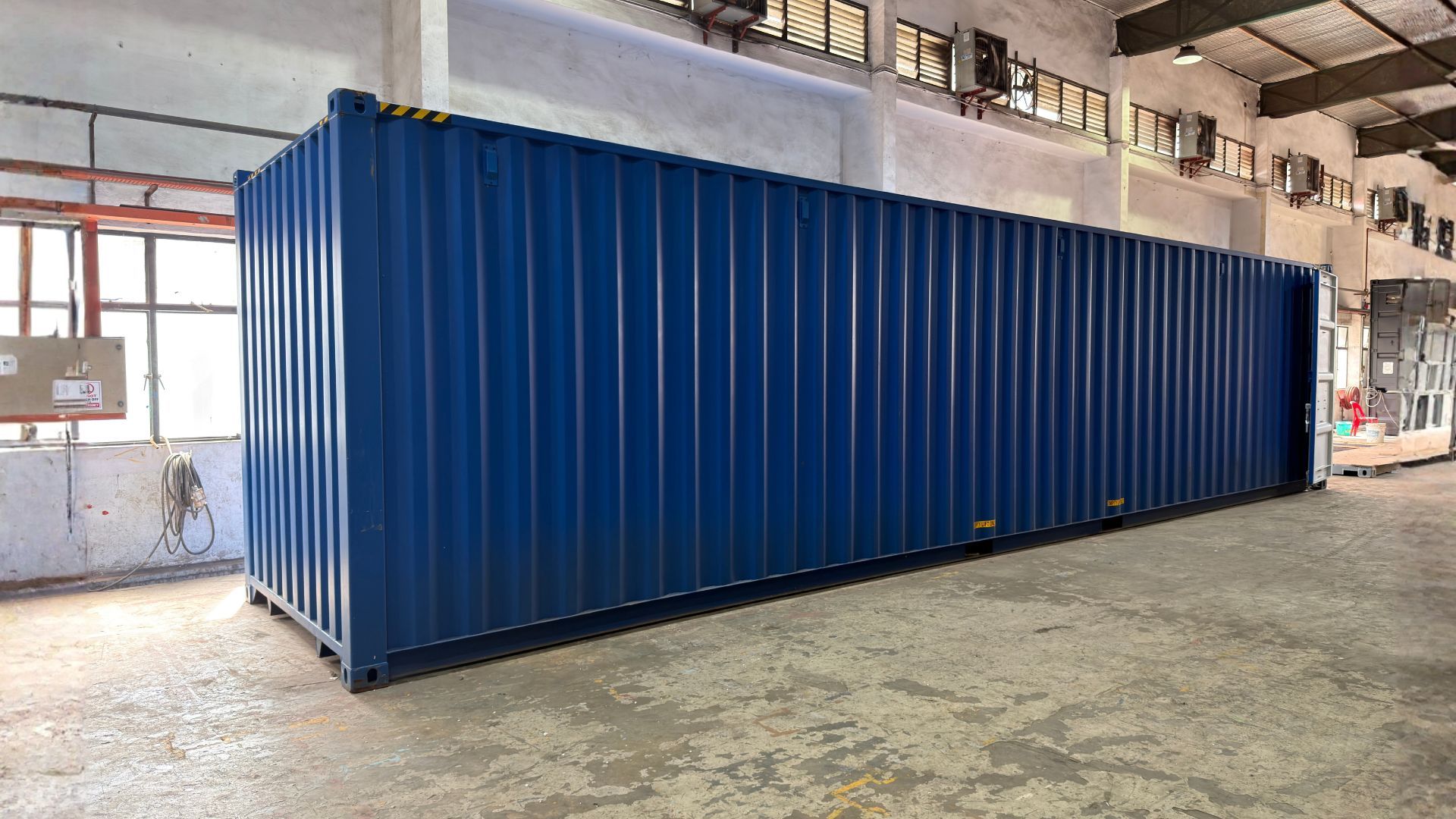
However, side-opening mechanisms bring their own site demands that many site managers overlook during planning:
- Door swing radii: Bifold side doors need at least five feet of flat, unobstructed clearance along the entire flank of the unit to fold back flush against the side frame.
- Aperture losses: Structural headers on roller shutters reduce the vertical drive-in height by eight to twelve inches compared to full-height steel cargo doors.
- Wall deflection risks: Removing continuous corrugated steel walls weakens side stiffness, meaning the ground must remain perfectly flat to prevent shutter tracks from jamming.
Stage 2: Choosing Unit Grades and Misinterpreting Wear Levels
The secondary container market uses industry shorthand that sounds descriptive but actually hides substantial differences in structural condition. When you browse listings for second hand containers for sale, terms like economy, wind and water tight, cargo-worthy, and single-trip denote specific mechanical tolerances rather than cosmetic cleanliness. Thinking that a cheap box simply needs a quick wire brushing and paint job is one of the most expensive errors a buyer can make.
What Separates As-Is Economy Stock from Wind and Water Tight Units?
Economy or as-is stock represents the bottom tier of decommissioned fleet containers, typically sold off because marine carriers decided repairs would cost more than writing off the steel. These units often trade around $1,175 for a twenty-foot box or roughly $2,000 for a forty-foot unit, but they frequently hide bent structural rails, patch repairs made with non-standard sheet metal, and torn door gaskets. If you store dry goods or electrical machinery, placing them inside an as-is container invites leaks, rodent intrusion, and rapid rust damage along raw steel seams.
By contrast, a wind and water tight unit guarantees that the internal envelope keeps out driving rain and light wind, making it the practical minimum baseline for basic tool storage. A twenty-foot wind and water tight unit generally runs around $1,775, while a forty-foot version costs around $2,150. You will still find exterior surface rust, scratches, dings, and faded shipping line liveries across the panels, but the doors seal cleanly and the roof contains no puncture holes. For stationary equipment storage where maritime transport certification is unnecessary, paying the modest step up from economy to wind and water tight protects your inventory from immediate water damage.
| Container Grade | Typical 20ft Price | Typical 40ft Price | Structural Integrity | Best Suited Application |
|---|---|---|---|---|
| Economy / As-Is | $1,175 | $2,000 | Punctures, heavy rust, deformed rails, or worn seals likely present. | Rough agricultural gear, scrap storage, or salvage components. |
| Wind & Water Tight (WWT) | $1,775 | $2,150 | Weatherproof envelope, sound seals, minor panel dents, cosmetic rust. | Static job-site storage, domestic tools, and dry building supplies. |
| Cargo Worthy (CW) | $2,050 | $2,325 | Meets ISO standards, valid CSC plate rating, straight corner posts. | Intermodal rail transit, export freight, and stacked yard storage. |
| Single-Trip (1-Trip) | $2,650 | $4,225 | Near-new steel, pristine flooring, factory paint, flawless hardware. | Office conversions, customer-facing retail, and architectural builds. |
Is the Price Gap Between Cargo Worthy and Single-Trip Grades Worth It?
Buyers often debate whether to buy a cargo-worthy container or stretch their budget for a single-trip unit. A twenty-foot cargo-worthy box costs roughly $2,050, whereas a single-trip equivalent commands around $2,650. For forty-foot boxes, that price gap widens from $2,325 for cargo-worthy up to $4,225 for a single-trip unit. A cargo-worthy rating means a qualified marine surveyor can certify the unit under the Convention for Safe Containers, verifying that the corner castings, floor stringers, and crossmembers can support the stresses of sea transit.
If you intend to transport your container across rail lines or load it onto commercial ships, you must buy a cargo-worthy unit with a valid CSC plate. However, if you are building an architectural office, an insulated workshop, or a pop-up retail space, we recommend choosing the single-trip container. Cargo-worthy units carry ten to fifteen years of dented panels and road salt exposure, meaning you will spend more on sandblasting, panel straightening, and bodywork than the initial price difference between used and single-trip stock.
Stage 3: Conducting Physical Inspections and Missing Hidden Flaws
Never buy used ocean equipment based solely on digital photos that display the container from flattering angles under clear skies. When sourcing shipping containers for.sale, you should inspect the unit in person at the storage depot, or demand an unedited, walk-through video that checks specific failure points. Structural issues and water leaks rarely announce themselves from ten paces away, so you need a methodical approach to confirm that the steel box remains sound.
How Do You Spot Rust Pinholes and Brittle Door Gasket Seals?
The quickest test for pinholes requires you to step completely inside the container, pull both cargo doors shut until the latching bars click into place, and wait twenty seconds for your eyes to adjust to the pitch dark. If you see tiny white pinpricks of light along the roof seams, corrugation valleys, or upper header rails, water will seep in whenever rain gathers on top of the container. Surface oxidation on Corten steel is normal and forms a protective patina, but dark, flaky rust along the roof folds indicates sheet metal that has worn through.
Next, check the flexible rubber gaskets running around the perimeter of both doors. Marine door gaskets rely on twin-lip synthetic EPDM rubber to compress against the steel door jamb and block out wind-driven salt water. If the rubber feels brittle, cracked, or glued down with silicone caulk, moisture will enter the interior and soak your storage floor. Replacing door gaskets requires removing the steel retainer strips, drilling out frozen fasteners, and fitting new rubber channels, which quickly adds substantial repair costs to a bargain purchase.
Why Must You Check for Floor Delamination and Chemical Odours?
Standard marine containers use twenty-eight-millimetre-thick marine-grade plywood floors, supported by structural steel crossmembers spaced twelve inches apart underneath. Walk across the entire internal floor area, stepping heavily down the centreline and across the edges, while watching for springy patches, soft spots, or loose floor screws. If a forklift dropped an overweight pallet inside the unit during its sea life, the internal plywood plies may have delaminated, leaving a weak deck that will buckle under the wheels of a pallet truck.
Smell the air the moment the doors swing open. During ocean voyages, timber floors are heavily treated with pesticide chemicals like methyl bromide, organochlorines, or fluorides to stop timber-boring insects from crossing international borders. If the wooden floor absorbed industrial chemical spills or heavy pesticide coatings, that sharp smell will linger indefinitely, making the space unsuitable for an office, food pantry, living quarters, or tool workshop without stripping out the entire subfloor.
Stage 4: Preparing Site Logistics and Miscalculating Delivery Access
Sourcing quality ship containers for sale covers only half of your operational challenge; getting the forty-foot steel box off the truck and onto your property without incident requires thorough logistics planning. Transport drivers work on strict delivery schedules, and if your access road has tight radiuses or your ground is soft, the driver may abort the drop-off and charge you a hefty dry-run haulage fee.
Which Transport Option Works Best: Tilt-Tray or Crane Trucks?
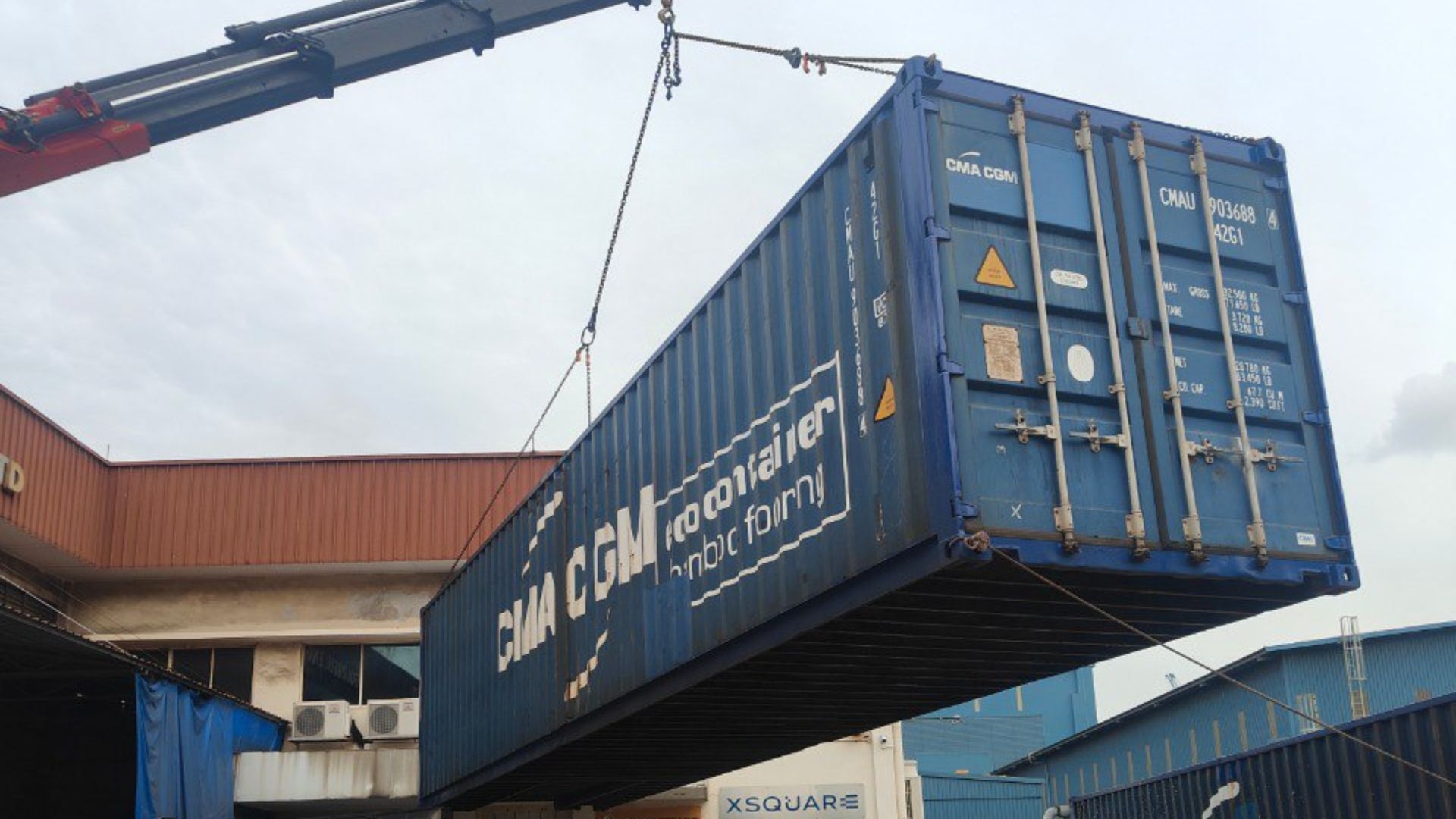
Transport companies deliver containers using either tilt-tray flatbeds or crane trucks (often called Hiab trucks), and picking the wrong setup will ruin your delivery day. A tilt-tray truck slides the container off its tail by raising the bed and driving forward out from underneath the box. To deliver a single twenty-foot container safely, a tilt-tray truck needs at least sixty feet of straight-line clearance directly in front of the drop pad, along with fourteen feet of overhead clearance to raise the bed without hitting low-hanging utility wires.
When your site access turns through narrow farm gates, hugs tight suburban alleys, or sits boxed in by brick buildings, a tilt-tray cannot drop the unit. In those constrained spots, you need a truck-mounted crane that can park parallel in the street, swing its hydraulic stabiliser outriggers, and lift the container up and over fences onto the pad. Crane transport costs more per hour than tilt-tray haulage, but attempting to force a tilt-tray into a tight, winding driveway almost always results in ruts in your grass, damaged gate posts, and an undelivered container.
What Happens When You Place Units on Uneven Ground Without Footings?
A shipping container gets its immense structural strength from its rigid outer frame, channeling all weight straight down through the four corner castings. If you drop the unit directly onto bare, uneven dirt, ground moisture will rust the underside, and the corner castings will settle unevenly into the mud. When one corner sinks even two inches lower than the others, the rectangular box twists out of square, a problem called racking that binds the door locking bars and makes the rear doors impossible to open or close.
To keep the frame level and square for decades of use, prepare four stable points of contact before the truck arrives on site:
- Clear the pad: Strip off loose topsoil, dig out high spots, and lay down six inches of compacted crushed limestone or gravel to help water drain away.
- Set solid corner supports: Place precast concrete pavers, solid concrete blocks, or treated hardwood railway sleepers under each of the four corner castings.
- Check your cross-diagonal levels: Lay a long spirit level or run a laser line across all four corners to confirm they rest on the same horizontal plane.
- Shim the low spots: Insert flat steel shims or heavy rubber packing plates beneath the lowest corner casting until the bubble centres perfectly.
Stage 5: Planning Shell Modifications and Compromising Structural Rigidity
The moment you take delivery of your steel container, the temptation is to grab a plasma cutter or angle grinder and start slicing out large openings for personal doors, windows, and partition walls. However, the raw shells of shipping containers for sale rely entirely on their corrugated wall skins to resist buckling forces and hold the roof rigid. Treating a container like an ordinary timber-framed shed without understanding structural steel loads can leave you with a sagging roof and doors that warp out of shape.
Why Does Cutting Corrugated Steel Panels Require Reinforcing Welds?
The thin, corrugated Corten steel wall panels act as shear webs that keep the heavy top and bottom corner rails parallel under tension. When you slice out an eight-foot section of wall panel to fit a broad roller shutter or glass sliding door, you remove the vertical stiffness that stops the top rail from sagging toward the floor. Without proper reinforcement, the roof will bow downward under heavy rainfall, pooling water along the centreline and jamming your newly fitted window and door frames.
Every single opening cut into a container wall must be framed with structural box-section steel tubing before you fit any window or door hardware. Weld a rectangular steel frame directly to the corrugation peaks and valleys around the perimeter of your cutout. This steel subframe restores the lost shear strength of the wall panels, transfers the overhead roof load back down to the main floor beams, and provides a flat, rigid mounting flange for weatherproofing your window flashings and exterior trim.
How Do You Prevent Condensation and Container Rain?
Steel responds quickly to external air temperatures, turning uninsulated shipping containers into massive condensation chambers. In damp or cold weather, the outer corrugated skin chills rapidly; warm, humid air inside strikes the cold steel and turns into water droplets along the ceiling. This effect, known throughout the transport trade as container rain, drips steady streams of moisture onto stored stock, tools, and dry subfloors, fostering hidden black mould growth behind decorative wall cladding.
Fixing condensation requires more than simply pushing standard fibreglass batt insulation between timber studs. If you run batts directly against raw corrugated panels without an airtight vapour seal, humid air will bypass the insulation, condense against the cold steel, and remain trapped out of sight where it rots the framing and rusts the wall panels from the inside out. You should apply closed-cell spray foam directly to the clean steel walls or fit an unbroken, taped vapour barrier membrane over rigid foam boards. Sealing out interior moisture protects the steel shell, keeps your storage dry, and guarantees that your container remains a durable, long-term asset for your site. If you are assessing container grades for an upcoming operational build, our team can help review technical specifications and site access plans before delivery.
Looking for General Purpose Containers in Malaysia?
Explore our general purpose containers for storage, logistics, and industrial applications. Contact our team to discuss suitable container options based on your business requirements.
Explore General Purpose Containers