ISO Tank Containers in Singapore: Types, Uses & Buying Guide
Transporting bulk liquids requires careful planning, particularly when shipments involve multiple transport modes, specialised cargo requirements, or international destinations. Businesses need suitable equipment to protect their products while meeting applicable transport and safety requirements.
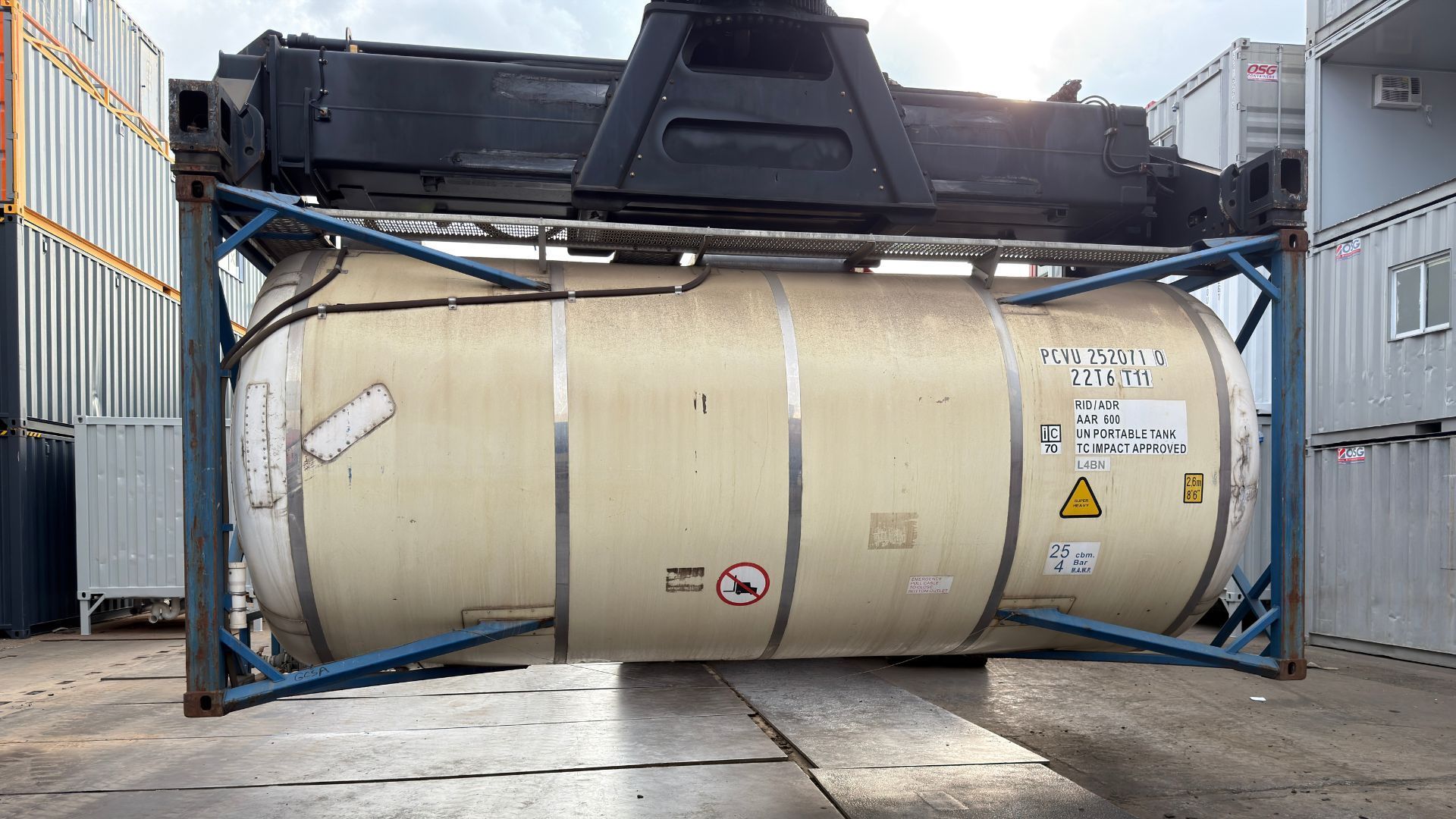
An ISO tank container provides a solution for transporting compatible bulk liquids in a tank vessel mounted within a standardised intermodal frame. This design allows the container to be handled across compatible road, rail, and sea transport networks without routinely transferring the liquid into a different vessel at each stage.
For businesses involved in chemical manufacturing, industrial processing, food production, and international logistics, choosing the right ISO tank can help support a more efficient transport arrangement.
However, not every tank is suitable for every type of liquid. Tank classification, cargo compatibility, capacity, condition, and transport requirements must be considered before selecting a unit.
This guide explains how ISO tank containers work, the differences between common tank types, and what Singapore businesses should consider when purchasing or renting one.
Stage 1: Why Consider Switching to an ISO Tank Container?
Businesses transporting bulk liquids may use road tankers, drums, intermediate bulk containers, or other suitable packaging systems, depending on their cargo and distribution requirements.
An iso container tank offers an alternative when bulk liquids need to move through intermodal transport networks.
Rather than transferring cargo between different tanks during every change of transport mode, an ISO tank container can be transferred as a complete unit between compatible transport equipment.
How Do ISO Tanks Support Intermodal Transportation?
ISO tanks are designed for handling within standardised container transport systems.
This allows suitable units to be transported using compatible container handling equipment, subject to the tank's certification, transport requirements, and applicable regulations.
For example, a shipment may be transported by road to a port, loaded onto a vessel, and subsequently transferred to another road vehicle at its destination.
Where the transport arrangement permits, the liquid can remain inside the same tank container during these changes.
Potential operational advantages include:
- Reduced cargo handling: Fewer transfers between tanks may reduce handling requirements.
- Intermodal compatibility: Suitable tanks can move through established container transport networks.
- Bulk transportation: ISO tanks provide an alternative to transporting certain liquids in smaller individual packages.
- Reusable equipment: Tank containers can be used for multiple shipments when properly maintained, inspected, and prepared.
- Flexible logistics planning: Businesses can evaluate different transport routes based on cargo and operational requirements.
The actual benefits depend on the shipment, route, equipment availability, and cargo handling arrangements.
Can ISO Tanks Help Businesses Manage Transport Costs?
Transport costs depend on factors including cargo volume, distance, transport modes, equipment availability, handling requirements, and return logistics.
Using ISO tank containers may help reduce some cargo transfer and handling activities, particularly for international shipments involving more than one transport mode.
However, ISO tank transportation also involves equipment-related costs, cleaning, inspection, transport arrangements, and other operational requirements.
Businesses should compare the total logistics requirements rather than assuming that one transport method is always less expensive.
Stage 2: Understanding Different ISO Tank Container Types
ISO tanks are available in different configurations to accommodate various cargo requirements.
The appropriate tank depends on the properties and classification of the liquid being transported.
For dangerous goods, portable tank instructions form part of the applicable regulatory framework and specify requirements related to the tank's construction and safety provisions.
What Is the Difference Between T4, T11 and T14 ISO Tanks?
OSG Containers Singapore supplies T4, T11 and T14 ISO tank container solutions.
These tank types support different transport applications, with suitability subject to the specific cargo and tank certification.
| ISO Tank Type | General Application | Key Considerations |
|---|---|---|
| T4 ISO Tank | Selected non-hazardous bulk liquids, depending on cargo requirements | Verify product compatibility, tank construction and applicable specifications |
| T11 ISO Tank | A range of industrial and other compatible liquids, including certain dangerous goods | Confirm cargo classification, tank approval, material compatibility and fittings |
| T14 ISO Tank | Certain specialised or hazardous liquid cargoes requiring the applicable portable tank specification | Verify the assigned tank instruction, permitted openings, pressure requirements and cargo compatibility |
This comparison is intended as general product guidance and should not be used as the sole basis for selecting equipment for regulated cargo.
For classified dangerous goods, the appropriate tank must be determined using the relevant transport regulations, cargo details, and tank documentation.
How Do You Determine the Right ISO Tank Classification?
Selecting a tank involves more than identifying the liquid by its general commercial name.
Businesses should provide the tank supplier and relevant logistics professionals with accurate information about the cargo.
Important details may include:
- Product or chemical name
- UN number, where applicable
- Safety Data Sheet (SDS)
- Dangerous goods classification, where applicable
- Cargo density and required loading quantity
- Operating and transport temperature requirements
- Material compatibility requirements
- Loading and discharge arrangements
- Destination and transport modes
For dangerous goods transported by sea, the International Maritime Dangerous Goods (IMDG) Code provides relevant requirements.
Other applicable regulations may also need to be considered depending on the transport route and jurisdictions involved.
The selected tank must satisfy the requirements applicable to the cargo and intended journey.
Why Is Tank Material Compatibility Important?
ISO tank vessels are commonly constructed using stainless steel, although tank construction and internal protection vary by application.
Different liquids can interact with tank materials in different ways.
For example, certain corrosive chemicals may require specialised materials or protective linings, while other products may be compatible with an appropriate stainless steel vessel.
Material compatibility should be assessed using the specific cargo properties and tank specifications.
Businesses should not assume that a particular stainless steel grade or tank classification is suitable for every chemical within a broad product category.
Where specialised linings are required, the lining must also be compatible with the cargo and intended operating conditions.
Stage 3: How Can ISO Tanks Help Manage Cargo Quality and Contamination Risks?
Maintaining cargo quality is an important consideration when transporting bulk liquids.
Tank cleanliness, previous cargo history, material compatibility, and loading procedures may affect whether a unit is suitable for its next shipment.
These factors are particularly important for products with specific purity, quality, or food-contact requirements.
Why Are Cleaning and Inspection Records Important?
Before loading a bulk liquid into an ISO tank, the equipment should be assessed against the cargo requirements.
Depending on the product and transport arrangement, this may involve reviewing:
- Previous cargo information
- Cleaning records or certificates
- Inspection documentation
- Tank condition
- Valve and gasket condition
- Compatibility of seals and fittings
- Applicable certification and test validity
Cleaning requirements vary according to the previous cargo, intended next cargo, and relevant procedures.
A cleaning certificate alone does not establish suitability for every product. Businesses should confirm that the preparation process meets their specific cargo requirements.
What Should You Consider for Food-Grade Liquid Transportation?
Some ISO tank configurations are suitable for transporting compatible food-grade liquids.
However, food-grade suitability depends on more than the tank being made from stainless steel.
Businesses should review the tank's cargo history, cleaning arrangements, materials, seals, and applicable food-contact requirements.
Products with strict purity requirements may require additional controls or dedicated equipment.
Before transporting food-grade liquids, confirm that the selected tank and preparation procedures are suitable for the product and relevant regulations.
How Can Businesses Reduce Cargo Contamination Risks?
Cargo contamination risks can arise from inadequate cleaning, incompatible materials, damaged components, incorrect loading practices, or unsuitable equipment.
Risk management should include appropriate tank selection, documented preparation, inspection, and loading procedures.
Where cargo quality is critical, businesses should consult the relevant technical and quality personnel before loading.
Stage 4: What Should You Know About Temperature Control in ISO Tanks?
Certain bulk liquids require temperature management during transportation or before discharge.
Product properties may change when exposed to different temperatures. Some liquids become more viscous as temperatures decrease, which can affect unloading.
Temperature requirements should therefore be considered when selecting equipment.
Do All ISO Tanks Have Heating Systems?
No. Heating and insulation arrangements vary according to the tank design.
Some ISO tanks are equipped with insulation, heating coils, or other temperature-management features.
These systems may help support the handling of compatible cargoes under suitable operating conditions.
However, the presence of heating equipment does not mean that a tank can automatically maintain any specified temperature throughout its journey.
Businesses should confirm:
- Whether the tank is insulated
- Whether a heating system is installed
- The type of heating arrangement
- Whether suitable heating facilities are available
- The cargo's permitted temperature limits
- Any product-specific heating or discharge requirements
Heating procedures should follow the cargo requirements and the tank manufacturer's applicable instructions.
Why Is Insulation Important for Certain Bulk Liquids?
Insulation can help reduce the rate of heat transfer between the tank contents and the surrounding environment.
For temperature-sensitive cargoes, this may support thermal management during transportation.
However, insulation alone does not provide active temperature control.
Actual performance depends on factors including the tank construction, ambient conditions, journey duration, and initial cargo temperature.
Where strict temperature control is required, businesses should assess whether the proposed equipment and logistics arrangement can meet the product's requirements.
Stage 5: How Do You Select the Right ISO Tank Capacity and Configuration?
ISO tank containers are available in different capacities and equipment configurations.
Selecting the appropriate capacity requires considering both the cargo volume and the product's physical properties.
A tank suitable for one liquid may not be appropriate for another, even if both shipments require the same nominal volume.
What Factors Affect ISO Tank Capacity Selection?
The amount of liquid that can be loaded depends on several factors, including:
- Tank capacity
- Cargo density
- Maximum permitted gross mass
- Applicable filling requirements
- Transport regulations
- Tank specifications
- Route and vehicle weight restrictions
Businesses should not determine the permitted cargo quantity from tank volume alone.
The allowable filling level and payload must be assessed against the relevant requirements for the specific cargo and tank.
Can ISO Tanks Be Used for Temporary Storage?
ISO tanks may be used in certain temporary storage applications, subject to the equipment's suitability and applicable requirements.
However, a tank approved for transportation is not automatically suitable for every stationary storage arrangement.
Site conditions, cargo hazards, tank condition, supporting infrastructure, and local regulatory requirements must be assessed.
Businesses should also consider whether the intended storage activity requires additional approvals, containment arrangements, or operational controls.
Loaded tank stacking or other specialised storage configurations should only be considered following an appropriate technical and safety assessment.
Should You Buy or Rent an ISO Tank?
The decision to purchase or rent depends on the intended duration of use, cargo requirements, operational arrangements, and available equipment.
Rental may be suitable for businesses with temporary or project-based requirements, while purchasing may be considered for ongoing equipment needs.
Before deciding, businesses should compare:
- Expected usage duration
- Tank type and specification
- Cargo compatibility
- Equipment condition and documentation
- Maintenance and inspection responsibilities
- Cleaning and preparation arrangements
- Delivery and return requirements
- Commercial terms
OSG Containers provides ISO tank sale and rental options in Singapore, subject to the selected product and availability.
Frequently Asked Questions About ISO Tank Containers
What Is an ISO Tank Container?
An ISO tank container is a tank vessel mounted within a standardised intermodal container frame.
It is used to transport compatible bulk cargo, including certain liquids, through suitable transport networks.
The exact design, certification, and permitted cargo depend on the tank type.
What Is the Difference Between T4 and T11 ISO Tanks?
T4 and T11 refer to different portable tank instructions.
They have different technical requirements, and the appropriate tank depends on the cargo classification and applicable regulatory provisions.
Businesses should verify the assigned portable tank instruction and tank specifications rather than relying only on general cargo descriptions.
Can ISO Tanks Transport Hazardous Chemicals?
Certain ISO tank containers are designed and approved to transport specific hazardous chemicals.
Suitability depends on the cargo's classification, the assigned tank instruction, material compatibility, and relevant safety and transport requirements.
Not every ISO tank is suitable for hazardous cargo.
Are ISO Tanks Suitable for Food-Grade Liquids?
Some ISO tank configurations can be used for compatible food-grade liquids.
Suitability depends on the tank's materials, previous cargo history, cleaning procedures, and applicable product requirements.
The supplier and relevant quality personnel should confirm suitability before loading.
Can ISO Tanks Be Transported by Road and Sea?
ISO tank containers are designed for intermodal transport using compatible equipment.
Actual transport arrangements must comply with the applicable requirements for the tank, cargo, carrier, and route.
What Information Should I Provide When Requesting an ISO Tank Quotation?
Businesses should provide the intended cargo, required tank type where known, expected quantity, usage duration, transport arrangements, and relevant technical documentation.
For dangerous goods, the UN number and Safety Data Sheet are particularly important for evaluating suitability.
Why Choose OSG Containers for ISO Tank Solutions in Singapore?
OSG Containers supplies ISO tank container solutions for businesses involved in bulk liquid transportation, chemical logistics, manufacturing, and other industrial applications.
Our Singapore product range includes T4, T11, and T14 ISO tank container options for different cargo requirements.
We offer sale and rental options, along with container-related logistics support.
Our team can assist customers in reviewing available equipment based on their intended application, required specifications, and operational requirements.
Tank suitability, certification, condition, and availability should be confirmed for each enquiry.
Find the Right ISO Tank Container for Your Business
Choosing the right ISO tank involves understanding the cargo, confirming the required tank specification, and planning the intended transport or storage arrangement.
Whether your business is considering a transition from another bulk liquid transport method or reviewing equipment for an upcoming shipment, selecting an appropriate tank is an important part of managing operational and compliance requirements.
Looking for ISO Tank Containers in Singapore?
Explore our T4, T11, and T14 ISO tank solutions for bulk liquid and chemical applications. Contact our team with your cargo details and equipment requirements to discuss suitable options.
Explore ISO Tank Containers