
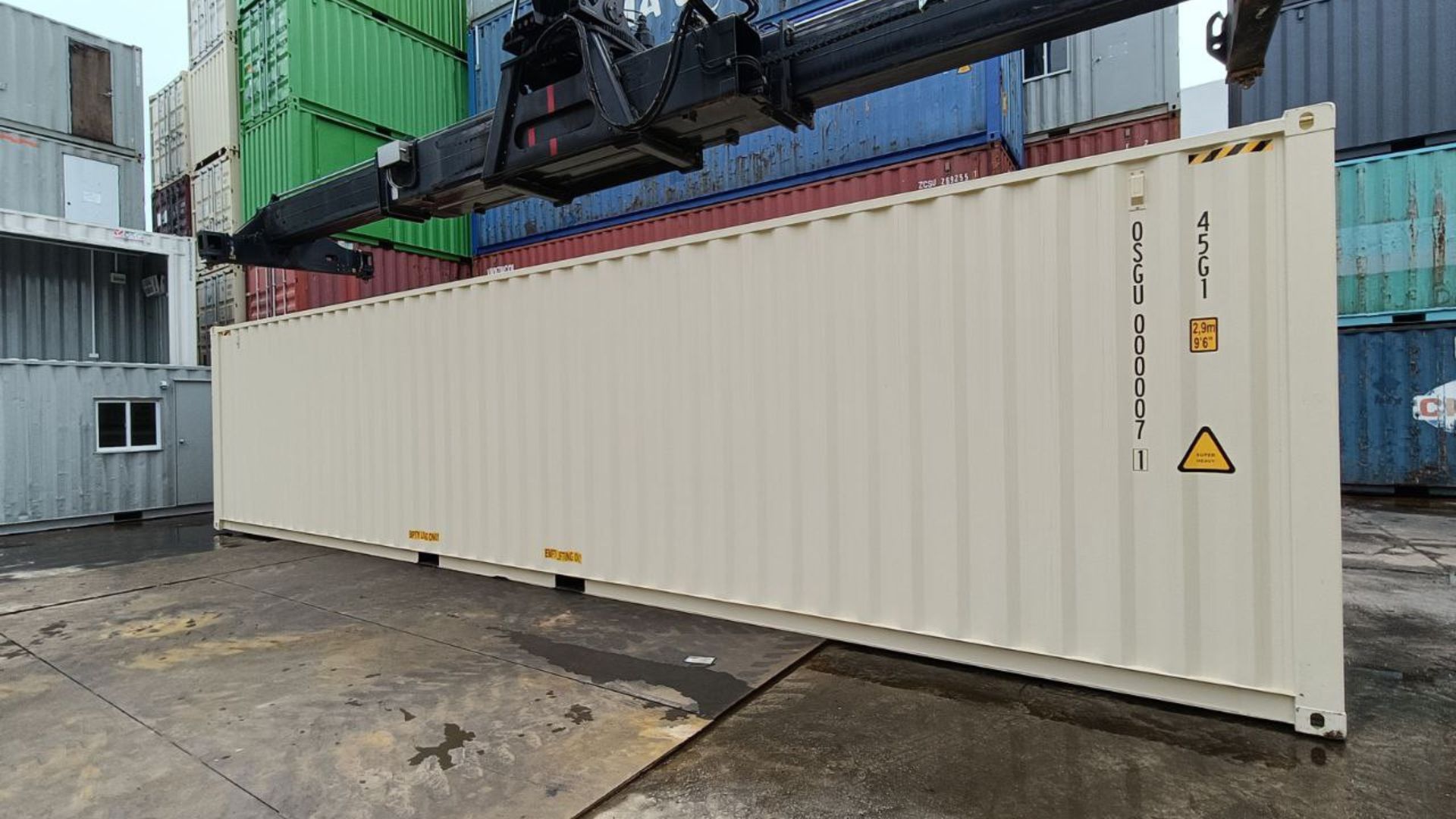
40 Foot Containers: How to Check Quality Before Buying in Singapore
Buying 40 foot containers in Singapore involves more than comparing prices or choosing between new and used units. Container condition, structural integrity, internal dimensions, and intended use all affect whether a unit is suitable for shipping, storage, or industrial applications.
While some used containers may show minor cosmetic wear, others may have corrosion, damaged flooring, or door alignment issues that require further inspection. Understanding the differences helps businesses make informed purchasing decisions.
Whether you need a 40ft container for commercial storage, logistics, or project-related use, checking the unit's condition and specifications before purchase is an important part of the selection process.
This guide covers the key features to inspect, common container grades, standard shipping container dimensions, and what Singapore businesses should consider before buying.
Stage 1: Understanding Different Types of 40 Foot Containers
Before evaluating container condition, businesses should determine which 40ft configuration is appropriate for their intended application.
Two common options are Standard General Purpose containers and High Cube containers. Both provide enclosed space for suitable dry cargo, but they differ in height and available internal volume.
What Is the Difference Between a Standard and High Cube Container?
A standard 40ft container has an external height of approximately 2,591 mm, while a 40ft High Cube container is approximately 2,896 mm tall.
Both configurations share the same nominal external length and width. The additional height of a High Cube unit provides more vertical clearance for suitable cargo.
Standard containers may be appropriate for packaged goods, machinery parts, and commercial inventory that fit within the available dimensions.
High Cube containers may be considered for taller equipment, bulky merchandise, furniture, or applications requiring additional internal height.
The appropriate choice depends on cargo dimensions, weight, site access, and the intended use.
Which 40ft Container Is Better for Storage?
Both Standard and High Cube containers can provide enclosed storage space for suitable goods.
A Standard container may be sufficient for equipment, materials, or inventory that does not require additional height.
A High Cube unit may provide greater flexibility when storing taller items or installing internal shelving and other fittings.
However, a larger internal volume does not automatically mean a container can carry more weight. Payload and maximum gross mass must be checked against the specifications of the individual unit.
Stage 2: Checking the Exterior Condition of a 40ft Container
The exterior condition can provide useful information about how a container has been used and maintained.
Used containers may show surface rust, scratches, dents, or previous repairs. These signs do not automatically make a unit unsuitable, but they should be assessed in relation to the container's intended application.
How Can You Identify Potential Corrosion Problems?
Corrosion can develop when container surfaces are exposed to moisture, salt, and environmental conditions over time.
When inspecting a used container, pay particular attention to:
- Bottom side rails: Look for visible corrosion, deformation, or damage affecting structural components.
- Corner posts: Check for visible dents, cracks, or signs of previous repairs.
- Roof panels: Look for corrosion, holes, or damage that could affect weather protection.
- Side walls: Examine visible rust, dents, and repaired sections.
- Door frames: Check for deformation or corrosion that may affect door operation.
Minor surface corrosion may be different from deeper deterioration affecting structural components.
Where significant rust, cracking, or deformation is suspected, the container should be assessed by an appropriately qualified inspector before purchase or use.
Does Fresh Paint Mean a Container Is in Good Condition?
A freshly painted exterior can improve a container's appearance, but paint condition alone does not confirm structural integrity.
Containers may be repainted as part of refurbishment or maintenance. Buyers should still review the underlying condition, visible repairs, and available inspection information.
When considering a refurbished container, ask the supplier about the scope of work completed and whether any structural components were repaired or replaced.
The container's suitability should be assessed using its actual condition and intended use rather than appearance alone.
What Should You Know About Previous Repairs?
Used containers may have undergone repairs during their service life.
Properly completed repairs do not necessarily make a container unsuitable, but the location and quality of the work are important considerations.
Buyers should pay attention to repairs affecting corner posts, rails, crossmembers, and other structural components.
For containers intended for international freight transport, relevant repairs and the current condition should be assessed against applicable requirements.
Where necessary, seek professional inspection rather than attempting to determine structural safety from photographs alone.
Stage 3: Inspecting Container Flooring, Doors and Seals
The condition of flooring, doors, and seals affects how effectively a container can be used for storage or transportation.
These components should be reviewed according to the expected cargo, loading method, and environmental conditions.
What Should You Check on the Container Floor?
Many general purpose shipping containers use timber or plywood flooring, although construction and thickness vary by model and manufacturer.
During inspection, look for:
- Visible cracks or damaged floorboards
- Signs of water damage or delamination
- Unusual stains or residues
- Areas showing excessive wear
- Evidence of previous repairs
- Unusual odours that may require further investigation
Flooring should be suitable for the intended goods and loading equipment.
For used containers with uncertain cargo or treatment history, additional checks may be appropriate before storing sensitive products or converting the unit into an occupied space.
If contamination is suspected, obtain professional advice rather than attempting to identify hazardous substances through appearance or smell alone.
How Do You Check Container Doors and Locking Mechanisms?
Container doors should open, close, and secure correctly without excessive force.
Misaligned doors can be associated with worn hardware, damaged components, or problems affecting the container's alignment.
Important components to review include:
- Door hinges
- Locking rods and handles
- Door frames
- Locking keepers
- Rubber door seals
- Visible corrosion or damage around the doorway
Door operation should be tested under safe conditions. Heavy container doors can present crushing and entrapment hazards, so inspections should be conducted with appropriate precautions.
Difficulty operating the doors should be reported to the supplier for further assessment.
Why Are Door Seals Important?
Rubber door gaskets help limit water ingress around the container doors when they are correctly installed and maintained.
Damaged, displaced, or deteriorated seals may affect the container's weather protection.
Inspect the accessible seals for visible cracks, gaps, missing sections, or deformation.
The condition of the complete door assembly should also be considered, as correctly functioning seals depend on suitable door alignment.
Stage 4: Comparing Standard 40ft and High Cube Shipping Container Dimensions
Understanding shipping container dimensions is important when planning cargo loading, storage layouts, and delivery arrangements.
Standard 40ft and 40ft High Cube containers have different external heights, but their external lengths and widths are generally the same.
What Are the Dimensions of a 40 Foot Container?
| Specification | 40ft Standard Container | 40ft High Cube Container |
|---|---|---|
| External Length | 12,192 mm | 12,192 mm |
| External Width | 2,438 mm | 2,438 mm |
| External Height | 2,591 mm | 2,896 mm |
| Internal Length | Varies by model | Varies by model |
| Internal Height | Varies by model | Greater than comparable standard-height models |
| Internal Capacity | Approximately 67–68 m³ | Approximately 76 m³ |
| Tare Weight | Unit-specific | Unit-specific |
| Maximum Payload | Unit-specific | Unit-specific |
Note: Dimensions and capacities are indicative for common ISO dry freight container configurations. Actual internal measurements, tare weights, payload ratings, and equipment specifications should be confirmed for the individual container.
Why Do Internal Dimensions Matter?
Internal measurements determine whether goods and equipment can be accommodated inside the container.
When planning loading or storage, businesses should consider:
- Cargo length, width and height
- Door opening measurements
- Packaging and pallet dimensions
- Loading equipment requirements
- Allowable payload
- Space required for safe access or cargo handling
Internal fittings, insulation, or modifications may reduce the usable space of a container.
For more details, refer to our shipping container solutions.
Does a High Cube Container Carry More Weight?
A High Cube container provides additional height, but this does not automatically mean it has a higher payload capacity.
The maximum permitted gross mass and payload depend on the individual unit's design and specifications.
Before transporting cargo, businesses should check the container's markings and applicable transport weight restrictions.
This is particularly important when loading dense or heavy industrial materials.
Stage 5: Understanding New, Cargo-Worthy and Storage-Grade Containers
Container condition is an important factor when choosing between new and used equipment.
Different condition descriptions may be used in the container market, but buyers should confirm what each grading term means under the supplier's actual quotation.
What Is a One-Trip Container?
A one-trip container generally refers to a relatively new unit that has completed limited cargo transportation, commonly involving an initial shipment from its manufacturing location.
These containers typically show less previous service wear than units with longer operating histories.
However, the term does not guarantee that a container is free from scratches, dents, or other cosmetic marks.
Buyers should still review the condition and specifications of the actual unit.
What Is a Cargo-Worthy Container?
A cargo-worthy container is generally understood to be in a condition suitable for freight transportation, subject to applicable inspection and approval requirements.
Used cargo-worthy containers may show cosmetic wear or previous repairs while remaining suitable for their intended transport applications.
For international freight use, the container's condition, relevant safety approval, and examination status should be confirmed.
Cargo-worthy descriptions should not replace the necessary verification of an individual container.
What Is a Wind and Watertight Container?
A wind and watertight container is generally described as a unit intended to provide enclosed protection against wind and rain under appropriate conditions.
Such containers may be considered for suitable stationary storage applications.
However, a wind and watertight designation alone does not establish that the unit meets the requirements for international cargo transportation.
Businesses should confirm the container's condition and intended use before making a purchase.
What About As-Is Containers?
As-is containers are generally offered in their existing condition, potentially with defects, wear, or repair requirements.
Buyers should carefully inspect the container and understand the applicable sale terms before purchasing.
Where structural defects are present, professional assessment may be necessary to determine whether the unit is suitable for the intended application.
Stage 6: Checking CSC Approval and Container Documentation
For businesses purchasing containers for international freight transportation, relevant safety approval and examination documentation should be reviewed.
The International Convention for Safe Containers (CSC) establishes safety requirements for freight containers within its scope.
What Is a CSC Approval Plate?
A CSC approval plate provides information relating to the container's safety approval and specified operating limits.
Depending on the container and approval arrangements, the plate includes relevant identification and technical information.
Buyers should check that the approval information is legible and corresponds to the container being inspected.
The presence of a CSC plate alone does not confirm that the container is currently suitable for every intended use.
Does a CSC Plate Have an Expiry Date?
Containers may be maintained under different examination arrangements, including periodic examinations or an Approved Continuous Examination Programme (ACEP).
Under a periodic examination scheme, the applicable next examination date is relevant.
For containers maintained under ACEP, the approved programme and required examination arrangements should be considered.
Businesses should verify the relevant approval and examination status instead of assuming that every container uses the same examination-date format.
Why Should Buyers Check Container Identification?
Freight containers use standardised identification markings to support tracking and equipment management.
ISO 6346 provides a system for identifying freight containers and describing their size and type characteristics.
Before purchasing a container for shipping, buyers should confirm that the identification markings and relevant documentation are consistent with the unit.
Stage 7: How to Inspect a 40 Footer Container Before Purchase
Before purchasing a 40 footer container, businesses should arrange an appropriate inspection based on the intended use.
Where possible, inspect the actual unit or request relevant photographs and condition information from the supplier.
For structural or safety-critical concerns, seek assessment by a qualified professional.
What Should Be Included in a Container Inspection?
A practical inspection checklist may include:
- Exterior condition: Check visible panels, roof areas, and structural components for damage.
- Corrosion: Look for significant rust or deterioration requiring further investigation.
- Flooring: Inspect accessible floor surfaces for visible damage, moisture-related issues, or contamination concerns.
- Doors: Check whether doors and locking mechanisms operate correctly.
- Door seals: Look for gaps, cracks, or deterioration.
- Repairs: Review visible repair work and ask for relevant records where appropriate.
- Identification: Confirm the container number and applicable markings.
- Documentation: Check the necessary approval and examination information for the intended use.
Inspection findings should be recorded and discussed with the supplier before purchase.
Can You Check a Container for Water Leaks?
A container's weather protection can be assessed by inspecting its roof, walls, door seals, and other accessible areas for visible damage or signs of water ingress.
Any light-entry inspection should be performed using a controlled method that prevents doors from closing or locking on people inside the container.
Do not allow anyone to become trapped inside a container during an inspection.
Where a detailed watertightness assessment is required, arrange an appropriate inspection rather than relying solely on visual checks.
What Should You Do if You Find Damage?
Visible defects should be reported to the supplier before completing the purchase.
Minor cosmetic marks may not affect the intended use, while structural damage, severe corrosion, or significant water ingress may require further assessment.
The appropriate action depends on the condition of the container and its intended application.
Do not assume that cosmetic repairs are sufficient to address structural defects.
Stage 8: Planning 40ft Container Delivery in Singapore
Container delivery should be planned according to the selected container's dimensions, weight, intended placement location, and site conditions.
Delivery requirements may vary between Standard and High Cube containers, particularly where overhead clearance is limited.
What Should You Prepare Before Delivery?
Before arranging transportation, consider:
- Delivery vehicle access
- Gate and entrance clearance
- Overhead structures and cables
- Suitable unloading space
- Ground conditions at the placement area
- Container orientation and door access
- Any site-specific restrictions or approvals
The transport provider should assess the appropriate delivery and lifting arrangements based on the container and destination.
Why Does Ground Preparation Matter?
Containers require suitable support at their intended placement location.
Unsuitable or uneven supporting surfaces can affect container stability, alignment, and door operation.
The appropriate support arrangement depends on the container's design, expected loading, ground conditions, and intended use.
Where necessary, obtain technical advice before placement.
Frequently Asked Questions About 40 Foot Containers
What Are the Dimensions of a 40 Foot Shipping Container?
A standard 40ft dry shipping container has nominal external dimensions of approximately 12,192 mm in length, 2,438 mm in width, and 2,591 mm in height.
A 40ft High Cube container has the same nominal length and width but an external height of approximately 2,896 mm.
Actual internal dimensions vary by manufacturer and model.
How Much Storage Space Does a 40ft Container Provide?
A common standard 40ft dry container provides approximately 67–68 cubic metres of internal volume, while a 40ft High Cube container provides approximately 76 cubic metres.
These are indicative values. Actual usable space depends on the container's internal dimensions, cargo packaging, and loading arrangements.
What Is the Maximum Payload for a 40ft Container?
Maximum payload varies according to the container's specifications.
Businesses should check the individual container's tare mass, maximum gross mass, and relevant approval markings before loading.
Transport weight restrictions may also apply depending on the route and equipment used.
How Many Pallets Fit Inside a 40ft Container?
The number of pallets that can fit inside a 40ft container depends on pallet dimensions, cargo overhang, stacking arrangements, and the container's internal measurements.
Businesses should prepare a suitable loading plan based on the actual pallet and cargo dimensions rather than relying on a universal pallet count.
What Does Cont 40 Feet Mean?
The term cont 40 feet is sometimes used as shorthand when referring to a 40-foot shipping container.
When requesting a quotation, buyers should specify whether they need a Standard 40ft container or a 40ft High Cube container, along with the intended application and preferred condition.
Should I Buy a New or Used 40ft Container?
The appropriate choice depends on your intended use, budget, condition requirements, and whether the unit will be used for shipping or storage.
Newer containers may offer less previous service wear, while suitable used containers can provide an alternative for businesses that do not require a newer unit.
The condition and specifications of the individual container should always be confirmed before purchase.
Why Choose OSG Containers for 40ft Shipping Containers in Singapore?
OSG Containers provides shipping container solutions for businesses involved in logistics, construction, industrial operations, and commercial storage.
Our product range includes Standard General Purpose and High Cube containers, with options depending on product specifications and availability.
We also provide container-related services, including transportation, lifting, positioning, and selected modification works.
Whether you need a 40ft container for storage, freight transportation, or another commercial application, our team can help you explore suitable options based on your requirements.
Find the Right 40ft Container for Your Business
Choosing a suitable 40ft container involves reviewing its dimensions, condition, intended use, and relevant documentation.
Before purchasing, businesses should compare available container types, check the condition of the unit, and confirm the delivery requirements.
Understanding these factors helps buyers identify equipment suited to their operational needs.
Looking for 40ft Shipping Containers in Singapore?
Explore our Standard and High Cube container options for shipping, storage, and industrial applications. Contact our team to discuss available sizes, conditions, and delivery requirements.
Explore Shipping Containers