
Double Door Container Malaysia: 20ft vs 40ft Tunnel Container Guide
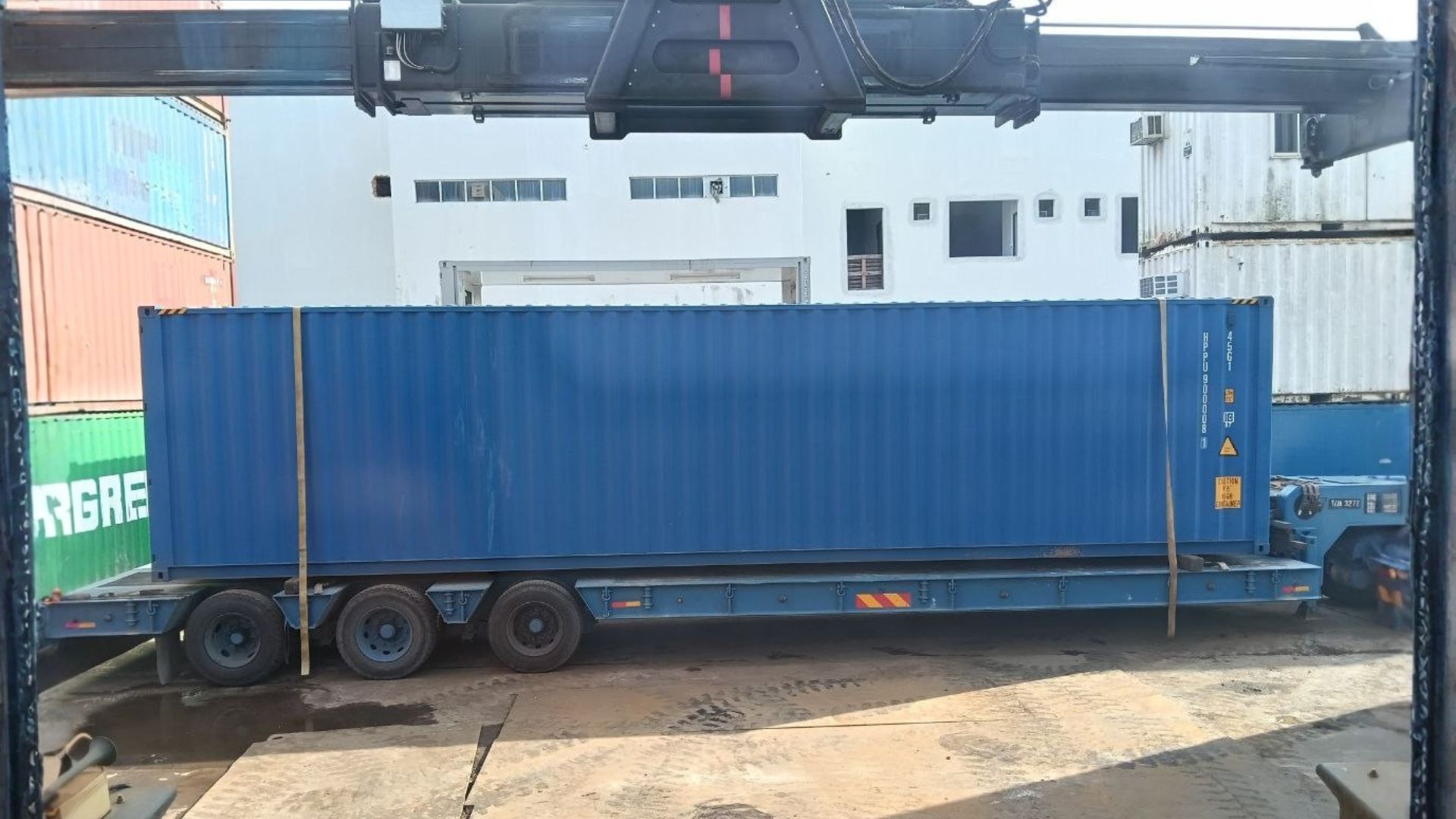
A double door container Malaysia businesses can use provides cargo access from both ends of the container. Unlike a standard shipping container with doors at only one end, a double door container features two opposing sets of cargo doors, allowing goods and equipment to be accessed from either direction.
Also known as a tunnel container, this configuration can be useful for construction sites, warehouses, industrial facilities, and commercial storage operations where convenient access to stored materials is important.
For businesses comparing a 20ft unit with a 40ft tunnel container, the right choice depends on storage capacity, available site space, loading requirements, and the intended application.
This guide explains the differences between standard and double door shipping containers, their practical advantages, available configurations, and important factors to consider before purchasing a container in Malaysia.
What Is a Double Door Tunnel Container?
A double door container is a specialised shipping container with full-width cargo doors installed at both ends. This creates two access points instead of the single entrance found on most standard dry containers.
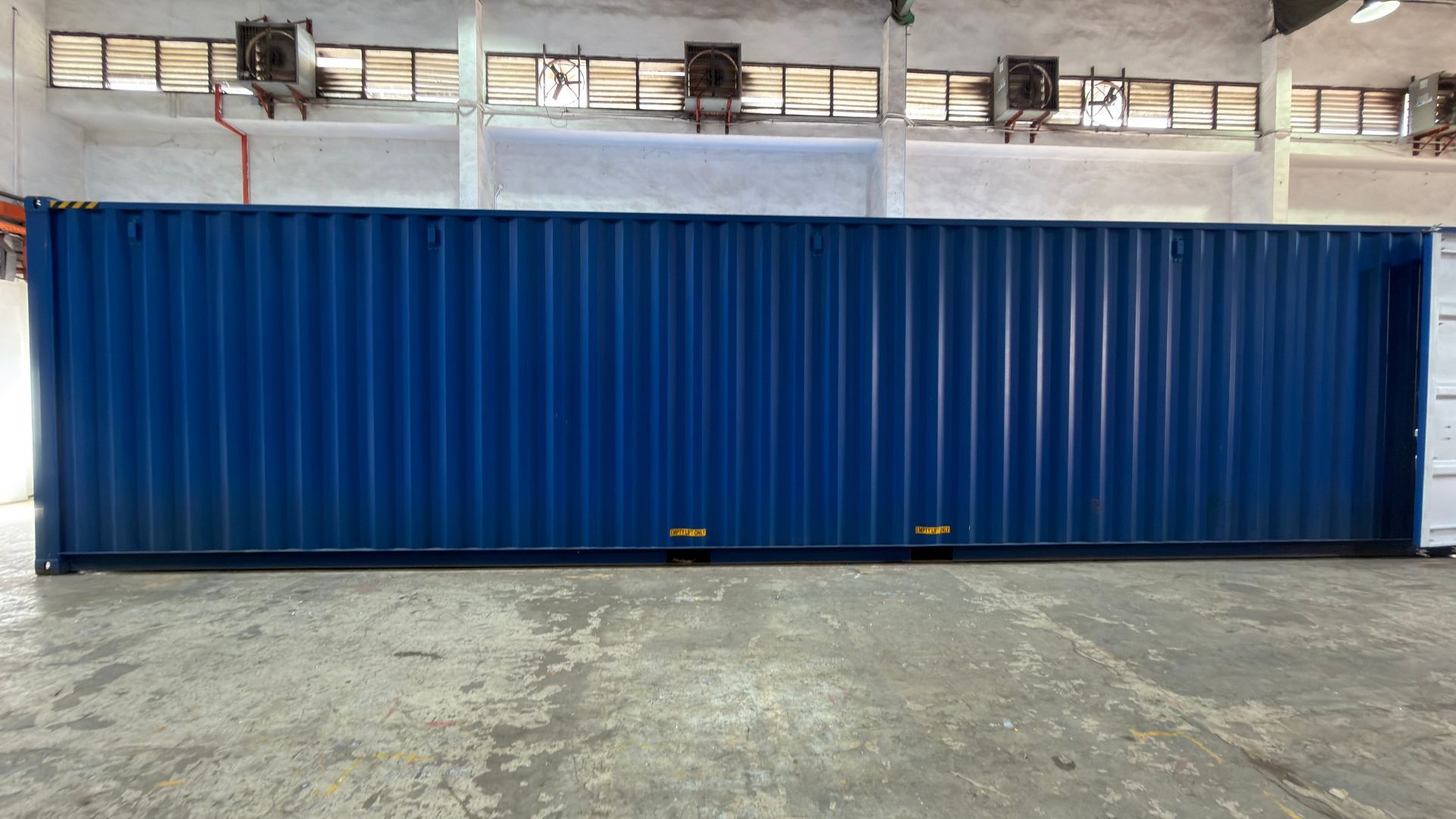
When both sets of doors are open, the container provides a continuous passage through its interior. This is why the configuration is commonly called a shipping container tunnel.
Both 20ft and 40ft tunnel container configurations are available in the international container market, including certain high-cube versions that provide additional height.
The availability of particular sizes, conditions, and specifications in Malaysia should be confirmed with the supplier before purchase.
How Does a Tunnel Container Work?
A tunnel container allows goods to be loaded, unloaded, or retrieved from either end, depending on the site layout and handling arrangements.
For example, a warehouse may use one end for receiving goods and the opposite end for dispatching materials. A construction site may use separate entrances to access different categories of tools and supplies.
However, the presence of two doors does not automatically create a safe drive-through route for forklifts or other machinery. Internal clearances, floor capacity, ventilation, cargo arrangement, and operating procedures must be assessed before equipment enters the container.
Standard Shipping Container vs Double Door Container
The primary difference between a standard dry container and a tunnel container is the number of cargo access points.
A standard container has one set of doors at the rear, requiring users to enter and retrieve goods from the same opening. A double door configuration allows access from both ends, which may improve inventory accessibility and reduce unnecessary cargo movement.
| Feature | Standard Shipping Container | Double Door Tunnel Container |
|---|---|---|
| Cargo Access | One end | Both ends |
| Door Configuration | One set of cargo doors | Two sets of cargo doors |
| Inventory Accessibility | Access primarily from one direction | Access from two directions |
| Storage Layout | Single-entry arrangement | Dual-entry or pass-through arrangement |
| Common Sizes | 20ft and 40ft | 20ft and 40ft configurations |
| Typical Applications | General storage and freight | Storage requiring access from both ends |
| Site Requirements | Door clearance at one end | Door clearance at both ends |
| Availability | Common in container markets | Specialised configurations; confirm stock |
Both configurations can be practical for industrial and commercial applications. The better option depends on whether the additional access provides a meaningful benefit to daily operations.
Advantages of a Double Door Container in Malaysia
Businesses in Malaysia may consider a double door container when traditional single-entry storage creates difficulties accessing goods or organising equipment.
1. Access Goods from Both Ends
The main advantage of a tunnel container is the ability to access stored goods from either end.
This can be particularly useful when equipment or materials are arranged in separate sections, allowing users to retrieve goods without moving through the entire container.
2. Support More Organised Inventory Handling
For warehouses and logistics facilities, dual access can support inventory handling arrangements where goods enter from one side and are retrieved from the opposite side.
This may help support first-in, first-out stock management when combined with suitable shelving, inventory procedures, and cargo-handling arrangements.
Actual operational efficiency depends on the volume and type of goods being handled.
3. Separate Storage Areas
A tunnel container can provide convenient access to different categories of equipment or materials.
For example, construction companies may allocate one end for frequently used tools and the other for maintenance materials or project supplies.
Where internal partitions are required, the container layout should be planned to preserve safe access and ventilation.
4. Suitable for Various Business Applications
Double door containers can be considered for construction, manufacturing, logistics, and commercial storage applications.
Their usefulness comes primarily from the additional access point rather than increased storage capacity.
Businesses should evaluate whether both entrances can be used effectively within their available site layout.
20ft Tunnel Container: Compact Dual-Access Storage
A 20ft tunnel container provides two cargo entrances within a relatively compact footprint.
With an external length of approximately 6.06 metres and a standard width of 2.44 metres, this configuration can be considered for locations where a longer container would occupy too much space.
Suitable Applications for a 20ft Tunnel Container
- Construction Sites: Storage for tools, equipment, and building materials.
- Maintenance Operations: Access to different categories of spare parts and supplies.
- Factories: Supplementary storage for compact industrial components.
- Commercial Premises: Additional inventory storage where space is limited.
- Project Sites: Dual-access storage for temporary operational requirements.
What Should You Consider Before Choosing a 20ft Unit?
Although a 20ft tunnel container is more compact than a 40ft model, sufficient clearance is still required for both sets of doors.
Businesses should also consider how goods will be arranged inside the container and whether both entrances can be accessed conveniently.
If only one end can be used because of surrounding structures or restricted site access, the practical advantage of the tunnel configuration may be limited.
40ft Tunnel Container: Greater Capacity with Dual-End Access
A 40ft tunnel container combines the greater length of a standard 40ft shipping container with cargo access from both ends.
This configuration can be suitable for businesses managing larger quantities of materials, industrial equipment, or commercial inventory.
A standard-height 40ft container has an external length of approximately 12.19 metres, width of 2.44 metres, and height of 2.59 metres.
However, internal dimensions, door openings, and usable storage capacity may vary depending on the specific tunnel container design.
Why Choose a 40ft Tunnel Container?
The additional length provides more room for storing larger quantities of goods or creating separate storage sections.
Access from both ends may also make it easier to retrieve materials stored deeper within the container, provided the interior layout supports this arrangement.
This can be useful for manufacturing facilities, construction projects, and commercial storage operations with substantial inventory requirements.
Common Applications of 40ft Tunnel Containers
- Warehousing: Storage for larger quantities of inventory and packaging materials.
- Manufacturing: Storage for industrial supplies, components, and suitable equipment.
- Construction: Organisation of project materials and equipment.
- Logistics: Dual-access storage for goods requiring frequent handling.
- Commercial Operations: Supplementary storage for businesses managing large inventories.
Important Site Considerations
Before purchasing a 40ft tunnel container, businesses should confirm that sufficient space is available for the container itself and the operation of both door openings.
Transportation, unloading, ground conditions, and vehicle access also require consideration.
A 40ft container may not be suitable for every site, especially locations with narrow entrances, limited turning areas, or restricted placement space.
40ft High Cube Tunnel Container: Additional Vertical Space
A 40ft high-cube tunnel container offers additional height compared with a standard-height 40ft container.
Standard-height containers typically measure approximately 2.59 metres externally, while high-cube containers measure approximately 2.90 metres externally.
This additional height may be beneficial for businesses storing taller goods or requiring greater internal clearance.
However, the actual internal dimensions and door opening height must be confirmed for the specific unit.
When Is a High-Cube Tunnel Container Suitable?
- Storage of taller packaged goods.
- Industrial inventory requiring additional vertical clearance.
- Equipment that cannot fit comfortably inside a standard-height container.
- Storage layouts where additional height improves space utilisation.
High-cube tunnel containers should not be assumed suitable for unrestricted forklift entry or double-stacked pallets. The actual door clearance, floor loading capacity, handling equipment, and cargo arrangement must be checked.
40 Ft Container Double Doors: Factory-Built vs Modified Units
Businesses considering 40 ft container double doors may encounter two main configurations: factory-built tunnel containers and containers that have been modified to include an additional set of doors.
These options can serve similar land-based storage requirements, but their structural and certification considerations differ.
Factory-Built Tunnel Containers
A factory-built tunnel container is manufactured with cargo door openings at both ends as part of its original structural design.
Where intended for international shipping, the unit must satisfy the applicable container requirements and have the necessary approval and documentation.
Buyers should confirm its actual specifications, condition, and certification status before use.
Modified Double Door Containers
A modified tunnel container may be produced by adding an additional door opening to an existing shipping container.
Because this involves altering the original structure, the modification can affect structural strength, lifting arrangements, and the validity of existing certification.
Any modified container intended for international transportation must be assessed against the applicable approval requirements.
For land-based storage applications, buyers should confirm that the modification is properly designed and suitable for the intended use.
Which Option Should You Choose?
The appropriate choice depends on whether the container will be used for international freight, static storage, or a specialised commercial application.
Businesses should provide their intended use, required specifications, and certification needs to the supplier before selecting a configuration.
How to Choose the Right Double Door Container in Malaysia
When comparing double door shipping containers, businesses should consider more than the container's length and number of doors.
1. Identify Your Storage Requirements
Determine the type, dimensions, quantity, and weight of the goods you intend to store.
A 20ft tunnel container may be sufficient for smaller equipment and limited inventory, while a 40ft configuration may be more suitable for larger storage requirements.
2. Evaluate Your Site Layout
Check whether both ends of the container can be accessed conveniently.
Allow adequate clearance for cargo doors, loading equipment, pedestrian access, and surrounding operations.
3. Consider Loading and Unloading Methods
Determine whether goods will be handled manually, using pallet trucks, or with other equipment.
Confirm that the container floor, door openings, and internal clearances are suitable for the intended handling method.
4. Confirm Container Specifications
Before purchasing, request the specifications of the actual unit.
Important details may include:
- External and internal dimensions.
- Door opening dimensions at both ends.
- Container condition.
- Maximum gross weight and payload rating.
- Floor condition and loading suitability.
- Door seals, locking bars, and hinges.
- Applicable certification or documentation.
5. Check Stock Availability
Tunnel containers are specialised configurations, and availability may differ from standard single-door containers.
Businesses should confirm whether the preferred size, height, condition, and specification can be sourced for their project timeline.
Double Door Container Comparison: 20ft vs 40ft vs High Cube
| Container Configuration | Main Advantage | Suitable Applications | Key Considerations |
|---|---|---|---|
| 20ft Tunnel Container | Compact size with dual-end access | Construction tools, maintenance supplies, smaller inventory | Limited storage length; door clearance at both ends |
| 40ft Tunnel Container | Greater storage capacity with access from both ends | Industrial storage, warehouse inventory, construction materials | Longer footprint; delivery and site accessibility |
| 40ft High Cube Tunnel Container | Additional height with dual-end access | Taller goods, bulky inventory, commercial storage | Height clearance, loading method, equipment availability |
| Modified Double Door Container | Potential for application-specific access arrangements | Land-based storage and specialised operational uses | Structural modifications, inspection, and certification requirements |
The best configuration depends on the buyer's operational requirements, available space, and intended container use.
Factors That Affect Double Door Container Availability and Quotations
When sourcing a double door container in Malaysia, the final quotation depends on the required specifications and procurement arrangements.
Important factors include:
- Container Size: 20ft, 40ft, or high-cube configuration.
- Condition: New, used, or modified equipment.
- Door Configuration: Factory-built or application-specific modifications.
- Stock Availability: Available inventory and sourcing requirements.
- Quantity: Number of containers required.
- Location: Preferred depot, port, or delivery destination.
- Certification Requirements: Whether the container is intended for shipping or static storage.
- Additional Features: Any requested modifications or special requirements.
Because these factors differ between projects, buyers should request a quotation based on their actual specifications rather than relying on general market estimates.
Frequently Asked Questions About Tunnel Containers
1. What Is a Tunnel Container?
A tunnel container is a shipping container with cargo doors at both ends. This allows users to access stored goods from either direction and may support more convenient inventory handling.
2. What Is the Difference Between a Standard Container and a Double Door Container?
A standard shipping container usually has cargo doors at one end, while a double door container has doors at both ends. The additional entrance provides more access options, but the overall storage capacity depends on the unit's dimensions and design.
3. What Are the Dimensions of a 40ft Tunnel Container?
A standard-height 40ft tunnel container typically follows the nominal external dimensions of a 40ft ISO container: approximately 12.19 metres long, 2.44 metres wide, and 2.59 metres high. Actual internal dimensions and door clearances vary by model.
4. Can I Buy a Double Door Container in Malaysia?
Businesses in Malaysia can enquire with container suppliers about factory-built tunnel containers or suitable modified configurations. Available sizes, condition grades, quantities, and delivery arrangements should be confirmed before purchase.
5. Is a 40ft Tunnel Container Better Than a 20ft Tunnel Container?
Not necessarily. A 40ft tunnel container provides greater storage capacity, while a 20ft unit occupies less ground space. The better option depends on the amount of goods being stored, available site space, and handling requirements.
6. Can a Tunnel Container Be Used for International Shipping?
A tunnel container may be suitable for international shipping if the particular unit meets the necessary structural, inspection, certification, and carrier requirements. Modified containers may require further assessment or approval before use in international transport.
7. What Are the Benefits of a Shipping Container Tunnel?
The main benefit of a shipping container tunnel is dual-end access. This may improve access to stored goods, support separate storage areas, and allow different loading or retrieval arrangements when the site layout permits.
8. Can a Double Door Container Be Customised?
Yes, double door containers may be customised for certain applications, subject to structural feasibility and relevant requirements. Buyers should discuss their intended use, modifications, and certification needs with the supplier before proceeding.
Choosing the Right Tunnel Container for Your Business
A double door container can provide practical advantages for businesses that require convenient access to stored equipment and materials.
Whether you are considering a compact 20ft tunnel container or a larger 40ft configuration, the most suitable option depends on your storage requirements, site conditions, handling arrangements, and intended use.
Before purchasing, confirm the container's dimensions, condition, specifications, and availability to ensure that it meets your operational needs.
Looking for Double Door Shipping Containers in Malaysia?
Explore shipping container solutions for commercial, industrial, and project requirements in Malaysia. Whether you need a standard container or want to enquire about a specialised tunnel container configuration, our team can help review your specifications and sourcing requirements.
Share your preferred container size, quantity, condition, intended application, and location to request a quotation.
Explore Shipping Containers in MalaysiaSee More Insights from OSG Containers on Google
Enjoy our container guides and industry insights? Add OSG Containers as a Preferred Source on Google to discover more of our relevant articles.
Add OSG as a Preferred Source (opens in a new tab)