Booking Portable Toilet Rental in Singapore
A portable toilet rental in Singapore provides compliant on-site sanitation for construction projects, events, and outdoor venues without sewer access. Standard self-contained chemical cubicles support roughly 25 to 40 users per day with scheduled vacuum servicing, while direct sewer and container units deliver continuous high-volume sanitation across long-term industrial operations.
Setting up sanitation on a remote build site, grass field, or road closure in Singapore often turns into an operational headache if you misjudge waste capacity or vehicle clearance. Local environmental rules and strict workplace safety guidelines require accessible, clean sanitary facilities from the first morning of work. Securing a reliable portable toilet rental in Singapore keeps your site compliant with public health inspectors, protects ground hygiene, and prevents queues from disrupting daily schedules.
Option 1: Self-Contained Chemical Units
Stand-alone chemical cubicles represent the most agile solution across Singapore's industrial and outdoor sectors. These single-cubicle units operate entirely off-grid without requiring links to municipal sewer lines or running water mains. We position them directly on grass patches, concrete hardstands, and roadside verges where fast deployment is your primary goal.
Chemical Waste Reservoir and Foot-Pump Flushing
Each unit features a sealed subterranean holding tank primed with a specialised chemical solution. This liquid neutralises biological foul odours, breaks down solids, and suppresses bacterial growth under tropical heat and high humidity. Users activate the flush using a mechanical foot-pump system. This hands-free mechanism draws the chemical mixture through the pan, which prevents contact contamination between consecutive users.
The companion washing station runs on a separate foot pedal that pulls non-potable water from an integrated fresh reservoir to a compact sink. A basic interior layout standardises your sanitation footprint across sprawling project sites:
- Sanitary fittings: Hands-free foot pedal flush, integrated hand-wash sink, and mounted liquid soap dispenser.
- Consumables: Weather-shielded dual-roll toilet paper dispensers stocked with breakdown-compatible paper.
- Ventilation: Louvred side vents and screened roof ports that circulate ambient air while blocking insect ingress.
- Security: Heavy-duty internal slide latch paired with an external occupancy indicator dial.
How Many Users Can a Self-Contained Unit Handle?
A standard self-contained unit provides approximately 250 flushes before waste reaches operating capacity. For a standard eight-hour construction workday, local operating standards mandate allocating one cubicle for every five workers. On active building contracts running for months at a stretch, a single unit reliably accommodates a small work crew when supported by scheduled tanker pump-outs.
Depending on crew size and shift intensity, waste logistics providers schedule vacuum truck servicing at frequencies of three times per week or six times per week. Vacuum tankers pull waste through an external seal, pressure-clean internal tank walls, recharge chemical solutions, and restock toilet paper and hand soap. For short-term single-day events, plan for 30 to 40 users per toilet over a full day, or tighten the ratio to 25 people per toilet for concentrated four-hour gatherings.
Ground Placement and Power Hookup Specifications
Because self-contained units weigh around 80 to 100 kilograms empty, delivery teams wheel or fork them across flat ground. They must rest on level ground to avoid uneven liquid accumulation inside the chemical reservoir. While mechanical pumps require zero electricity, night shifts and evening events require interior lighting.
Standard units incorporate interior moisture-resistant lights powered via an exterior industrial 16-amp blue CEE-form plug. Your site must provide a matching 230-volt single-phase power point or connect the cubicles to a temporary distribution box. Once our delivery truck sets the unit and fills the reservoir with water and chemicals, you cannot manually shift the toilet due to liquid weight and structural stability risks.
Option 2: Direct Manhole-Connected Restrooms
When you manage long-term civil engineering sites or recurring outdoor functions near existing sewer infrastructure, a temporary toilet rental that hooks straight into a sewer manhole eliminates vacuum servicing dependencies. We prefer direct manhole hookups whenever permanent underground inspection chambers sit within reachable bounds of your site footprint.
Direct Sewer Discharge and Continuous Water Hookup
Unlike chemical holding tanks, a manhole toilet discharges effluent straight into Singapore's public sewerage network. The base of the unit connects to an outlet flange that empties directly through an open inspection shaft via custom rubber sleeves and sealed transition pipes. This continuous gravity-fed fall eliminates static chemical storage, stops biological decomposition odours at the source, and provides an experience that mirrors permanent brick-and-mortar restrooms.
Continuous freshwater connections transform personal hygiene standards for site personnel. A standard half-inch or three-quarter-inch hose brings pressured utility water directly into the unit, feeding a conventional push-button cistern flush, a tap with continuous running water, and an integrated spray bidet.
When Should You Choose a Temporary Toilet Rental Connected to a Manhole?
Choose a temporary toilet rental hooked directly to a manhole whenever you need unlimited usage volume without pump truck visits. Direct discharge removes the operational ceiling of the 250-flush holding tank. Because waste drops straight into the active sewer line, you can run high user volumes through a single stall throughout back-to-back 24-hour construction shifts without fearing reservoir overflows. This mechanical continuity makes direct connection the practical choice for underground rail projects and major road expansions.
Scheduled maintenance changes fundamentally with this configuration. Because there is no holding tank, vacuum pump trucks do not need access to the cubicle. Site cleaners simply mop interior non-slip floors, disinfect touchpoints, and top up soap and paper products using standard on-site custodial routines, which reduces your monthly servicing overhead.
Manhole Alignment and Utility Connection Logistics
Physical placement demands exact planning. The toilet must sit plumb over or immediately adjacent to an approved inspection manhole. You cannot bridge long horizontal runs without auxiliary macerator pumps, meaning your site layout must accommodate the physical location of the utility chamber.
- Confirm manhole depth, invert levels, and run approvals with PUB and main site engineers before scheduling delivery.
- Clear a flat hardstand platform directly across the manhole frame to support the unit footprint safely.
- Seat the toilet base and secure airtight flexible coupling collars over the open drop to seal out sewer gases.
- Hook up a continuous freshwater feed capable of maintaining a minimum of 1.5 bar running pressure.
- Connect an insulated, outdoor-rated CEE-form cable to the integrated lighting junction.
Option 3: Modular Multi-Cubicle Container Blocks
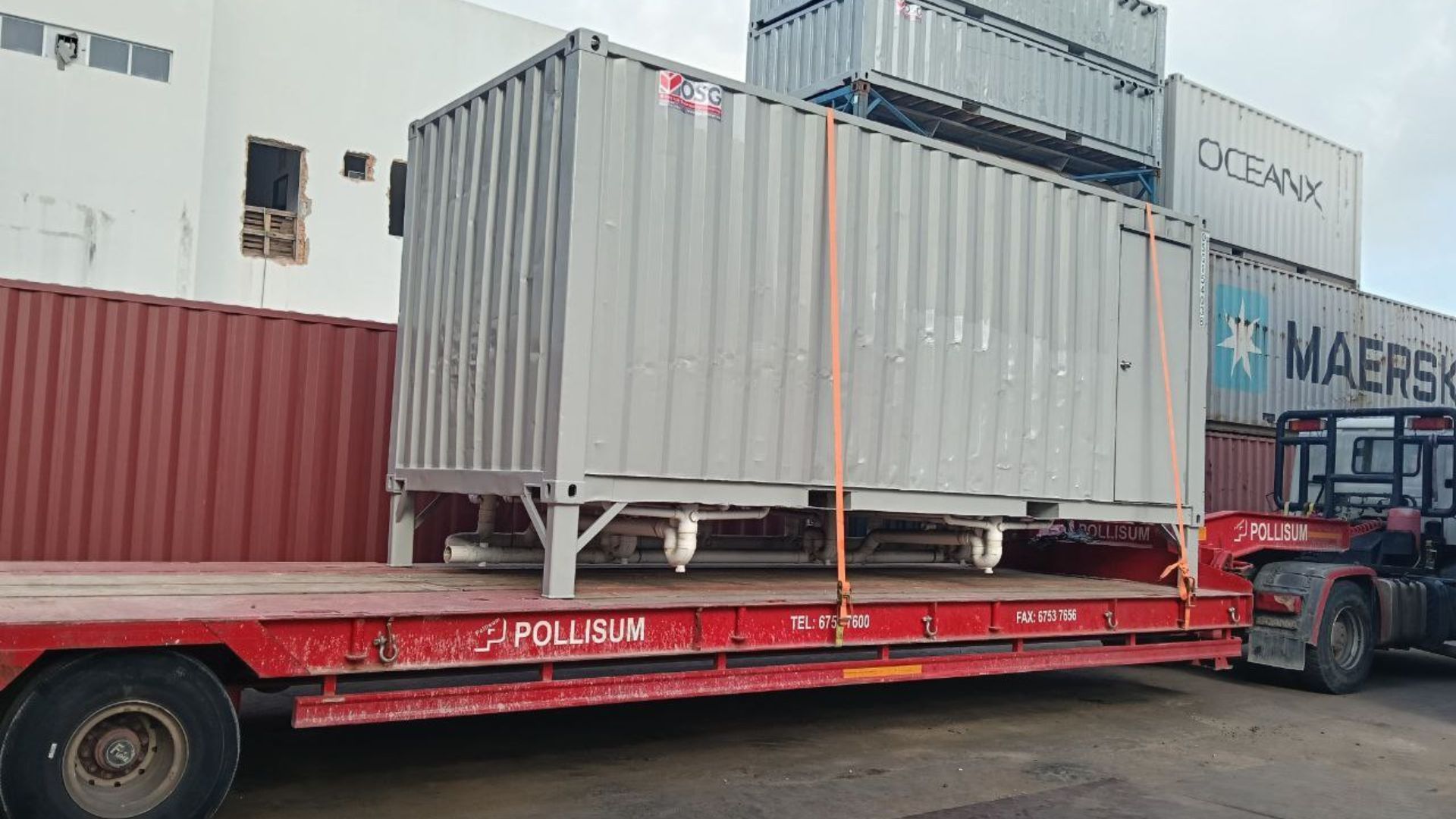
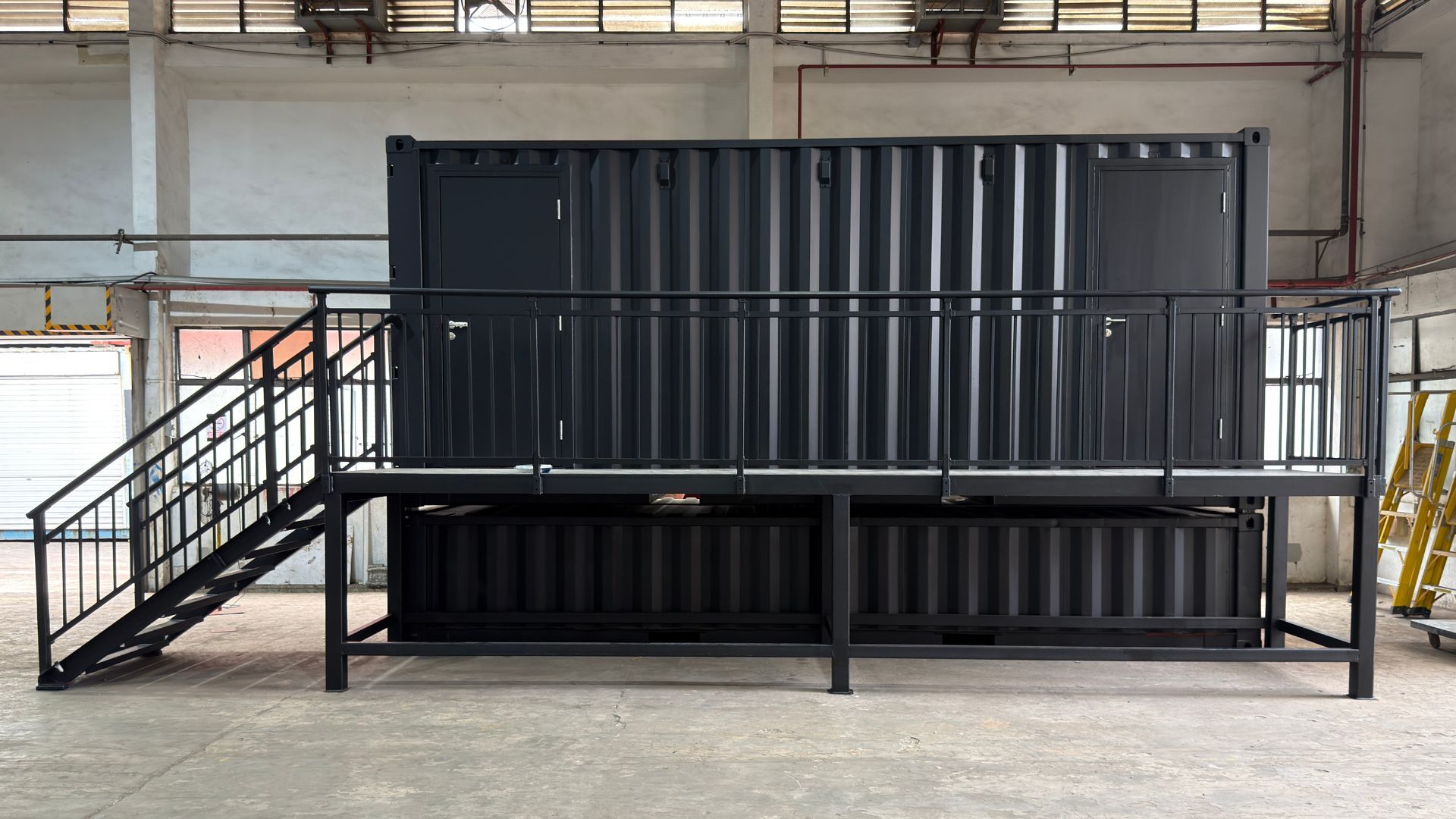
High-density industrial zones, shipyards, and major sporting events require dense throughput that single plastic cubicles cannot handle cleanly. A modular mobile toilet rental packaged inside a converted 10-foot or 20-foot steel shipping container delivers rigid structural integrity, integrated climate control, and high user capacity within a single delivery footprint.
Centralised Plumbing and Waste Infrastructure
Containerised blocks combine multiple private cubicles, communal urinals, and continuous vanity sinks over durable chequered aluminium or anti-skid stainless steel flooring. Plumbing infrastructure sits housed inside secure internal service ducts behind water-resistant composite partition walls. This setup protects pipework, pressure valves, and electrical feeds from rough site conditions.
Engineers link container toilets directly to adjacent sewer manholes or attach them to exterior heavy-duty holding bladders equipped with high-capacity submersible macerator pumps. Running centralised stainless steel plumbing channels effluent through unified drainage manifolds, which reduces external connection points to one main waste outlet and one freshwater inlet.
When Is a Mobile Toilet Rental Container Block Required?
A modular mobile toilet rental container block is required when massive user volumes overwhelm single-stall plastic units during shift changeovers or event intermissions. A standard 20-foot container block typically provides three to five private water closets, multiple waterless or sensor urinals, and twin hand-washing basins, handling sudden surges in pedestrian traffic without creating long outdoor queues.
Because these blocks support hundreds of user visits across single shifts, facility managers must maintain regular housekeeping teams on-site. Routine care focuses on restocking high-capacity commercial paper dispensers, wiping down polished fixtures, and monitoring continuous drainage runs. When linked to external waste storage bladders rather than mains sewers, operators schedule large-capacity vacuum tankers to clear subterranean waste tanks during off-peak hours.
Crane Access, Footprint, and Electrical Connections
Installing container units requires careful logistical coordination compared to moving lightweight single cubicles. Heavy lorry cranes need wide turning radii, stable ground outriggers, and overhead clearance free from tree canopies or low-hanging power cables to drop a multi-tonne steel block onto position.
Container units demand substantial electrical power to operate high-output mechanical exhaust fans, bright internal LED strips, and optional split-system air conditioning units. You must supply a steady 32-amp or 63-amp single-phase or three-phase industrial electrical feed. If your site lacks permanent mains electricity, you must wire these units directly to an on-site diesel generator to guarantee consistent climate and odour control.
Option 4: VIP and Executive Event Suites
Corporate galas, luxury brand pop-ups, and executive enclosures at outdoor festivals cannot provide basic plastic chemical stalls to guests. Sourcing a dedicated mobile toilet rental singapore fleet composed of executive trailer suites delivers comfort, clean interior aesthetics, and climate-controlled luxury identical to five-star hotel restrooms.
What Does a Mobile Toilet Rental Singapore Executive Suite Include?
A dedicated mobile toilet rental singapore executive suite includes separate gender cubicles, ceramic flushing bowls, solid stone vanities, large vanity mirrors with ambient warm lighting, brushed stainless tapware, and integrated split air conditioning systems running at a steady 22 degrees. These trailer suites bypass utility-grade plastics to offer an upscale guest environment.
Executive suites house integrated freshwater tanks and internal silent waste management cassettes. Low-noise pressure pumps deliver steady flow to ceramic basin faucets, while concealed chemical macerators grind and vacuum waste into odour-sealed containment bays hidden inside the chassis frame, keeping mechanics completely out of guest sight.
Guest Capacity Guidelines and Immediate Event Cleaning
Executive suites run on tighter guest-to-stall ratios to eliminate wait times and maintain spotless hygiene throughout formal functions. Event directors must calculate allocations carefully:
- Plan on one private executive cubicle per 50 to 75 VIP guests for functions spanning four to six hours.
- Station dedicated, uniformed restroom attendants to wipe countertops, sanitise door latches, and clear hand towels after every use.
- Stock premium paper hand towels, moisturising soaps, and ambient reed diffusers to uphold luxury standards.
- Monitor internal fresh-water and grey-water levels constantly via hidden digital gauge panels in the service bay.
Event Site Layout and Vehicle Delivery Clearance
Executive suites travel as heavy towable trailers or rigid truck platforms. Site planners must ensure direct, level asphalt or compacted gravel access roads that accommodate vehicle lengths upwards of eight metres without bottoming out over ramps.
Position units away from primary dining spaces, yet keep them close enough for well-lit, paved guest access in formal footwear. Delivery must happen hours ahead of guest arrival to allow plumbing pressurisation, electrical testing, and air-conditioning pull-down. You must reserve flat, stable ground with access to dedicated 32-amp power lines or silent mobile generators to avoid unwanted motor noise adjacent to hospitality tents.
Choosing the Right Option: Deployment Guidelines and Cost Analysis
Selecting the right sanitation system requires balancing duration, infrastructure access, and your overall project budget. Misjudging your setup can mean overpaying for unneeded tanker runs or watching lines grow out of control. We break down the technical differences below so you can match the correct format to your exact site constraints.
Sanitation Decision Matrix Based on Duration and Headcount
| Toilet Model | Best Use Case | Headcount Guidelines | Water / Power Needs | Servicing Dependency |
|---|---|---|---|---|
| Self-Contained Chemical | Short events, early-stage civil sites, roadworks | 30-40 pax per day; 5 pax per shift (construction) | None for plumbing; 16A CEE-form for light | Vacuum tanker required (3x to 6x weekly) |
| Direct Manhole Restroom | Long-term sites with active sewer covers | High volume / virtually unlimited flush count | Continuous 1/2-inch water mains; 16A CEE-form | Zero vacuum tanker needs; daily sanitising only |
| Containerised Block | Industrial yards, large sports hubs, festivals | 150-300 pax per multi-cubicle unit block | Continuous water feed; 32A to 63A power supply | Direct sewer hookup or external bulk waste tanks |
| VIP Executive Trailer | Galas, brand activations, hospitality suites | 50-75 VIP guests per private stall | Water tanks built-in; 32A steady power feed | Full-time on-site attendant; post-event pump-out |
What Factors Influence Portable Toilet Rental Prices?
When assessing portable toilet rental prices, base equipment hire makes up only one portion of your total invoice. Standard chemical units often display base entry costs around $150 for brief deployments, but recurring expenses dictate long-term project budgets. You need to weigh mechanical hire rates against labour and logistical line items before signing contracts:
- Delivery and Demobilisation Transport: Flatbed trucks and lorry cranes charge flat deployment and collection fees based on site accessibility, timing, and road permits.
- Vacuum Tanker Servicing Cycles: Pumping, chemical recharging, and sanitisation visits account for the bulk of long-term operational costs on chemical models. Stepping up from three to six visits per week doubles your servicing overhead.
- Direct Infrastructure Connections: Manhole toilets incur higher upfront plumbing and mechanical hookup costs during site establishment, but they eliminate weekly pumping invoices entirely.
- Consumables and Dedicated Labour: High-end functions require dedicated janitorial teams, premium paper products, and dedicated generator fuel lines to keep air conditioning running.
If you have direct access to a certified inspection manhole, choose a direct-discharge unit to lock in low monthly operating costs. When dealing with open turf, undeveloped plots, or rapid single-day projects, self-contained chemical cubicles remain the practical operational standard. Contact our technical team today to review your site plans, calculate your required stall counts, and confirm utility requirements before setting up your site.
Searching for a Mobile Toilet Rental? Have a look at our Instaloo NOW!