
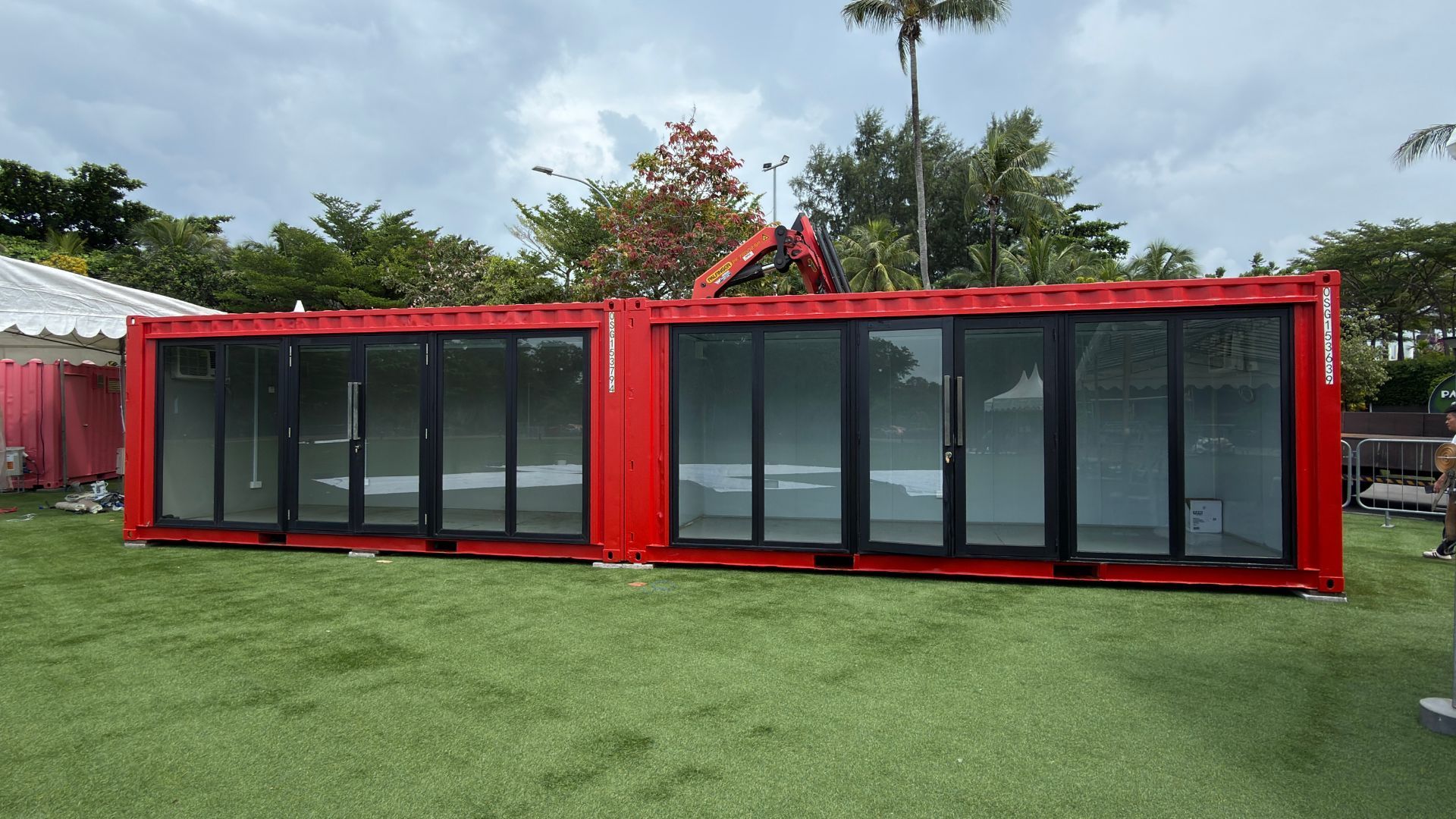
booth container vs Traditional Exhibition Stands
A booth container is a modular shipping container engineered into a reusable brand activation space for trade shows and outdoor events. Modified with custom doors, display electrics, and structural reinforcement, it offers a durable, weather-resistant alternative to disposable wooden stands while drastically reducing setup time and recurring build costs across multi-day exhibitions.
Traditional timber and aluminium exhibition stands often end up in disposal skips forty-eight hours after trade show doors close, wasting thousands of dollars in single-use materials and labour. A converted shipping container solves that waste by giving you a rigid, relocatable steel asset you can use across multiple multi-day events. However, taking a heavy intermodal box into an indoor exhibition hall or outdoor festival grounds introduces real engineering demands that standard custom carpentry never faces. If you do not calculate your point loads, structural modifications, and door clearances properly, your activation will stall at the loading dock.
Stage 1: How Do You Buy and Inspect a booth container Shell?
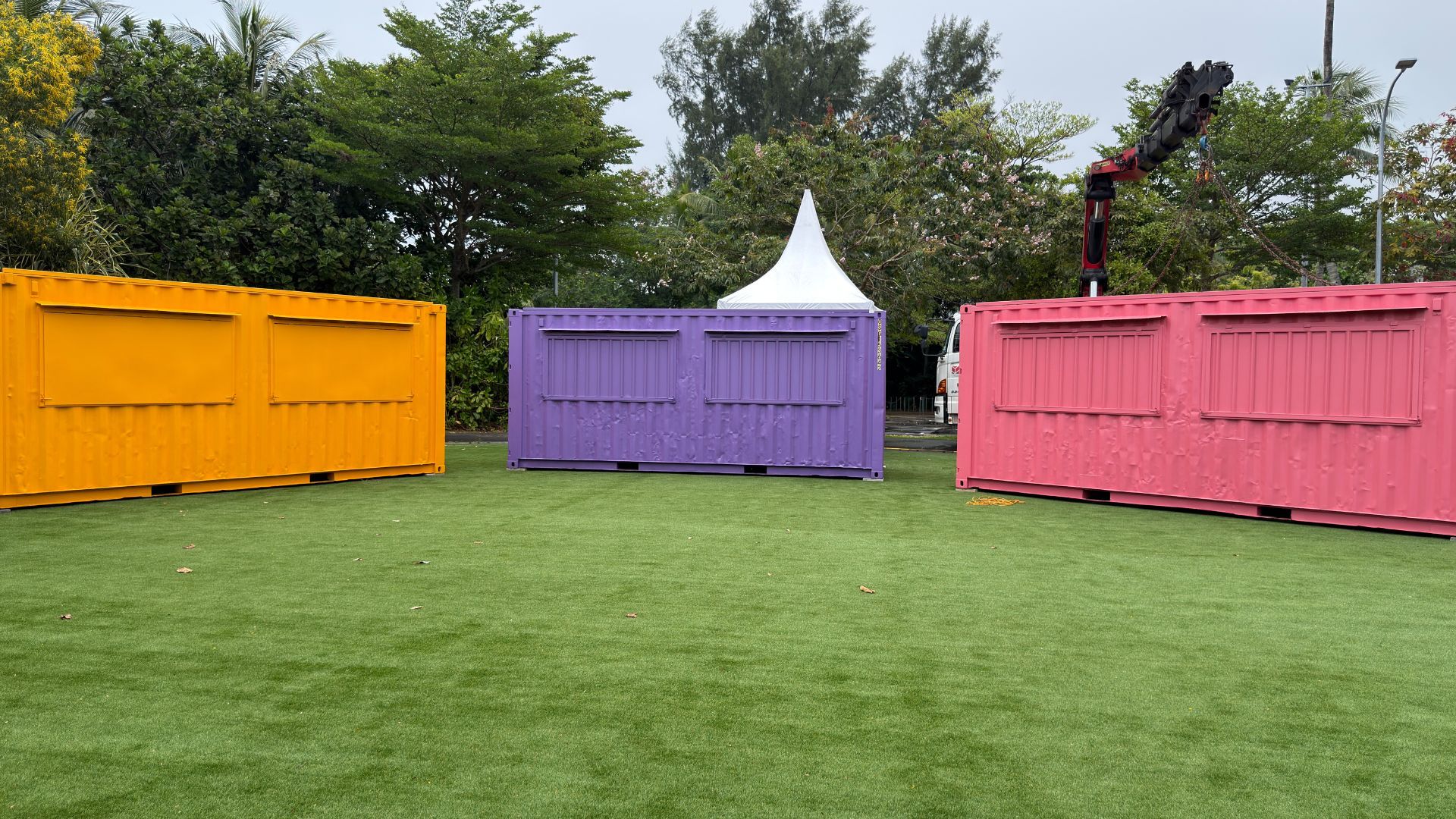
Transforming standard freight hardware into an engaging brand activation starts with choosing the right base unit before you cut any openings. We always advise clients to purchase a one-trip Corten steel box rather than a retired twenty-year-old ocean cargo unit because the structural differences dictate your entire renovation budget. A single-trip container arrives with true corner posts, unbowed roof headers, and pristine side corrugations that will not fight your fabrication team during welding.
Why Are Base Frame Sourcing and Checking Corten Steel Critical?
Every reliable booth container relies on Corten A weathering steel to prevent deep atmospheric oxidation when you deploy your display outside in unpredictable weather. When you source a unit, examine the original CSC plate mounted to the left cargo door to confirm the manufacturing date, tare weight, and allowable stacking limits. Ensure that the main perimeter rails and the twelve-gauge corrugated side panels match the original factory specifications, because lower-grade knockoffs lack the chemical composition needed to arrest surface rust. If your design team plans to install heavy interior display equipment, you must confirm that the internal crossmembers underneath the 28mm marine plywood floor remain pristine and undamaged.
What Structural Corrosion and Warped Framing Failures Occur?
Retired cargo boxes frequently suffer from hidden structural failures that undermine their performance as a public exhibition platform. Saltwater exposure corrodes the floor bearer junctions where the crossmembers weld into the bottom side rails, which drastically lowers your permissible floor live loads. Even worse, years of rough sea transits and heavy port crane handling often twist the rectangular frame out of alignment. If the corner posts sit even twenty millimetres out of square, custom-fabricated bifold doors and drop-down side stages will bind, jam, or refuse to seal during setup.
How Do You Spot Shell Defects Early?
You can spot severe structural problems before the container leaves the depot by running three mechanical verification checks:
- Diagonal cross-measurement: Run a steel tape measure from the top-left corner casting to the bottom-right corner casting on both end frames, ensuring the two diagonal readings differ by less than five millimetres.
- Ultrasonic thickness testing: Place a handheld thickness gauge along the bottom side rails and lower corrugated sheets to check that the steel retains its full original wall thickness.
- Under-floor bearer inspection: Slide an inspection camera or creeper underneath the chassis to confirm that the transverse steel ribs are free from severe corrosion and forklift tine damage.
Stage 2: How Do You Engineer an exhibition booth design and Interior?
Cutting large openings into corrugated container walls removes the structural rigidity that keeps the box square during transport and lifting. Whenever our team cuts out a side sheet to create a service counter or hospitality area, we weld rectangular hollow section (RHS) steel framing around the entire perimeter to restore that lost strength. A thoughtful exhibition booth design balances open access for visitors with the structural steel framing needed to keep the ceiling from sagging under the weight of lighting rigs or HVAC units.
How Should You Plan Transformable Panels and Electrical Conduits?
Hydraulic flaps, gas-strut drop-down floors, and sliding glass partitions turn an industrial shipping container into a polished commercial environment. When we design these moving panels, we specify industrial pivot bearings and commercial gas struts matched to the precise weight of the clad steel panels. Behind the internal wall linings, we run twin-wall rigid PVC conduit through pre-drilled holes in the steel intermediate studs to isolate the low-voltage display wiring from high-power distribution lines. Running cables through the floor cavity or perimeter ceiling bulkheads ensures your electrical crew can service power feeds without stripping finished interior wall surfaces.
| Component System | Standard Construction Approach | High-Traffic Exhibition Specification | Operational Trade-Off |
|---|---|---|---|
| Wall Structural Framing | Lightweight timber battening | 75x50mm RHS structural steel frame | Steel adds 450kg but prevents structural wracking |
| Fold-Down Deck System | Manual chain-link hoist | Integrated dual hydraulic rams | Hydraulics need dedicated power but set up in 2 minutes |
| Electrical Distribution | Surface-mounted plastic trunking | Recessed steel conduit with CEE inlets | Recessed systems take longer to build but withstand rough transit |
| Thermal Insulation | Glass mineral wool batts | 50mm closed-cell spray polyurethane foam | Spray foam costs more but stops internal wall sweating completely |
What Triggers Expansion Mechanism Binding and Circuit Overloads?
Mechanical binding happens when fabricators build drop-down awnings and folding stage decks without accounting for thermal expansion or minor chassis flex during transit. A steel awning that opens cleanly inside an air-conditioned workshop can seize completely when direct sunlight expands the metal by several millimetres at an outdoor trade show. On the electrical side, builders often tie high-draw air conditioning units, commercial coffee machines, and dense LED display walls into a single distribution board phase. This bad wiring strategy trips upstream venue breakers during peak visiting hours and shuts down your activation when foot traffic is highest.
How Do You Detect Alignment and Clearance Errors in the Workshop?
Catch mechanical and electrical defects during workshop fabrication using this structured quality review process before the unit heads to the paint booth:
- Mount laser alignment levels along the upper header beams while opening and closing every fold-out panel to verify that gaps stay uniform through the entire swing path.
- Apply continuous maximum load to all drop-down floor platforms for four hours, measuring vertical deflection with dial indicators to confirm that the supporting arms hold steady.
- Run all onboard electrical devices together for two hours while checking distribution breakers and junction boxes with a thermal imaging camera to spot high resistance spots.
Stage 3: How Do You Coordinate Logistics for an exhibition booth singapore?
Moving a twenty-foot container into a major event venue requires far more administrative and logistical planning than moving loose display panels. When organizing an exhibition booth singapore showcase at hubs like Singapore EXPO, Marina Bay Sands, or Suntec Singapore, you have to satisfy strict venue rules and obtain local structural certifications. You must verify road permits, schedule crane access windows, and ensure floor loading limits match before your truck leaves the workshop yard.
How Do You Navigate Venue Delivery Protocols and Floor Loading Limits?
Exhibition hall floors look indestructible, but they carry strict uniform distributed load (UDL) and point-load limits that a steel container can easily exceed. While general exhibition floors might support twenty to thirty kilonewtons per square metre, a converted container concentrates its total mass onto four small corner casting pads. You must supply load distribution spreader plates, usually made of thirty-millimetre-thick high-density polyethylene or heavy mild steel, to spread that concentrated weight across a broader floor area. You must also provide signed professional engineer (PE) calculations to the venue safety team weeks in advance to prove your container will not crack the hall slab.
What Causes Freight Ingress Rejections and Access Clearance Delays?
Nothing ruins an event schedule faster than having the venue loading dock master turn your transport trailer away at the perimeter gates. Standard container trailers frequently sit too high to clear the basement ramp height limits found at venues like Suntec or Marina Bay Sands. If your fabricator fitted external roof-mounted air conditioning units or display signage trusses, the total vehicle height can easily hit 4.5 metres, smashing into overhead fire sprinkler pipes or low clearance signs. In addition, missing local lifting gear certifications or late driver security clearances will push your unloading slot back and eat into your precious stand setup time.
How Do You Spot Site Permitting and Transit Bottlenecks Early?
To avoid delivery disasters, walk the actual access route and cross-check your site paperwork against these physical constraints:
- Low-bed trailer requirements: Confirm with your freight hauler that they will use a low-bed trailer that keeps total transit height below four metres from the road to the highest structural point.
- Loading dock turning radius: Check the loading bay turn angles using venue dock drawings to confirm your prime mover can make the tight turns without scraping wall barriers.
- Professional Engineer endorsements: Ensure your registered PE approves both the internal structural modifications and the spreader plate calculations at least three weeks before freight check-in.
Stage 4: How Do You Handle Rigging and Crane Offloading of the exhibit booth?
Offloading a modified steel structure inside a tight exhibition hall or busy outdoor plaza demands disciplined crane operations. Whether you are using a mobile hydraulic crane or an onboard lorry crane (HIAB), your rigging team must treat the exhibit booth as an engineered lift rather than simple freight. Hoisting an unevenly weighted box over finished venue floors leaves zero margin for dropped loads or rough placements that can crack expensive flooring tiles.
What Are the Core Precision Hoisting and Foundation Leveling Procedures?
Always connect your lifting slings directly into the top corner castings using rated twist-lock lifting lugs or approved bow shackles. We strongly recommend using a certified four-point lifting spreader beam, which keeps the wire rope slings vertical and stops inward crushing forces from buckling modified roof headers. Once the crane lowers the container onto its marked floor footprint, set up precision laser levels on all four corner castings. Stack solid steel shims and high-density neoprene levelling pads underneath the corner castings until the chassis sits completely level, keeping all moving parts aligned.
How Does Uneven Ground Settlement Lead to Chassis Twisting?
When you set up on outdoor grass or unreinforced asphalt during warm weather, the heavy corner castings can slowly sink into the softening ground. If one corner drops as little as fifteen millimetres over two days, the entire container frame twists diagonally along its length. This frame twist pinches custom sliding doors in their tracks, breaks structural silicone seals around fixed windows, and can even crack expensive large glass panels. Inside exhibition halls, soft floor protection sheets can compress unevenly, throwing the container out of level and causing interior display doors to swing open on their own.
How Do You Diagnose Leveling and Structural Strain on Site?
Use simple, reliable diagnostic checks during and immediately after crane operations to verify your container sits level and stable:
- Position precision digital spirit levels across both the long bottom side rails and the transverse end headers to ensure deviation stays below one millimetre per metre.
- Measure the diagonal gaps around all open interior door frames with a vernier calliper to check for early frame twist before securing internal features.
- Walk the perimeter of all weight-bearing corner pads with an engineer feeler gauge to ensure full, flush contact with the underlying steel spreader plates.
Stage 5: How Do You Commission and Pack Down the exhibition booth?
The operational success of an exhibition booth depends on how quickly and safely your team can set it up, run it, and pack it away when the show ends. Unlike traditional wooden stands that require days of painting, patching, and demolition, a container booth should open for business within hours of hitting the floor. Achieving that fast turnaround requires durable weatherproofing seals, dependable locking systems, and a strict pack-down process that protects high-value interior technology during transit.
How Do You Manage Weatherproof Sealing and Post-Event Turnaround?
For outdoor venues, we install automotive-grade EPDM bulb gaskets around every fold-out hatch, service window, and access door. These hollow rubber seals compress tightly when mechanical over-centre draw latches pull the moving panels flush against the main Corten steel frame. Inside, mount all display televisions, touchscreens, and point-of-sale terminals on heavy-duty lockable slide mounts that pin securely during transit. When the exhibition wraps up, your site crew disconnects the main power feed, unlocks the mechanical deck winches, folds the side panels closed, and locks the transit bars without needing to pack loose furnishings into external crates.
What Causes Water Seal Degradation and Rapid Pack-Down Damage?
Rushing your pack-down at the end of an event often leads to costly repairs that eat away at your operational savings. Crew members eager to clear the hall can pinch rubber perimeter gaskets inside folding steel joints, tearing the seals and inviting water leaks during the next rainfall. Leaving loose stools, display podiums, or light fittings unsecured inside the container is another common mistake. When the truck brakes hard or turns sharply on the highway, loose items tumble across the floor, scratching custom wall panels and shattering expensive display screens.
How Do You Confirm Joint Sealing and Highway Readiness?
Before releasing your mobile booth to the transport driver, run this final sign-off inspection to confirm the unit is secure for the highway:
- Gasket compression review: Inspect the full perimeter of every closed exterior hatch to verify that the EPDM rubber seals compress evenly without bunching or pinching.
- Mechanical transit pin engagement: Verify that all secondary safety pins, travel braces, and drop-deck safety chains lock firmly in place over the main moving panels.
- Interior load securing: Check the container interior to confirm all loose chairs, display assets, and inventory ride inside padded floor-mounted transport brackets.
Choosing an industrial container conversion over single-use custom carpentry gives your business a tough, reusable event platform that cuts setup times and stands out on busy show floors. If you are planning an upcoming trade show activation and want to explore a custom mobile structure, our engineering team can review your footprint requirements and map out a practical build specification that works for your brand.
Contact us today about our Event & Retail Containers NOW!