
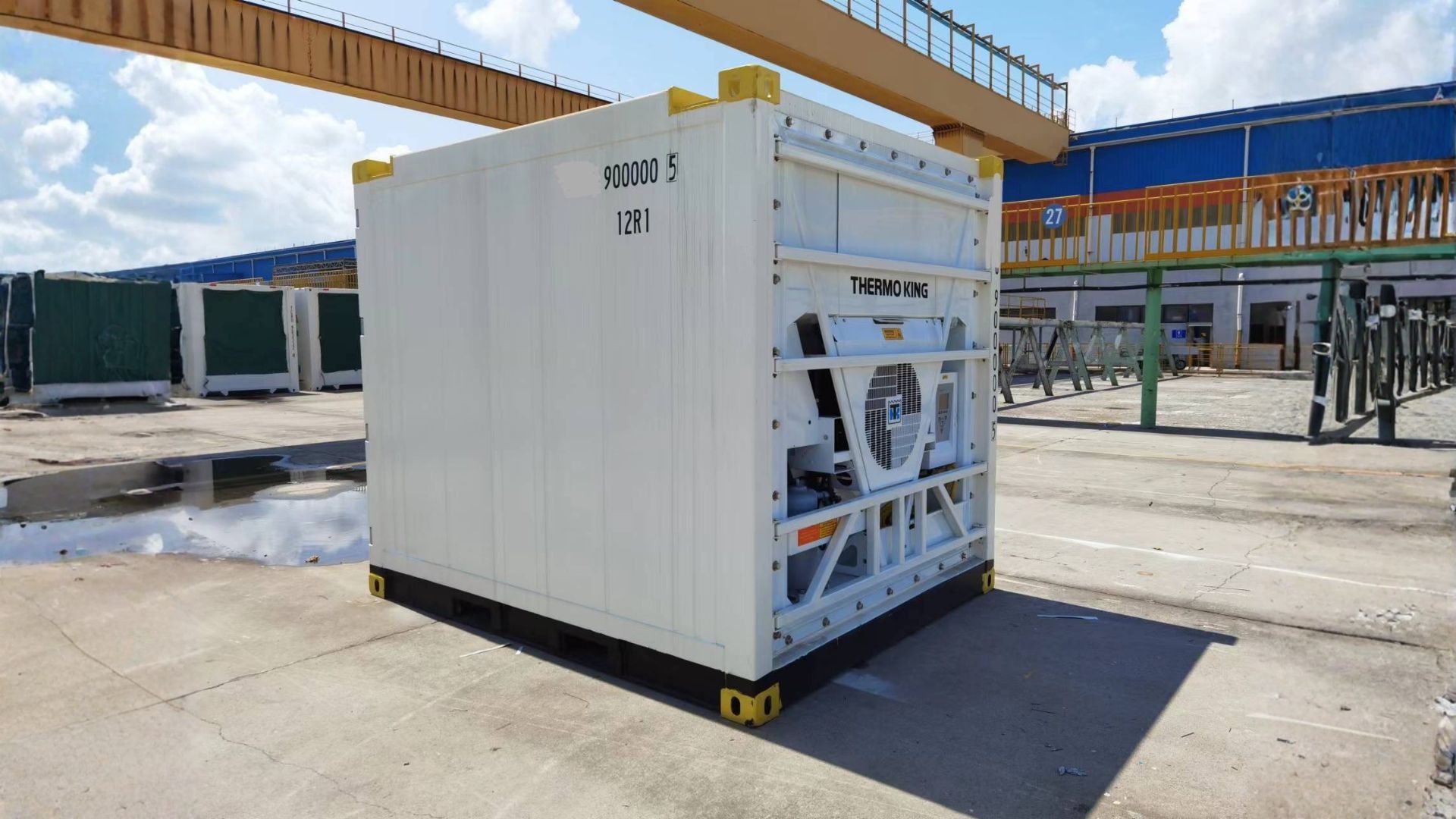
Sizing and Cooling Errors in a 20 reefer container for sale
To evaluate a 20 reefer container for sale, check internal dimensions, insulation health, power compatibility, and mechanical cooling performance. Standard 20-foot refrigerated units offer 27 to 28.2 cubic meters of usable space, require 380-volt to 460-volt three-phase power, maintain temperatures between -25°C and +25°C, and need intact door seals to prevent air leakage.
Buying cold storage equipment often breaks down because buyers treat an active refrigeration box like an ordinary steel shipping container. A refrigerated box is an active mechanical and thermal envelope, so small calculation errors about internal volume, power compatibility, or wall insulation will spoil cargo, drive up power bills, and disrupt your logistics schedule. If you plan to evaluate a 20 reefer container for sale, understanding mechanical limitations, physical clearances, and structural decay keeps your operational budget intact.
Stage 1: When Should You Rent Reefer Container Units Instead of Buying?
You should rent reefer container units when your cold storage need runs under eighteen months or covers unpredictable seasonal harvests, which avoids heavy capital expense and shifts repair liability to the supplier.
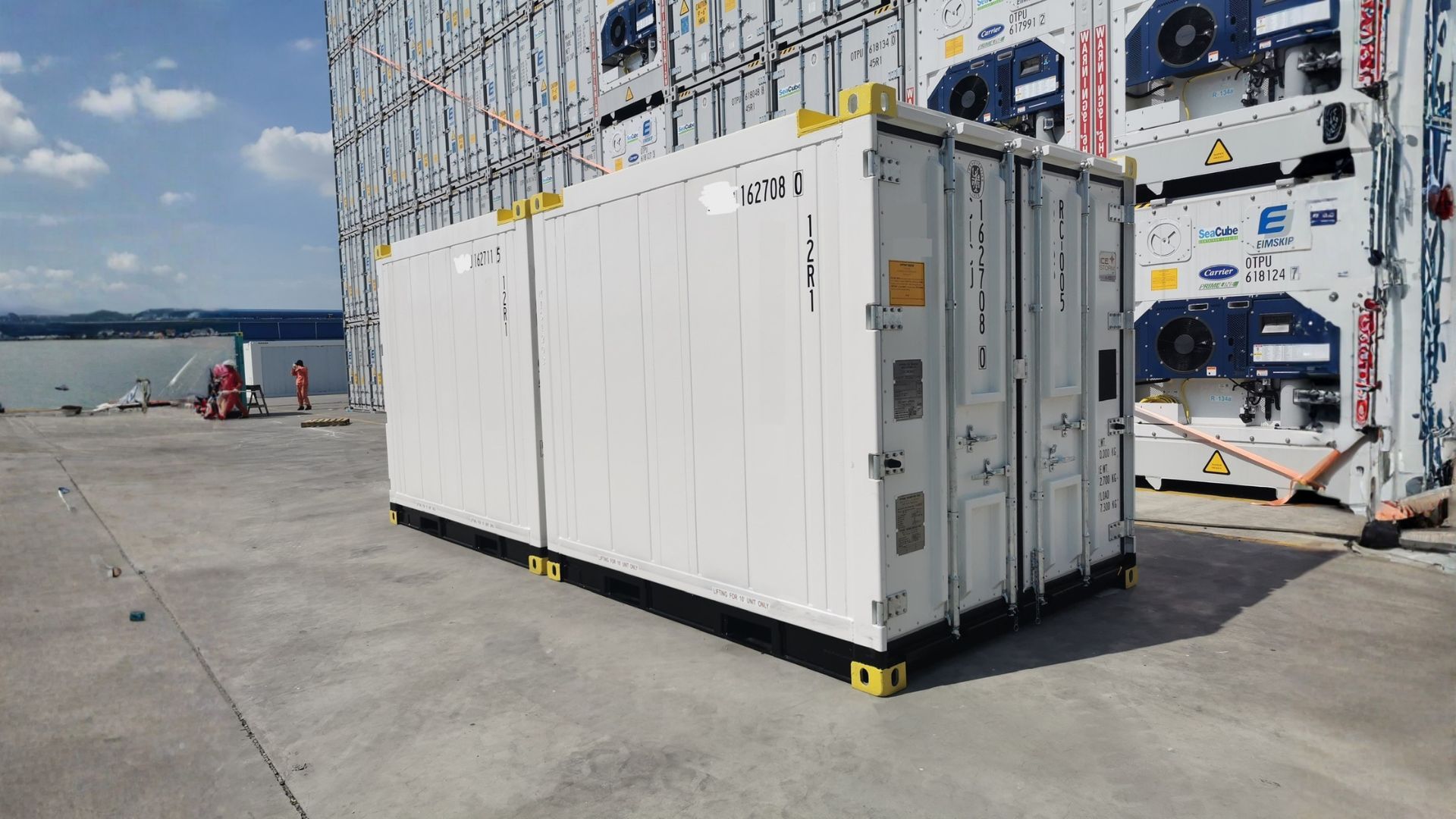
Operations teams often jump straight to purchasing without weighing the true running span of seasonal operations. If your cold storage demand lasts less than nine months or covers an unpredictable harvest, choosing to rent reefer container units protects your working cash flow while transferring machinery breakdown liabilities back to the fleet leasing provider.
Miscalculating Project Duration Against Long-Term Ownership Costs
Buying a container demands immediate cash outlay for the box, site preparation, transport logistics, and crane hire, alongside permanent ownership obligations. If a project runs for four to eight months, rental agreements let you expense equipment directly against current operational revenue without depreciating assets on your balance sheet. Conversely, buyers who plan on permanent cold holding on farm or factory premises waste money when paying recurring rental fees past the twenty-four-month threshold. We recommend buying when your operational horizon exceeds eighteen months of continuous use, because at that point cumulative rental charges outpace equipment purchases, site commissioning, and annual routine maintenance budgets.
Identifying Maintenance and Servicing Liabilities Before Commitment
Lease agreements and sales contracts treat machinery failures and routine servicing under completely different standards. When entering a contract to rent reefer container hardware, scrutinize the equipment service level agreement to determine whether the supplier covers call-out charges, periodic refrigerant top-ups, compressor repairs, and emergency breakdown response. In a direct purchase, you assume all technical liabilities from day one, meaning you must establish connections with qualified refrigeration technicians certified to service Carrier, Thermo King, or Daikin machinery. Signing a long-term rental without guaranteed on-site technician response windows leaves perishable loads vulnerable to compressor trips, while buying outright without keeping critical electrical spares on hand invites catastrophic cargo write-offs during weekend thermal outages.
Stage 2: How Do 20 Reefer Container Dimensions Impact Usable Cargo Volume?
Standard 20 reefer container dimensions yield 27.0 to 28.2 cubic meters of usable volume because mechanical bulkheads and thick wall insulation reduce internal length, width, and height compared to dry boxes.
Buyers often plan their cargo volume against standard ISO dry freight boxes, which creates costly loading errors at the dock. Because refrigerated walls contain thick polyurethane insulation layers alongside mechanical evaporator fans, actual internal cargo space shrinks noticeably compared to external measurements.
Mistaking Exterior Dimensions for Usable Internal Cubic Volume
An exterior shell measures standard ISO lengths, but internal operational clearances determine how much cold stock you can physically fit inside. Reviewing accurate 20 reefer container dimensions prevents costly warehouse repackaging operations when packing high-density perishable shipments.
| Dimension / Capacity Metric | Standard 20ft Dry Box | 20ft Refrigerated Container (e.g. Carrier PrimeLINE) | Operational Variance |
|---|---|---|---|
| External Length | 6,058 mm (20 ft 0 in) | 6,058 mm (20 ft 0 in) | None (Standard footprint) |
| External Width | 2,438 mm (8 ft 0 in) | 2,438 mm (8 ft 0 in) | None (Standard footprint) |
| External Height | 2,591 mm (8 ft 6 in) | 2,591 mm (8 ft 6 in) | None (Standard footprint) |
| Internal Length | 5,898 mm (19 ft 4 in) | 5,440 mm to 5,454 mm (17 ft 11 in) | Lost ~444 mm to 458 mm for machinery bulkhead |
| Internal Width | 2,352 mm (7 ft 9 in) | 2,280 mm to 2,284 mm (7 ft 6 in) | Lost ~68 mm to 72 mm to side foam insulation |
| Internal Height | 2,393 mm (7 ft 10 in) | 2,240 mm to 2,263 mm (7 ft 5 in) | Lost ~130 mm to 153 mm to roof foam and T-floor |
| Usable Internal Cubic Volume | Approx. 33.2 m³ | 27.0 m³ to 28.2 m³ (approx. 996 ft³) | Usable volume reduced by roughly 15% to 18% |
| Door Opening Dimensions | 2,340 mm W x 2,280 mm H | 2,290 mm W x 2,291 mm H (Cargo access: 2,220 mm) | Restricted forklift mast and top clearance |
Identifying Incompatible Pallet Configurations and Floor Airflow Obstructions
Floor geometry in a refrigerated unit functions as an active air duct rather than a flat loading deck. Air flows bottom-up across raised aluminum T-bar floor profiles, so packing stock directly onto the floor without proper footprint clearance chokes refrigeration cycle performance:
- Euro Pallet Layout: You can load a maximum of 10 Euro pallets (1,200 mm by 800 mm) in an alternating pattern, leaving adequate side space for chilled air circulation.
- Industrial Pallet Capacity: Standard ISO industrial pallets (1,200 mm by 1,000 mm) fit up to 9 pallets maximum, requiring careful center alignment to avoid blocking perimeter wall air channels.
- Red Line Height Limits: Stacking cartons beyond the orange or red interior load limit line painted on the side panels blocks circulation return air, causing warm spots at the door end.
- T-Floor Blockages: Leaving open gaps on the floor allows chilled supply air to short-circuit back to the evaporator before reaching the door, while failing to lay down cardboard or filler baffles ruins cooling pressure across distant pallets.
Stage 3: How Do You Spot Decay in Used Reefer Containers for Sale?
To assess used reefer containers for sale, inspect exterior panels for delamination, check door sills for cracked welds, and perform a light gap test along door gaskets to detect air leaks.
Used shipping hardware endures punishing marine environments, crane operations, and repeated handling cycles across ocean voyages. If you are shopping the market for used reefer containers for sale, separating routine cosmetic wear from hidden core degradation protects your inventory from high power consumption and moisture intrusion.
Detecting Compromised Wall Panels and Delaminated Thermal Insulation
Reefer walls use a sandwich construction featuring an exterior Corten steel or aluminum skin, foamed-in-place polyurethane core, and an interior lining of food-grade stainless steel or aluminum. When sea spray or handling impacts puncture the outer shell, moisture seeps directly into the polyurethane foam, degrading its closed-cell thermal performance. Inspect the exterior walls closely for swollen spots, outward panel bowing, or squishy soft patches when pressing firmly against the cladding. A waterlogged insulation layer loses much of its thermal resistance, forcing your compressor to run non-stop while driving heat leakage far above the standard twenty-three kilocalories per degree Celsius per hour benchmark.
Spotting Defective Door Gaskets and Costly Air Leakage Points
Door assemblies endure extreme physical stress from forklift bumps and constant mechanical cycling. In an efficient box, door sill engineering limits ambient air leakage to roughly two cubic meters per hour, but cracked or crushed sealing systems destroy that baseline.
- Conduct a light gap test: Step inside the box during bright daylight, close both doors completely, and check for any daylight penetrating through the gasket perimeters or bottom sill plates.
- Examine the multi-fin rubber gaskets: Verify that the door rubber remains pliable, free from tearing, and firmly anchored without brittle splits along the corner joints.
- Inspect locking gear and hinge pins: Check that cam handles, keeper brackets, and hinge bushings pull the doors firmly against the box frame without requiring mechanical leverage from cheater pipes.
- Check the interior thermal threshold: Ensure the subfloor aluminum transition plate and muffler-grade stainless steel door sill show no cracked welds, buckling, or damaged subfloor timber where moist ambient air could bypass the cold zone.
If you evaluate multiple used reefer containers for sale, walk away from units showing cracked sill welds or bowed door panels. Replacing degraded door gaskets or realigning bent door leaves adds thousands of dollars in shop labor that quickly negates any upfront savings on purchase price.
Stage 4: What Temperature Range and Machinery Specs Does a Reefer Container for Sale Require?
A commercial reefer container for sale must maintain temperatures from -25°C to +25°C, draw steady 380-volt or 460-volt three-phase power, and feature digital microprocessors with tight sensor calibration.
A shipping box without dependable machinery is merely an oversized insulated shed. When evaluating any reefer container for sale, matching the cooling system's technical specs to your specific cargo needs avoids expensive mechanical retrofits down the road.
Confirming Inadequate Operating Temperature Ranges and Pull-Down Capabilities
Perishable goods demand distinct temperature profiles, ranging from frozen fish holding at deep sub-zero conditions to fresh floral bulbs needing exact chilled ventilation. A standard commercial reefer unit operates between minus twenty-five degrees Celsius and plus twenty-five degrees Celsius, supported by electronic expansion valves and digital controllers such as the Carrier Micro-Link 5 system. If your operations involve loading warm produce directly from field harvests, remember that reefer boxes maintain product temperature rather than serve as rapid blast freezers. Demanding that a standard Carrier PrimeLINE or ThinLINE unit pull down twenty metric tons of warm cargo places heavy stress on the compressor, extends defrost cycling, and risks surface condensation that accelerates mold growth across perishables.
Identifying Electrical Supply Mismatches and Controller Faults
Marine reefer units run on three-phase shore power, making electrical compatibility checks essential before moving hardware onto private commercial property:
- Power Supply Requirements: Standard units need a dedicated 460-volt or 380-volt, 3-phase, 50/60 Hertz electrical feed with a 32-ampere circuit breaker, or an onboard dual-voltage step-down transformer to run on 230-volt 3-phase circuits.
- Microprocessor Controller Integrity: Inspect digital control boxes for burned terminal blocks, corroded sensor connections, and outdated firmware that fails to hold tight temperature tolerances down to plus-or-minus a quarter degree Celsius.
- Sensor Calibration: Check supply air and return air thermistors, along with USDA cold-treatment meat probe ports, to ensure the control system reads true cabinet conditions rather than false heat signals.
- Dehumidification Systems: Verify that the system delivers active moisture extraction down to fifty percent relative humidity if you plan on storing sensitive commodities like seed bulbs, onions, or dry pharmaceuticals.
Confirming these electrical specifications prevents frustrating power tripping issues, burnt transformer coils, and continuous machinery shutdowns after site drop-off.
Stage 5: Why Must You Run Diagnostics on a 20 Reefer Container for Sale Before Delivery?
Running an automated Pre-Trip Inspection on a 20 reefer container for sale verifies compressor health, tests manual defrost cycles, checks refrigerant pressure, and reveals active controller fault codes.
Buying machinery based strictly on digital photos or broker descriptions represents an avoidable operational risk. Before taking legal ownership and scheduling flatbed crane delivery for a 20 reefer container for sale, commissioning an operational test run confirms mechanical health under real thermal load conditions.
Catching Hidden System Diagnostic Faults During Pre-Trip Inspections
A structured Pre-Trip Inspection test runs the refrigeration machinery through automated diagnostics, testing every relay, fan speed, heating element, and pressure switch. Connect the unit to a certified 460-volt power supply, start the automatic test protocol via the controller keypad, and observe system behavior across all phases:
- Observe the compressor startup sequence: Listen for unusual knocking sounds, excessive chassis vibration, or oil foaming in the compressor sight glass as the unit draws primary power.
- Run manual defrost mode: Ensure the electric heating elements energize cleanly, the evaporator fans pause to prevent blowing steam into the cargo box, and the defrost drain tubes allow condensation to flow freely outside without pooling on the floor.
- Verify the cooling cycle pull-down: Monitor supply air sensors as the unit drops from ambient temperature down toward freezing, confirming that the high-side and low-side refrigerant pressures remain within manufacturer specifications.
- Review controller error logs: Query the system history log for recurring alarm codes, such as compressor high-pressure cutouts, sensor out-of-range warnings, or power interruption codes that indicate an intermittent electrical issue.
Verifying Inaccurate Tare Weights and Structural Certification Plates
Every commercial container carrying cargo across highways or shipping lanes requires a valid International Convention for Safe Containers plate fastened to the door skin. Examine this metal plate to verify the container's structural rating, maximum gross weight of 30,480 kilograms, payload capacity around 27,480 to 27,620 kilograms, and bare tare weight running between 2,860 and 3,000 kilograms depending on machinery configuration. If the data plate is missing, severely corroded, or shows an uncertified weight discrepancy, marine terminals, rail heads, and commercial freight carriers may legally reject the unit for loaded transit. Also check whether the container holds ATO-DLO certification for horticultural carriage and USDA seals for cold-treatment compliance if your business handles perishable cross-border exports.
Checking these diagnostic logs, physical dimensions, and structural certifications protects your business from unplanned machinery downtime. If your team is evaluating a specific 20 reefer container for sale and needs help sizing electrical supply panels, assessing insulation integrity, or setting up seasonal fleet maintenance, consult with an equipment specialist to verify your operational requirements before commissioning the unit.
Frequently Asked Questions
What temperature range can a 20ft refrigerated container maintain?
A standard 20ft unit maintains temperatures between -25°C and +25°C (-13°F to +77°F) depending on cooling machinery specifications and ambient site conditions.
What cargo types fit inside a 20ft refrigerated container?
These units carry temperature-sensitive cargo including fresh fruits, vegetables, meat, fish, dairy, floral exports, pharmaceuticals, and frozen goods.
Can you rent reefer container equipment instead of buying?
Yes, suppliers provide short-term and long-term lease terms, which helps operations avoid major capital expenses during seasonal peak harvests or temporary projects.
What does used condition mean for a refrigerated container?
A used unit has spent years in ocean freight. It may show cosmetic scratches, small dents, or surface rust, but it remains wind- and watertight, structurally sound, and certified for safe storage or transit.