
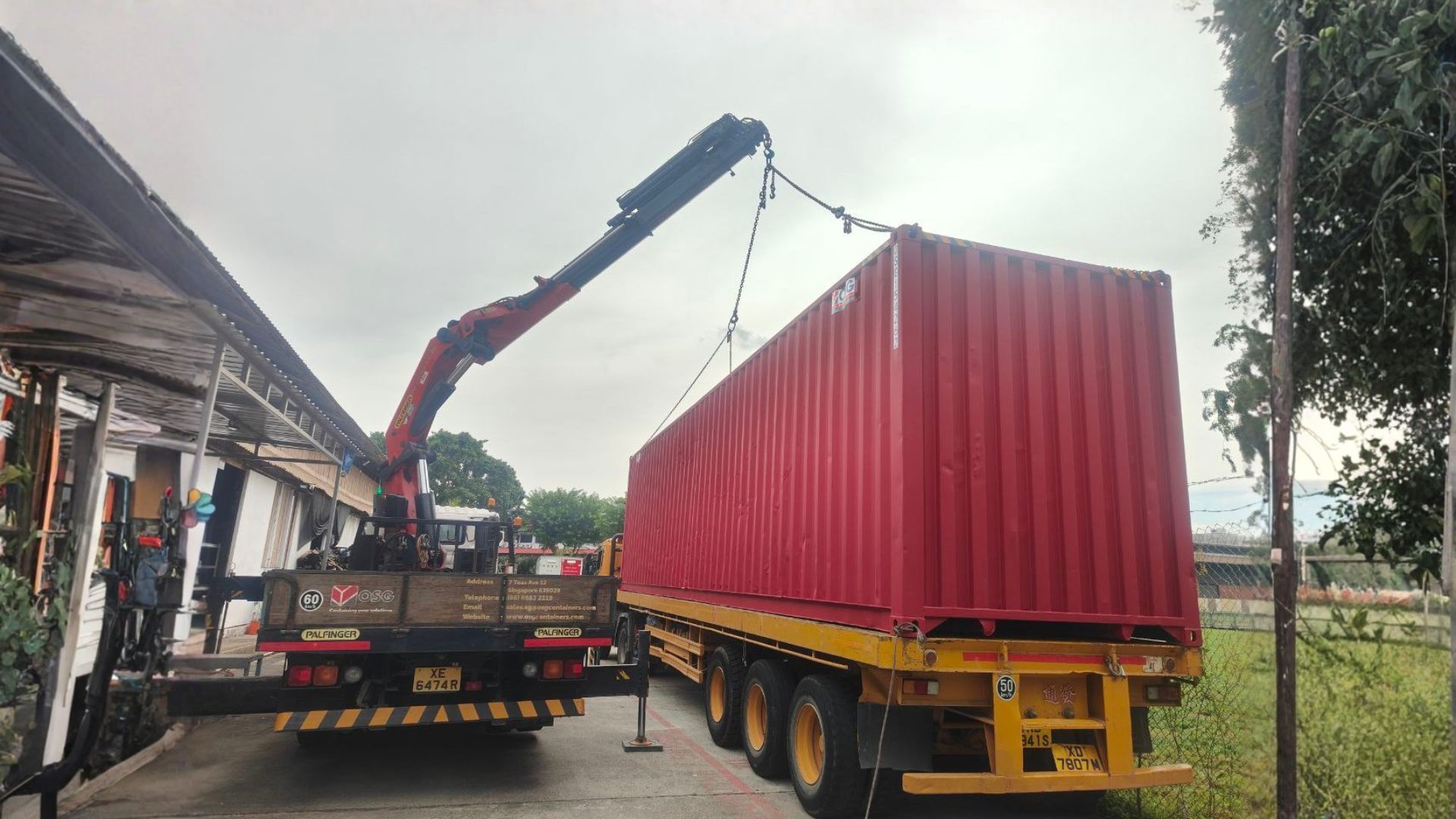
Skeletal vs Flatbed Container Trucks
Skeletal container trucks feature a bare chassis built solely to haul shipping containers, maximizing payload capacity and fuel economy on port routes. Flatbed trailers provide a solid timber or steel deck that accommodates both containers and breakbulk freight, trading roughly 1,500 kilograms of payload capacity for backhaul cargo versatility.
You lose margin every time your tractor unit hauls dead chassis weight across an empty return leg or turns away profitable breakbulk freight because your trailer only accepts twist-lock boxes. Fleet managers face a recurring dilemma between the stripped-back efficiency of a skeletal chassis and the broad utility of a flatbed deck. Choosing the wrong trailer format increases diesel consumption, slows loading cycle times at freight yards, and leaves high-paying cargo on the dock. We evaluate both builds across tare weights, securing systems, maintenance costs, and freight versatility so you can match the correct platform to your contract portfolio.
What Are Fixed Skeletal Trailer Configurations?
Fixed skeletal chassis represent the purest workhorse of modern port-to-door drayage, engineered exclusively to move standard ISO boxes with minimal deadweight. Fabricated from high-tensile steel main beams with transverse crossmembers, these trailers eliminate decks, side coamings, and heavy floorboards to maximise legal net payloads. When you run fixed skeletal container trucks on continuous shuttle runs between sea terminals and inland consolidation depots, you eliminate dead chassis mass and protect your fuel budget.

Structural Weight and Payload Capacity
A standard 40-foot three-axle straight-frame skeletal chassis typically registers a tare weight between 4,000 and 4,500 kilograms, depending on whether you specify lightweight alloy rims and air suspension systems. Because the trailer carries no heavy timber floorboards or steel diamond plating, you transfer that weight saving directly into payload capacity for your customer. When your drivers haul high-density freight like canned foods, metals, or paper pulp, that structural weight advantage of roughly 1,500 kilograms over a flatbed allows you to accept heavier shipping manifests without exceeding highway gross vehicle weight limits.
Loading and Securing Mechanisms
Securing an ISO box to a skeletal trailer takes seconds rather than minutes because the design relies on four corner twist-locks welded directly to the chassis outriggers. Crane operators at container terminals lower the box directly onto the guide bolsters, which steer the corner castings onto the twist-lock heads without manual alignment. Your driver merely leaves the cab, rotates the lock handles through 90 degrees, snaps the safety catches into place, and drives through the terminal gates without handling chains or winches.
- The port gantry lowers the shipping container onto the chassis guide bolsters.
- Corner castings seat over the chassis twist-lock heads.
- The driver rotates each locking handle into the locked position.
- Safety shear pins drop into place to prevent accidental unlocking in transit.
Route Suitability and Operating Costs
Fixed straight skeletal trailers shine on closed loops between marine terminals, rail intermodal heads, and large logistics parks equipped with recessed loading docks. Operating costs remain low because the absence of floor decking eliminates floorboard replacement and joint resealing, which normally plagues aged flatbeds. However, straight-frame skeletal chassis present real clearance risks when you mount 9-foot-6-inch high-cube boxes, often pushing total vehicle height past the safe 4-meter bridge limits found across older industrial arterial corridors.
Why Choose Gooseneck Skeletal Chassis Units?
The gooseneck skeletal frame solves the height headache created by modern maritime shipping, where 9-foot-6-inch high-cube boxes now outnumber standard 8-foot-6-inch containers on international sea lanes. By lowering the forward chassis deck behind the fifth-wheel kingpin, this design drops the total travel height of the box by several critical inches. Running a gooseneck container truck ensures your fleet moves high-cube boxes under motorway bridges and overhead utility lines without forcing drivers to detour onto circuitous surface roads.
Structural Weight and Payload Capacity
The neck transition on a gooseneck trailer introduces additional gusseting, web stiffeners, and structural steel reinforcement to resist the severe bending moments generated over the tractor drive axles. Consequently, a 40-foot gooseneck chassis weighs between 4,300 and 4,800 kilograms, slightly heavier than its straight-frame sibling but still considerably lighter than an equivalent flatbed. You sacrifice roughly 200 to 300 kilograms of net freight capacity compared to a straight frame, yet you gain the legal ability to haul tall cargo containers on high-speed arterial motorways.
Loading and Securing Mechanisms
Gooseneck trailers require containers fitted with an underside tunnel recess, which slides over the raised neck of the trailer bed during crane positioning. Retractable front twist-locks feature heavily on modern combination goosenecks, which allows you to adjust the front support positions when shifting between a single 40-foot box or two 20-foot empty units. If a terminal worker drops a standard box without a tunnel onto an unadjusted gooseneck, the container will rest unevenly on the neck step, risking frame bending and creating an unstable load.
Route Suitability and Operating Costs
We choose gooseneck skeletals for all intermodal drayage involving international high-cube boxes because the reduced ride height lowers your aerodynamic drag at highway speeds. Lowering the overall container profile cuts fuel use across long open motorway routes where head-on wind resistance drives up diesel consumption. Tire wear on gooseneck units remains comparable to straight-frame skeletals, though you must inspect the structural neck weld regularly for stress fatigue, especially if your routes traverse broken secondary roads and bumpy port rail crossings.
When Should Fleets Use Standard Flatbed Platforms?
Standard flatbed platforms deliver absolute cargo versatility at the expense of deadweight, acting as the general practitioner of commercial road freight transport. Equipped with a continuous flat floor made from hardwood shiplap or heavy-duty steel tread plate, these trailers transport any item that can be strapped down. When your outbound trip requires moving an import cargo container while your return leg involves carrying steel pipes or machinery pallets, a flatbed preserves your revenue by eliminating empty miles.
Structural Weight and Payload Capacity
A conventional 40-foot three-axle flatbed trailer weighs between 6,000 and 7,200 kilograms because it carries an entire structural timber or steel deck supported by heavy crossbearers. This structural mass reduces your maximum legal payload by nearly two full metric tonnes compared to an equivalent skeletal chassis. If your customer bills you by gross box weight and hands you a 28-tonne container, you risk violating single-axle or gross combination road limits before your tractor even leaves the port weighbridge.
Loading and Securing Mechanisms
Modern flatbeds intended for intermodal work incorporate twist-locks housed in sunken deck pockets, which sit flush with the floor timber when retracted to haul general palletised freight. When you carry a box, the driver twists the sunken locks upward, locks the container down, and often attaches secondary web lashings to side coaming rails for extra peace of mind. Securing general freight requires significantly more physical labour and driver downtime, demanding ratchet straps, chains, edge protectors, and weather-proof tarpaulins to protect water-sensitive merchandise.
- Sunken deck twist-locks twist upward to secure ISO corner castings.
- Heavy-duty tensioner chains hook onto floor-mounted deck rings.
- Lashing winches along the outer coaming rail take 50mm synthetic cargo straps.
- Ratcheting lever binders tension anchor chains across heavy breakbulk crates.
Route Suitability and Operating Costs
Flatbeds excel on trade corridors where ocean freight volumes run in only one direction, forcing hauliers to hunt for domestic general cargo to cover the return trip. Maintenance costs run higher on flatbeds because exposed hardwood floorboards rot, splinter under forklift traffic, and require periodic board replacement every three to five years. The open perimeter and aerodynamic resistance of an empty flatbed running at highway speeds also consumes more fuel than an empty open skeletal chassis, which lets wind pass through unobstructed.
What Are Drop-Deck Flatbed Transporters Used For?
Drop-deck or step-deck flatbeds feature a split-level floor designed to carry over-height machinery, construction equipment, and specialized industrial freight without exceeding legal transit envelopes. The forward deck rests over the tractor fifth-wheel, while the main cargo bed drops significantly closer to the tarmac between the trailer kingpin and the rear axle bogie. When you haul tall out-of-gauge cargo containers or open-top units with protruding machinery, a drop-deck gives you the overhead margin required to clear bridges safely.
Structural Weight and Payload Capacity
Drop-deck platforms are the heaviest configuration discussed here, with three-axle units rarely weighing less than 7,500 kilograms and heavy-duty outrigger models exceeding 8,500 kilograms. The severe drop in the main frame requires thick swan-neck web plates and high-grade structural alloys to prevent the chassis from sagging under concentrated mid-span loads. You face the most restrictive payload limits for standard sea boxes on a drop-deck, making this trailer poor value for standard dense freight.
Loading and Securing Mechanisms
Loading containers onto a drop-deck requires care because standard docks cannot align with the lowered central well, which often sits just 800 to 900 millimetres off the pavement. Twist-locks on drop-decks are either mounted on raised pedestals welded into the well or bolted to movable bolsters clamped across the main beams. If you transport industrial machinery rather than boxes, your drivers will spend hours setting heavy transport chains, using turnbuckles, and securing anti-slip rubber matting across the deck floor.
Route Suitability and Operating Costs
We deploy drop-deck trailers primarily for project freight, agricultural machine transfers, and specialized drayage involving open-top boxes with over-height plant equipment. Running costs are high: the lowered deck necessitates smaller 19.5-inch or 17.5-inch low-profile tires that rotate faster per highway mile, accelerating tread wear and increasing replacement intervals. Brake drums and disc pads also endure higher thermal stress on small-wheel drop-deck setups, which requires your workshop mechanics to inspect friction linings more frequently.
How Do You Select the Optimal Fleet Configuration?
Choosing between skeletal and flatbed designs requires assessing your actual fleet movements rather than idealized logistics scenarios. If more than 80 percent of your daily transport assignments originate or terminate at container terminal gates, skeletal trailers will consistently yield lower fuel burn, lower maintenance expenses, and faster gate-to-gate turnarounds. Conversely, if your operation serves secondary manufacturing hubs where backhauls consist of palletized crates, steel coils, or structural timber, flatbed platforms protect your bottom line against unpaid empty miles.
| Chassis Configuration | Average Tare Weight (kg) | Primary Cargo Focus | Loading Turnaround | Deck Upkeep Needs |
|---|---|---|---|---|
| Fixed Skeletal | 4,000 – 4,500 | Standard ISO containers | Under 5 minutes | Very low (no decking) |
| Gooseneck Skeletal | 4,300 – 4,800 | High-cube containers | Under 5 minutes | Low (structural checks) |
| Standard Flatbed | 6,000 – 7,200 | Boxes and breakbulk | 20 – 45 minutes | High (board wear) |
| Drop-Deck Platform | 7,500 – 8,500+ | Over-height & project cargo | 30 – 60 minutes | High (decking and tires) |
Evaluating Freight Volume and Type
Examine your historical freight manifests from the previous four operating quarters before committing capital to new trailer orders. If you run contract carriage for major retail importers whose shipments arrive uniformly packed in high-cube maritime boxes, standardize your fleet on gooseneck skeletals to lower wind resistance and maintain legal clearances automatically. If you operate an irregular spot-market haulage business where shipping boxes make up only half your revenue, buy dual-purpose flatbeds with sunken twist-locks, because an idle skeletal trailer earns nothing while parked against a yard fence.
Operational Costs and Route Constraints
Local geography and statutory axle regulations dictate trailer viability far more than purchase price alone. When operating a container truck singapore routes between PSA terminals, Jurong industrial zones, and Tuas container depots demand low tare weight and agile turning circles over open-deck flexibility. Singapore's tightly enforced axle limits and high Electronic Road Pricing costs penalize heavy, inefficient deadweight, making the lightweight gooseneck skeletal the premier tool for local port drayage. If your operations span cross-border runs into Malaysia or mixed industrial transport across regional logistics hubs, maintaining a 70/30 split between gooseneck skeletals and standard flatbeds keeps your fleet flexible. This mix lets you seize unexpected freight opportunities without crushing your diesel efficiency.
Reach out to our logistics transport team if you need help reviewing your axle weight configurations, evaluating trailer lifecycle costs, or specifying the ideal chassis setups for your upcoming commercial fleet replacement programme.