
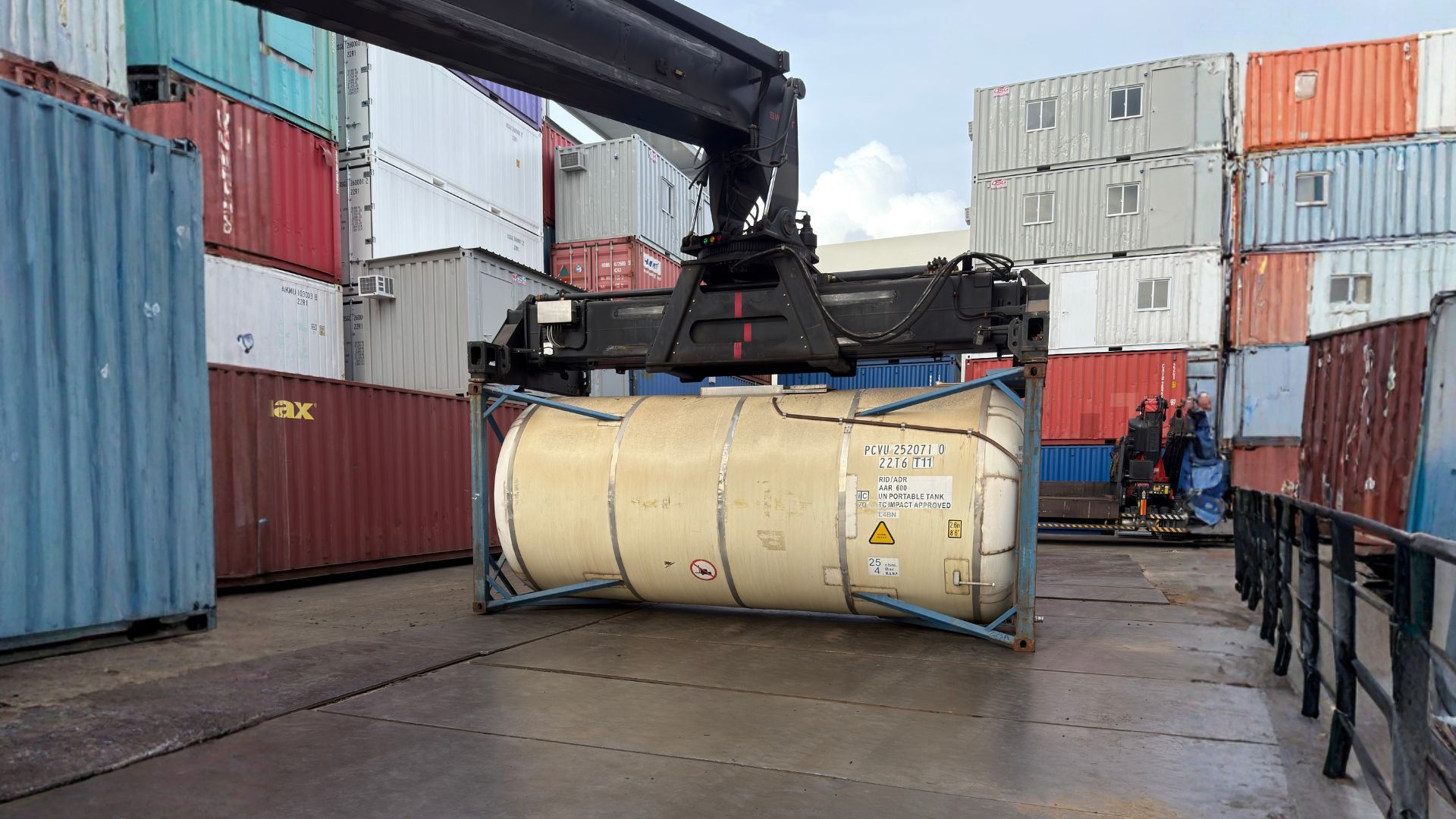
Specs That Separate Quality ISO Container Tanks
Quality ISO container tanks require 316L stainless steel shells with nominal thicknesses between 4.4 mm and 5.0 mm, pressure relief assemblies rated for 4 bar working pressure, and high-tensile Corten steel frames. Compliance with IMDG, CSC, and ASME Section VIII standards ensures these intermodal vessels handle heavy chemical transport without premature fatigue or leaks.
When you put thousands of gallons of hazardous chemicals or food-grade liquids into an intermodal supply chain, buying equipment on price alone is the fastest route to expensive cargo claims, road rejections, and structural failures. Tank failures rarely happen because of sudden cataclysms; they happen because a procurement team chose an inappropriate steel grade, skimped on shell thickness to save tare weight, or ignored poorly seated pressure relief assemblies. We have pulled apart units that looked pristine on a broker's yard only to find stress cracks hiding behind insulation cladding and valve seats eroded by aggressive products. If you want equipment that lasts twenty years across rail, road, and ocean transport, you need to understand the exact physical specifications that separate genuine workhorses from disposable shells.
Standard ISO Container Tanks Specification Standards
The standard twenty-foot intermodal tank is the foundation of bulk liquid transport, but build quality across manufacturers varies far more than the standard ISO framework suggests. You will find that high-grade iso container tanks rely on balanced designs that preserve structural rigidity under severe dynamic sloshing while holding tare weight low enough to maximize payload earnings.

Shell Thickness and Material Quality
For standard liquid service, 316L austenitic stainless steel remains the baseline industry benchmark because its low carbon content limits carbide precipitation during welding and resists pitting from mild chemicals. Standard designs typically specify a nominal shell thickness between 4.4 mm and 4.7 mm, though premium builds for heavy cyclic use push this to 4.8 mm or 5.0 mm to allow a corrosion allowance across decades of regular cleaning. When you evaluate the barrel, look beyond the stated mill thickness and verify that the manufacturer cold-rolled the steel and applied an automated longitudinal weld seam with a pickling and passivation treatment. A shell made from poorly pickled 304 or lower-grade 316 will show localized surface pitting within its first year of hauling industrial solvents or detergents, leading to pinhole leaks that force early barrel condemnation.
Pressure Relief and Valve Specifications
Standard UN portable tanks intended for non-refrigerated liquids operate under standard working pressures, commonly rated at a maximum allowable working pressure of 4 bar with a test pressure of 6 bar. The discharge and venting system must combine a spring-loaded pressure relief valve with a calibrated rupture disc and a tell-tale pressure gauge positioned between them to flag disc leaks immediately. We always specify a high-grade 316 stainless steel footvalve paired with a secondary butterfly valve and a blanking flange or threaded cap at the bottom outlet. Cheap units often cut costs on the secondary valves, using low-grade fluoropolymer seals that stiffen in cold weather or swell when exposed to aromatic hydrocarbons, creating weeping discharge points during transshipment.
Structural Frame and Certification Standards
The external frame protects the pressure vessel from racking forces during crane lifts and absorbs intense coupling impacts on railcars without transferring shock directly into the vessel shell. High-tensile carbon steel, specifically Corten or equivalent atmospheric corrosion-resistant structural steel, forms the corner posts, longitudinal rails, and cross-members that surround the tank barrel. Look for full compliance markings on the consolidated data plate, showing approvals under the International Maritime Dangerous Goods code, the International Convention for Safe Containers, and ASME Section VIII. A substandard frame will show paint peel and galvanic corrosion where the stainless shell brackets bolt or weld to the carbon steel framework, which soon invites structural rust that fails roadside chassis inspections.
Insulated ISO Tank Containers and Thermal Checks
When your liquid cargo cannot drop below a target viscosity or must stay within a tight temperature band to avoid crystallization, standard steel shells fail the mission. Built specifically for temperature-sensitive cargoes like fatty acids, resins, and liquid sugars, insulated iso tank containers depend entirely on thermal skin continuity and steam heat transfer efficiency to keep products flowing smoothly.
Shell Thickness and Material Quality
Insulated vessels frequently use a 316L barrel with a cold-rolled internal finish buffed to a 0.4-micron to 0.8-micron arithmetic average roughness for easy washing and sanitary product integrity. The bare shell thickness matches standard structural limits, but the outer face incorporates a dedicated array of longitudinal steam heating channels welded directly against the lower half of the vessel belly. You must verify that the heat-transfer steam coils have a working pressure rating of at least 4 to 6 bar to avoid internal steam-pipe ruptures that dilute the cargo with condensate water. The protective outer cladding generally consists of 1.8 mm to 2.2 mm glass-reinforced plastic or pre-painted marine-grade aluminum, which shields the interior insulation core from driving rain, salt spray, and physical impacts during terminal handling.
Pressure Relief and Valve Specifications
Thermal expansion inside an insulated barrel presents a continuous challenge because rising cargo temperatures expand liquid volume and steadily compress the air headspace above the load line. You need relief valves fitted with integral flame arresters, vacuum relief valves set to open at 0.21 bar of negative pressure, and steam-jacketed discharge valves that melt product plugs before you open the line. Inexpensive discharge assemblies freeze up when high-viscosity resins solidify within unheated valve necks, forcing operators to apply dangerous open-flame heating torches in field terminals. High-end insulated units eliminate this vulnerability by routing auxiliary steam passages through the valve body itself, ensuring the entire drain path heats evenly within fifteen minutes of steam connection.
Structural Frame and Certification Standards
Insulation adds dead weight, meaning the structural frame must balance load ratings against strict gross weight boundaries while preventing thermal bridging between the hot shell and cold frame. We prefer frames that mount the tank via specialized thermal isolation pads made from dense synthetic polymers, keeping heat from escaping into the carbon steel side rails. Look for a CSC plate rating that confirms maximum gross mass certification up to 36,000 kg, allowing you to carry heavy liquid payloads on intermodal container chassis without exceeding axle tolerances. The insulation core itself must feature at least 50 mm of high-density rockwool or polyurethane foam injected without internal air pockets that cause localized sweating, shell condensation, and hidden corrosion.
Baffled ISO Tanks Containers for Liquid Stability
Hauling liquids across road networks exposes truck drivers and cargo to massive longitudinal surge forces when stopping, turning, or climbing steep grades with partially filled barrels. Standard tanks cannot run safely at 50% to 75% capacity due to internal sloshing, making surge-damped iso tanks containers mandatory for fleet operations that mix drop-off routes and irregular batch sizes.
Shell Thickness and Material Quality
Dynamic fluid surge concentrates massive local hydraulic pressure against the tank heads and intermediate baffles, requiring thicker barrel plates or targeted reinforcement rings around each internal bulkhead section. The baffle plates themselves must match the shell material, typically 3.0 mm to 4.0 mm 316L stainless steel, dished and flanged to disperse fluid momentum without tearing free from the wall welds. Regulations govern these partitions strictly, specifying that internal surge plates must cover at least 70% of the tank cross-sectional area to control surging while leaving enough clearance for vapor flow and human entry. If a manufacturer builds internal baffles without sufficient flanging radius or uses stitch welds instead of continuous smooth welds, wave impact stresses will quickly tear the baffle brackets directly off the shell walls.
Pressure Relief and Valve Specifications
Surge waves can smash directly into roof fittings, which means pressure relief assemblies on baffled units must resist hydraulic slamming without spitting product through the relief vent. You should insist on surge baffles installed directly beneath the top manway nozzle and the safety relief valve port to keep surging cargo from lifting the spring discs during hard braking. High-grade assemblies incorporate top-discharge dip pipes alongside standard bottom outlets, using siphon tubes fitted with foot-valve controls to permit sealed, top-down product transfers. These valves must use reinforced PTFE or perfluoroelastomer seals that handle dynamic pressure waves without micro-leaking around the valve spindles during transcontinental road moves.
Structural Frame and Certification Standards
Because internal baffles restrict visual access from the primary manway opening, certifying these units demands additional inspection points, cleaner tank geometries, and multiple manholes. Premium frames incorporate access ladders, non-slip aluminum walkways, and full-length spill boxes equipped with drain hoses to manage minor drips cleanly during sampling. The structural frame must meet dynamic impact testing under ISO 1496-3, which subjects the unit to longitudinal deceleration forces exceeding 2g to prove the frame and baffles can endure sudden shocks. We look for units stamped with both IMDG and ADR approvals that explicitly permit variable fill volumes outside the normal 20% and 80% restrictions applied to non-baffled designs.
Dedicated ISO Tank Container Lining and Shell Grades
When you haul aggressive inorganic acids like hydrochloric, hydrofluoric, or sulfuric acid, bare stainless steel will dissolve in a matter of hours or days. You must step up to a dedicated iso tank container fitted with a heavy-duty polymer lining, bonded rubber protective barrier, or exotic nickel-alloy shell to isolate the corrosive chemical from the structural steel.
Shell Thickness and Material Quality
Lined vessels often use a base shell of pressure-vessel-grade carbon steel, such as SA-516 Grade 70, with a minimum plate thickness of 5.0 mm to 6.0 mm to guarantee rigid support for the lining. A flexible lining applied over a shell that bends under load will crack, craze, or detach from the metal, causing catastrophic hidden leaks. Common lining systems include:
- ETFE and PTFE Linings: Chemically inert fluoropolymers applied in 2.5 mm to 3.5 mm thicknesses, built to withstand strong acids, alkalis, and aggressive industrial solvents at high operating temperatures.
- Vulcanized Rubber Linings: Natural or synthetic rubber layers applied up to 4.0 mm to 6.0 mm thick, vulcanized under steam pressure to yield flexible abrasion and corrosion defense against hydrochloric acid and ferric chloride.
- High-Nickel Alloys: Specialized non-lined builds constructed entirely from Hastelloy C-276 or titanium, used when operating temperatures and mechanical stresses destroy conventional elastomeric coatings.
Pressure Relief and Valve Specifications
Standard stainless-steel valves will fail rapidly in lined service, so every wetted component in the product stream must match the chemical resistance of the internal barrel lining. We specify solid fluoropolymer or PVDF-lined bottom footvalves, coupled with Hastelloy-C rupture discs calibrated to precise relief pressures to prevent destructive over-pressurization. The pressure relief valve body itself must be lined or manufactured from solid PTFE, and the rupture disc must include a non-metallic burst sensor that triggers an alert without letting corrosive vapors touch the external frame. A single metal component exposed to acid fumes will corrode rapidly, freeze up valve linkages, and prevent emergency shutoff systems from closing securely.
Structural Frame and Certification Standards
Carrying Class 8 corrosives requires strict adherence to international dangerous goods codes, often demanding UN T14 or T20 portable tank classifications with higher minimum test pressures and shell reinforcements. The supporting frame must include specialized acid-drip trays beneath all flanged connections, manufactured from polyethylene or fiberglass to protect the structural steel cross-members from occasional spills. Certification plates must show lining inspection history alongside normal hydrostatic test intervals, verifying that the lining passed a high-voltage holiday spark test to confirm total absence of pinholes. Frames must also feature heavy diagonal bracing around the front and rear discharge areas to shield sensitive lined flanged outlets from side-impact collisions.
Choosing Between Container Configurations Based on Inspection Evidence
Selecting the right iso container tank requires matching your chemical profile, route logistics, and unloading setup against documented physical specs and physical inspection evidence. The specifications must always mirror the real-world operational challenges the unit will encounter throughout its working lifecycle.
| Configuration | Typical Shell Material | Working Pressure | Key Advantage | Primary Limitation |
|---|---|---|---|---|
| Standard T11 Liquid Tank | 316L Stainless Steel (4.4–4.7 mm) | 4.0 bar | High payload, low tare weight, simple maintenance | Cannot haul aggressive acids or keep viscous cargoes warm |
| Insulated & Steam Heated | 316L with GRP/Aluminum Jacket | 4.0 bar | Maintains product temperature and viscosity in transit | Heavier tare weight, risk of hidden shell corrosion under wet insulation |
| Baffled Multi-Compartment | 316L with Dished Surge Plates | 4.0 bar | Allows partial loading without dynamic sloshing hazards | Difficult to wash clean inside; adds 250–400 kg of dead weight |
| Lined Corrosive Vessel (T14/T20) | Carbon Steel with PTFE/Rubber Lining | 4.0–6.0 bar | Total chemical resistance against strong acids | Linings can tear or blister; requires frequent spark testing |
Comparing Operational Requirements
If you haul uniform bulk chemicals like ethanol or base oils between dedicated industrial terminals, standard uninsulated T11 tanks will yield the lowest cost per ton and the simplest cleaning turnarounds. When handling food-grade fats, heavy waxes, or temperature-sensitive chemicals, you must pay the premium for an insulated unit with polished interior welds and steam jackets to avoid product hardening in the line. Choose baffled configurations only when your supply chain demands partial offloading across multiple delivery stops, because the extra cleaning complexity and tare weight penalty outweigh their stability benefits on simple point-to-point routes. For aggressive acids, spend the capital on fluoropolymer-lined vessels; attempting to stretch a standard stainless shell into corrosive service will destroy the asset and expose your business to severe environmental liabilities.
Safety and Testing Evidence for Procurement
Never sign off on buying an asset without verifying the underlying test history and physical inspection documents. When you evaluate an existing or newly manufactured unit, follow this sequential physical check to verify structural integrity:
- Check the CSC Data Plate: Confirm the periodic 2.5-year intermediate and 5-year full hydrostatic test stamps match the physical paperwork signed by an authorized third-party surveyor.
- Review Wall Thickness Ultrasonic Gauging: Ask for an ultrasonic thickness report covering the barrel bottom, crown, and dished ends to ensure the metal has not worn below minimum design limits.
- Inspect the Rupture Disc and Gauge Assembly: Verify the tell-tale pressure needle points to zero and the rupture disc burst indicator shows no distortion, pinholes, or weeping product.
- Examine the Interior Surface Finish: Check for surface pitting, weld discoloration, stress corrosion cracking around internal baffle joints, or lining blisters using a high-intensity inspection lamp.
- Conduct a Spark Test on Lined Shells: Run a high-voltage spark detector across every inch of internal rubber or fluoropolymer lining to prove no pinholes exist through to the steel backing.
Frequently Asked Questions
What is an ISO tank container?
An ISO tank container is a specialized, multimodal pressure vessel mounted permanently inside a standard twenty-foot structural steel frame that meets International Organization for Standardization specifications. Built primarily for carrying bulk liquids, liquefied gases, and dry powders across road, rail, and maritime transport networks, it combines the chemical safety of an engineered pressure barrel with the handling convenience of a standard intermodal freight box. By eliminating the waste, physical handling, and disposal hazards associated with single-use steel drums or plastic intermediate bulk containers, a reusable tank provides a safer, more economical, and environmentally sound method for bulk cargo handling across global supply lines.
If you are reviewing fleet requirements or need guidance on selecting the right barrel alloy, lining system, and frame specification for your product lines, our technical team can help you review your cargo profiles and match your needs with field-tested equipment built to perform safely over millions of miles.