
Specifications That Define a Quality Mobile Toilet
A quality mobile toilet provides reliable on-site sanitation using durable high-density polyethylene construction, adequate waste containment, and effective ventilation. Choosing the right unit requires matching site footprint, expected user traffic, and servicing access to the proper cabin build, ensuring hygienic conditions, odor control, and full environmental compliance across active commercial and industrial operations.
When you manage an active worksite or plan a major public gathering, failing sanitary facilities disrupt operations faster than bad weather. Sourcing the right sanitation fleet demands a technical review of materials, structural framing, containment methods, and servicing connections rather than simply accepting the lowest quote from a vendor catalog.
Standard Chemical Portable Toilets Specifications
The standard chemical cabin remains the most common workhorse on industrial layouts and short-term worksites where plumbed infrastructure does not exist. These free-standing units rely entirely on self-contained chemical treatment tanks that break down solid waste, suppress microbial growth, and mask offensive smells between routine maintenance intervals.
Ventilation and Odour Management
Natural convection drives the ventilation path in entry-level chemical units, using high-density polyethylene structural louvers molded directly into the top corners of the walls. A vertical vent pipe runs straight from the sealed holding tank through the roof skin, drawing rising gases out of the containment space using ambient wind currents across the exterior cowl. We specify units with continuous screening over every vent slit because insect intrusion creates severe hygiene hazards on long-term deployments. The chimney stack must measure at least one hundred millimeters in internal diameter to generate enough draft, keeping the cabin airspace clean even during humid mid-afternoon heat spikes.
Waste Holding Capacity and Servicing
Holding tanks on standard build units feature a static capacity between two hundred and two hundred and fifty liters, which delivers approximately three hundred to three hundred and fifty discrete uses before you must pump the tank out. The tank floor slopes downward toward an evacuation sump fitted with a deep vacuum pick-up point, ensuring that service suction hoses clear waste completely without leaving stagnant sludge pockets. Technicians empty the unit via a three-inch quick-release suction coupling, which stops spills on your site surface during routine servicing rounds.
- Static volume: 220-liter drop tank engineered from chemical-resistant high-density polyethylene.
- Vacuum evacuation point: Standard three-inch camlock interface for direct suction connection.
- Chemical dosing volume: Ten to fifteen liters of biocidal chemical solution mixed into the base charge.
Interior Fixtures and Sanitary Fittings
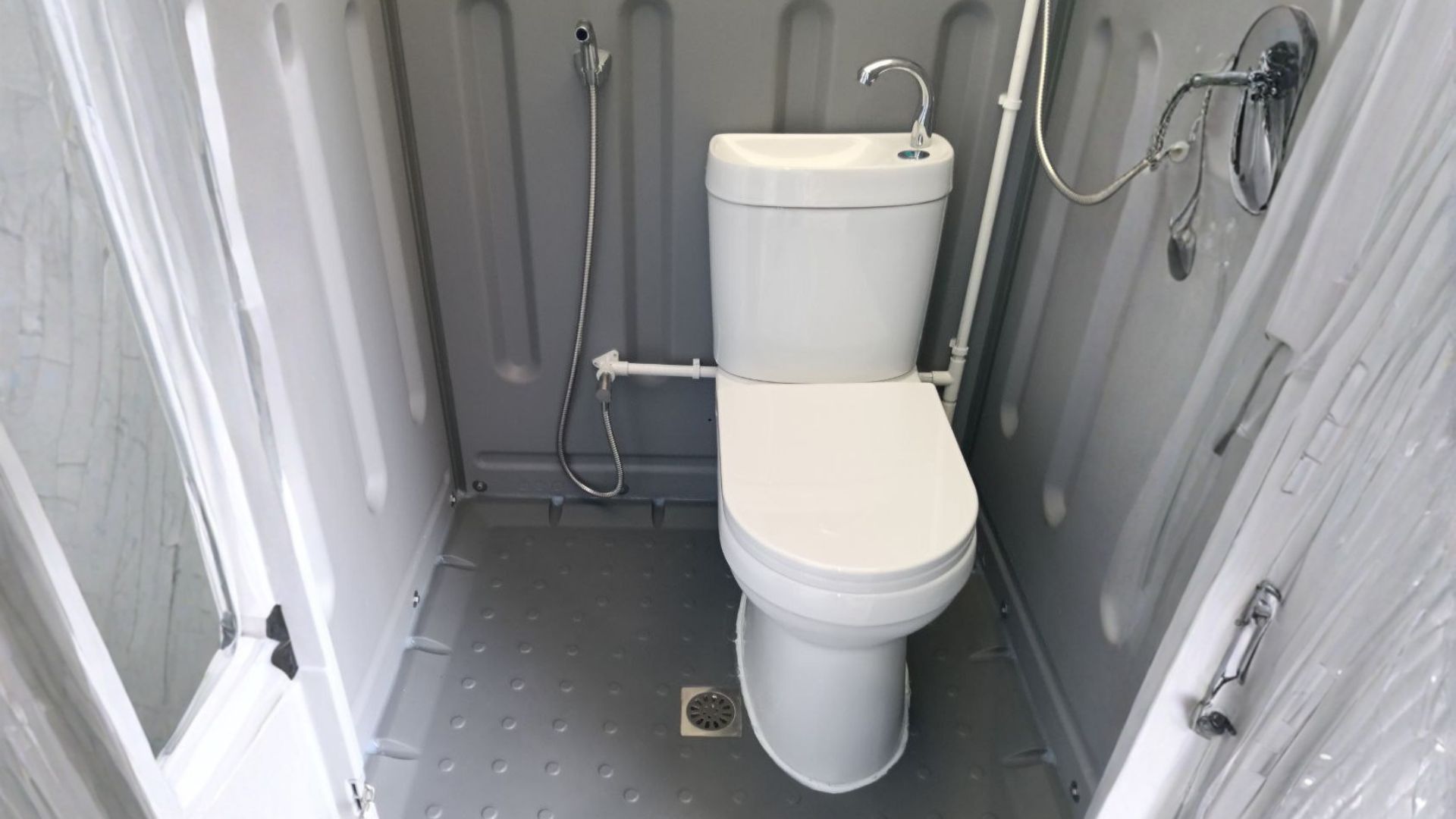
Durability dictates interior appointments in basic units, so rotomolded polymer shells incorporate the seat bench, toilet paper dispenser, and skid floor directly into the frame. Foot-operated hand sanitiser pumps protect users from cross-contamination, removing hand-touch contact points across the entire cabin interior. The door assembly features a heavy-duty stainless steel torsion spring that keeps the latch pulled tight, paired with an emergency exterior release slot and a clear occupied indicator visible from thirty meters away.
Self-Contained Mobile Toilet Singapore Fleet Standards
Operating a fleet within tropical urban conditions requires tailored build specifications that hold up against extreme relative humidity, torrential seasonal rain, and dense worker concentrations. Deploying a standard international model into a humid environment without regional modifications results in degraded interiors, stubborn smells, and premature material breakdown.
Ventilation and Odour Management
A fleet-grade mobile toilet singapore specification replaces passive convection cowls with solar-powered extraction fans mounted directly into the upper roof assembly. These roof fans move air continuously at a minimum rate of eighty cubic meters per hour, removing moisture and stale air even on windless days. We mandate UV-stabilised louvers fitted with ultra-fine stainless steel mesh down to zero-point-five millimeter aperture sizing, stopping vector pests like dengue-carrying mosquitoes from finding breeding water inside the internal waste sump.
Waste Holding Capacity and Servicing
Because local urban sites maintain stringent effluent containment rules, tanks feature dual-seal perimeter gaskets and reinforced internal baffle plates to prevent internal liquid surging during crane lifts. The standard tank holds two hundred and sixty liters, paired with an external sight gauge that allows service teams to check waste levels without opening the cabin door. Our vacuum service trucks dock onto external camlock ports, keeping the servicing process outside the cubicle to protect sanitary conditions inside active work zones.
Interior Fixtures and Sanitary Fittings
Hygiene standards in demanding municipal and commercial zones call for freshwater flushing mechanisms rather than recirculating chemical fluids. The flushing system uses a mechanical foot pedal that pumps clear water from an integrated seventy-liter fresh supply tank, leaving the bowl surface clean without touching electrical components. We equip these units with recessed, vandal-resistant liquid soap holders, twin jumbo toilet roll dispensers, and wide corner wash basins connected to greywater recovery channels that route directly into the main drop tank.
High-Capacity Portable Toilet Singapore Units
Mass-participation infrastructure projects, weekend festivals, and high-density industrial shutdowns overwhelm entry-level cabins within hours. Choosing high-capacity portable toilet singapore equipment prevents line bottlenecks and reduces the risk of foul conditions during peak usage surges.
Ventilation and Odour Management
High-turnover cabins use twin opposing wall louvers together with high-volume, continuous-draw mechanical exhaust blowers wired into temporary site power supplies or heavy internal lithium storage cells. This cross-flow air path flushes the entire interior cabin volume twice every minute, removing trapped thermal energy alongside offensive smells. Dark interior roof caps give way to translucent, light-diffusing white polymer roofs that reduce radiant solar heat absorption while providing natural interior daytime lighting without wiring runs.
Waste Holding Capacity and Servicing
High-capacity systems replace standard plastic boxes with integrated holding reservoirs containing three hundred and ninety to four hundred and fifty liters of waste capacity. This large reservoir allows up to seven hundred uses between servicing calls, keeping public events sanitary even through extended weekend shifts. The units incorporate internal pressure-wash flush nozzles that clean the tank interior during the vacuum pump-out process, clearing dried solids and reducing foul build-up over long deployment runs.
- Extended storage: 400-liter composite polymer tank engineered with anti-splash internal baffles.
- High-volume service port: Four-inch direct suction connection for fast vac-truck turnaround.
- Freshwater supply: Integrated one hundred and twenty-liter reservoir feeding mechanical wash basins.
Interior Fixtures and Sanitary Fittings
Cabin interiors feature smooth, gel-coated walls and marine-grade stainless hardware that resist harsh chemical cleaners and high-pressure washdowns. Double-walled door panels resist wind shear and forced impacts, hung on full-length aluminum piano hinges rather than individual plastic brackets. Heavy-duty foot pumps supply five hundred milliliters of water per stroke to wide sinks, while full-height splash partitions keep adjacent spaces dry during fast turnover periods.
Premium Mobile Toilet Rental Singapore Trailer Options
When you host corporate hospitality functions, VIP wedding receptions, or executive site operations, industrial plastic cabins fail to meet user expectations. Luxury trailer options replicate the fit and finish of hotel washrooms while remaining fully mobile and self-reliant on remote ground.
Ventilation and Odour Management
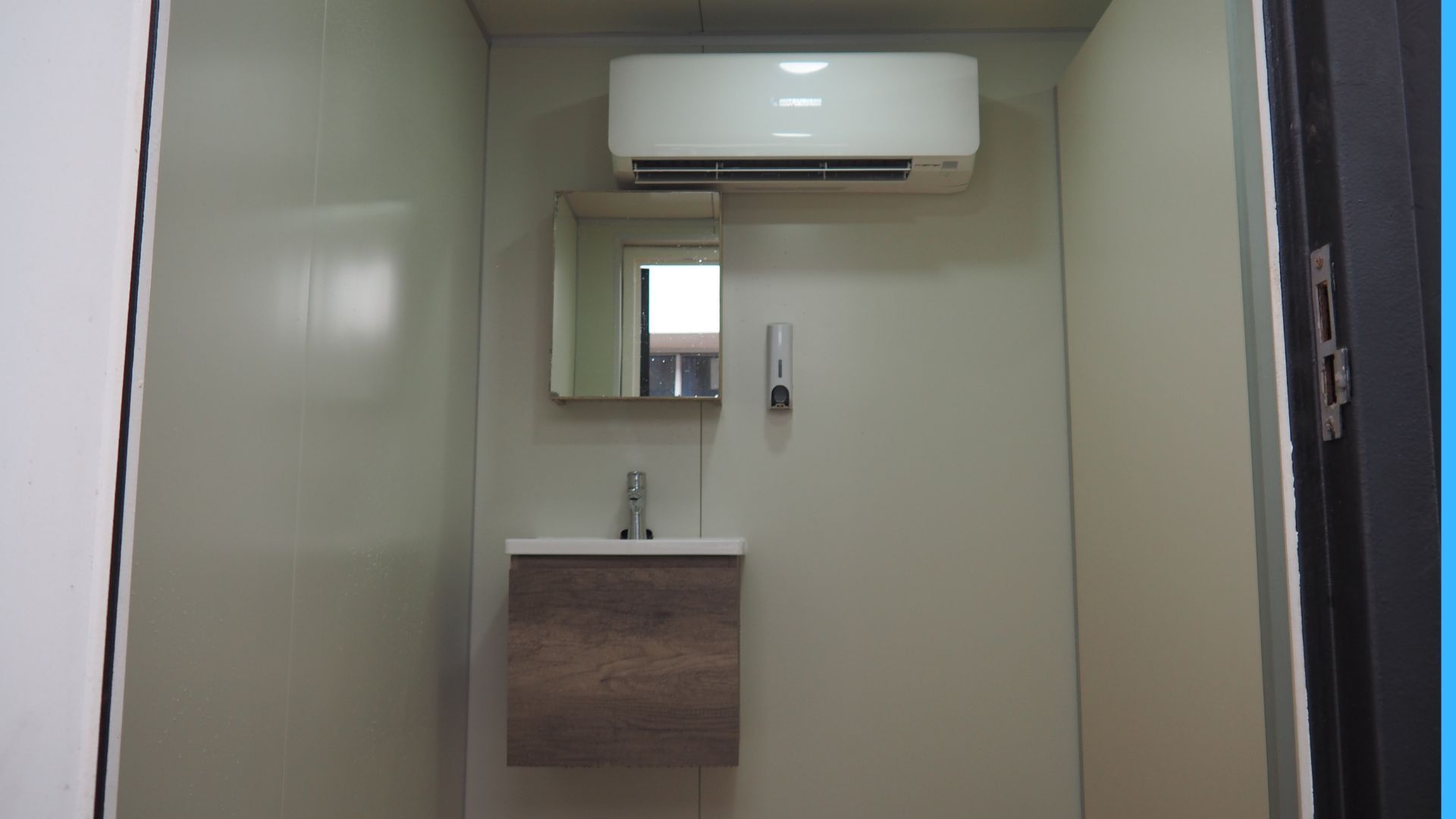
A luxury mobile toilet rental singapore build drops plastic vents entirely in favor of sealed, whisper-quiet split-system air conditioning units that maintain an interior temperature of twenty-two degrees Celsius. Continuous ducted extraction fans draw air directly from floor-level baseboards and toilet pans, pushing stale air out through carbon-activated filters hidden within trailer utility compartments. This setup eliminates external odors completely, allowing you to position luxury trailers immediately next to dining pavilions or corporate marquees without complaints.
Waste Holding Capacity and Servicing
Trailer systems feature divided sub-floor steel or thick polyethylene tanks with capacities running from one thousand to two thousand liters across multiple stalls. Commercial macerator pumps liquefy solids automatically, transferring waste cleanly into external tanks or temporary site sewer tie-ins through sealed sanitary lines. Electronic tank telemetry monitors blackwater and freshwater levels continuously, sending automated alerts to site coordinators before tanks reach maximum capacity.
Interior Fixtures and Sanitary Fittings
Interior finishes feature composite solid-surface countertops, porcelain drop-in sinks, polished chrome sensor faucets, and ceramic vacuum or low-volume water-flush bowls. The sub-floors carry seamless commercial-grade vinyl with sealed coving that stops moisture penetration, while warm LED perimeter lighting illuminates full-length vanity mirrors. Flush-mounted touchless soap dispensers, hidden recessed waste bins, and automated fragrance dispersal modules complete a clean, hotel-quality user experience.
How to Choose the Best Mobile Toilet Based on Site Data
Selecting the right sanitation infrastructure requires matching exact site constraints against anticipated user traffic, rather than guessing your unit count. The wrong unit choice leads to overflowing tanks, unhygienic conditions, and expensive emergency vacuum call-outs that blow your operating budget.
| Specification Detail | Standard Chemical Unit | Self-Contained SG Cabin | High-Capacity Event Unit | Premium Restroom Trailer |
|---|---|---|---|---|
| Waste Tank Volume | 220 Liters | 260 Liters | 400 Liters | 1,200 - 2,000 Liters |
| Freshwater Capacity | Optional (45L) | 70 Liters | 120 Liters | 800 Liters (or mains direct) |
| Ventilation Method | Passive Convection Pipe | Solar Exhaust + Louvers | Mains Exhaust Fan | Ducted HVAC / Active Filter |
| Target Application | Rough Construction Sites | Urban Work Sites | Festivals & Dense Zones | Corporate / VIP Functions |
| Maximum Uses Per Cycle | 300 - 350 Uses | 350 - 400 Uses | 650 - 700 Uses | 1,800 - 3,000 Uses |
Footprint and Site Access Constraints
Every setup relies on access for heavy service vehicles, because even the most rugged portable toilets turn unusable once waste tanks reach total capacity. A standard plastic cabin demands a ground footprint of one-point-two square meters, yet you must leave a clear overhead envelope of three meters for crane offloading. Vacuum suction pump trucks need to park within eight meters of every tank connection, as longer suction hose runs cause severe pump cavitation and dangerous line clogging during routine waste extractions.
Servicing Cycles and Usage Volumes
Calculate your servicing schedule around a baseline rule of one standard cabin per ten workers across a forty-hour work week, scheduling weekly pump-outs under typical conditions. In warm tropical areas, waste tanks ferment quickly, generating volatile organic compounds that degrade chemical biocides within three to four days. We advise moving to twice-weekly servicing whenever site teams exceed twenty workers per unit, ensuring waste remains fully treated and tank volumes never surpass eighty percent of total capacity.
Evidence-Based Selection Criteria
Follow a clear selection process to match your operational ground data directly to the right cabin architecture:
- Audit available utilities: Check whether your site supplies pressurized potable water lines, greywater drainage points, and temporary single-phase electrical power.
- Map vehicle paths: Confirm whether eight-ton vacuum suction tankers can access every cabin staging pad safely throughout wet and dry site conditions.
- Calculate peak hourly loads: Determine whether usage happens in steady intervals across twelve hours or surges within short thirty-minute meal breaks.
- Confirm environmental controls: Select closed-system fresh-flush cabins equipped with vector-sealed insect mesh whenever your site operates near urban residential boundaries.
- Verify cleaning schedules: Lock in written servicing contracts that define vacuum suction pump-outs, freshwater refills, chemical top-ups, and interior scrubbing routines before you sign.
Contact us today about our InstaLoo NOW!
Frequently Asked Questions
What is a mobile toilet?
A mobile toilet is a self-contained, transportable sanitation cubicle or trailer designed to provide hygienic waste containment without permanent connections to municipal water and sewer lines. These units use high-density plastic or insulated composite shells housing dedicated waste collection tanks, chemical or freshwater flushing systems, and integrated servicing ports that vacuum tankers empty on site.
Choosing the right sanitation platform protects health conditions, workers' dignity, and regulatory standing across any commercial or industrial site. We help project managers configure reliable, compliant temporary sanitation fleets that fit real usage loads and operational site budgets. Talk with our site team today to plan your temporary sanitation layout and service schedules before work begins.