
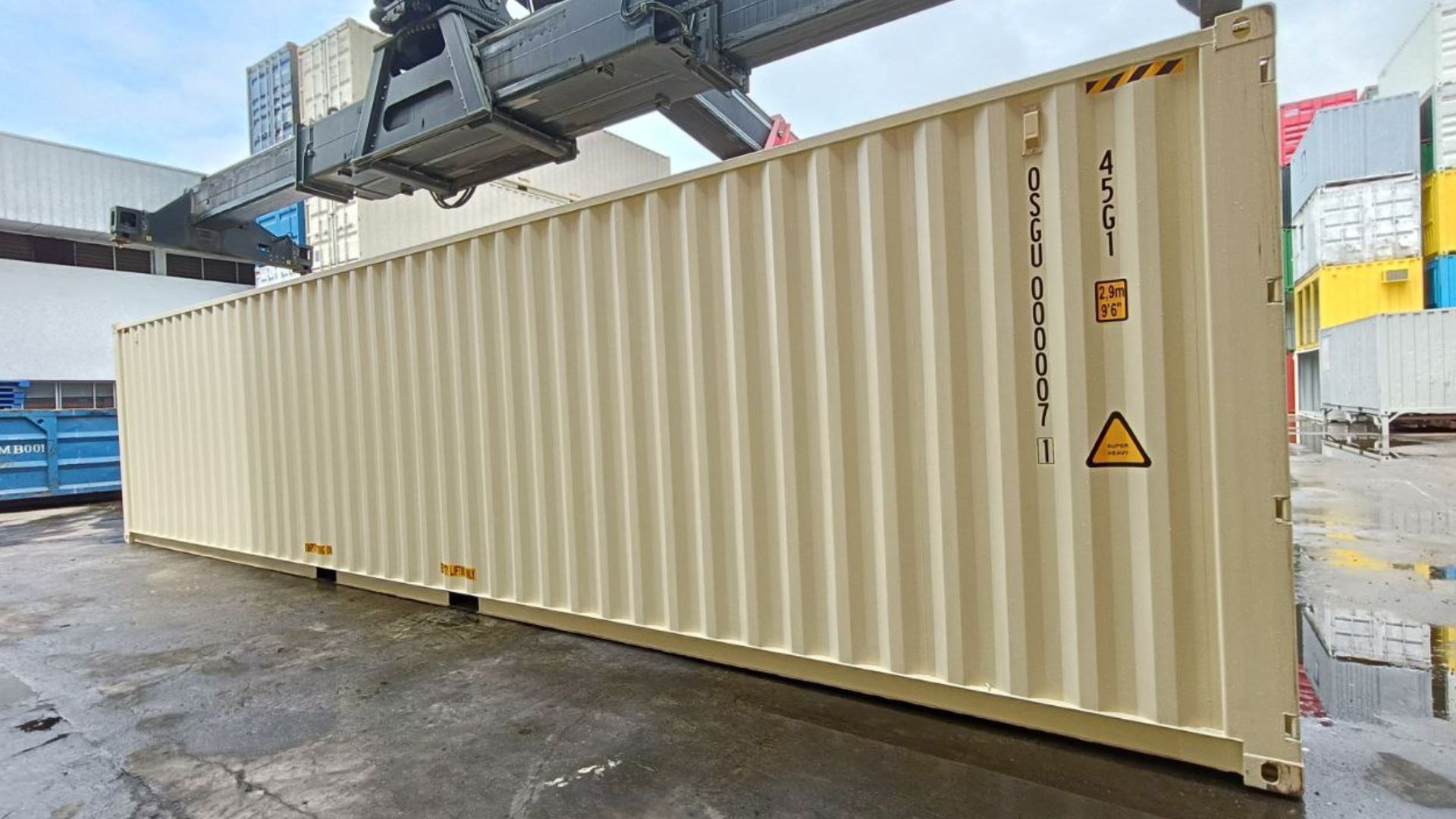
Choosing an hq container Based on Cargo Volume
A hq container (high cube) is an ocean freight container providing 30 centimetres of extra vertical clearance over standard units. Measuring 2.89 metres high externally with roughly 76 cubic metres of interior volume, it allows shippers to stack taller pallet tiers and maximize space efficiency for bulky, lightweight goods.
You lose money the moment you book the wrong shipping box for your freight profile. Shippers frequently default to standard boxes out of habit, only to leave empty air inside or discover that their palletised cartons sit a few inches too tall for the door frame. A hq container gives you thirty extra centimetres of internal vertical clearance, lifting total volume from roughly 67.7 cubic metres to approximately 76.4 cubic metres. That extra space transforms shipping economics for low-density, bulky goods like furniture, textiles, footwear, and consumer electronics. The challenge lies in knowing exactly when your shipment justifies this taller build and when it simply adds dead weight or excess cost to your line haul.
Stage 1: Calculating Cargo Volume and Height Requirements
Before you commit to ocean booking slots, you must measure your physical cargo footprint rather than trusting generic carton estimates. A high-cube container shares the same exterior length of 12.19 metres and width of 2.44 metres as a standard unit, but its external height reaches 2.89 metres (9 feet 6 inches). Inside, you gain 2.69 to 2.70 metres of standing clearance. That vertical expansion changes how you stack cartons and arrange pallets across the container floor.
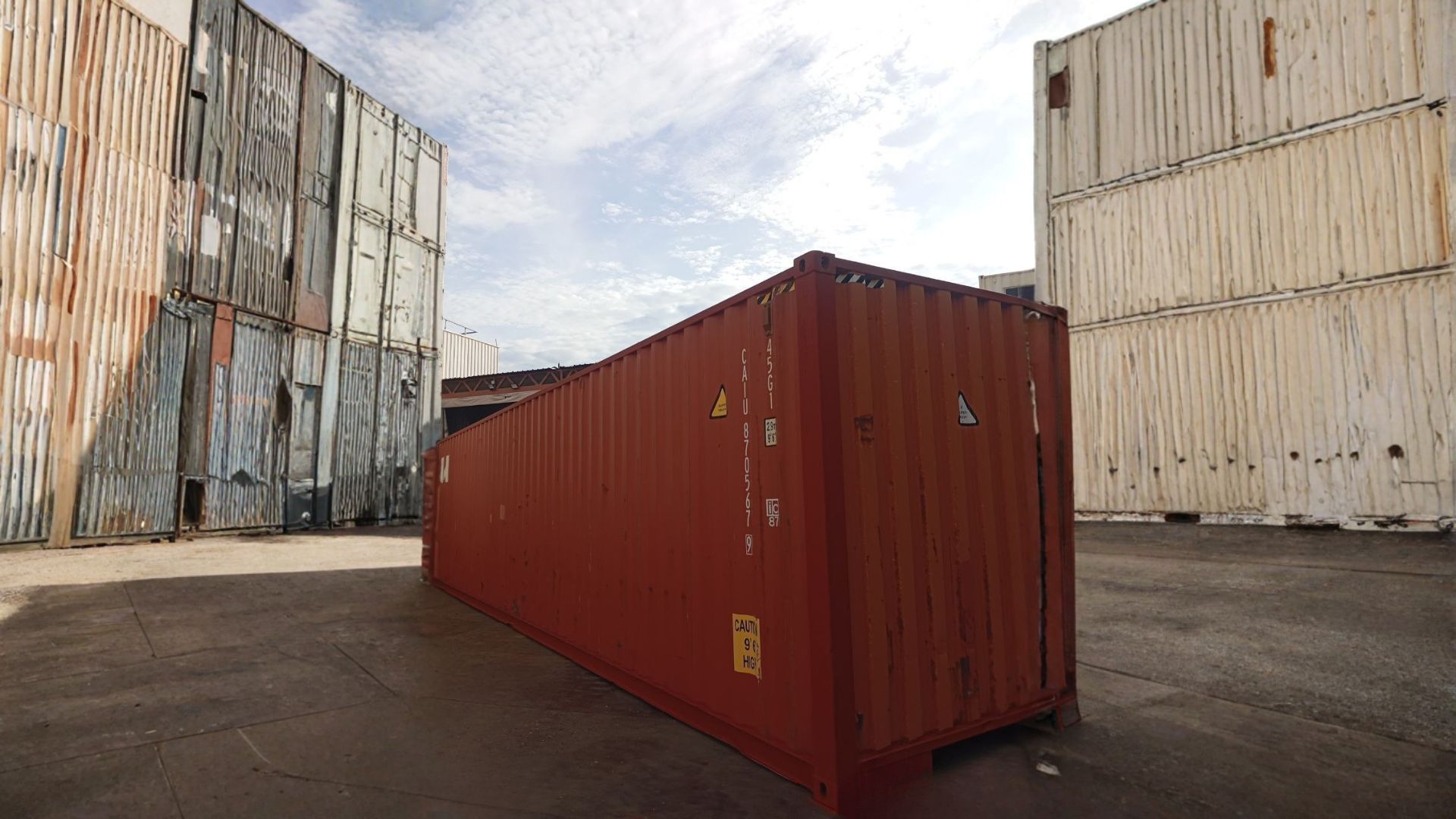
| Dimension Metric | 40ft Standard (GP) | 40ft High Cube (HQ) | Operational Difference |
|---|---|---|---|
| External Height | 2.59 m (8 ft 6 in) | 2.89 m (9 ft 6 in) | +30 cm vertical space |
| Internal Height | 2.39 m (7 ft 10 in) | 2.69 m to 2.70 m (8 ft 10 in) | Accommodates taller cargo |
| Total Cubic Volume | 67.7 CBM | 76.0 to 76.4 CBM | 10% to 15% volume increase |
| Euro Pallet Capacity | Up to 25 single-stacked | Up to 25 (double-stacked taller) | Permits taller tier stacking |
Evaluating Pallet Stacks Against Usable Volume
A standard 40-foot box accepts up to 25 EUR pallets in a single tier on its wooden floorboards. When your pallet units measure 1.1 metres tall, a standard unit leaves awkward head space: you cannot safely double-stack them because the combined height of 2.2 metres plus pallet runners exceeds the interior roof clearance once you factor in handling margins. Inside a hq container, that same cargo stacks cleanly to 2.4 metres, allowing you to double your floor capacity on lightweight items without exceeding ceiling limits.
Paying for Unused Vertical Space
Volume gains vanish when you load rigid, non-stackable freight. If you place twenty-five 1.2-metre machinery crates on the floor that cannot support top loads, the extra 30 centimetres above them sits empty across twelve metres of floor run. Carriers charge a modest premium for taller equipment on many trade routes, so paying for an empty overhead pocket directly reduces your shipment margin.
How to Spot Volume Inefficiencies Before Booking
Calculate your shipment packaging using a simple three-step check before you confirm container requirements:
- Multiply your individual package dimensions to find total unit volume, then add ten percent for irregular gaps and pallet bases.
- Check if dividing your carton height into 2.69 metres gives you a clean whole integer that standard 2.39-metre units cannot match.
- Confirm whether your cargo can bear weight on its upper layers; if it cannot take top weight, keep it in a standard unit.
Stage 2: Weighing Total Cargo Against Maximum Payload Limits
Every container type balances interior room against structural road and vessel limits. Selecting a 40 hq makes sense only when your goods run out of cubic space before they breach the gross mass limits printed on the unit safety approval plate.
Comparing Cargo Density with Payload Capacities
A typical 40-foot high-cube carries a tare weight of approximately 3,900 kilograms and permits a maximum cargo payload between 28,620 and 28,680 kilograms. Standard dry boxes feature similar payload ratings, commonly near 26,760 to 28,600 kilograms depending on the manufacturing series. This means you do not gain substantial lifting capacity with the taller profile. You gain spatial efficiency for goods with low bulk density, such as synthetic yarns, expanded plastics, paper packaging, and assembled hollow furniture.
The most expensive mistake in equipment selection happens when booking a high-cube for heavy industrial cargo like metal castings, ceramic tiles, or wet-salted hides. When your cargo density exceeds 400 kilograms per cubic metre, you will hit road weight limits or container payload ceilings when the box is barely half full. Loading heavy cargo into a tall box creates empty overhead pockets, shifts the container center of gravity upward, and incurs haulage fines at highway weigh scales.
How to Identify Dense Freight Mismatches
- Calculate gross cargo weight by multiplying item count by individual packed mass and adding pallet weights.
- Divide gross weight by total package volume to establish bulk cargo density in kilograms per cubic metre.
- Compare the result: if density exceeds 380 kilograms per cubic metre, book a standard 20-foot or 40-foot general purpose box instead of a high-cube unit.
Stage 3: Verifying Door Clearance Against Package Dimensions
Cargo that fits neatly inside the container interior dimensions can still get stuck during loading. The internal ceiling of a 40hq container sits at 2.69 to 2.70 metres, but the rear corner posts and header plate restrict the open doorway through which your forklift must work.
Matching Cargo Height to Door Aperture Specifications
The doorway on a 40-foot high-cube unit measures 2.34 metres wide by 2.58 metres high. Standard general-purpose boxes provide only 2.28 metres of vertical door clearance. While the high-cube door gives you thirty extra centimetres over standard gear, it still sits twelve centimetres lower than the internal ceiling. You cannot drive a 2.65-metre crated pump through a 2.58-metre opening, even though five centimetres of clearance waits inside the corrugated steel shell.
| Clearance Point | High Cube (HQ) Metric | Operational Safety Buffer |
|---|---|---|
| Door Entrance Height | 2.58 m (8 ft 6 in) | Requires 50 mm clearance for forklift mast entry |
| Door Entrance Width | 2.34 m (7 ft 8 in) | Requires 25 mm lateral clearance per side |
| Interior Clear Height | 2.69 m to 2.70 m (8 ft 10 in) | Internal height exceeds door frame by 11-12 cm |
| Mast Lift Margin | Forklift carriage rise | Mast must remain below 2.53 m during approach |
Warehouse staging crews often build pallets to 2.55 metres tall after noticing the 2.70-metre internal roof height. When the forklift picks up the skid, the mast lifts the pallet by another five to ten centimetres to clear the dock floor. As the forklift operator enters the rear sill, the top cargo corners strike the steel door header. This impacts the cargo, tears protective moisture wraps, and risks bending the container door cam keepers, which renders the box unseaworthy on the spot.
How to Detect Dimension Discrepancies Early
Measure your packaged freight on top of the actual forklift tines at pick height before moving it toward the loading dock. If the highest carton edge stands more than 2.50 metres from the warehouse concrete, your crew must repackage the skid. Never calculate door access using resting pallet dimensions alone; you must include handling clearances for ramps, tilt angles, and container dock plates.
Stage 4: Specifying Equipment Codes During Carrier Booking
Carriers use standardized four-digit ISO 6346 size and type codes to assign equipment across vessel manifests and yard cranes. Requesting a container hq using vague text on an email booking sheet often leads to operational mix-ups at depot gates.
Differentiating ISO Codes on Shipping Schedules
A standard 40-foot dry freight container carries the ISO code 42G0 or 42G1. The first digit represents length (4 equals 40 feet), and the second represents height (2 indicates standard 8-foot-6-inch height). A high-cube unit carries the code 45G0, 45G1, or 45G2. The digit 5 designates a 9-foot-6-inch tall unit. The letters and trailing digits identify venting styles and structural steel specs.
- 42G1: Standard general purpose box, 40 feet long, 8 feet 6 inches tall, with standard vents.
- 45G0: High-cube dry box, 40 feet long, 9 feet 6 inches tall, baseline dry configuration.
- 45G1 / 45G2: High-cube dry unit featuring passive side wall venting arrangements.
Receiving Standard Height Fleet Units
When booking clerks write general remarks like "40ft dry" instead of specifying the exact ISO equipment code, the carrier software assigns empty inventory from the most available pool. If a 42G1 arrives at your supplier yard instead of a 45G1, your factory packing crew will find that their taller pallets do not fit. Your operations team then faces substantial demurrage charges, missed feeder vessel cut-offs, and double drayage bills while swapping the box.
How to Confirm High-Cube Equipment Confirmations
When your freight forwarder or carrier issues the booking confirmation document, review the equipment description line immediately. Check that the alphanumeric line displays 45G0, 45G1, or explicitly states 40HC / 40HQ. If the document displays "40GP" or "42G1", reject the booking notice right away and request an equipment correction before the drayage trucker pulls the chassis through the depot gate.
Stage 5: Inspecting and Securing Tall Cargo Inside the Unit
Taller cargo profiles change the dynamic forces acting on your goods while the ship rolls at sea. Transporting your cargo in a 40 high q container elevates the center of gravity, which amplifies tipping forces during transit.
Utilizing High and Low Lashing Points for Tall Freights
High-cube containers come equipped with internal lashing rings welded along both the bottom side rails and top roof headers. These steel anchor loops provide rated tie-down points for composite strapping, chains, and ratchet straps. While standard cargo often requires only bottom floor ties, taller loads require restraint at two-thirds of their overall height. Anchoring cargo to the upper lashing rings neutralizes horizontal shear forces caused by ship rolling.
- Check the condition of the top and bottom lashing loops for rust, cracked weld beads, or bends.
- Install heavy dunnage bags in vertical voids between pallet faces to stop lateral movement across the 2.35-metre interior width.
- Run cross-straps from the top corner lashing eyes down to the pallet base on the final row to construct a rigid rear bulk barrier.
- Verify that your cargo weight remains evenly distributed along the 12.03-metre floor run to avoid stress cracking on chassis trailers.
Dynamic Load Shift and Cargo Damage
A tall pallet stack left unsecured inside an expanded vertical space acts like an inverted pendulum. When an ocean vessel encounters rough weather and rolls through fifteen-degree arcs, unsecured upper tiers tilt outward. The top layers crush against the corrugated side panels or tip into the center aisle. When your customer opens the doors at destination, damaged freight spills onto the loading ramp, creating insurance disputes and worker hazards.
How to Recognize Inadequate Tie-Down Securing
Never sign off on an outgoing container if you see open horizontal gaps wider than fifteen centimetres between top cargo rows without bracing. If you can push the upper corner of a pallet stack by hand and make it flex, your cargo will not withstand an ocean voyage. Demand secondary cross-bracing, install intermediate timber shoring, or add inflated cargo air bags to lock your tall freight into an immovable, solid block before closing and sealing the doors.
Contact us today about our HQ Containers NOW!
Frequently Asked Questions
How many CBM in a 40ft HQ container?
A standard 40ft HQ container provides a total manufactured internal volume of approximately 76.0 to 76.4 cubic metres (around 2,700 cubic feet). This total is based on interior dimensions of 12.03 metres in length, 2.35 metres in width, and 2.69 to 2.70 metres in height.
How much CBM in a 40ft HQ container is usable for cargo?
Usable cargo capacity typically ranges between 65 and 70 cubic metres for loose cartons, and roughly 55 to 62 cubic metres for palletised freight. Pallet bases, clearances around corner posts, dunnage air bags, and ceiling handling margins prevent shippers from using the total theoretical volume.
If you need assistance matching equipment profiles to your global shipping schedule, our logistics team is available to review your cargo manifests and packing plans.